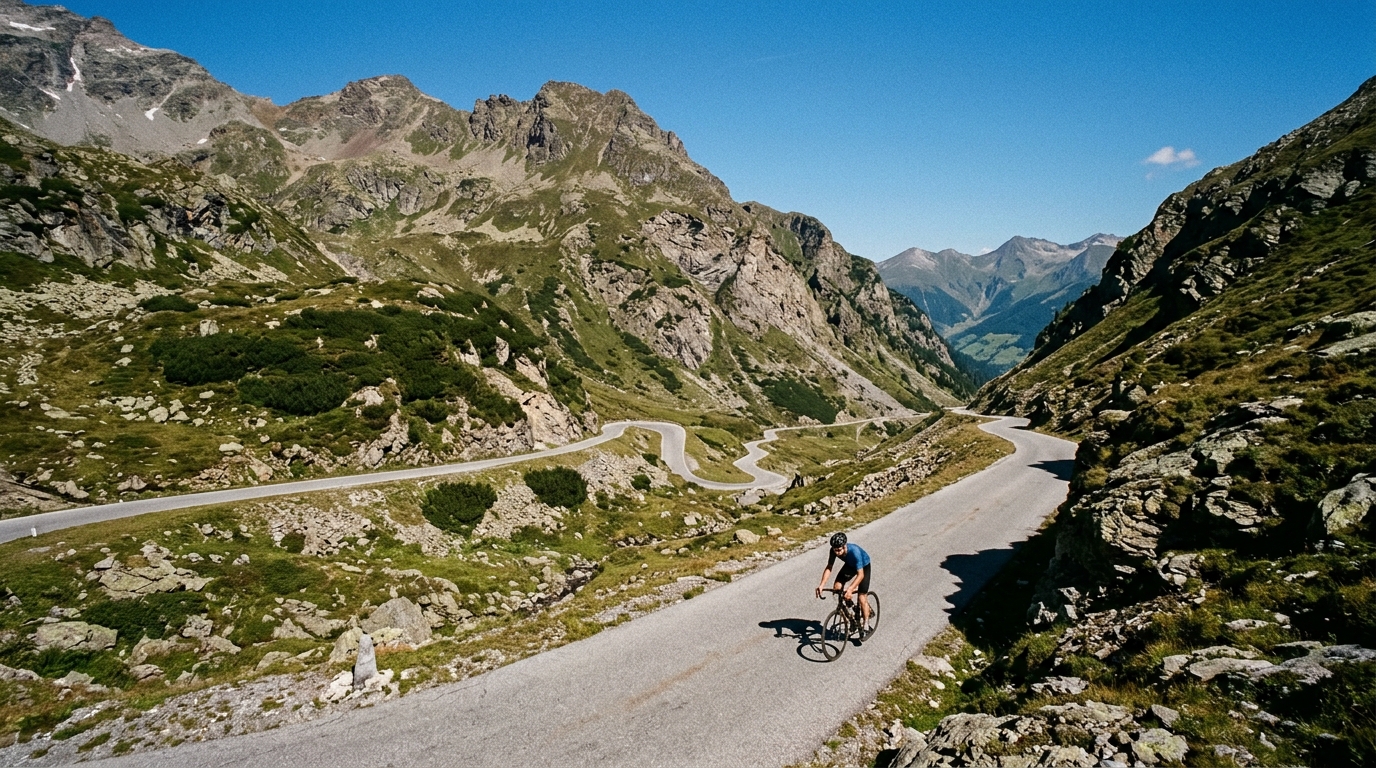
Kapruner Törl
A long HC Austrian climb: 19.8 km at 6.59%, rising from 798 m to 2100 m, with enough steepness to punish poor pacing.
- Lunghezza
- 19.8km
- Media
- 6.6%
- Max
- 12.4%
- Vetta
- 2,100m
- Dislivello
- 1,283m
La salita
Profilo altimetrico
Kapruner Törl cycling climb profile
Kapruner Törl is an HC climb in Austria that asks for patience before it asks for force. On paper, the key number is not the 12.45% maximum gradient, although that matters. The more important shape is the combination of length and sustained elevation gain: 19.8 km from 798 m to 2100 m, with 1302 m of net elevation gain. That makes this a climb where pacing errors compound slowly, then become expensive late.
The average gradient of 6.59% tells you this is not a wall from bottom to summit. Instead, it is the kind of long alpine effort where the difficulty comes from duration and the inability to recover fully once the road starts trending upward. A rider who treats the opening kilometers like a short climb will likely pay for it before the summit, because almost twenty kilometers at this average leaves little room for repeated surges.
How the gradient rides
With a 6.59% average and a 12.45% maximum, Kapruner Törl is best read as a steady climb with sharper ramps embedded inside it. The maximum gradient is nearly double the average, which means the hardest sections are not representative of the whole climb, but they are steep enough to disrupt rhythm and force a gear change.
That contrast is important tactically. The climb is not just about holding one power number from bottom to top. The efficient ride is built around keeping the flatter or steadier portions controlled, then absorbing the steepest ramps without drifting too far above threshold. If you are riding by power, anchor the effort around sustainable climbing intensity rather than chasing speed when the gradient bites. If you are riding by feel, the opening should feel almost too restrained.
Pacing and gearing notes
For a climb this long, the first priority is keeping cadence available. The 12.45% maximum gradient makes an easy climbing gear a practical requirement, not a comfort choice. If your lowest gear only works when you are fresh, it will feel much heavier after sustained climbing into the upper half of the ascent.
A sensible approach is:
- Start below your target effort and let the climb come to you.
- Use the average gradient as a warning against overreacting to early speed.
- Shift before the steepest ramps rather than grinding into them.
- Keep enough reserve for the final part of the 1302 m net gain, where accumulated fatigue matters more than the headline gradient.
Kapruner Törl rewards riders who separate effort from emotion. The numbers point to a climb that is hard because it is long, high enough to feel consequential, and steep enough in places to expose weak pacing. Treat it like a controlled endurance climb with selective resistance to the ramps, not a series of attacks against the gradient. For training context, it sits naturally in the world of sustained threshold and sub-threshold climbing work, the kind of effort worth matching against your /glossary/ftp rather than your ego.