Libreria delle salite · Bhutan
Cycling Climbs in Bhutan
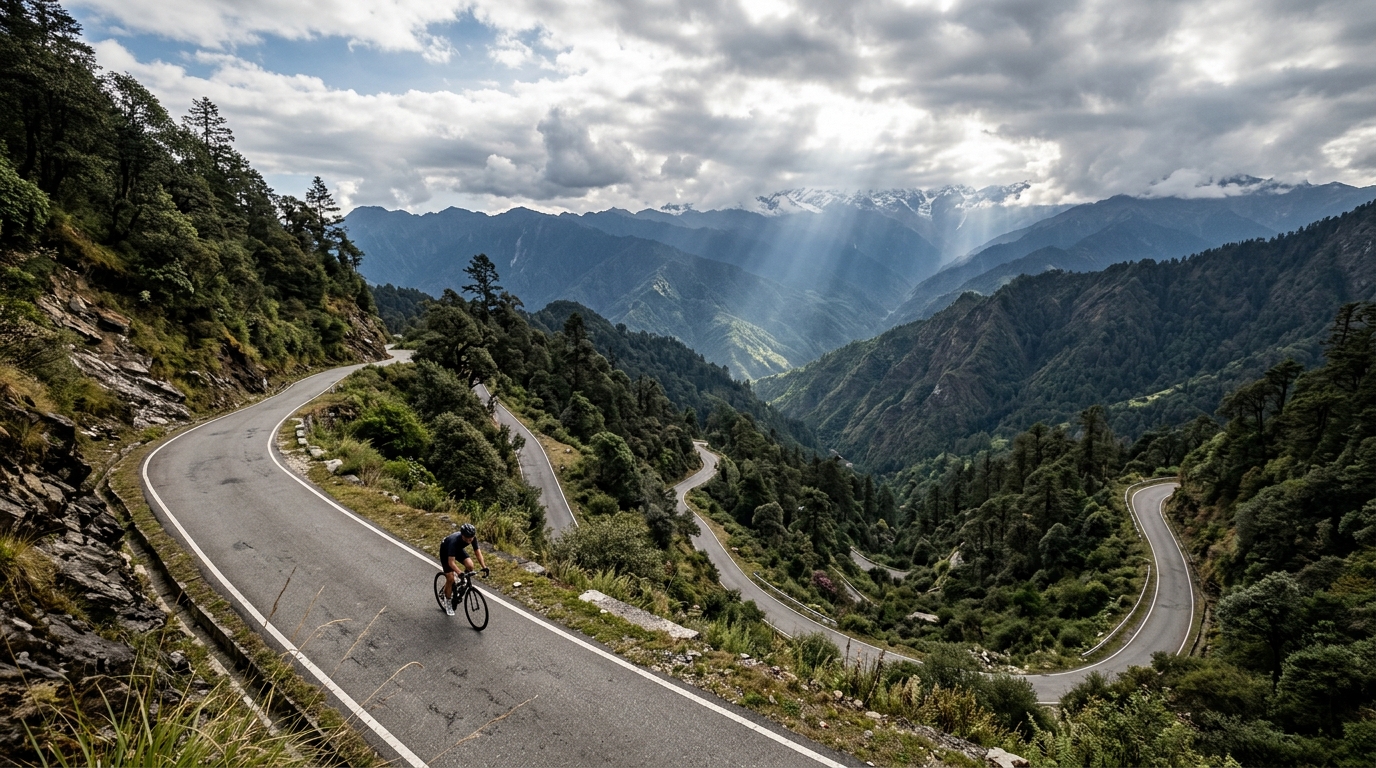
Bhutan is a small entry on the climb map, but not a soft one. The country has 3 listed climbs in this dataset, and all 3 are rated hors categorie, which tells you the riding character immediately: sustained climbing, real consequences for pacing, and very little room for casual overreach. With the highest listed summit reaching 4116m, the challenge is not just the road rising, but how well you manage effort when the terrain keeps asking for more.
Dochula Pass, Thrumshing La and Chele La give Bhutan its clear climbing identity. This is a destination for riders who want a trip built around big passes rather than scattered highlights. The appeal is the purity of the problem: settle into rhythm, respect the elevation, and let the road decide how much ambition you can actually carry.
Le salite più famose di Bhutan
Tutte le salite in Bhutan
5 salite
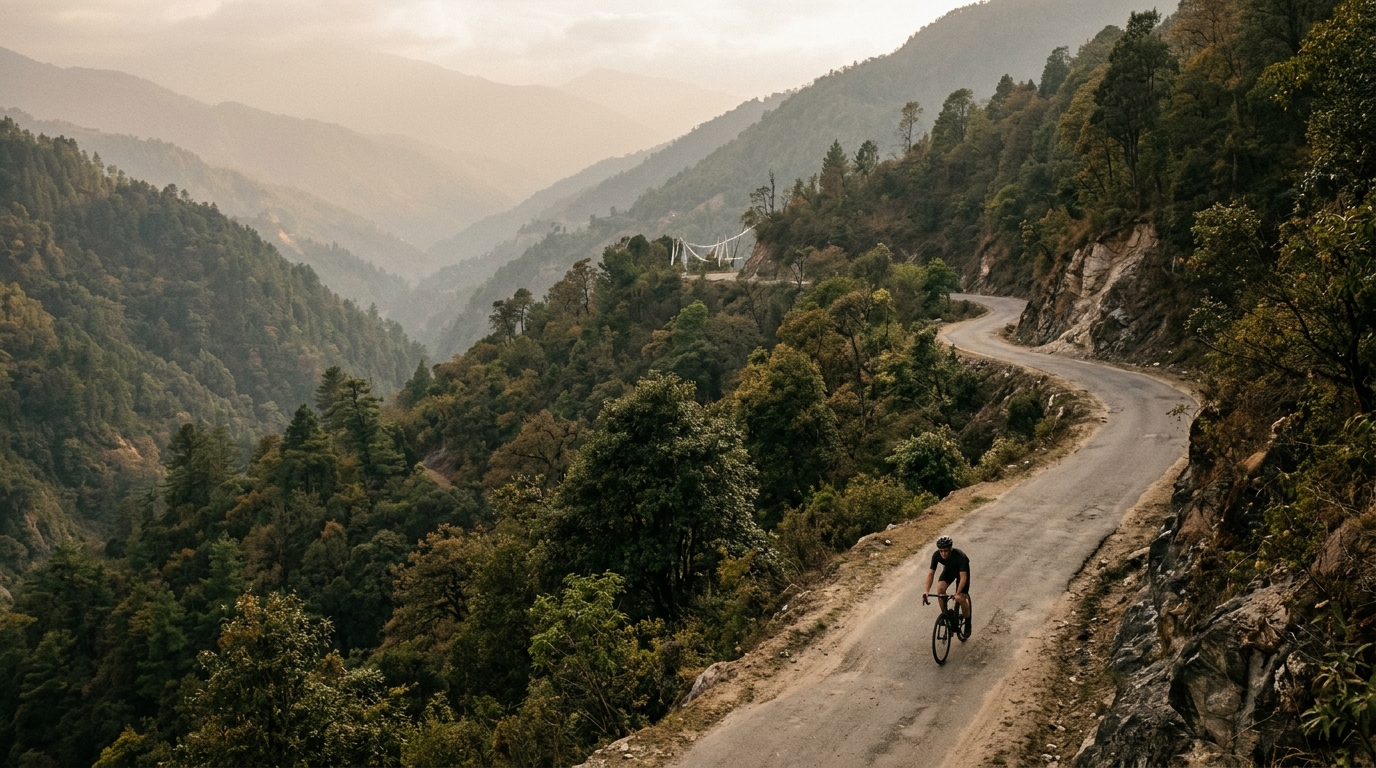
La guida completa alle salite in Bhutan
Terrain and character
Bhutan is not a place where climbing is a feature of the ride. It is the ride. The Neverchill climb database lists 3 notable climbs in the country, and all 3 are hors categorie: Dochula Pass, Thrumshing La, and Chele La. That tells you the main thing you need to know before planning a trip. The decisive variable is not whether you can climb, but whether you can repeat long efforts day after day while managing altitude, weather, road surface, traffic gaps, and nutrition with very little margin for poor pacing.
The character is different from a compact alpine cycling region where you can choose between short, medium, and giant climbs from the same valley base. Bhutan rewards riders who think in terms of full-route execution. Climbs are not isolated efforts you tick off between cafe stops. They are connectors across a mountain country, and that means the descent, the valley transition, and the next rise matter as much as the headline pass.
The highest summit listed in the Bhutan climb set is 4116 metres, which puts altitude at the centre of the riding experience. That changes the logic of pacing. Power targets that feel sustainable at lower elevation can become too expensive higher up, especially late in a ride when glycogen, hydration, and concentration are already under pressure. If you normally pace climbs by /glossary/ftp, treat that number as a ceiling, not a promise. The stronger strategy is to ride with a buffer early, then let the final part of the climb tell you whether there is room to lift.
The best riders for Bhutan are not necessarily the ones with the sharpest short-climb power. They are the riders who can stay patient. The terrain punishes surges, over-gearing, and optimism. It rewards low-variance effort, conservative fuelling, and the ability to descend carefully enough that the next climb is still productive.
Standout climbs and route logic
Dochula Pass
Dochula Pass is one of the key names in Bhutan cycling because it fits the country’s core riding pattern: a pass that is both a destination and a route-making hinge. It is the kind of climb where execution matters more than bravado. If it comes early in a ride, the temptation is to treat it as the day’s main event. That can be a mistake if the route continues beyond the pass, because the physiological cost of over-riding at altitude is paid later, not immediately.
The right approach is to settle into a sustainable rhythm well before the effort starts to feel hard. On a climb like Dochula Pass, the goal is not to prove fitness in the first section. It is to keep the metabolic cost flat, avoid repeated accelerations, and arrive near the top with enough coordination and focus for whatever the road asks next. That matters because mountain roads rarely give a clean separation between climbing and descending. Technical descending, variable surfaces, and changing weather can all turn the top of a pass into the midpoint of the problem rather than the end of it.
If you are building a route around Dochula Pass, think first about what comes before and after. A pass placed after a long transfer ride demands different fuelling and pacing than one reached fresh. If the day includes multiple major climbs, Dochula should be ridden more like a threshold-controlled endurance climb than a race simulation. Use heart rate drift, breathing, and cadence as checks against the power number. If power is steady but breathing is no longer controlled, the climb is already costing more than the file will admit.
Thrumshing La
Thrumshing La belongs in the category of climbs that should shape the entire day. In the Bhutan context, where the database lists only hors categorie major climbs, it is safer to assume any big pass can become the defining constraint of the route. That means start-time discipline, careful clothing choices, and enough food to avoid relying on perfect resupply timing.
The tactical key is to avoid making the climb stochastic. Repeated standing accelerations, grinding through steep-feeling ramps, or chasing stronger riders early can turn a manageable long effort into a survival ride. On a pass like Thrumshing La, the aerobic system needs stability. If you are riding with others, agree on the effort before the climb rather than negotiating it halfway up. Group pacing on major climbs often fails because the strongest rider feels comfortable while everyone else quietly burns matches they cannot replace.
For trained riders, the best framework is controlled endurance with brief, intentional changes in position. Stay seated when possible, stand to relieve pressure rather than to attack the gradient, and keep cadence high enough that torque does not become the limiter. If you are unsure what gearing supports that style, use a conservative setup. Bhutan is not the place to discover that your climbing gear only works when you are fresh.
Chele La
Chele La has special importance because it is part of the same climb set that reaches a highest listed summit of 4116 metres. Whether Chele La is the high point of a route or one major pass among others, the altitude implication is the same: pacing must get more conservative as the air gets thinner and the ride gets longer.
The common error on very high climbs is to chase the sensation of normal power. Riders know what endurance, tempo, or threshold feels like at home, then try to reproduce that feeling before their body has settled into the conditions. The smarter method is to start below ambition, watch breathing, and let perceived exertion lead. If the effort feels too easy early, that is not a problem. It is insurance.
Chele La also makes equipment choices more consequential. Cold at the top, heat lower down, and long exposure can all exist on the same route profile in a mountain country. Even when the climb itself is the objective, the descent needs equal respect. A rider who climbs well but descends under-fuelled, under-dressed, or mentally faded has not executed the route well. Carry layers you can access quickly, and do not treat the summit as the point where ride management ends.
Best season
The best season for Bhutan is the one that gives the most stable combination of dry roads, clear visibility, and manageable temperatures across both valleys and passes. For a climbing trip, that matters more than chasing the warmest conditions. Warm lower roads can still leave high passes exposed, and clear mornings can still turn into complicated afternoons in mountain terrain.
The practical rule is to choose settled shoulder-style weather windows over extremes. Avoid planning around the assumption that every pass will be rideable exactly when scheduled. In a country where the marquee climbs are all hors categorie, a single weather change can turn a hard day into an unreasonable one. Build flexibility into the itinerary so a major climb can move if visibility, rain, wind, or road conditions make the risk-to-reward ratio poor.
Start early when the forecast supports it, but do not confuse an early start with a complete safety plan. The day still needs enough food, clothing, and route margin to handle delays. Mountain cycling rewards riders who are slightly over-prepared and punishes those who need everything to go perfectly.
Practical notes
Traffic and road feel
Traffic in Bhutan should be treated as variable rather than predictable. Main roads and approaches to passes may be calm in places, then suddenly feel busier near settlements, junctions, construction, or transport corridors. The safest mindset is to ride as if sightlines can change quickly. Hold a predictable line, avoid drifting across the lane while climbing, and be especially controlled on bends where speed differences between cyclists and vehicles are highest.
Descending deserves the same discipline as climbing. Long mountain descents are not recovery in the simple sense. They require braking judgement, temperature management, and attention. If the surface is inconsistent, let speed come from visibility and road quality, not from confidence alone.
Resupply
Resupply should be planned conservatively. Do not design a route that depends on one perfect stop at the exact moment you need it. Carry enough carbohydrate to cover the critical climbing sections, then use shops, guesthouses, or planned stops as top-ups rather than lifelines.
For long climbs, the fuelling problem is usually timing. Riders often eat well before the climb, then stop eating once the gradient or altitude demands attention. That is backwards. The more sustained the climb, the more valuable small, regular intake becomes. If chewing is hard at altitude or high effort, bring options that are easy to consume while breathing steadily.
Altitude
With a highest listed summit of 4116 metres in the Bhutan climb database, altitude is not a footnote. It is one of the primary performance constraints. The effect is not just lower power. It is slower recovery between efforts, greater cost for surges, and a narrower margin between controlled and over-reached.
Plan the first major climbing day conservatively. Even fit riders can misread altitude because the early part of a climb may feel normal. The problem usually appears later, when the same wattage produces more strain, cadence drops, and decision-making gets dull. If that starts happening, reduce the effort before it becomes a full crack. In Bhutan, preserving the next hour often matters more than defending the last ten minutes of pace.
Gearing
Choose easier gearing than ego suggests. The climbs listed for Bhutan are all hors categorie, and that classification alone justifies a compact, climbing-friendly setup. The goal is not simply to get over the pass. The goal is to climb without excessive torque, keep cadence available when fatigued, and protect the legs for the next climb or the next day.
A good gearing choice lets you stay seated through most sustained sections and stand by choice rather than necessity. If your current setup only feels comfortable when you are fresh and riding near sea-level conditions, it is too ambitious for this trip. Use /tools/ftp-estimator if you need a rough benchmark for training zones before travelling, but do not let estimated fitness override practical route demands.
Pacing and ride construction
The best Bhutan routes should be built from the pass backward. Pick the key climb, then ask what energy, food, daylight, and weather window it requires. After that, decide whether the approach and exit are realistic. This is the opposite of drawing a big loop first and hoping the climbs fit.
For riders targeting all 3 notable climbs - Dochula Pass, Thrumshing La, and Chele La - the main challenge is repeatability. Each climb may be the headline on paper, but the trip is decided by how well you absorb one hard day before starting the next. Keep the first pass controlled, protect sleep and food intake, and avoid turning descents into unnecessary risk.
Bottom line
Bhutan is a pure climbing destination in the most consequential sense: the major routes are governed by high passes, long effort management, and altitude. The database picture is simple but demanding, with 3 notable climbs and 3 hors categorie climbs. That lack of easy options is exactly what makes the country compelling for experienced endurance cyclists.
Dochula Pass, Thrumshing La, and Chele La should be approached less like isolated trophies and more like strategic problems. The rider who gets the most out of Bhutan will not be the one who attacks every ramp. It will be the one who respects the terrain early, rides with enough control to keep eating and thinking clearly, and reaches each summit with the next section of road still in mind.