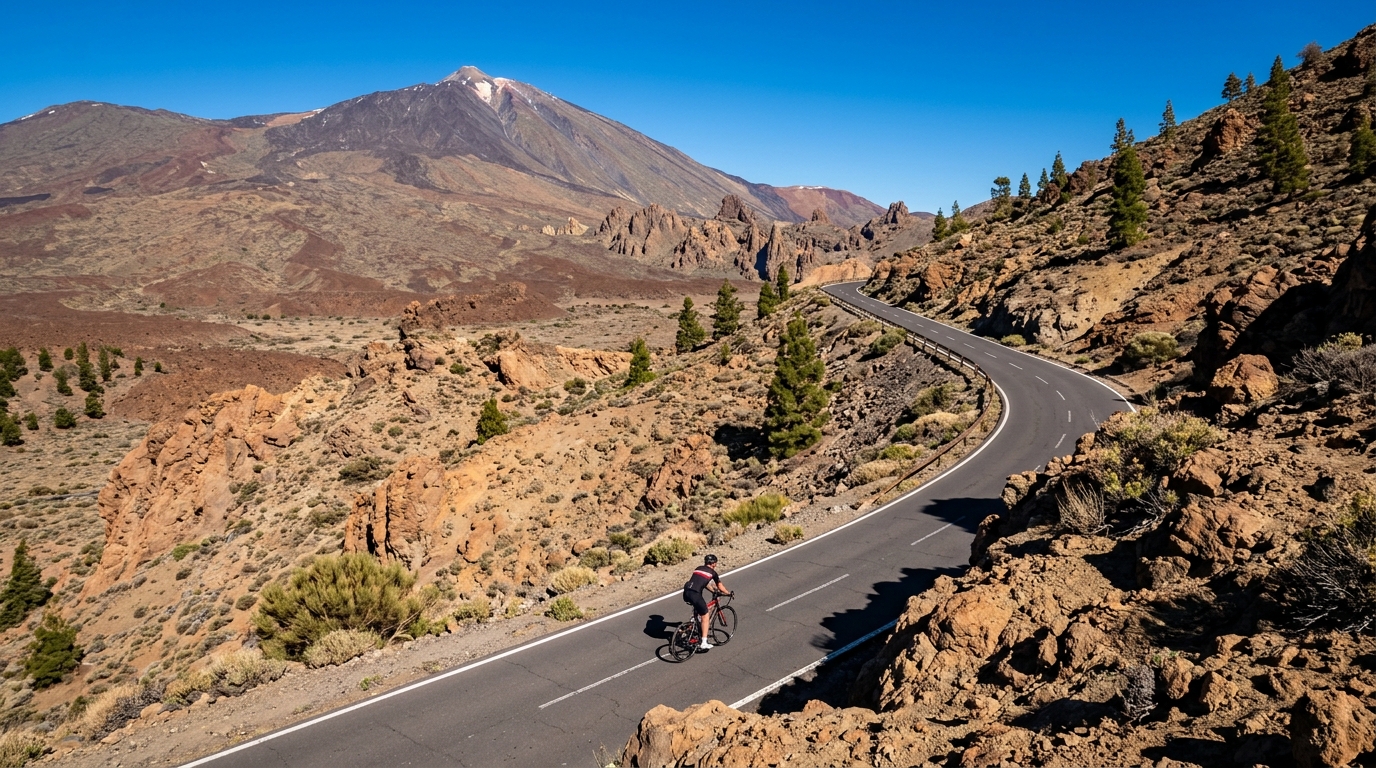
Alto de Guajara
Alto de Guajara is a 36.4 km HC climb in ES, averaging 5.4% with a 10.74% maximum and nearly 2,000 m of ascent.
- Lunghezza
- 36.4km
- Media
- 5.4%
- Max
- 10.7%
- Vetta
- 2,206m
- Dislivello
- 1,985m
La salita
Profilo altimetrico
Alto de Guajara cycling climb profile
Alto de Guajara is an HC climb defined less by savage average gradient and more by the length of the effort. At 36.4 km, with 1,967 m of net elevation gain and 1,985 m of total ascent, it is the kind of climb that punishes impatience. The average gradient of 5.4% looks manageable on paper, but that number is spread across a very long ascent, rising from 239 m to 2,206 m. The real difficulty is not one isolated wall. It is the cumulative cost of staying on the pedals for a long time while gaining almost two vertical kilometres.
How the gradient rides
The headline figure is the 5.4% average, which suggests a climb that should allow rhythm rather than repeated stop-start surges. The difference between net elevation gain and total ascent is small, so the route is essentially uphill for almost the entire climb rather than a rolling road with major descents to reset the legs.
That matters tactically. On a climb this long, even a moderate gradient becomes selective because there are few obvious places to recover without deliberately backing off. The maximum gradient of 10.74% is the warning sign: although the average is controlled, there are steeper ramps that can force a change in cadence and torque. Those sections are where riders who have paced the lower slopes too aggressively will start to pay.
The climb should be read as a sustained aerobic test with intermittent pressure points, not as a short steep climb where brute force solves the problem. If you ride the early kilometres as if 5.4% is easy, the upper part will feel much harder than the profile suggests.
Pacing and gearing notes
The best approach is disciplined from the bottom. Settle below threshold early, especially if using /glossary/ftp as your pacing anchor, and let the climb come to you. The length makes pacing errors expensive because there is too much road left to recover from repeated spikes above sustainable power.
Gearing should prioritise cadence insurance. You do not need to gear only for the average gradient. You need a low enough climbing gear to stay seated and controlled when the road reaches 10.74%. If your easiest gear already feels tight on moderate climbs, Alto de Guajara will expose that over 36.4 km.
Practical execution is simple:
- Start conservatively, even if the first sustained gradients feel comfortable.
- Avoid chasing short accelerations on the steeper ramps.
- Keep cadence smooth when the gradient rises rather than grinding through it.
- Fuel and drink as for a long climb, not a short effort.
Alto de Guajara is hard because it asks for patience, aerobic control, and gear discipline. The riders who handle it best will be the ones who respect the distance as much as the gradient.