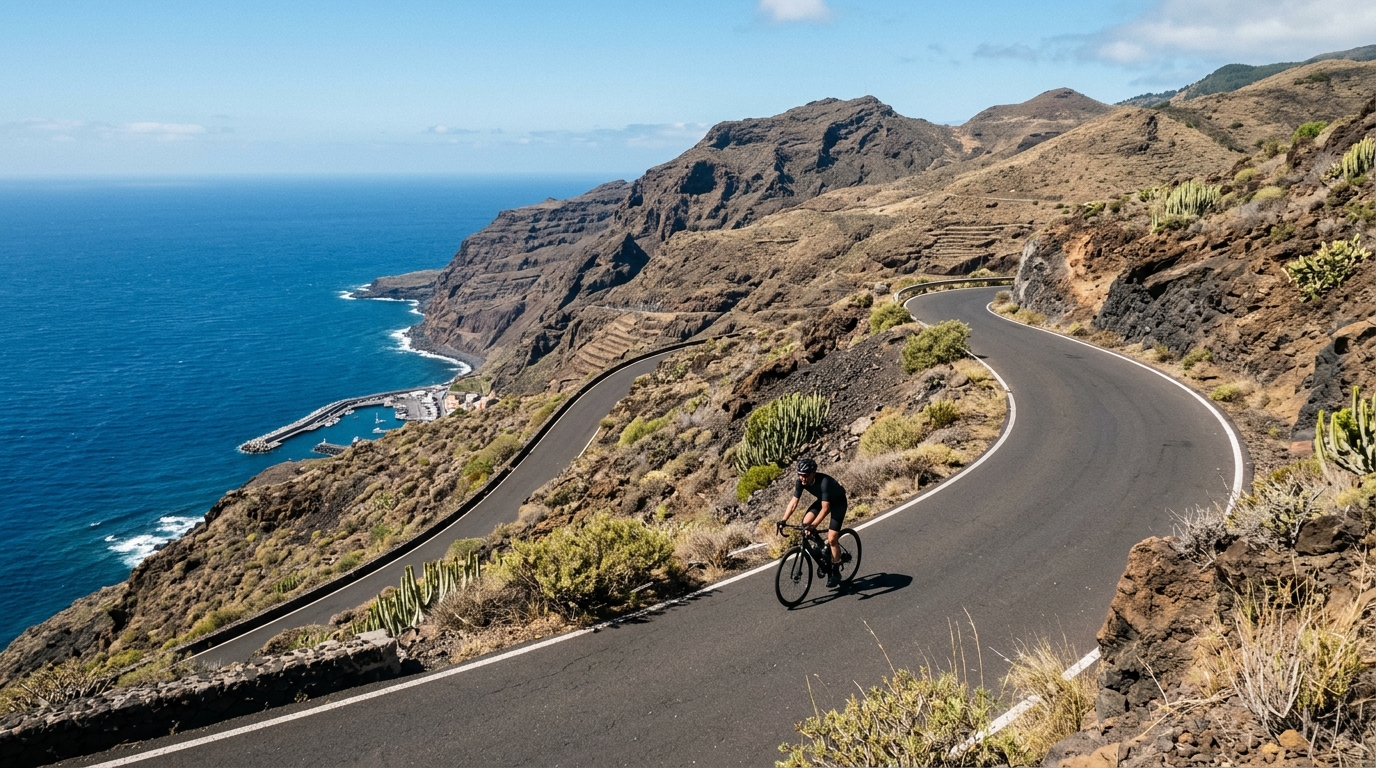
Puerto de La Estaca
A compact Category 3 climb in Spain: 3.9 km at 5.68%, with enough gradient to reward control but no evidence of sustained severe ramps.
- Longitud
- 3.9km
- Media
- 5.7%
- Máx
- 8.2%
- Cima
- 235m
- Desnivel
- 203m
El puerto
Perfil de desnivel
Puerto de La Estaca cycling climb profile
Puerto de La Estaca is a short, controlled Spanish climb rather than a long mountain test. The numbers set the tone clearly: 3.9 km at an average gradient of 5.68%, rising from 15 m to 235 m for 220 m of net elevation gain. It is listed as a Category 3 climb, which fits the profile. It is hard enough to matter, especially if ridden at intensity, but not long or steep enough to demand a pure survival approach.
The most important detail is the relationship between the average gradient and the maximum gradient. With a 5.68% average and a maximum of 8.2%, Puerto de La Estaca looks like a climb where the difficulty comes from sustained pressure rather than violent ramps. There is no indication in the supplied profile of a double-digit wall or a long section where cadence will collapse. That makes it a climb where pacing discipline is more important than simply having an emergency gear.
How the gradient unfolds
From bottom to summit, the climb gains height quickly enough to keep you loaded, but the profile stats point toward a mostly manageable gradient band. Over 3.9 km, a 5.68% average means the road is rarely giving you much free speed if you are riding it properly. The 8.2% maximum matters because it will punish overgearing, but it does not redefine the climb.
The practical reading is simple: expect a steady aerobic-to-threshold effort, with short moments where torque rises. If you start too hard because the opening feels manageable, the back half becomes more expensive than it should. On a climb this short, the mistake is not usually blowing up catastrophically. It is drifting above target early, then losing the ability to respond when the gradient touches its steeper pitch.
Pacing and gearing notes
Treat Puerto de La Estaca as a controlled power climb. Settle into a sustainable rhythm immediately, especially if riding by /glossary/ftp. The climb is short enough that strong riders can push near threshold, but the better tactic is to leave a small margin until the final part of the effort. The maximum gradient of 8.2% is not extreme, yet it is enough to expose anyone grinding too large a gear.
Gearing should prioritise cadence control. You do not need ultra-low mountain gearing based on these stats alone, but you do want a bailout ratio that lets you stay seated and smooth when the road rises above the average. If your cadence drops sharply every time the gradient lifts, you are turning a moderate Category 3 climb into a muscular effort, which costs more than it returns.
For training, this is a useful climb for steady threshold work, short climbing intervals, or repeat efforts. Its length makes it repeatable, while the gradient is steep enough to make drafting and momentum less decisive than on flatter terrain. Ride it patiently, keep the gear light enough to stay fluid, and save the real acceleration for when the summit is close enough that the extra cost no longer matters.