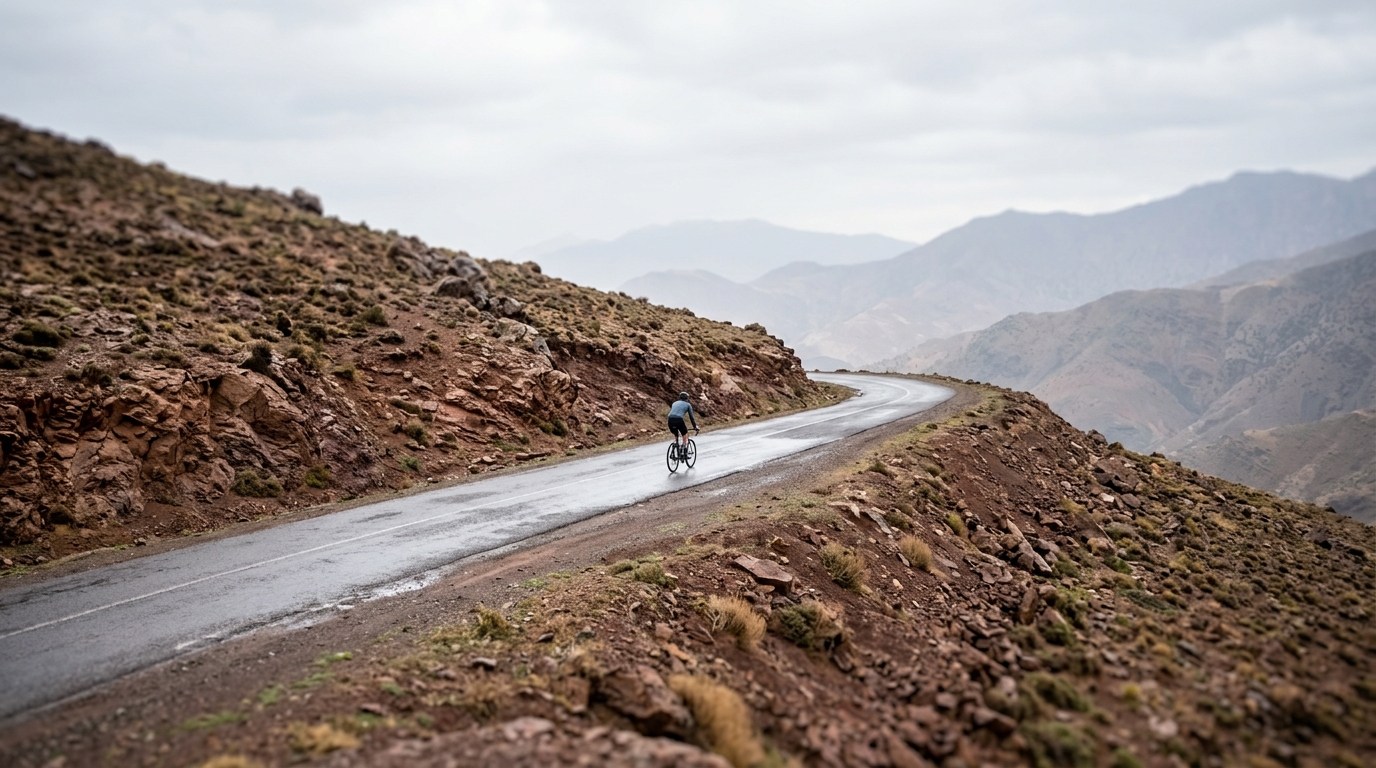
Biblioteca de puertos · Marruecos
Cycling Climbs in Morocco
Morocco is not a volume play for climb hunters. With 3 catalogued climbs and no hors categorie entries, its appeal is more selective - big, exposed roads where pacing, heat management, and patience matter more than chasing a famous European benchmark. The highest summit in the set reaches 2207 m, which is enough to make effort control a real part of the ride rather than an afterthought.
The headline names - Tizi n'Tichka, Tizi n'Test, and Col du Zad - give Morocco its climbing identity. These are the kind of routes worth travelling for because they change the rhythm of a ride: long approaches, open terrain, and the need to meter effort instead of simply reacting to the road. Come prepared, ride within the conditions, and Morocco rewards a measured climber.
Puertos emblemáticos de Marruecos
Todos los puertos en Marruecos
6 puertos
- Tizi n'TichkaCat 2MA · 34.1 km · 3.1% · 1042 m335pts
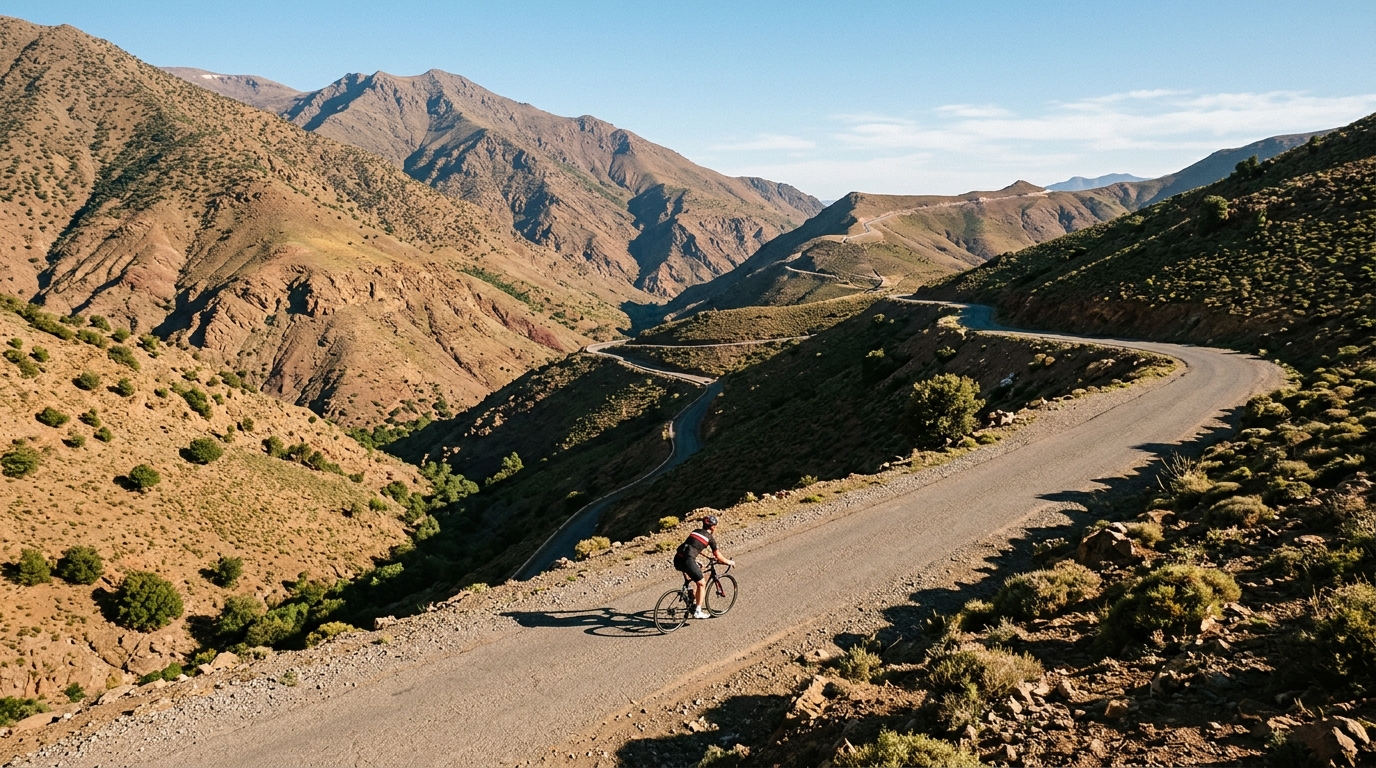 Tizi n'TestCat 1MA · 40.5 km · 3.7% · 1545 m561pts
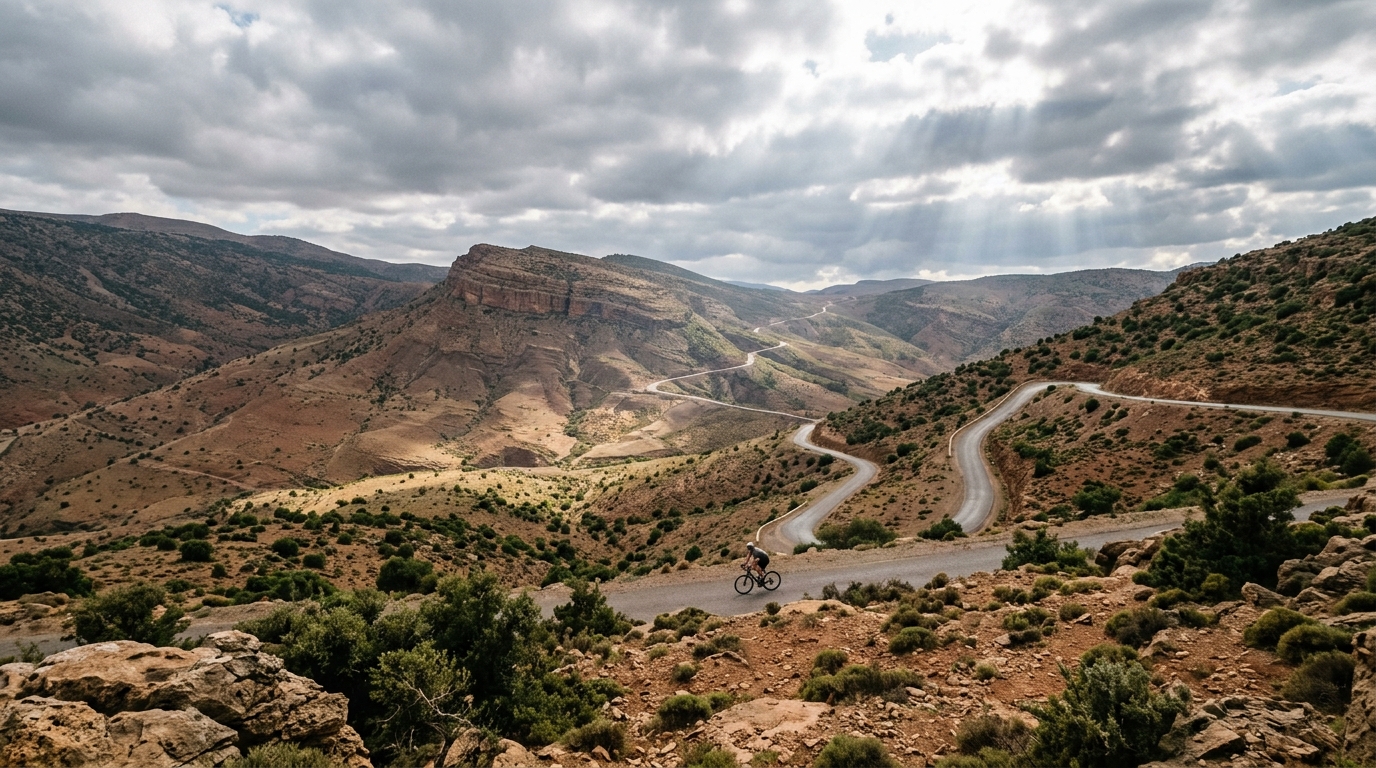 Col du ZadCat 2MA · 19.9 km · 3.3% · 627 m211pts
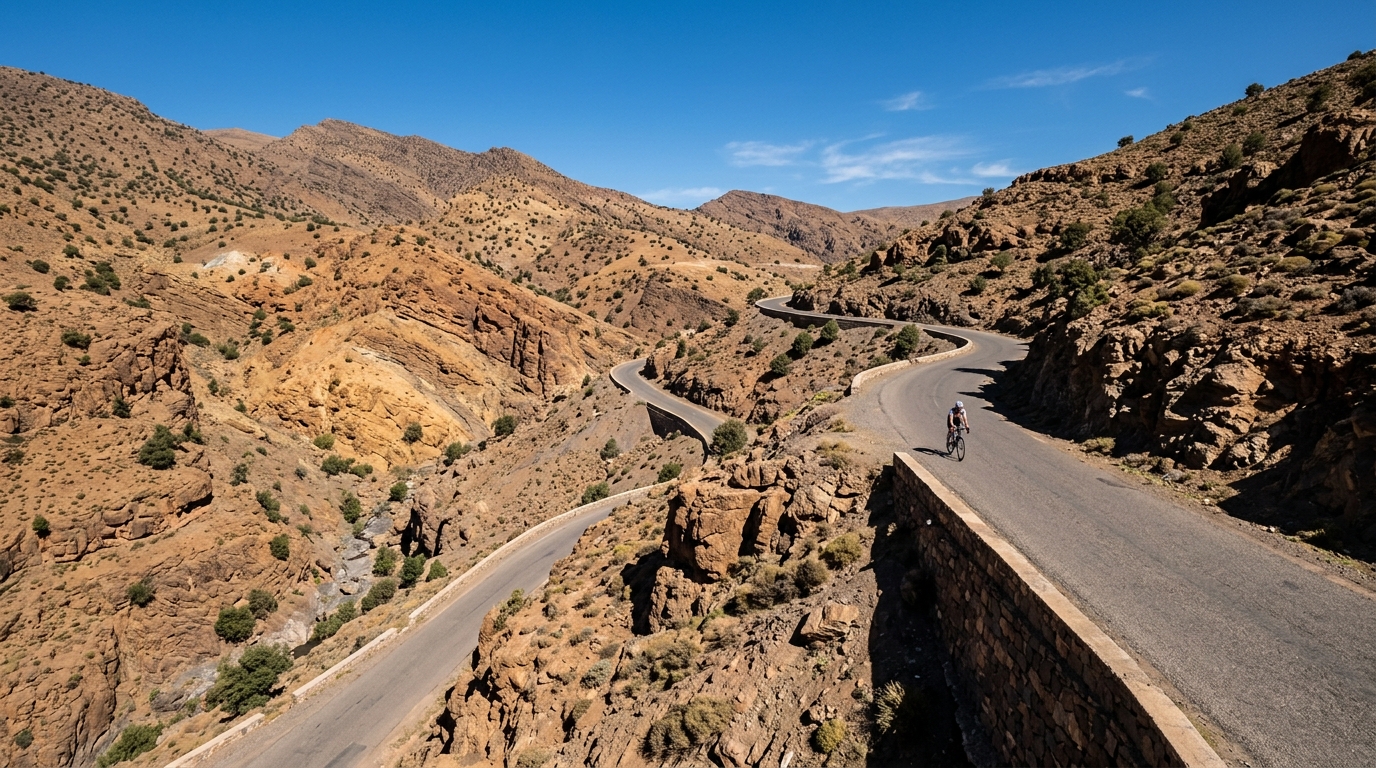 Col de Tizi TirherouzineCat 1MA · 11.8 km · 7.6% · 862 m677pts
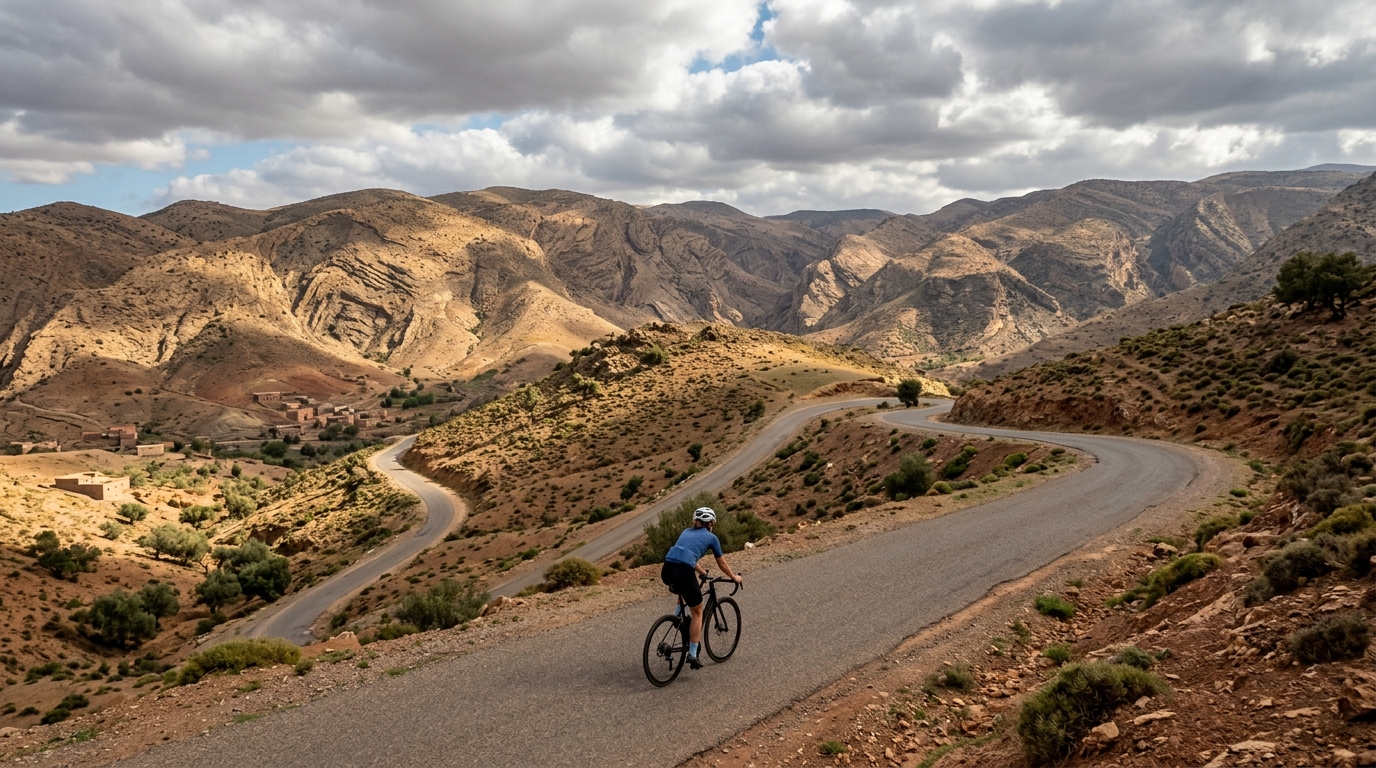 Col du TouaharCat 3MA · 5.9 km · 4.2% · 226 m104pts
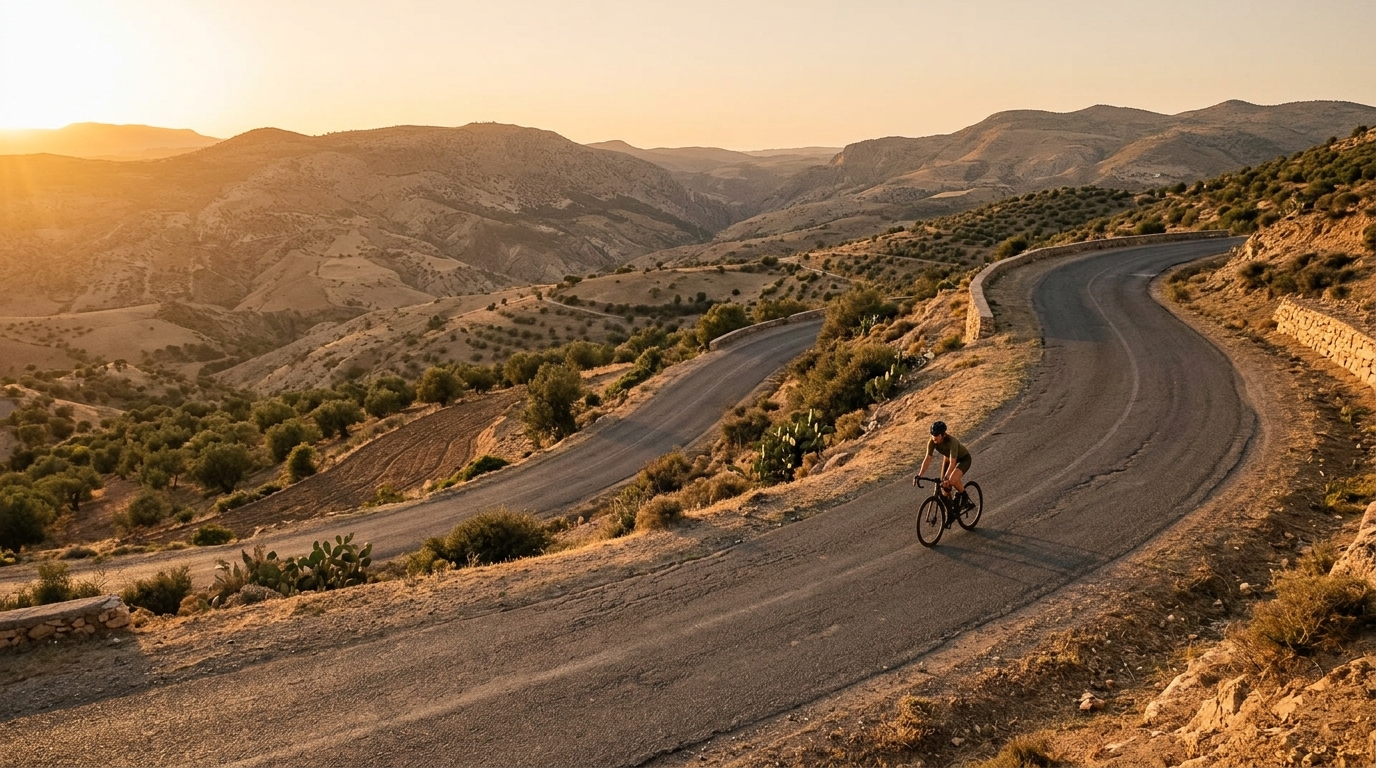 Col du ZegottaCat 4MA · 4.4 km · 4.7% · 180 m96pts
La guía completa de los puertos en Marruecos
Morocco climbing at a glance
Morocco is a climbing destination defined less by a single benchmark ascent and more by contrast. The riding asks you to manage long exposure, changing surfaces, variable traffic, heat, and the psychological load of roads that can feel remote very quickly. That makes it a different proposition from a tightly packaged Alpine or Pyrenean trip, where the climbs are often measured, signed, and culturally framed as sporting objectives.
Neverchill currently indexes 3 notable climbs in Morocco: Tizi n'Tichka, Tizi n'Test, and Col du Zad. None are classified as hors categorie in the current index, and the highest summit listed is 2207 metres. Those two facts are worth reading together. Morocco's best climbs are not defined by a race-label hierarchy. Their difficulty comes from context: altitude, exposure, road condition, weather swings, and the need to be self-sufficient between reliable stops.
That is the central planning point. If you arrive expecting only a gradient contest, you may underestimate the riding. If you treat the climbs as endurance problems with logistical friction layered on top, Morocco makes much more sense.
Terrain and character
Moroccan climbing rewards riders who can hold steady pressure without overreacting. The roads can ask for long seated efforts, but the real limiter is often not one brutal ramp. It is the accumulation: heat on the lower slopes, cooler air higher up, wind exposure, broken rhythm through bends or surface changes, and the uncertainty of what comes after the next village or pass.
This makes pacing more important than peak power. Riders who treat the early part of a climb like a European sportive ascent, sitting near threshold because the road feels manageable, can get caught later when altitude, dehydration, or headwind starts to bite. The better strategy is to ride the opening with margin, keep fueling simple and frequent, and only lift the effort once the topography and weather have stopped surprising you.
The climbing also has a strong route-based character. These are not always neat out-and-back test pieces. The best days tend to be built around crossings, loops, or point-to-point rides where the climb is part of a broader travel problem. That changes the tactical feel. You are not only asking, 'Can I ride this climb well?' You are asking whether you can still descend safely, find water, manage the next rise, and finish the day without turning a good route into a survival ride.
For training, Morocco suits endurance athletes who want specificity beyond pure watts. A climb here can be a test of /glossary/ftp control, but it is just as useful as a lesson in durability: holding an aerobic ceiling, eating before hunger, drinking before thirst, and staying disciplined when the road feels open and inviting.
The standout climbs and routes
Tizi n'Tichka
Tizi n'Tichka is the obvious name in any Morocco climbing conversation. In planning terms, it should be treated as a major mountain road rather than just a climb profile. That distinction matters because the demands are not limited to the ascent itself. Traffic, weather, surface variation, and descent management all shape the ride.
The right way to approach Tizi n'Tichka is conservatively. Keep the first part of the effort below the level that feels exciting. If you have a power meter, this is a climb where riding by sensation alone can be misleading, especially if cooler air higher up makes the effort feel easier than it is. Use power or heart rate as a governor, not as a target to chase. If you need a benchmark before traveling, a simple estimate from /tools/ftp-estimator can help set realistic zones, but the road should still have the final say.
This is also a climb where descent preparation starts before the summit. Make sure you have enough clothing to manage the temperature change, and do not assume the descent will be fast just because the road goes down. The safest riders here are not the ones who descend aggressively. They are the ones who leave enough energy and attention to read the road all the way to the bottom.
Tizi n'Test
Tizi n'Test has the kind of reputation that comes from setting, exposure, and commitment rather than a tidy set of numbers. It is best approached as an adventure climb. That means a rider should give as much attention to the route plan as to the effort plan.
The tactical mistake is to see a famous climb and build the whole day around reaching the top. In Morocco, the climb is only half of the decision. The direction of travel, descent conditions, weather, resupply confidence, and daylight all matter. Tizi n'Test is a route where the value comes from patience. Riding within yourself is not defensive. It is what allows you to enjoy the climb without creating problems later in the day.
Gearing should be chosen for control, not pride. Even without using a listed gradient, the practical logic is straightforward: inconsistent gradients, loaded pockets, altitude, and heat all increase the cost of being over-geared. A compact setup or low climbing gear gives you options. It lets you stay seated, keep cadence from collapsing, and avoid burning matches every time the road steepens.
Col du Zad
Col du Zad rounds out the current Neverchill list of Moroccan climbs. It is useful because it broadens the picture of the country beyond the most famous pass names. For a rider building a trip, that matters. A strong climbing region is not only about headline ascents. It is about whether the surrounding roads allow good sequencing: a hard day, a steadier day, a transfer day, then another focused climbing day.
Col du Zad fits the type of climb where endurance discipline usually beats aggression. The best riders on this terrain are smooth rather than spectacular. They avoid the stop-start energy spikes that come from chasing every change in slope. They stay organized with food, water, and clothing. They keep enough mental bandwidth to handle traffic and surfaces instead of spending it all on a power target.
For riders used to dense European cycling infrastructure, this is the adjustment. The road itself is not the only opponent. The operational side of the ride is part of the challenge.
Best season for riding
The best time to climb in Morocco is when temperature and mountain weather are both manageable. Avoid thinking only about the conditions at the start of the ride. The lower slopes and higher sections can feel like different days, and a route that begins comfortably can become exposed or cold later.
Hot periods make pacing and hydration the central constraints. Even a climb that looks steady on paper becomes harder when fluid intake cannot keep up. Cooler periods are often better for sustained efforts, but they raise the importance of clothing, especially for summits and descents. The safest window is not simply the warmest or the clearest. It is the period when you can climb without overheating and descend without arriving underdressed.
Because the context can change quickly, build flexibility into the itinerary. If the forecast is poor for a high pass, it is smarter to move the hard day than to force it. Morocco rewards riders who keep the plan elastic.
Practical notes: traffic, resupply, altitude, gearing
Traffic
Treat major roads as shared transport corridors first and cycling routes second. That does not mean they are unrideable. It means your timing and positioning matter. Start earlier when possible, keep lights on, and avoid drifting across the lane on exposed bends. In places where vehicles pass in clusters, it is often better to ride predictably and let the traffic pattern clear than to fight for space impulsively.
Resupply
Do not assume frequent resupply. Carry more fluid and food than you would for a comparable ride in a more serviced cycling region. The key is not just quantity. It is redundancy. If a planned stop is closed, dry, or farther apart than expected, the ride should still remain controlled.
Simple foods work best. Morocco climbing is not the place to experiment with unfamiliar nutrition under heat and altitude stress. Use what you already tolerate, then supplement locally when reliable options appear.
Altitude
With the highest indexed summit at 2207 metres, altitude is part of the performance equation. It does not need to be dramatized, but it should be respected. Power that feels routine lower down may cost more near the top of a long ascent, especially if dehydration is also present.
The practical move is to cap the effort early. If you normally climb close to threshold, leave a buffer. Watch for the combination of elevated breathing, fading cadence, and reduced appetite. Those signs usually mean the ride is becoming more expensive than the numbers suggest.
Gearing
Choose gearing for the worst section of the day, not the average section you hope to ride. A low gear is valuable because it protects cadence when the road steepens, when fatigue accumulates, or when you are carrying extra water and clothing. The performance benefit is not only mechanical. Lower gearing prevents the kind of repeated torque spikes that drain the legs before the route is finished.
If you are traveling with one setup, bias toward easier gears. Morocco is not a place where being slightly under-geared is a major problem. Being over-geared can turn a manageable climb into a long grind.
How to build a Morocco climbing trip
The best structure is to separate objective difficulty from logistical difficulty. Do not stack the most ambitious routes back to back simply because the climb list is short. Morocco has 3 indexed climbs on Neverchill, but each can carry more fatigue than the label suggests when weather, traffic, altitude, and resupply are factored in.
A sensible trip alternates hard climbing days with lower-pressure rides. Use the easier days to check the bike, recover, and prepare food and clothing for the next major pass. That may sound conservative, but it is how you keep the quality high. The goal is not to survive one famous road. It is to ride well across the trip.
For riders chasing training value, Morocco is strongest as a durability block. Keep the intensity mostly controlled, let the terrain create the load, and save hard efforts for sections where you have a clear descent and resupply plan afterward. If the legs are good late in the day, that is the time to press. If they are good in the first hour, that is usually just temptation.
Bottom line
Cycling climbs in Morocco are compelling because they resist being reduced to a profile. Tizi n'Tichka, Tizi n'Test, and Col du Zad give the country a clear set of headline objectives, but the real challenge is how those climbs sit inside the wider riding environment.
Plan for exposure, not just elevation. Gear for control, not ego. Pace for the full route, not the first climb. Do that, and Morocco becomes one of the more rewarding places to ride uphill: demanding, scenic, and honest in a way that quickly exposes poor preparation but gives a disciplined rider a deeply satisfying day out.