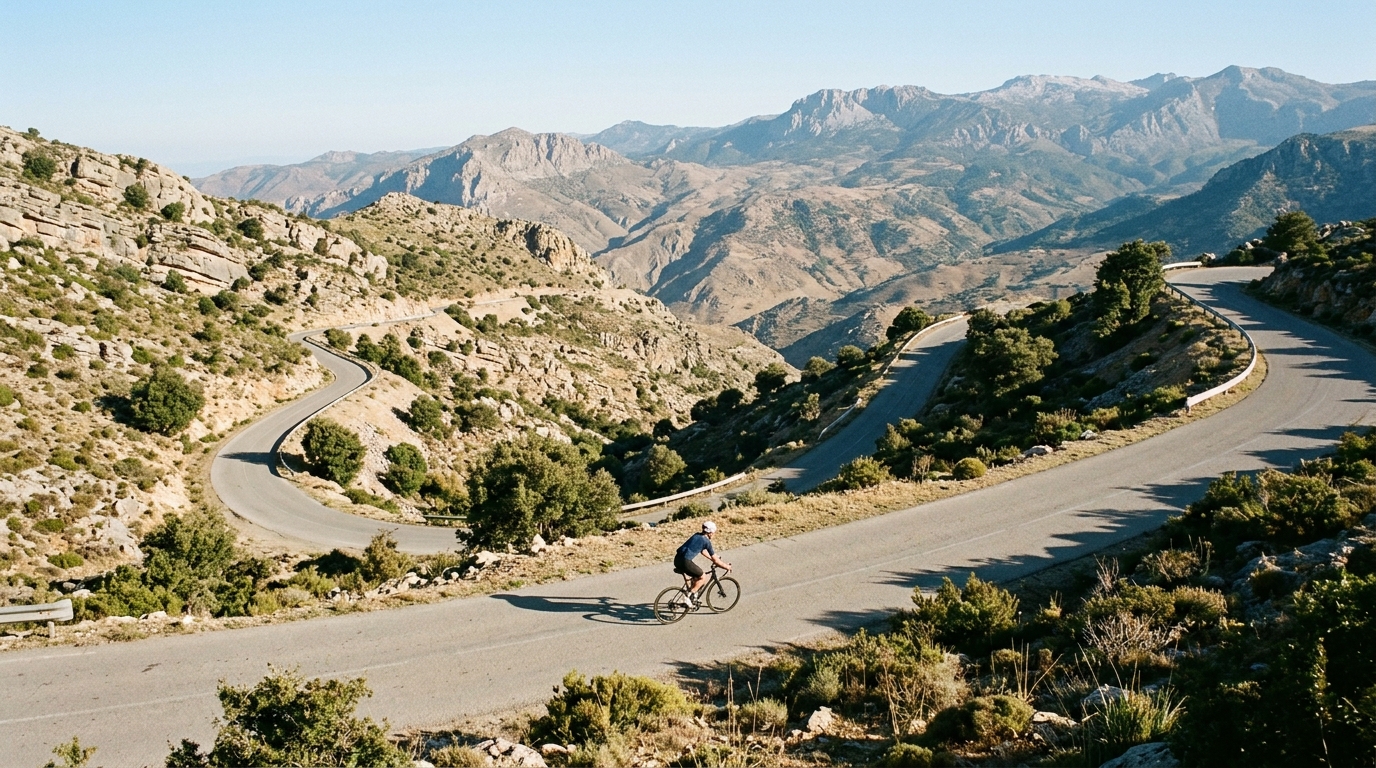
Biblioteca de puertos · Argelia
Cycling Climbs in Algeria
Algeria’s climbing scene is not built around volume. The current Neverchill list has three catalogued climbs, with no hors categorie entries, so the appeal is not ticking off a dense menu of famous names. It is the opposite: committing to big, exposed pass riding where the effort is shaped by terrain, surface, wind and pacing discipline rather than roadside mythology.
The anchor points are Chellata Pass, Tirourda Pass and Kouilal Pass, with the highest listed summit reaching 1727 metres. That gives Algeria a clear climbing identity: selective enough to demand respect, but sparse enough that each route has to justify the trip. For riders who like their climbing practical, remote and tactically honest, this is a destination where the legs decide the story.
Puertos emblemáticos de Argelia
Todos los puertos en Argelia
30 puertos
- Chellata PassCat 1DZ · 20.2 km · 5.0% · 998 m502pts
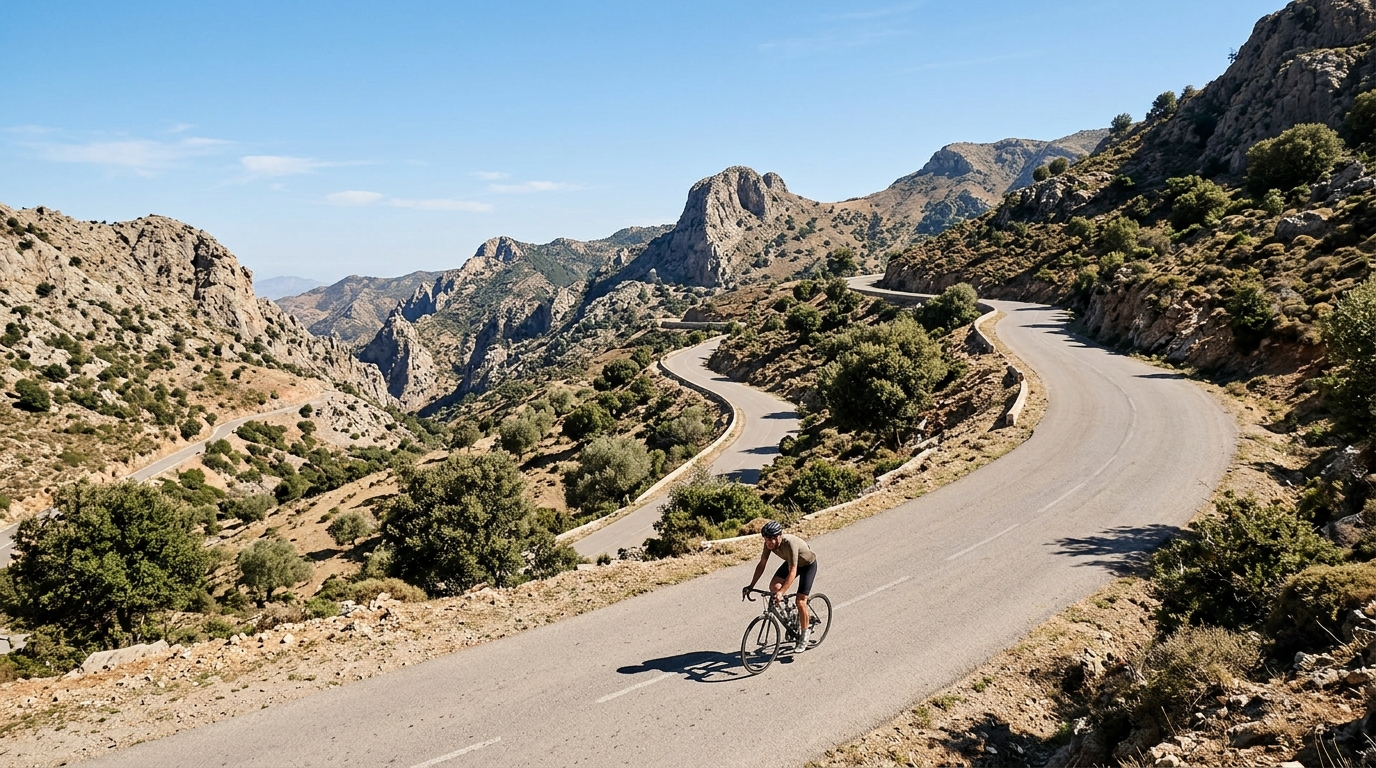 Tirourda PassCat 1DZ · 29.1 km · 5.1% · 1458 m751pts
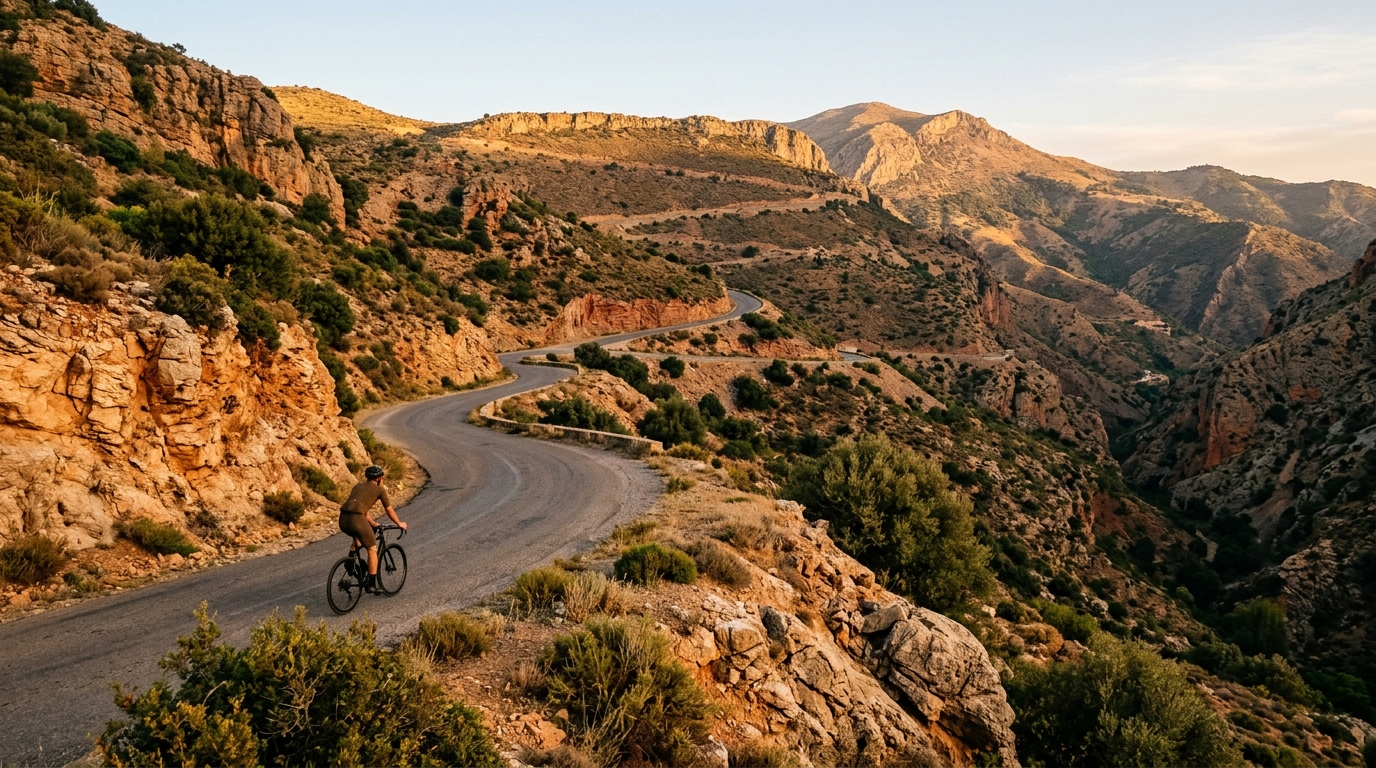 Kouilal PassCat 1DZ · 34.5 km · 3.7% · 1285 m482pts
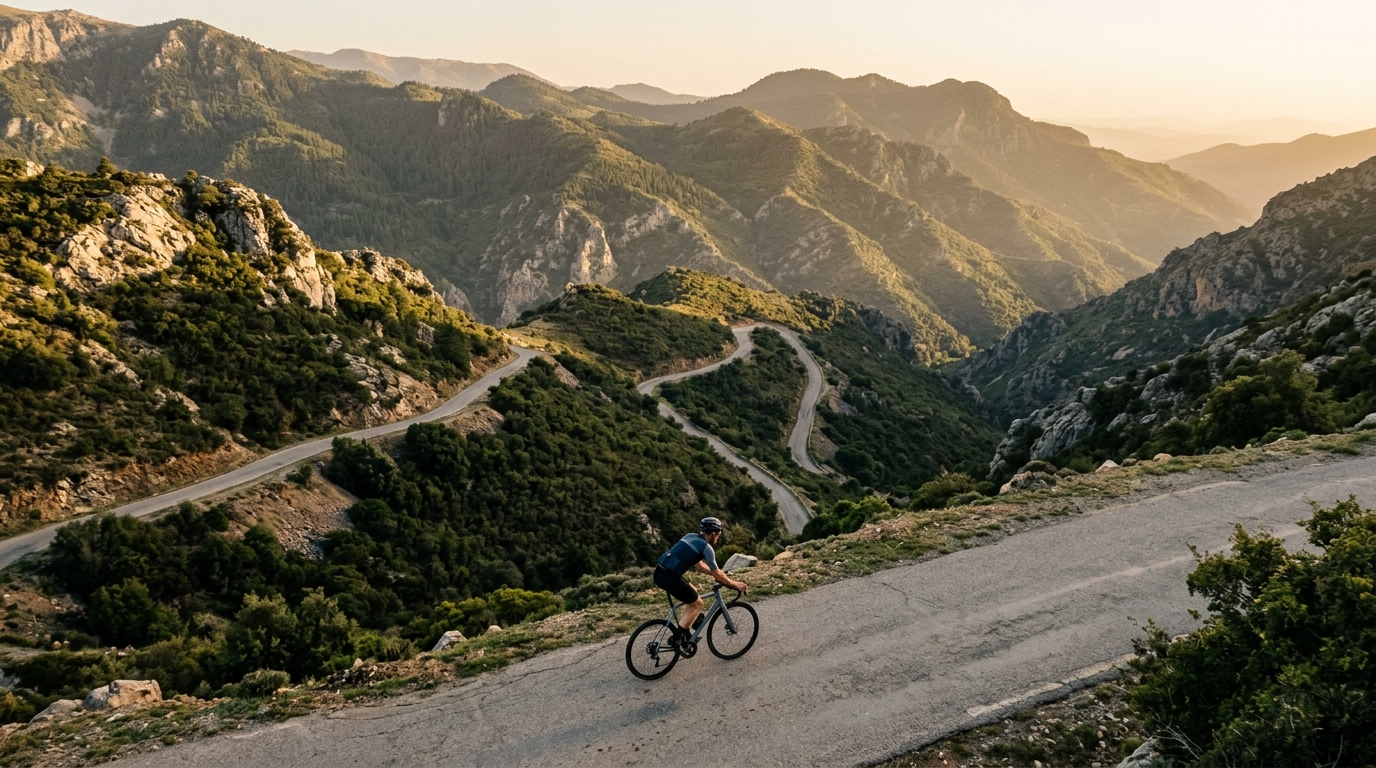 Akfadou PassCat 1DZ · 24.1 km · 5.3% · 1258 m680pts
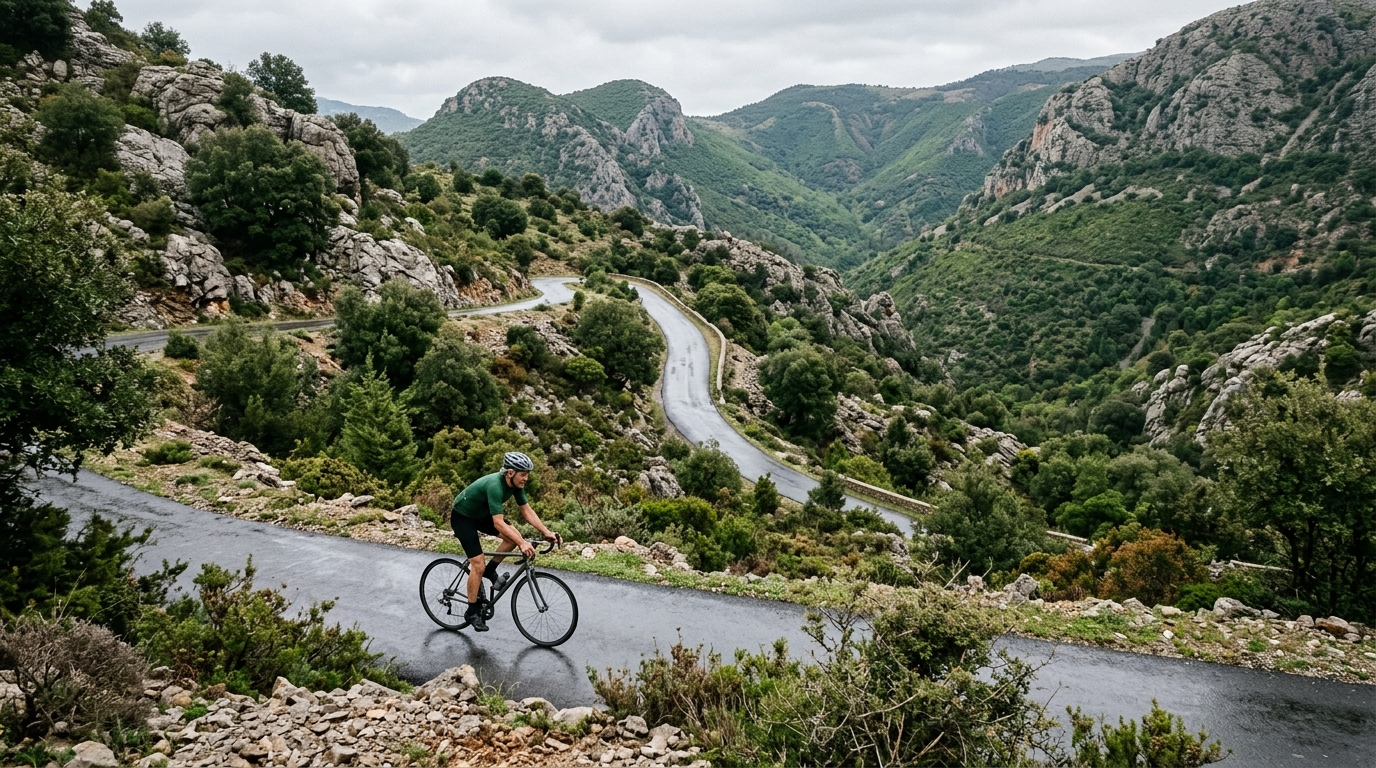 Col des ChênesCat 1DZ · 18.0 km · 5.2% · 924 m487pts
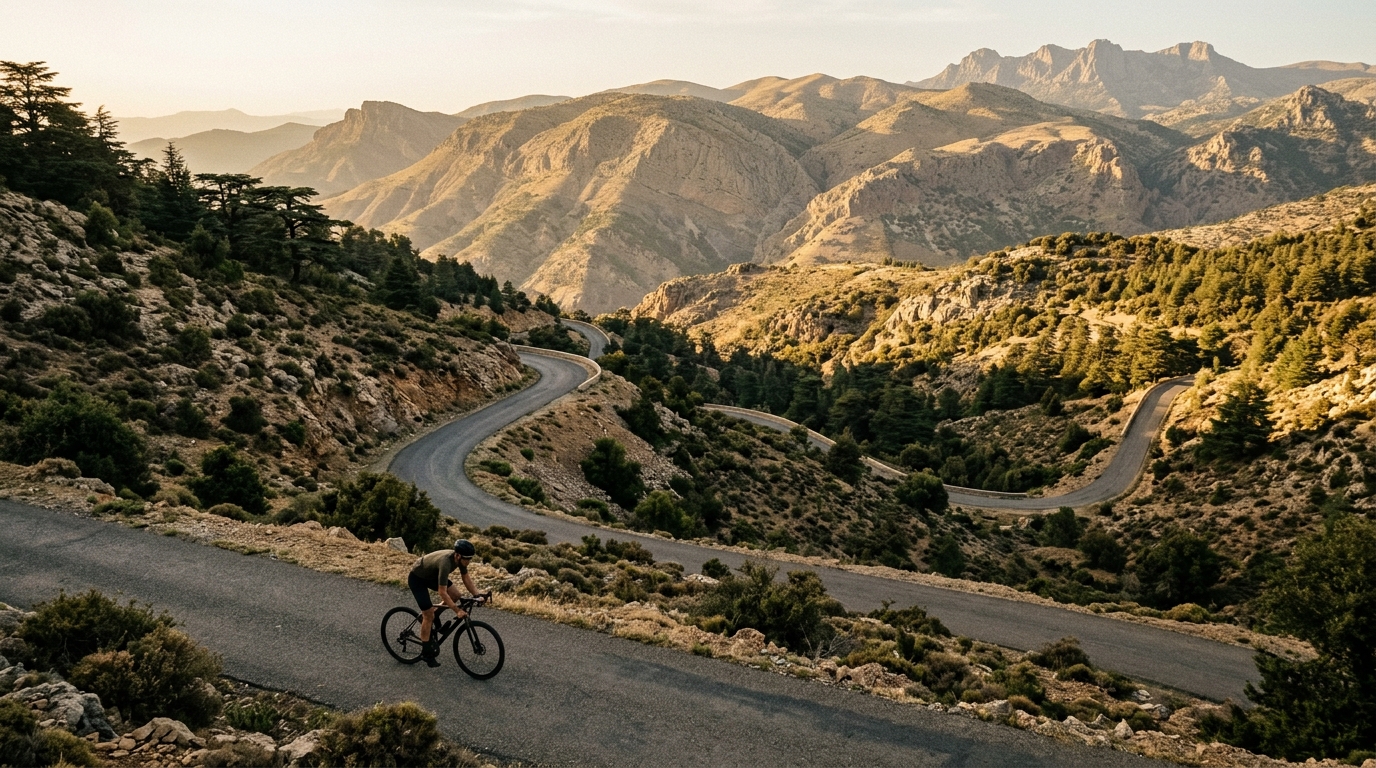 Col de ChreaHCDZ · 22.6 km · 6.2% · 1391 m872pts
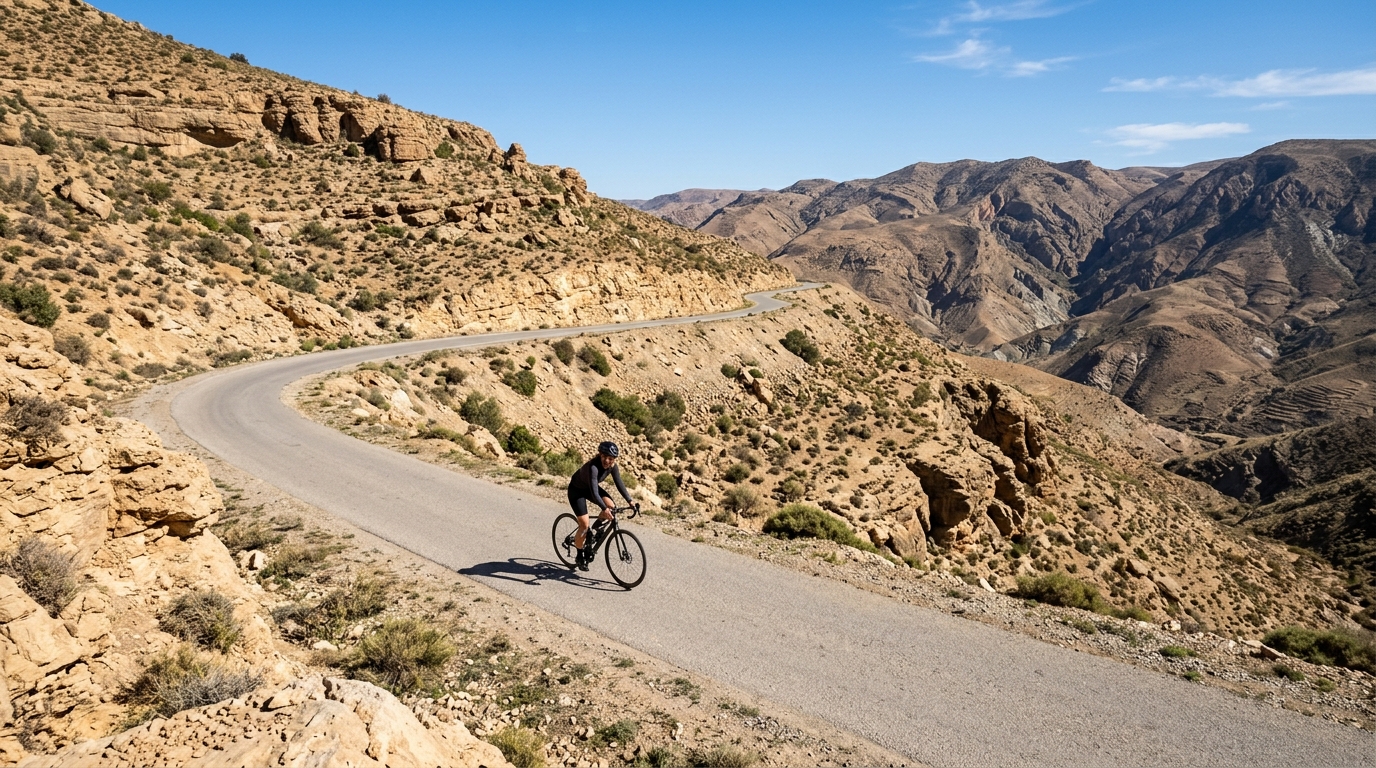 Col de TerrasCat 1DZ · 11.3 km · 8.0% · 857 m727pts
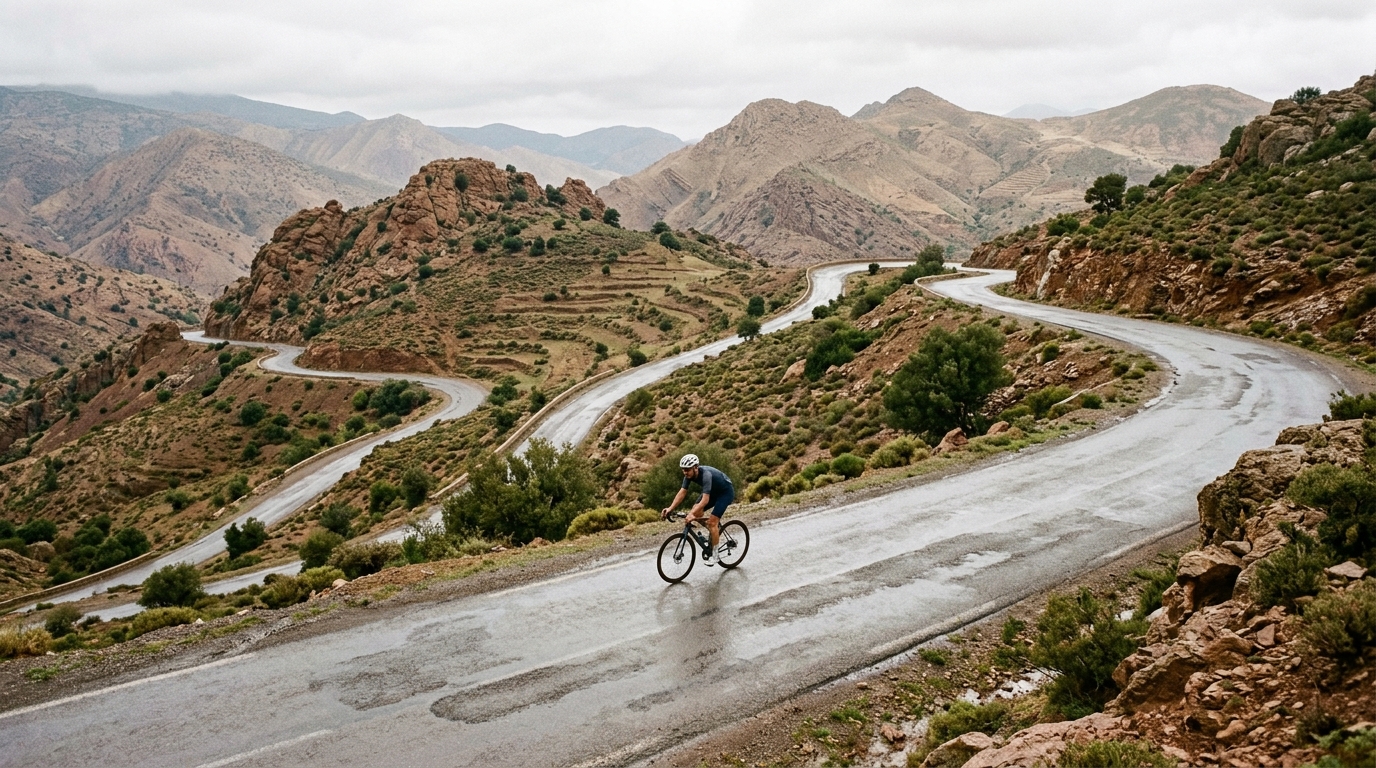 Col de FedoulesCat 1DZ · 13.5 km · 6.3% · 805 m537pts
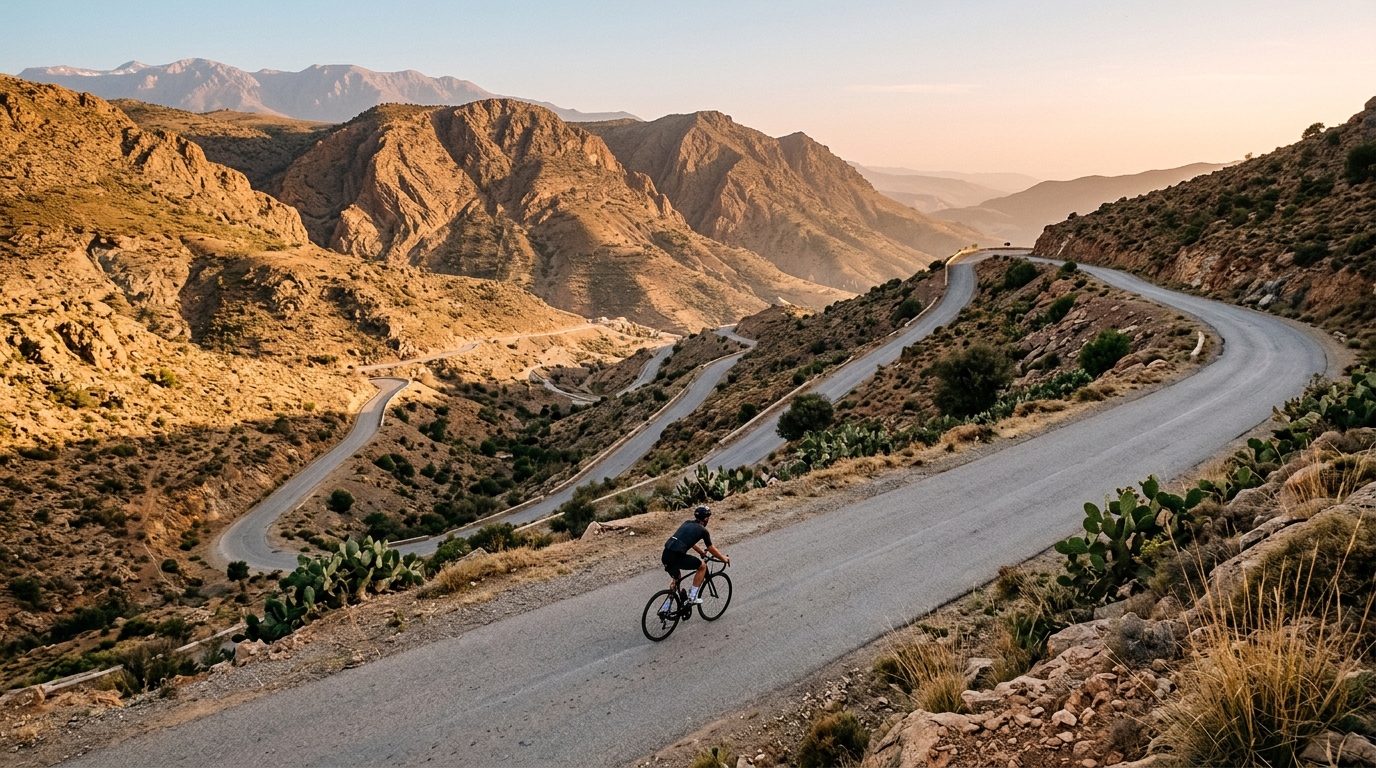 Col de TargoutsCat 1DZ · 17.8 km · 5.3% · 1060 m499pts
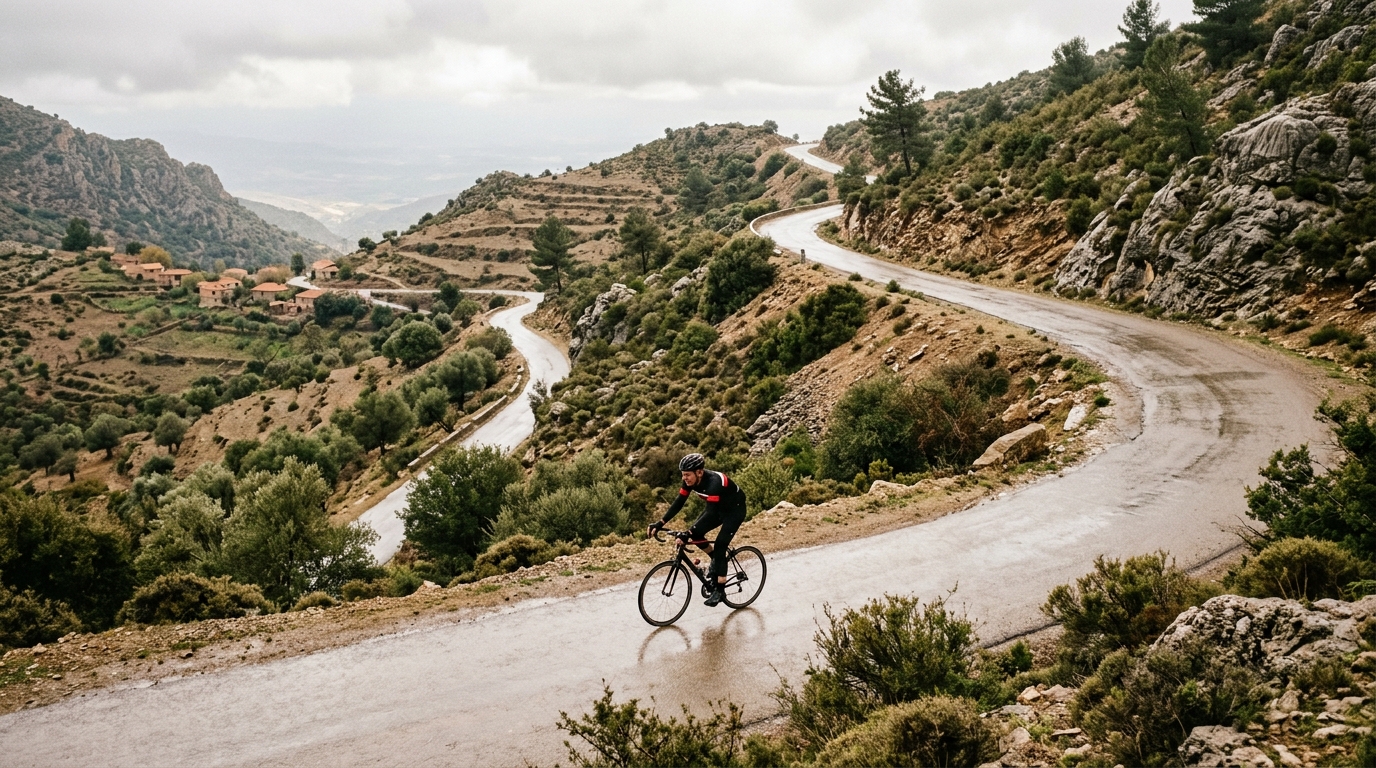 Col d'IdameneCat 1DZ · 16.4 km · 5.5% · 880 m491pts
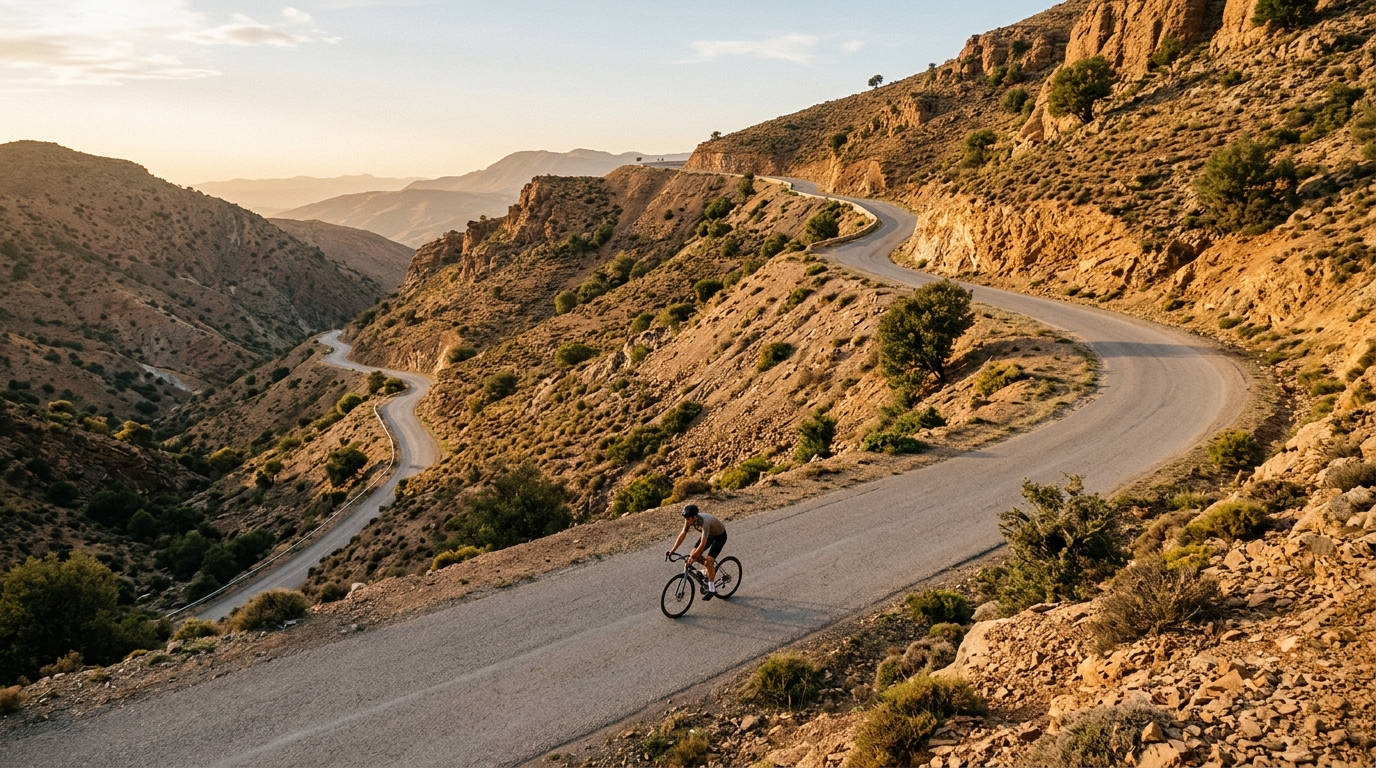 Col de BekarCat 1DZ · 10.8 km · 6.7% · 695 m477pts
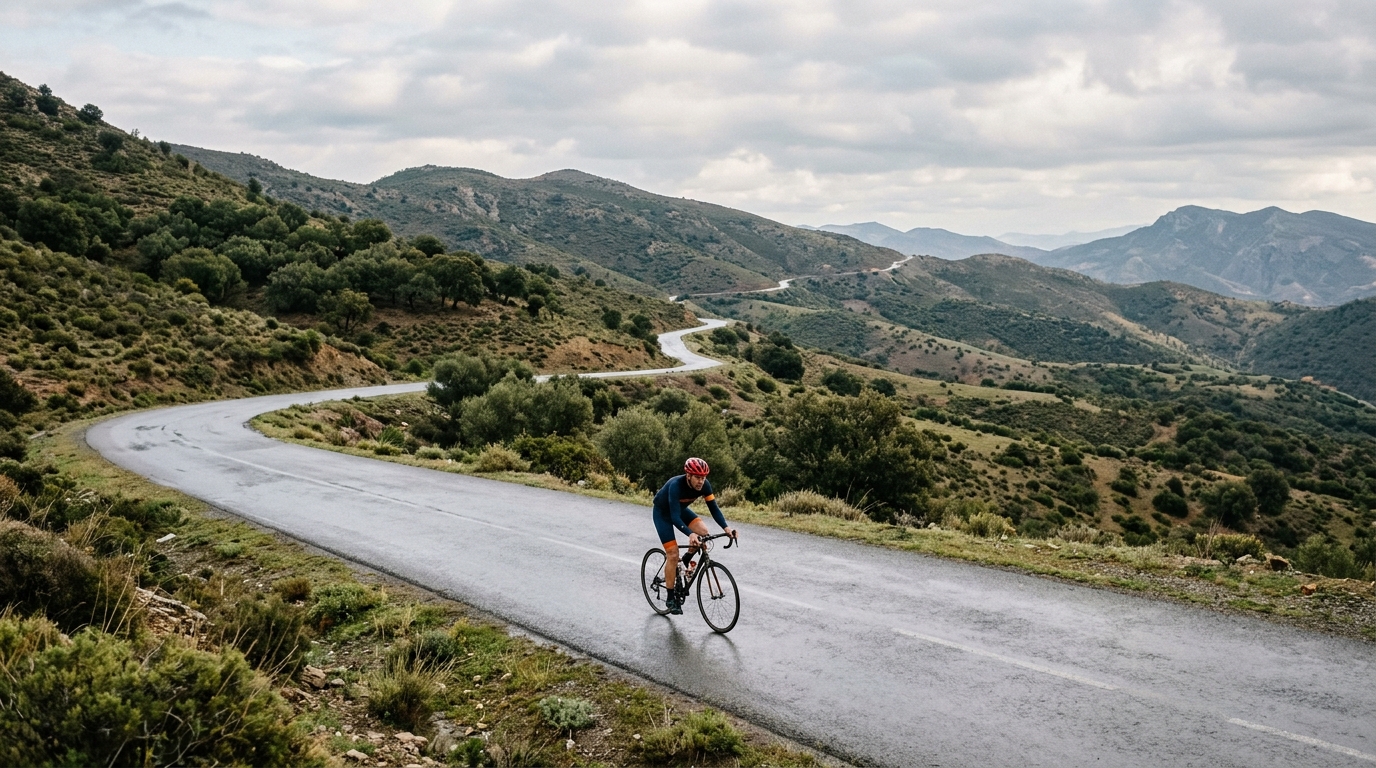 Col de SelmaCat 1DZ · 17.7 km · 5.0% · 929 m433pts
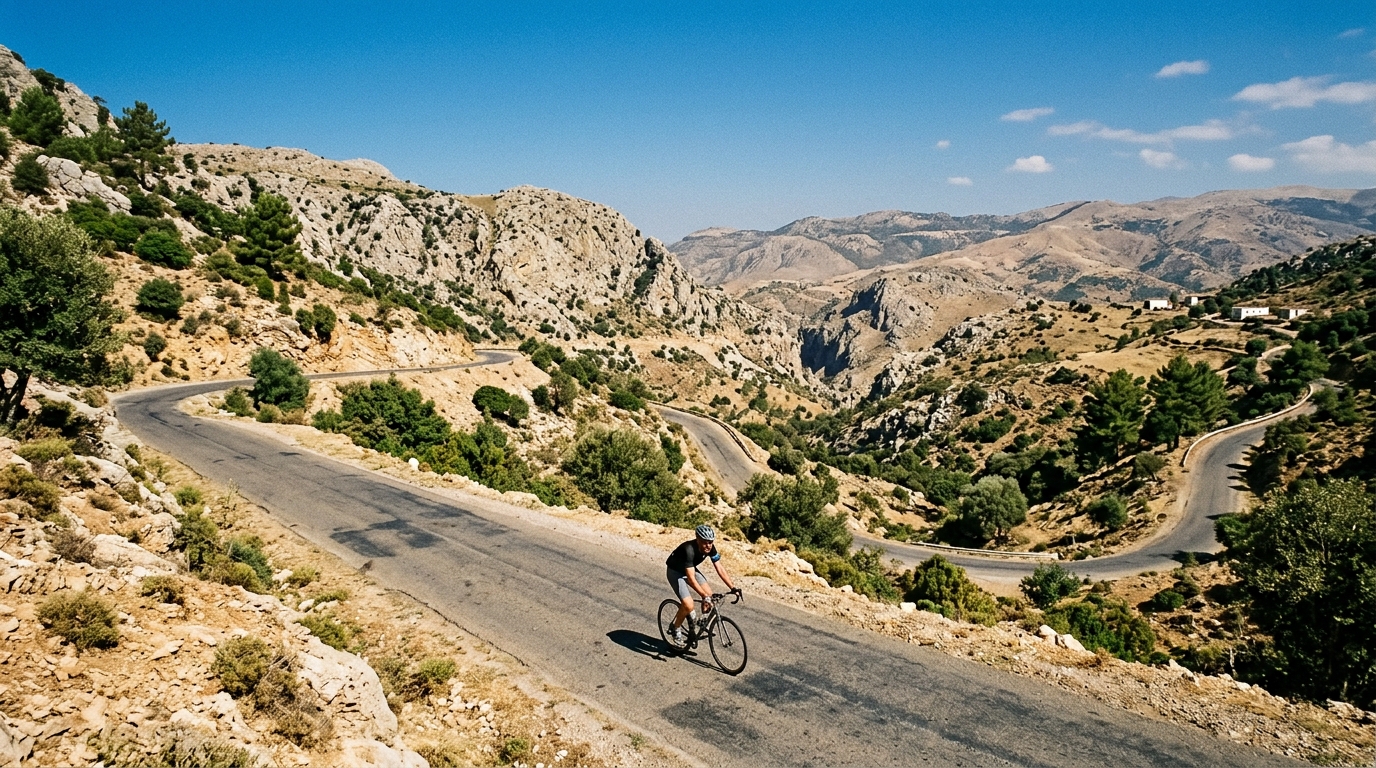 Col de K'FridaCat 2DZ · 15.2 km · 5.0% · 743 m384pts
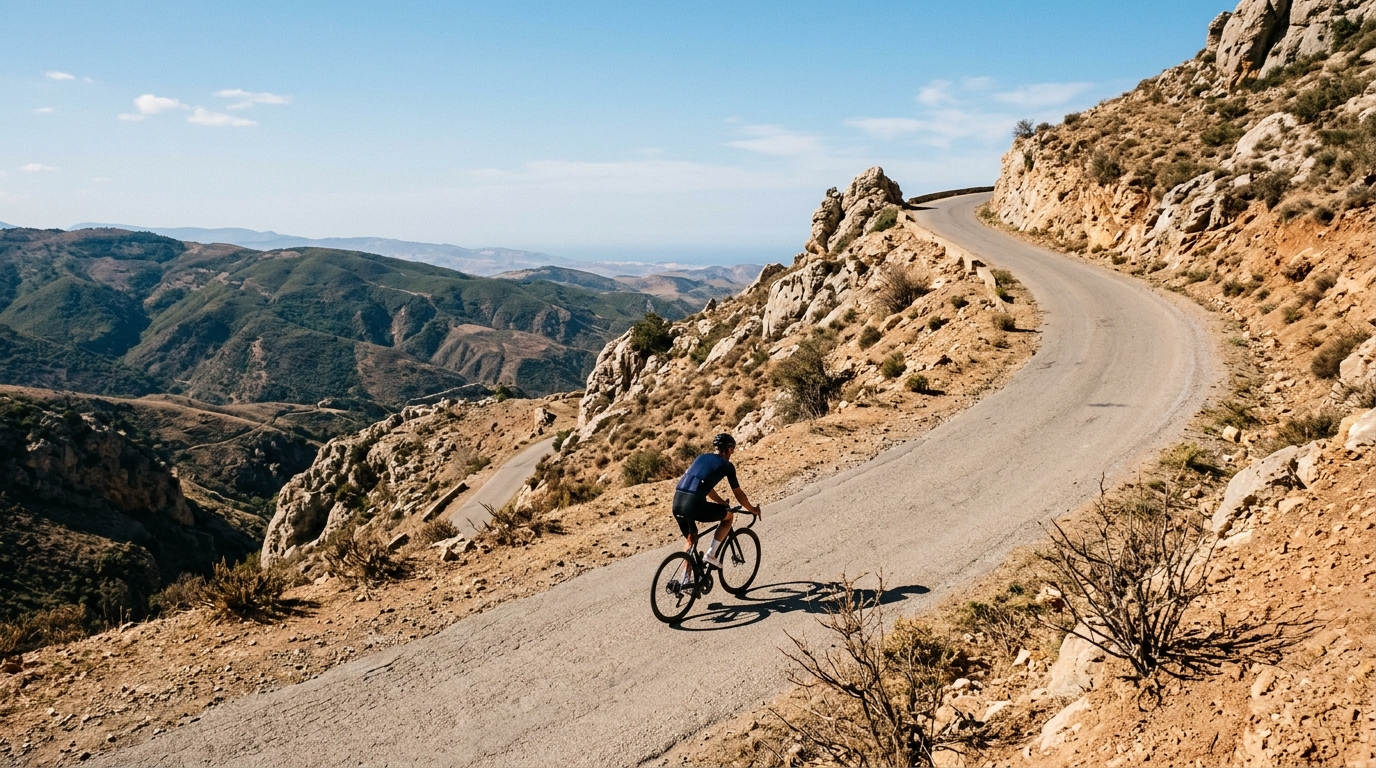 Col de BesbasCat 2DZ · 3.3 km · 10.3% · 315 m347pts
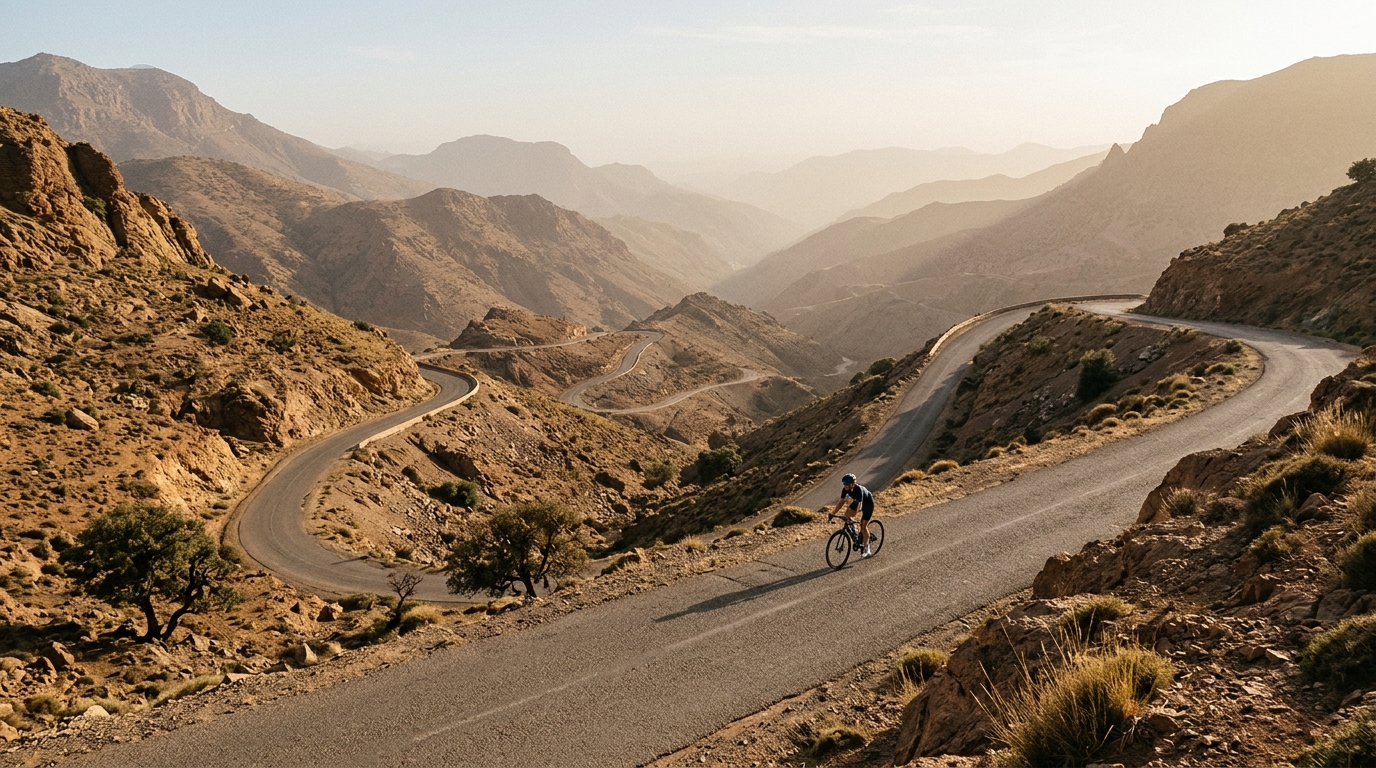 Col de TagdinntCat 2DZ · 24.4 km · 3.6% · 930 m316pts
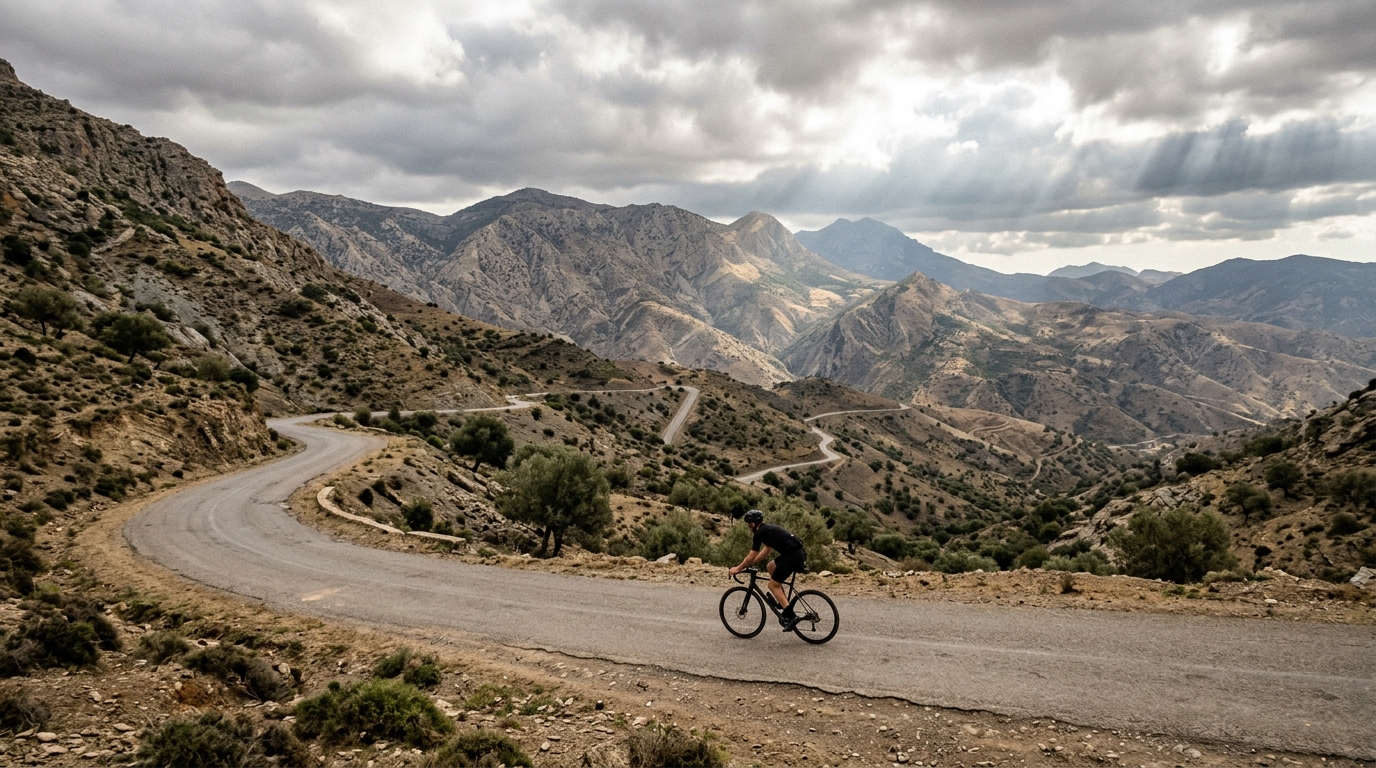 Col de TibahiraneCat 2DZ · 16.0 km · 4.4% · 687 m316pts
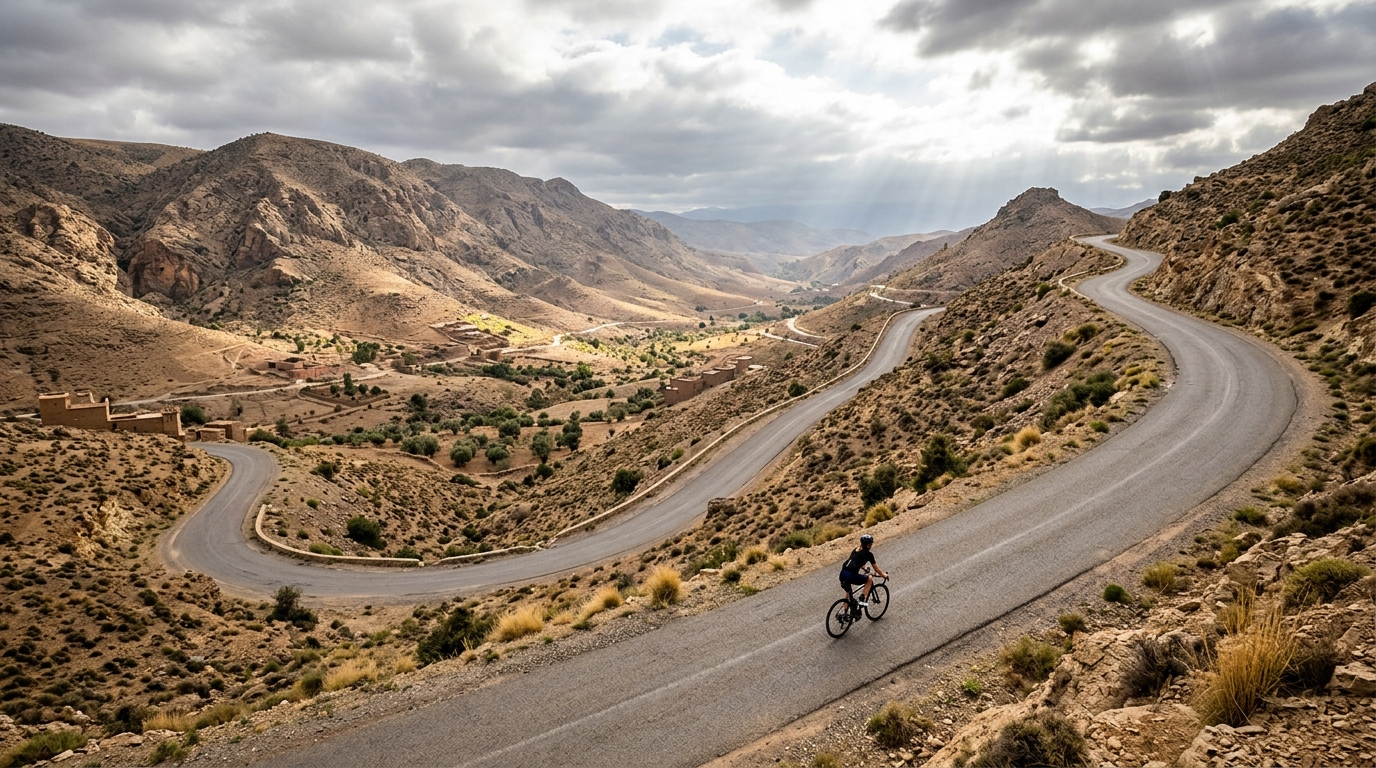 Col d'AmilloulCat 2DZ · 19.6 km · 4.0% · 770 m314pts
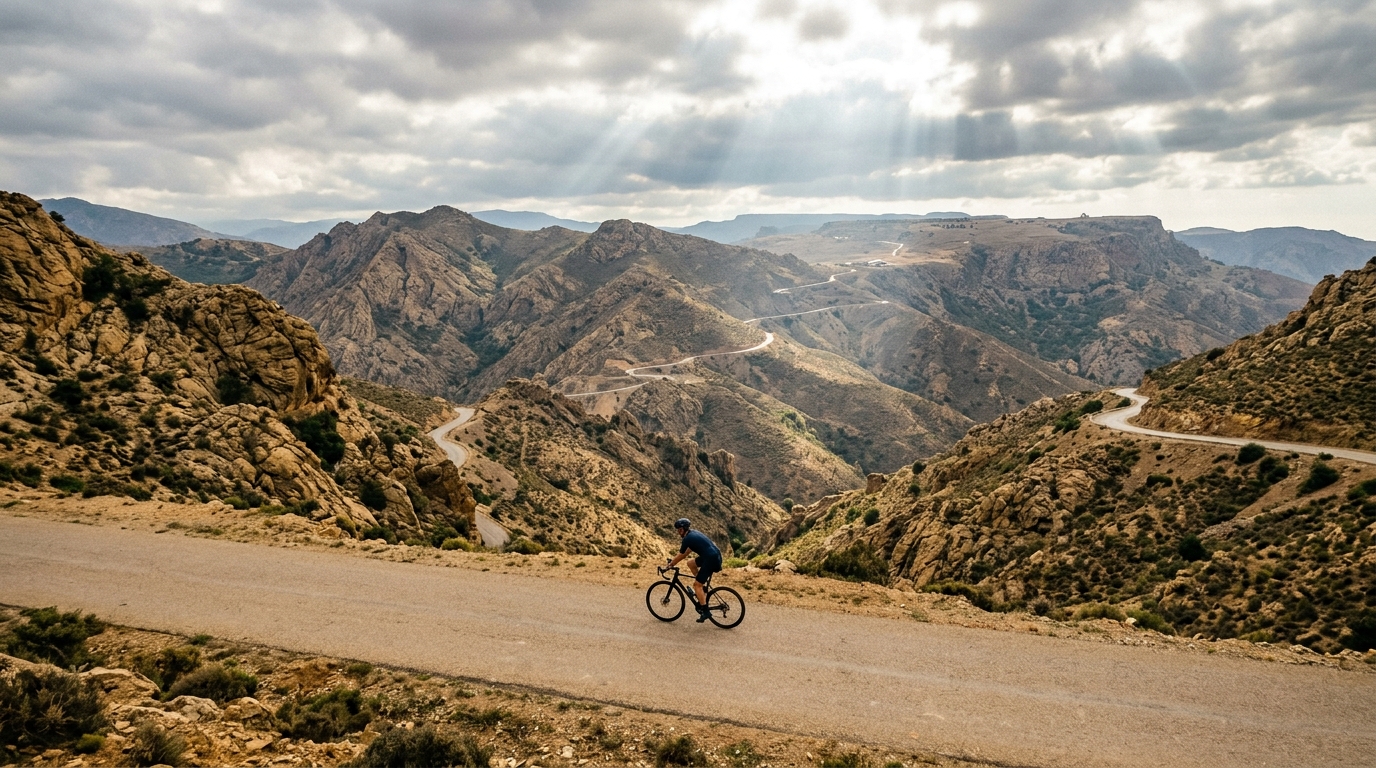 Col d'Agouni GourhraneCat 2DZ · 24.1 km · 3.5% · 871 m300pts
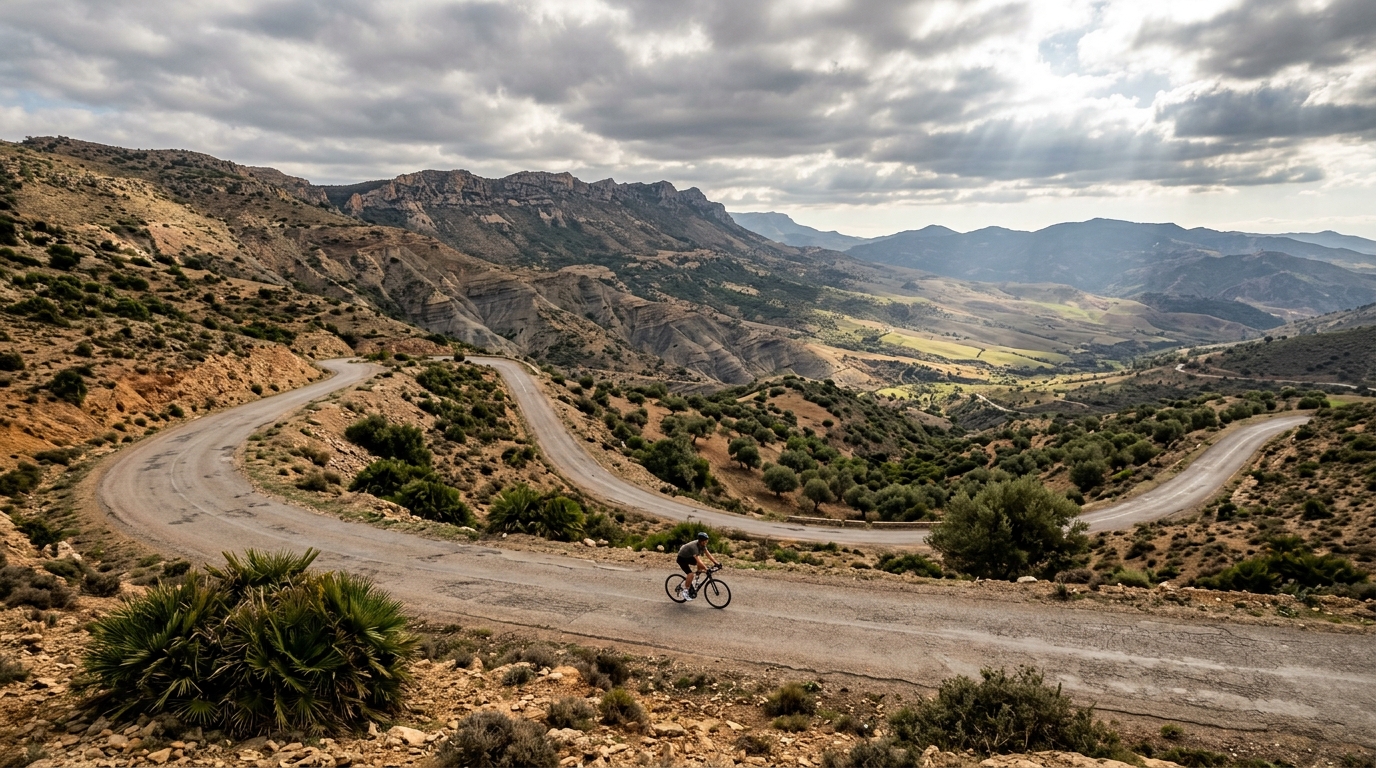 Col de TalmetzCat 2DZ · 17.2 km · 4.0% · 668 m270pts
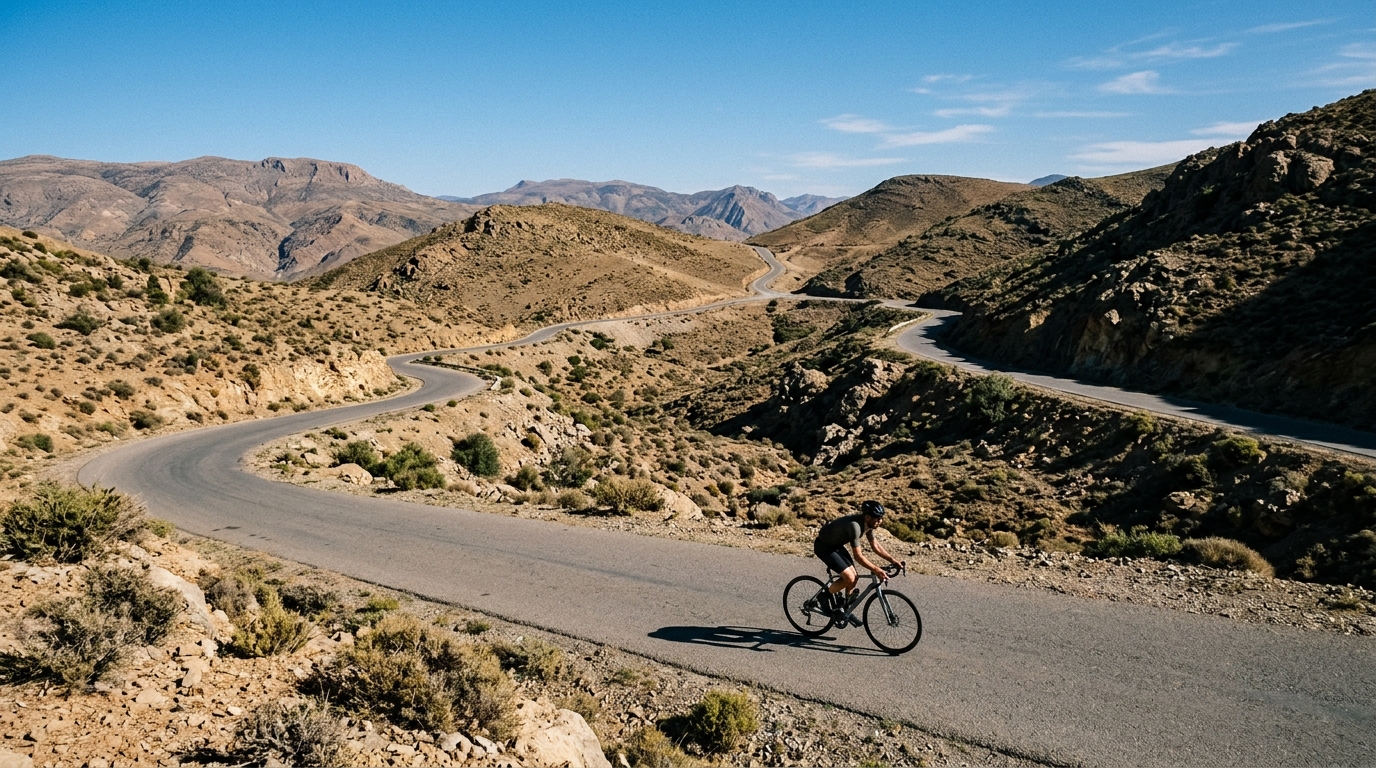 Col du MelabCat 2DZ · 17.2 km · 3.9% · 651 m262pts
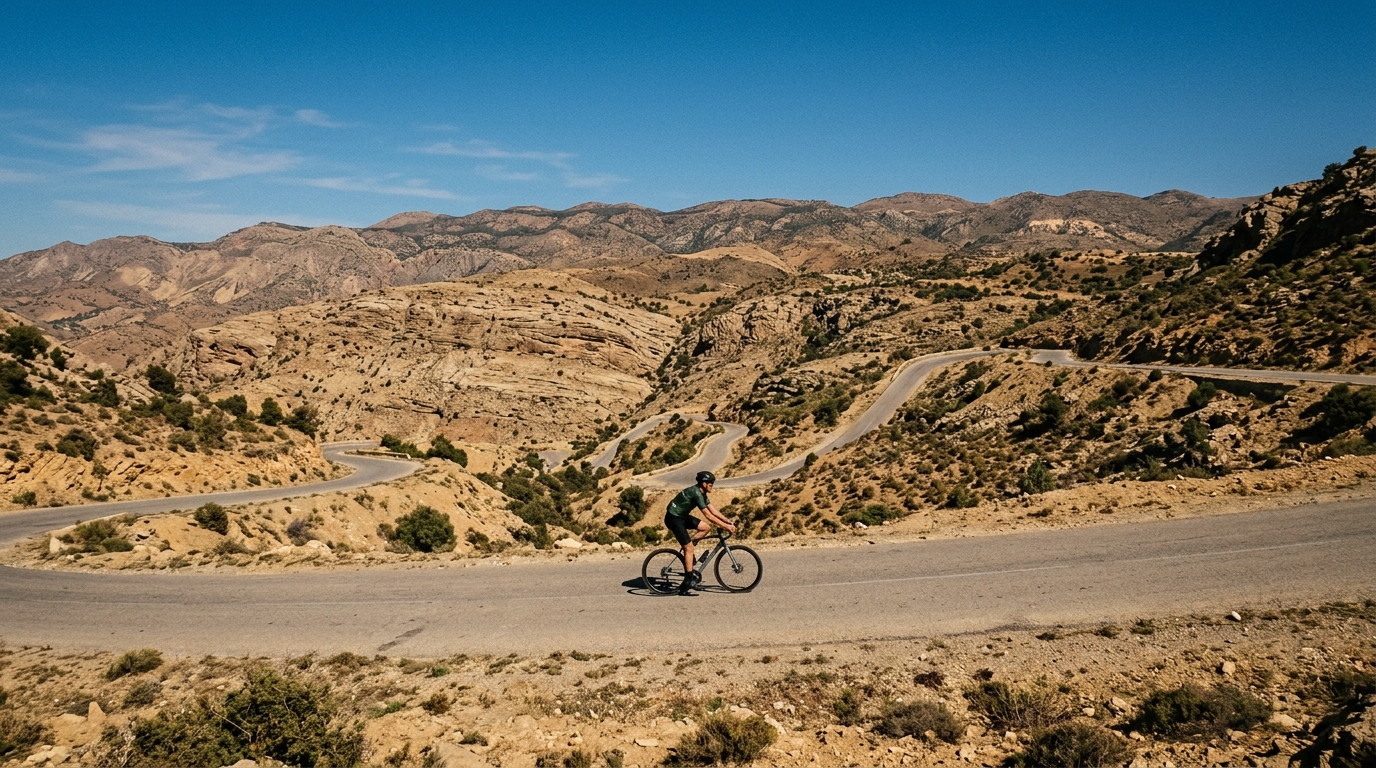 Col de TelmetCat 2DZ · 19.7 km · 3.6% · 679 m249pts
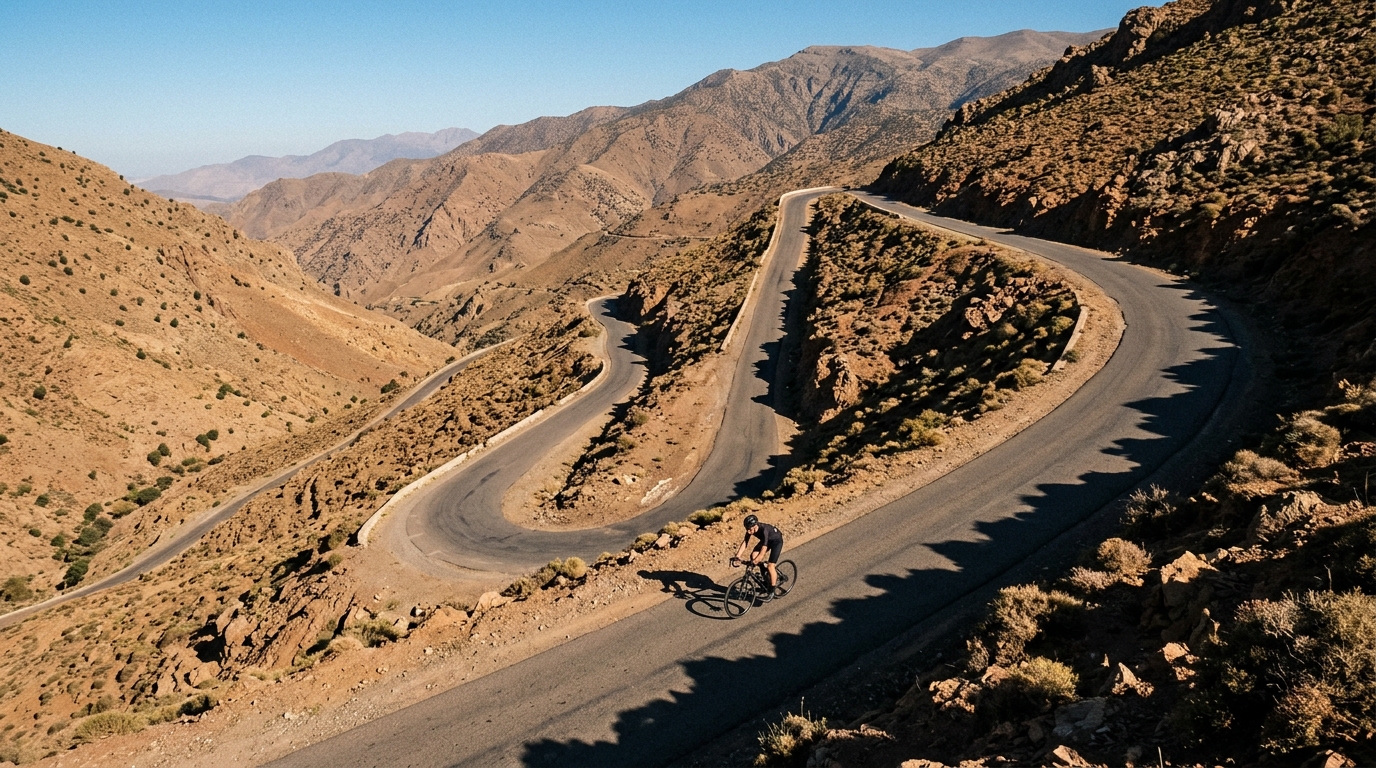 Col de TizougarineCat 2DZ · 17.3 km · 3.8% · 640 m245pts
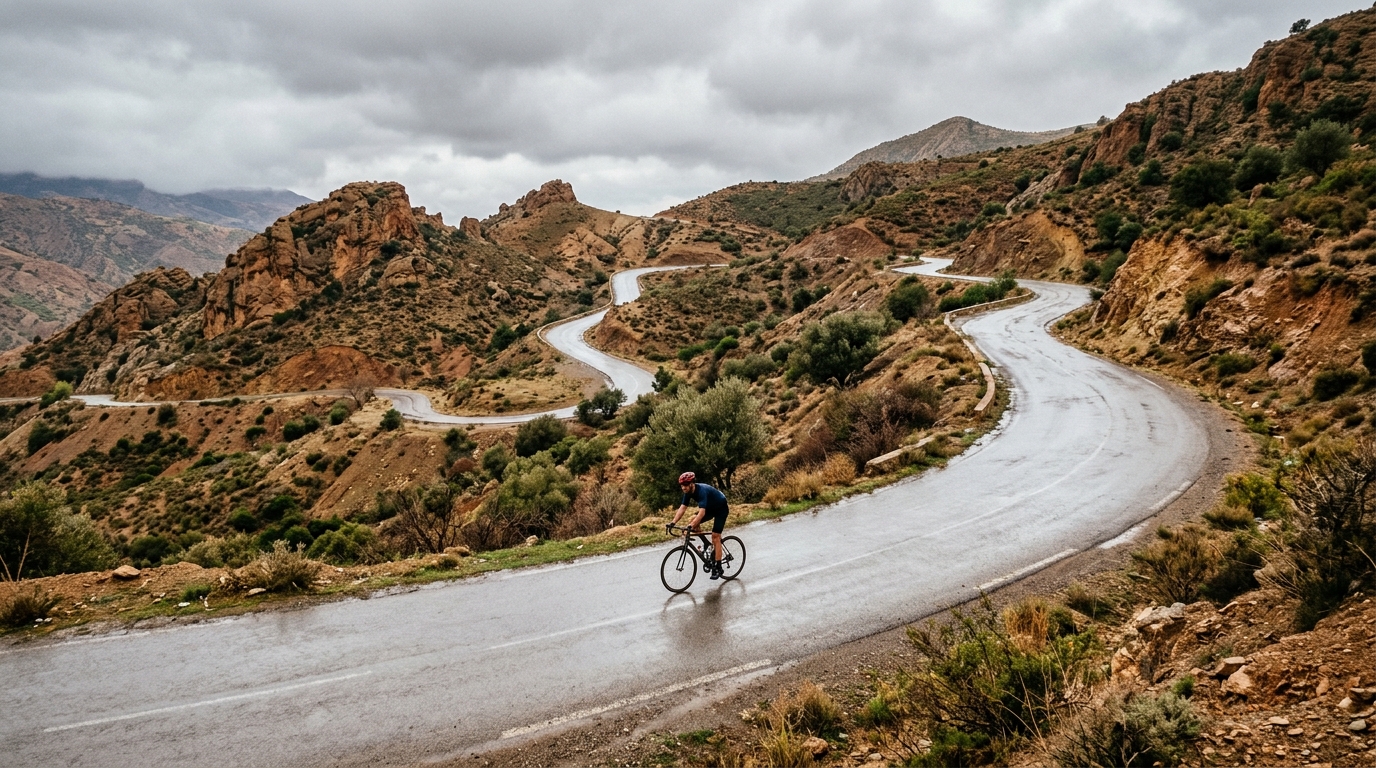 Col de DjemaaCat 2DZ · 8.0 km · 5.4% · 405 m230pts
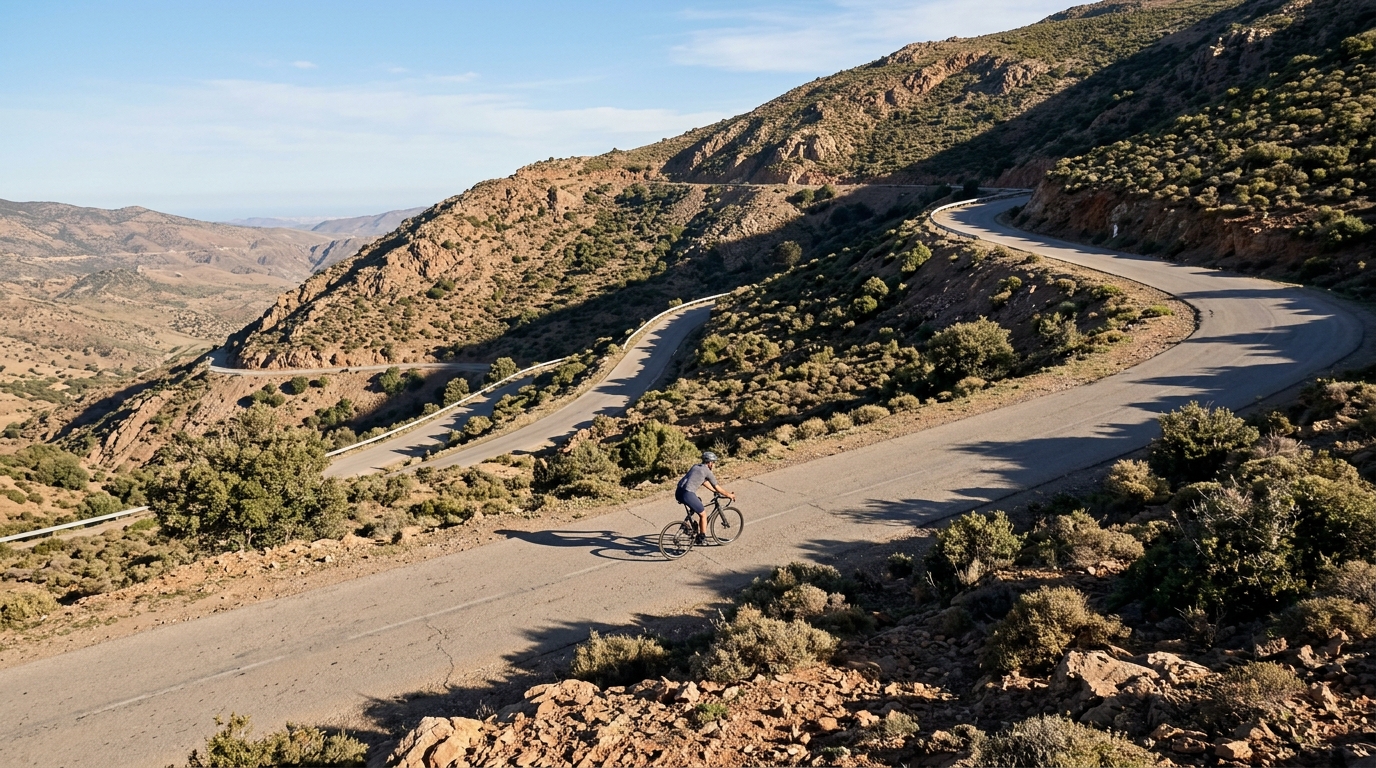 Col de l'AouanaCat 3DZ · 8.6 km · 4.7% · 385 m193pts
La guía completa de los puertos en Argelia
Algeria as a climbing destination
Algeria is not a simple climb-hunting destination where the route card writes itself. That is what makes it interesting. The Neverchill climb database currently lists 3 climbs in Algeria, with Chellata Pass, Tirourda Pass, and Kouilal Pass standing out as the reference points. There are 0 hors categorie climbs listed, and the highest listed summit is 1727m.
That profile matters. Algeria is not defined here by one giant, globally famous test that dominates every itinerary. Instead, the riding proposition is more tactical: linked passes, changing road surfaces, exposed terrain, and the need to manage energy across long transitions. The climbing is less about one clean benchmark effort and more about how well a rider handles repeated load, heat management, route uncertainty, and pacing without the constant safety net of dense cycling infrastructure.
For a data-driven rider, that changes the question. You are not just asking, 'What is the hardest climb?' You are asking which climb fits the session, how much fatigue the approach adds before the road tilts up, where the next reliable resupply might be, and whether the day rewards a steady aerobic ride or a more controlled threshold effort. Algeria rewards riders who plan like endurance athletes rather than tourists with a climb checklist.
Terrain and riding character
The listed Algerian climbs sit in the category of mountainous road riding rather than pure high-altitude expedition cycling. With the highest listed summit at 1727m, altitude can be relevant but should not be treated as the dominant performance limiter for most prepared riders. The bigger variables are likely to be heat, exposure, surface consistency, traffic rhythm, and the spacing between towns or services.
That distinction is important. A climb does not need an extreme summit elevation to be hard. If the approach is rolling, the surface is inconsistent, and the rider arrives under-fueled or over-geared, the physiological cost can exceed what the climb profile suggests. This is where Algeria can punish lazy planning. The absence of hors categorie climbs in the current database does not mean the riding is easy. It means the difficulty is distributed differently.
Expect the character of the riding to shift across a route. A pass can begin as a steady endurance effort, turn technical through bends or changing pavement, then become a mental pacing exercise if shelter and resupply are limited. That makes power discipline useful. Riders who surge early, especially when the road first steepens, can spend the rest of the climb paying back that debt. On unfamiliar roads, the safest performance strategy is usually to keep the first half controlled, ride by perceived exertion when the surface interrupts rhythm, and only lift the effort once the summit feels tactically close rather than emotionally close.
This is also a region where descending skill matters. A climb is only half the route. Variable surfaces, open roads, and changing traffic patterns mean the descent should be treated as part of the objective, not just the recovery section. Good braking habits, conservative corner entry, and a bike setup that prioritizes control over pure speed will often save more time and risk than an aggressive uphill effort gains.
The standout climbs
Chellata Pass
Chellata Pass is one of the named anchors of Algerian climbing in the Neverchill database. Treat it as a serious pass rather than a simple hill repeat. The key tactical question is not just how hard the steepest section feels, but how the road fits into the wider ride. If Chellata Pass comes after a long approach, the climb becomes a durability test. If it is ridden fresh, it can be used as a more structured climbing session.
For riders using power, Chellata Pass is best approached with restraint early. On unfamiliar climbs, the opening section often tempts riders into a pace that feels sustainable because freshness is masking the cost. A better approach is to ride below the level you think you can hold, let breathing and cadence settle, then build only when the gradient and road rhythm become clear. If you are setting targets from /glossary/ftp, remember that outdoor climbing power on variable roads rarely behaves like a lab number. Use FTP as an anchor, not a command.
Chellata Pass also suits riders who want a realistic climbing benchmark. Not a sterile test, but a field effort where pacing, fueling, and handling all matter. If the goal is fitness validation, arrive rested and ride it progressively. If the goal is training load, include it inside a longer endurance route and judge the day by how controlled the final effort remains.
Tirourda Pass
Tirourda Pass is another core Algerian climb, and it should be treated as a route-shaping feature. A pass like this can define the whole day because it affects not only the uphill work, but also the descent, weather exposure, and where a rider can safely reset afterward.
The strategic mistake is to ride Tirourda Pass as if the summit is the finish line. In real-world road cycling, especially in a region where services may not appear exactly when convenient, the summit is often only the midpoint of the decision tree. You still need enough energy, focus, and braking control to descend and continue. That means fueling before the climb, not only during it, and carrying enough fluid to avoid being forced into defensive riding later.
Tirourda Pass is well suited to riders who like long-form endurance days built around a central objective. The pass gives structure to the route. The approach sets up the fatigue, the climb reveals pacing discipline, and the descent tests whether the rider preserved concentration. That is the kind of climb that often produces better training value than a perfectly measured interval because it forces the entire system to work together.
Kouilal Pass
Kouilal Pass completes the trio of notable Algerian climbs in the current database. It should be viewed as part of the same broader pattern: the challenge is not just raw vertical difficulty, but how the climb interacts with route planning and environmental management.
Kouilal Pass can be a strong choice for riders looking to build a climbing-focused route without assuming that the hardest road on paper is automatically the best training stimulus. For many endurance athletes, the most productive climb is the one that can be ridden with quality. That means the rider can reach it safely, fuel properly, maintain cadence, and descend without turning the day into damage control.
As with Chellata Pass and Tirourda Pass, the smartest pacing model is progressive. Start controlled, protect cadence, and avoid chasing short-term speed if the road surface or gradient makes the effort stochastic. A good climb in Algeria is not necessarily the one where the rider produces the highest short power spike. It is the one where the effort remains coherent from bottom to top and still leaves enough capacity to finish the ride well.
Best season and weather logic
The best time to ride Algerian climbs is the period when heat, road exposure, and daylight are all manageable. Without treating the calendar as a fixed rule, the logic is straightforward: choose cooler conditions for hard climbing, avoid the most punishing heat, and give yourself enough daylight margin that mechanicals or slower roads do not turn into avoidable risk.
For performance, cooler riding conditions usually make pacing more predictable. Heat raises the cost of a given power output because more blood flow and fluid are diverted toward cooling. That can make a sustainable threshold effort feel unstable and can turn a tempo climb into a survival ride if hydration falls behind. The higher the exposure and the longer the gaps between resupply, the more conservative the plan should be.
Wind and weather shifts also matter on passes. A route that feels manageable in sheltered conditions can become much more demanding if the exposed sections slow progress or increase the cost of holding the bike steady. This is why start time matters. Leaving earlier can reduce heat exposure, create a buffer for unexpected delays, and allow the main climb to be ridden before fatigue and temperature combine.
Practical route planning
Algeria rewards conservative logistics. Plan the ride around certainty, not optimism. That means knowing where the route begins, where it can be shortened, where water is likely to be found, and what the descent commits you to after the summit.
A good Algerian climbing route should answer these questions before the ride starts:
- Is the main climb early enough that it can be ridden with quality?
- Is there a realistic turnaround or bailout if conditions change?
- Is resupply spaced safely for the temperature and exposure?
- Does the descent require extra caution because of surface, traffic, or remoteness?
- Is the gearing low enough to keep cadence under control late in the ride?
Digital routing is useful, but it should not be the only plan. Carry the route offline, keep enough battery reserve, and avoid building a day that depends on every small road being perfect. In a country-level climbing guide like this, the key theme is variability. A rider who leaves margin will enjoy the terrain. A rider who plans to the limit may find that the real difficulty is not the climb itself, but everything around it.
Traffic, road surface, and safety
Traffic should be handled with a defensive mindset. Pass roads can have changing vehicle behavior: quiet sections followed by busier approaches near settlements, narrow corners, or faster traffic where sightlines open. The safest climbing line is not always the most direct line. Hold a predictable position, avoid drifting under fatigue, and be especially cautious when the road narrows or the surface pushes you away from the edge.
Road surface is another reason to avoid over-specialized setups. A lightweight climbing bike is useful, but only if it remains controllable and reliable. Wider, durable tires can be the smarter choice than chasing the absolute lightest configuration. Comfort is not just comfort here. Reduced vibration helps preserve concentration, keeps handling more stable, and can lower fatigue over a long day.
Descending should be paced as deliberately as climbing. If the road is unfamiliar, do not assume the next corner behaves like the last one. Stay within sightlines, brake before the turn, and leave margin for surface changes. The rider who descends smoothly and predictably will usually arrive fresher than the rider who treats every open section as a time trial.
Resupply, altitude, and fueling
Resupply is one of the main practical constraints. The safest assumption is that water and food may not appear exactly when you want them. Carry more than the minimum, especially when climbing in warm or exposed conditions. A pass ridden at controlled intensity can still create a large fluid demand if the rider is exposed for long enough.
Fueling should begin before the climb. Waiting until the road tilts up is usually too late, because harder breathing and changing road rhythm make eating less convenient. The better system is steady intake on the approach, small and regular fueling on the climb, and a reset immediately after the summit or descent when the route allows. This keeps the climb from becoming a metabolic cliff.
Altitude deserves respect without being overplayed. With the highest listed summit at 1727m, riders should be aware that conditions can feel different near the top, but the main performance limiter for most will often be pacing, heat, hydration, and accumulated fatigue. If you are unsure where your sustainable climbing effort sits, estimate your current range with /tools/ftp-estimator and then build a plan that leaves room for terrain and weather to add cost.
Gearing and bike setup
Choose gearing for the worst part of the day, not the best. That means enough low range to keep cadence smooth when fatigue is high, the road kicks up, or the surface breaks rhythm. Over-gearing unfamiliar climbs is a common error because it turns a manageable endurance effort into repeated low-cadence torque work. That may be useful in a targeted workout, but it is a poor default for a long ride with uncertain conditions.
A compact or climbing-oriented setup is the sensible baseline. The exact choice depends on rider strength, bike, and route, but the principle is simple: if you are forced to grind early, you will have fewer options later. Cadence flexibility is tactical flexibility.
For equipment, prioritize reliability. Durable tires, fresh brake pads, a clean drivetrain, and enough spares matter more than marginal weight savings. Carry the tools to fix the common problems and the judgment to turn around if a small issue starts compounding. On remote or exposed rides, finishing safely is not a soft objective. It is the foundation that makes the training useful.
How to approach Algeria as a climber
Algeria's current Neverchill climbing profile is compact but distinctive: 3 listed climbs, 0 hors categorie climbs, and a highest listed summit of 1727m. The headline is not extreme altitude or an oversized climb count. The appeal is the way the riding forces complete execution.
Chellata Pass, Tirourda Pass, and Kouilal Pass should be approached as serious objectives that reward pacing, fueling, and route discipline. None should be reduced to a simple uphill segment. The climb, the approach, the descent, the weather, and the resupply plan all shape the real difficulty.
For endurance athletes, that is the value. Algeria is a place to ride climbs with a professional mindset: conservative logistics, controlled power, durable equipment, and enough humility to let the terrain dictate the day. Do that, and the climbs become more than names on a list. They become a test of whether the rider can turn fitness into execution outside the controlled environment of familiar roads.