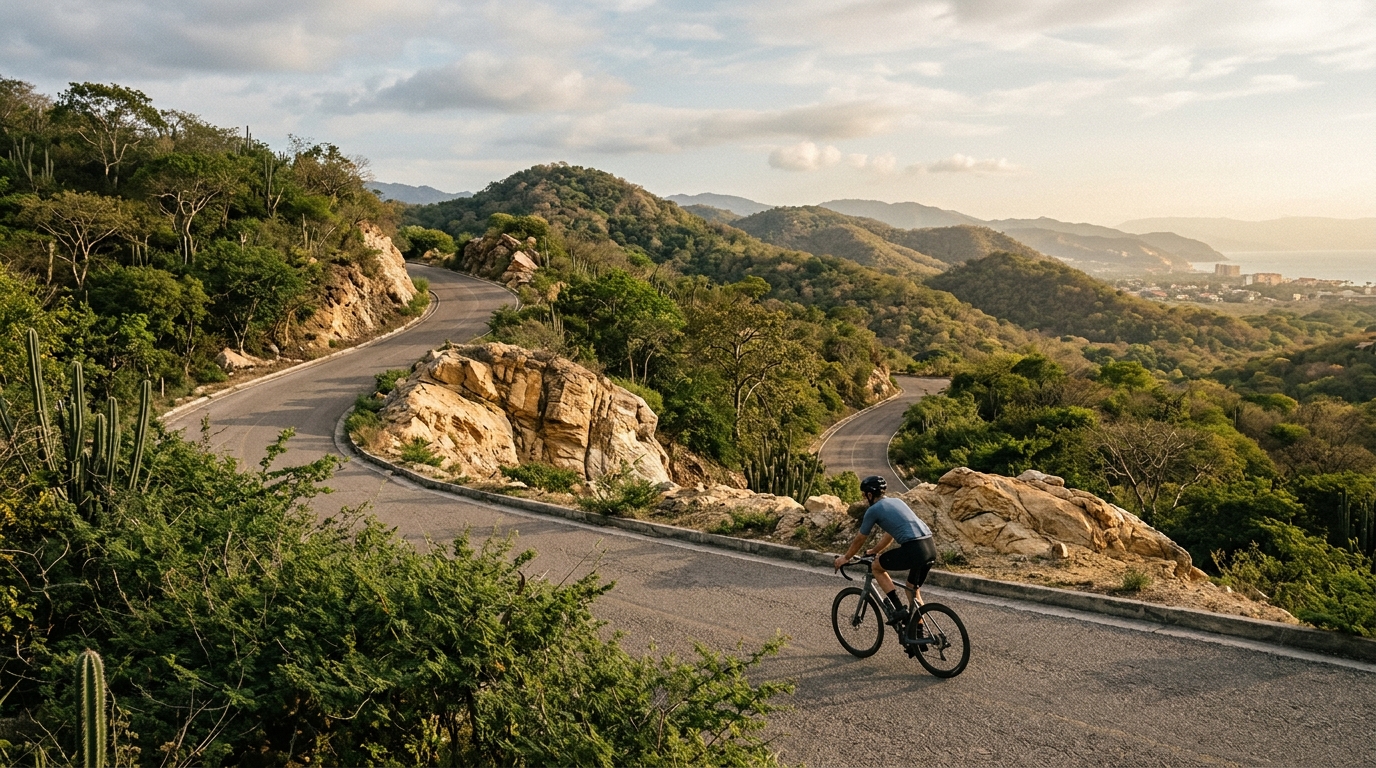
Paso de la Vía
A short category 4 climb in MX: 1.9 km at 5.98%, with enough gradient change to reward controlled pacing over an early surge.
- Extensão
- 1.9km
- Méd.
- 6.0%
- Máx.
- 8.0%
- Cume
- 179m
- Ganho de elevação
- 93m
A subida
Perfil de inclinação
Paso de la Vía cycling climb profile
Paso de la Vía is a short, category 4 climb in MX that rewards control more than patience. At 1.9 km with an average gradient of 5.98%, it is not long enough to become a full endurance grind, but it is steep enough to punish a rider who treats the opening like a sprint. The key feature is the ceiling: the gradient tops out at 8.04%, so the climb never needs survival gearing, but it does have enough bite to disrupt rhythm if you arrive overgeared or already above your sustainable effort.
The road rises from 68 m to 179 m, giving the climb a compact but meaningful vertical profile. That matters tactically. On a climb this short, the effort is concentrated, and the difference between riding it well and fading near the top usually comes from how disciplined you are in the first half.
How the gradient unfolds
The headline number is the 5.98% average. That tells you the climb is mostly moderate rather than brutally steep, but the 8.04% maximum gradient is the detail that shapes the pacing. A rider should expect the gradient to move above the average at points, and those steeper ramps are where the climb can become inefficient if you chase speed instead of holding pressure.
Because the climb is only 1.9 km long, there is limited time to recover from an early overreach. If you go too deep when the road first tilts up, the upper section can feel much harder than the raw numbers suggest. The smarter ride is to let the average gradient work in your favour: settle quickly, keep the effort smooth, then increase pressure only once the summit is clearly within reach.
Pacing and gearing notes
Treat Paso de la Vía as a controlled high-output climb, not a maximal launch from the bottom. The average gradient is manageable, so the fastest strategy is usually a steady build rather than repeated surges. Use the opening to find a gear that lets you stay seated and apply even torque. If the road pitches toward the 8.04% maximum, shift before cadence falls apart rather than forcing a heavy gear over the steepest section.
For riders pacing by power, this is the kind of climb where /glossary/ftp matters because the duration is short enough to tempt an above-threshold effort, but long enough that an uncontrolled start can still cost time. A well-ridden attempt should feel firm from the bottom, harder through the steepest gradient, and only fully committed near the summit.
Who the climb suits
Paso de la Vía suits punchy riders who can hold a strong seated effort and respond smoothly to gradient changes. Pure diesel climbers can still ride it well, but they need to avoid turning the climb into a series of accelerations. The profile is simple on paper: 1.9 km, 5.98% average, 8.04% max. The execution is where the time is made. Keep the first effort contained, gear for the ramps, and save the final push for when the top is close enough that there is no need to recover.