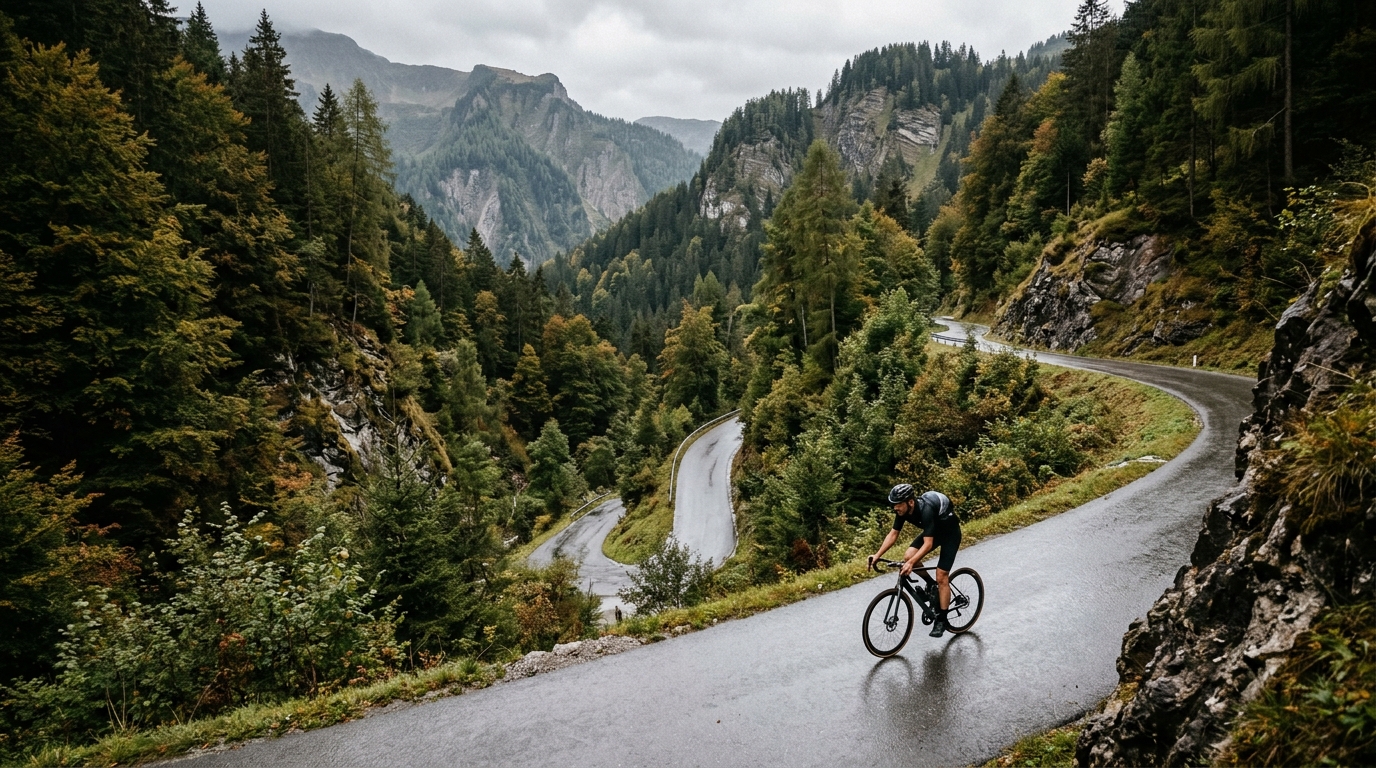
Klostertaler Gscheid
A practical pacing guide to the 6.8 km Klostertaler Gscheid cycling climb in Austria, averaging 5.95% with ramps up to 13.62%.
- Extensão
- 6.8km
- Méd.
- 6.0%
- Máx.
- 13.6%
- Cume
- 987m
- Ganho de elevação
- 387m
A subida
Perfil de inclinação
Klostertaler Gscheid cycling climb profile
Klostertaler Gscheid is a compact Austrian climb that asks for discipline more than drama. On paper, the climb runs for 6.8 km from 581 m to 987 m, gaining 406 m at an average gradient of 5.95%. That places it in the useful middle ground for a cyclist: long enough that pacing matters, but not so long that it becomes a pure endurance grind.
The key number is not just the average. The maximum gradient is 13.62%, which is more than double the climb's average. That tells you the road is not a perfectly even 6% drag. The overall demand is moderate, but there are steeper sections embedded in the profile that can force a rider above threshold if they respond too aggressively.
How the gradient rides
A 5.95% average over 6.8 km usually feels manageable if ridden smoothly, especially for riders who are comfortable settling into a steady tempo. But Klostertaler Gscheid should not be treated like a metronomic climb. The 13.62% maximum means the effort will likely come in waves, with at least one pitch steep enough to disrupt cadence and punish overgearing.
That matters because the climb gains its elevation quickly enough to create real fatigue, but not so steeply throughout that every section demands maximal torque. The best approach is to separate the climb into two mental demands:
- Ride the average gradient efficiently, keeping breathing and cadence under control.
- Absorb the steepest ramps without turning them into anaerobic surges.
The mistake is to pace only off the average. A rider who locks onto 5.95% as the full story may arrive at the steeper grades under-geared, over-threshold, or both. The smarter reading is that the climb's average gives you the sustainable target, while the maximum gradient tells you how much gear range and restraint you need.
Pacing and gearing notes
For most riders, Klostertaler Gscheid is best ridden just below or around sustainable climbing effort, rather than attacked from the bottom. If you use /glossary/ftp as a pacing anchor, the opening strategy should leave room for short periods above threshold when the road kicks up. Burning matches early on a climb of this length rarely buys much, because 6.8 km is long enough for those efforts to come back later.
Gearing should be chosen for the 13.62% maximum, not the 5.95% average. A setup that feels comfortable on a steady 6% grade can become restrictive when the road briefly reaches double digits. The practical goal is to keep cadence from collapsing on the steepest sections, because once cadence drops too far, the climb becomes a series of high-torque accelerations rather than a controlled aerobic effort.
Bottom line
Klostertaler Gscheid is a category 2 climb with enough vertical gain to matter and enough gradient variation to reward patience. The numbers point to a climb that should be ridden with a measured first half, flexible gearing, and a deliberate response to the steepest ramps. Respect the 13.62% maximum, but do not let it define the whole climb. The rider who keeps the average effort controlled and avoids panic on the harder pitches will make the best time to the 987 m summit.