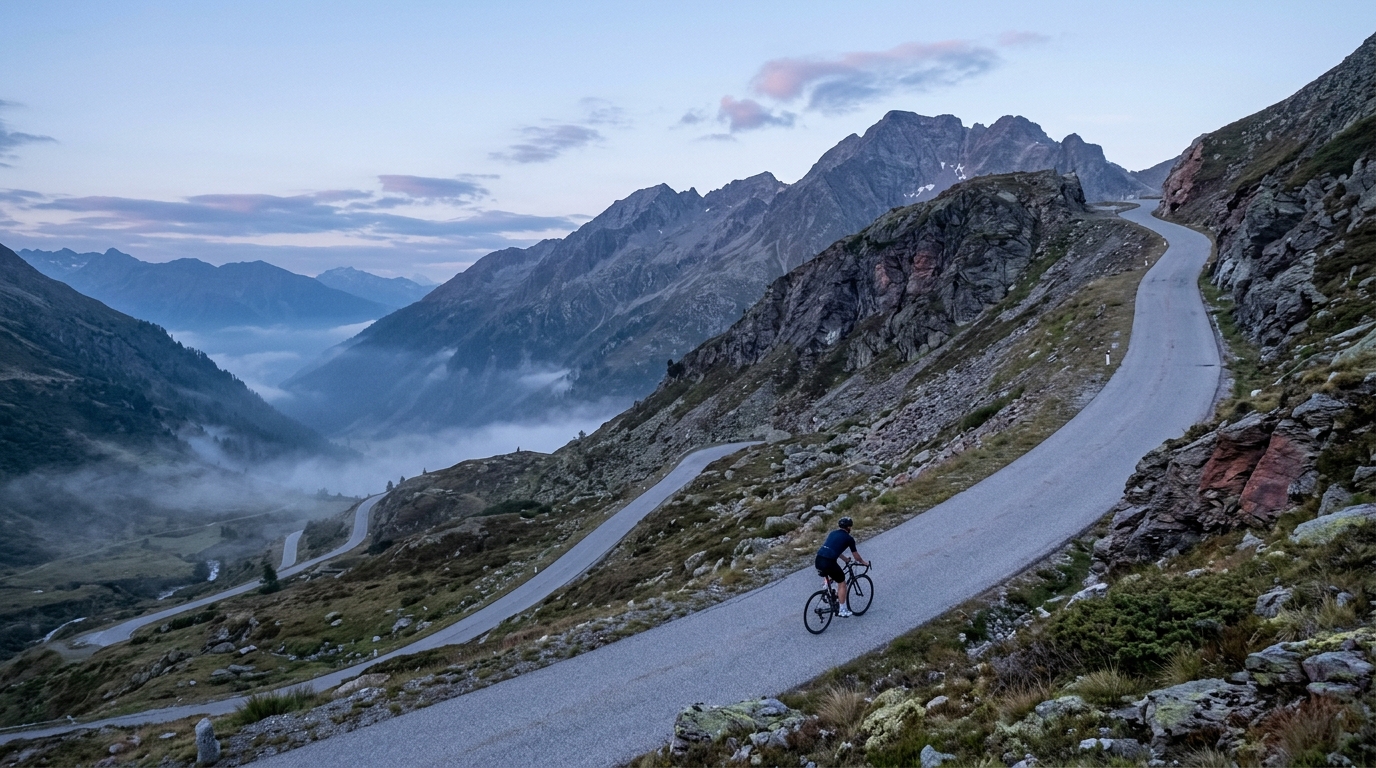
Sandebentörl
A practical profile of Sandebentörl, an HC Austrian climb with sustained steepness, serious elevation gain, and brutally sharp maximum gradients.
- Lengte
- 15.9km
- Gem.
- 8.7%
- Max
- 24.4%
- Top
- 2,189m
- Hoogtewinst
- 1,371m
De klim
Hoogteprofiel
Sandebentörl cycling climb profile
Sandebentörl is not a climb to bluff. On paper, it is 15.9 km long at an average gradient of 8.67%, rising from 811 m to 2189 m with 1378 m of net elevation gain. That combination is what defines the ride: long enough to punish any early overreach, steep enough that even a controlled effort will feel expensive, and high enough that the final part comes after a meaningful amount of accumulated fatigue.
The key number is the average gradient. An 8.67% average over 15.9 km is not the same problem as a short wall or a rolling alpine road with recovery between pitches. It implies a climb where the baseline effort is already high before the road ever reaches its hardest point. The listed maximum gradient of 24.37% changes the tactical picture again. Even if that steepest section is short, it means riders need a gear and pacing plan that can absorb extreme ramps without forcing a full anaerobic surge.
How the gradient unfolds
The available profile data does not provide sector-by-sector gradients, so the honest reading is broad rather than overly precise. From the start at 811 m to the summit at 2189 m, Sandebentörl gains almost all of its elevation through sustained climbing. The average tells you the climb is consistently severe, while the maximum gradient tells you it is not a smooth tempo ascent from bottom to top.
That makes it best approached as a hard endurance climb with intermittent torque spikes. The main risk is not one isolated steep ramp. It is the way a very steep ramp lands on top of an already demanding average gradient. If you ride the lower part as if the climb will ease later, the 24.37% maximum becomes a point where cadence collapses, breathing destabilises, and pacing discipline disappears.
Pacing and gearing
Treat Sandebentörl like an HC climb from the first pedal stroke. The category is not just a label here - it matches the workload implied by 15.9 km, 8.67%, and 1378 m of net gain.
Practical approach:
- Start below the effort you think you can hold. The climb is long enough that early enthusiasm is usually paid back with interest.
- Keep pressure steady on the sustained sections rather than chasing speed. On a climb this steep, speed changes can be misleading, while effort control matters more.
- Save a clear reserve for the steepest ramps. A maximum gradient of 24.37% can force low-cadence grinding even with sensible gearing.
- Use your easiest climbing gear before you need it. Waiting until the road is already at its steepest is how riders end up over-torquing and spiking effort.
- If pacing by power, anchor the effort around a sustainable climbing target rather than short surges above /glossary/ftp.
Sandebentörl rewards patience more than aggression. The fastest ride is likely to come from keeping the steep ramps contained, not from attacking them. Let the average gradient do its damage slowly, stay out of the red early, and arrive near the summit with enough control to keep turning the pedals when the road asks for more than tempo.