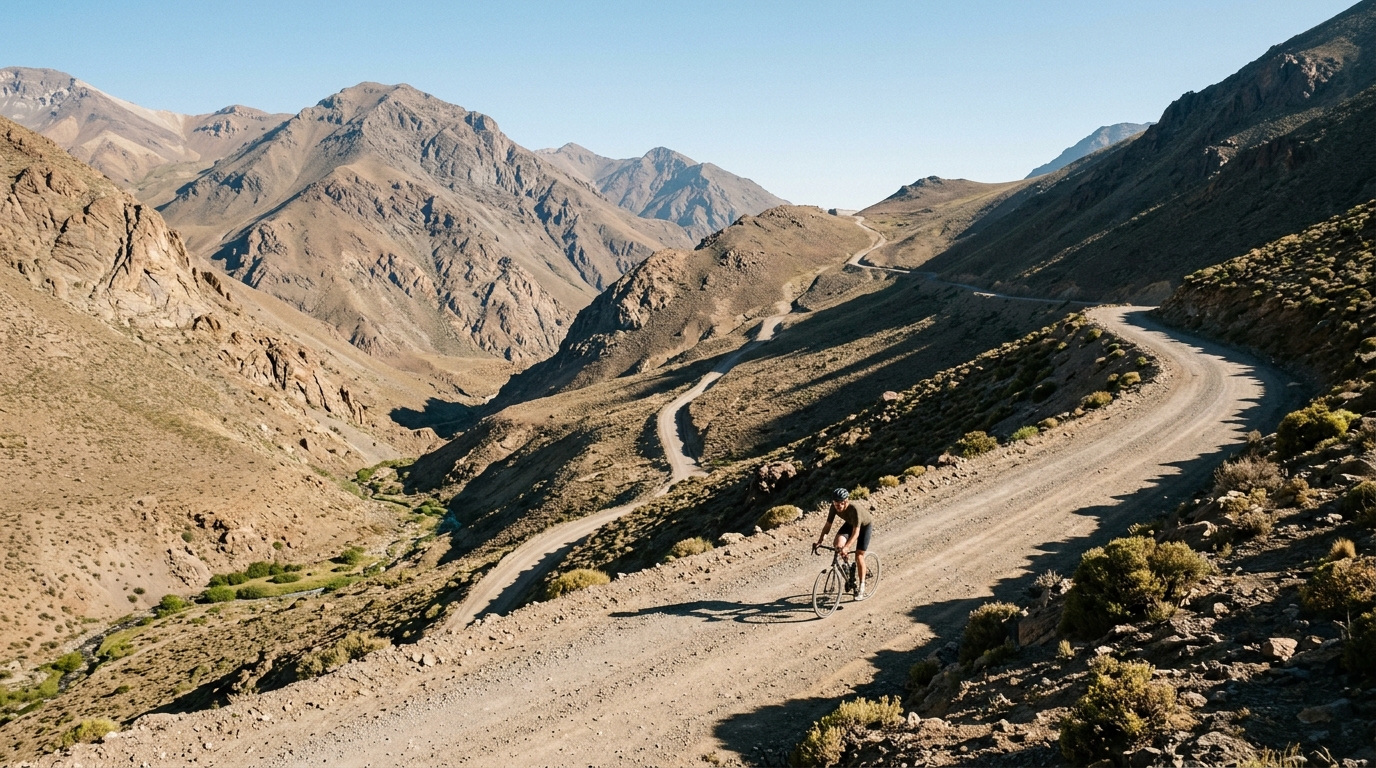
Paso de Chollay
A practical pacing and gearing profile for the 60.4 km Paso de Chollay cycling climb in Chile, an HC ascent gaining 3460 m to 4975 m.
- Lengte
- 60.4km
- Gem.
- 5.7%
- Max
- 11.1%
- Top
- 4,975m
- Hoogtewinst
- 3,466m
De klim
Hoogteprofiel
Paso de Chollay cycling climb profile
Paso de Chollay is not defined by a single savage ramp. It is defined by duration, elevation gain, and the compounding cost of doing work for a very long time. The climb runs for 60.4 km, averages 5.72%, and gains 3460 m from a start elevation of 1515 m to a summit elevation of 4975 m. That combination is why it sits in HC territory.
The average gradient can make the climb look more manageable than it is. A 5.72% average over 60.4 km is not a punchy road where you can bluff your way through with repeated accelerations. It is a sustained aerobic test where small pacing errors become expensive because there is so much climb left after the first effort feels controlled.
How the gradient rides
With a total ascent of 3466 m and a net elevation gain of 3460 m, the profile is effectively a long uphill journey rather than a sawtooth road packed with meaningful descents. That matters tactically. There is little implied relief in the numbers, so recovery needs to come from easing pressure on the pedals, not from waiting for the road to hand you long downhill resets.
The maximum gradient of 11.14% is the key pacing warning. The climb is not just a steady tempo drag. Somewhere on the ascent, the road steepens enough to force a real torque demand. If you ride the lower slopes too close to threshold, those steeper sections can push you above your sustainable ceiling and leave you managing fatigue for the remainder of a very long climb.
Pacing and gearing notes
Treat this as a climb to be under-ridden early. The first objective is not speed, it is preserving muscular freshness deep into the ascent. On a climb this long, a controlled effort below /glossary/ftp is usually more valuable than chasing an impressive opening pace.
Practical approach:
- Settle into a gear that lets you keep pressure smooth rather than grinding.
- Save the lowest gears for the sections that approach the 11.14% maximum.
- Avoid repeated surges, even if the average gradient feels comfortable.
- Pace by effort first, speed second, because the elevation gain and summit height make the upper portion progressively less forgiving.
Gearing should be conservative. The climb’s average of 5.72% suggests long seated work, but the 11.14% maximum means you need enough range to stay composed when the road steepens. If you run out of cadence on the steepest ramps, the cost is not just local discomfort. It adds muscular fatigue that has to be carried across a 60.4 km ascent.
The cleanest way to ride Paso de Chollay is to think of it as three demands stacked together: a long climb, a large vertical gain, and a very high summit. None of those can be beaten with aggression. The fastest sustainable ride is likely the one that feels almost too patient at the bottom and still controlled near the top.