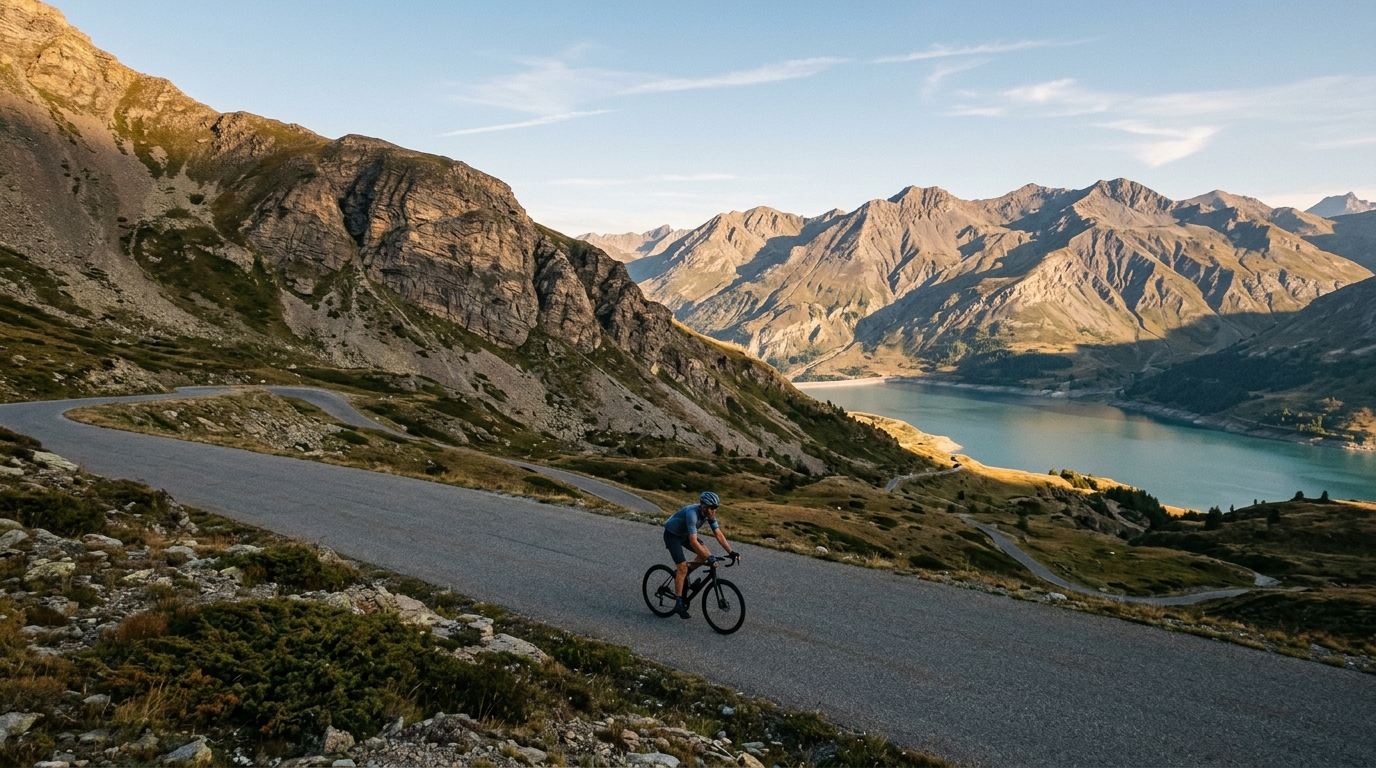
Mont Cenis Pass
A long HC ascent in France: 24.7km at 6.42%, rising from 508m to 2,093m with ramps up to 9.44%.
- Lengte
- 24.7km
- Gem.
- 6.4%
- Max
- 9.4%
- Top
- 2,093m
- Hoogtewinst
- 1,563m
De klim
Hoogteprofiel
Mont Cenis Pass cycling climb profile
Mont Cenis Pass is a pure endurance climb: long, high, and heavy enough to punish any early overreach. The climb runs for 24.7km at an average gradient of 6.42%, rising from 508m to a summit at 2,093m. That is 1,585m of net elevation gain, which is why the HC classification fits the effort rather than just the scenery.
The key point is the combination of length and gradient. A 6.42% average over this distance does not ride like a short punchy climb where you can lean on repeated surges and recover. It asks for a sustained aerobic output, with the max gradient of 9.44% acting as the ceiling that can turn a controlled ride into a slow grind if you arrive under-geared or already above threshold.
How the gradient feels
With only the headline profile available, the safest way to read Mont Cenis is as a long, steady climb with enough steeper ramps to break rhythm. The average is meaningful because it is spread across nearly 25km. Even if individual sections ease slightly, the climb keeps asking for torque, fueling, and temperature management for a long time.
The 9.44% maximum matters tactically. On a climb this long, a ramp near that pitch is not just a short inconvenience. If you are already riding too close to /glossary/ftp, those steeper moments force a choice: push into the red and pay later, or shift early, hold cadence, and let speed fall without panic. The second option is almost always the better one here.
Pacing notes
Treat the first part of the climb as a governor, not a launch pad. The summit is too far away to chase early speed. Settle into a power or perceived effort you can repeat for the full 24.7km, then reassess only once the bulk of the elevation gain is behind you.
A practical pacing approach:
- Start below your sustainable climbing effort, especially if riding by feel.
- Keep cadence protected on the steeper ramps up to 9.44%.
- Avoid standing accelerations unless they are used to briefly change muscle load, not to increase pace.
- Fuel early, because 1,585m of net gain gives little room to recover from a missed intake.
Gearing
Err on the side of easier gearing. The average gradient is already demanding, and the max gradient confirms that a standard climbing gear can still feel tight when fatigue builds. The right setup is one that lets you stay seated and smooth when the road tilts toward its steepest pitches, rather than forcing low-cadence grinding halfway through the ascent.
For training, Mont Cenis is a strong test of aerobic durability more than explosive climbing. If your pacing is right, the climb should feel controlled for a long time, then gradually expensive. If it feels expensive early, the pass is likely to collect that debt before the summit.