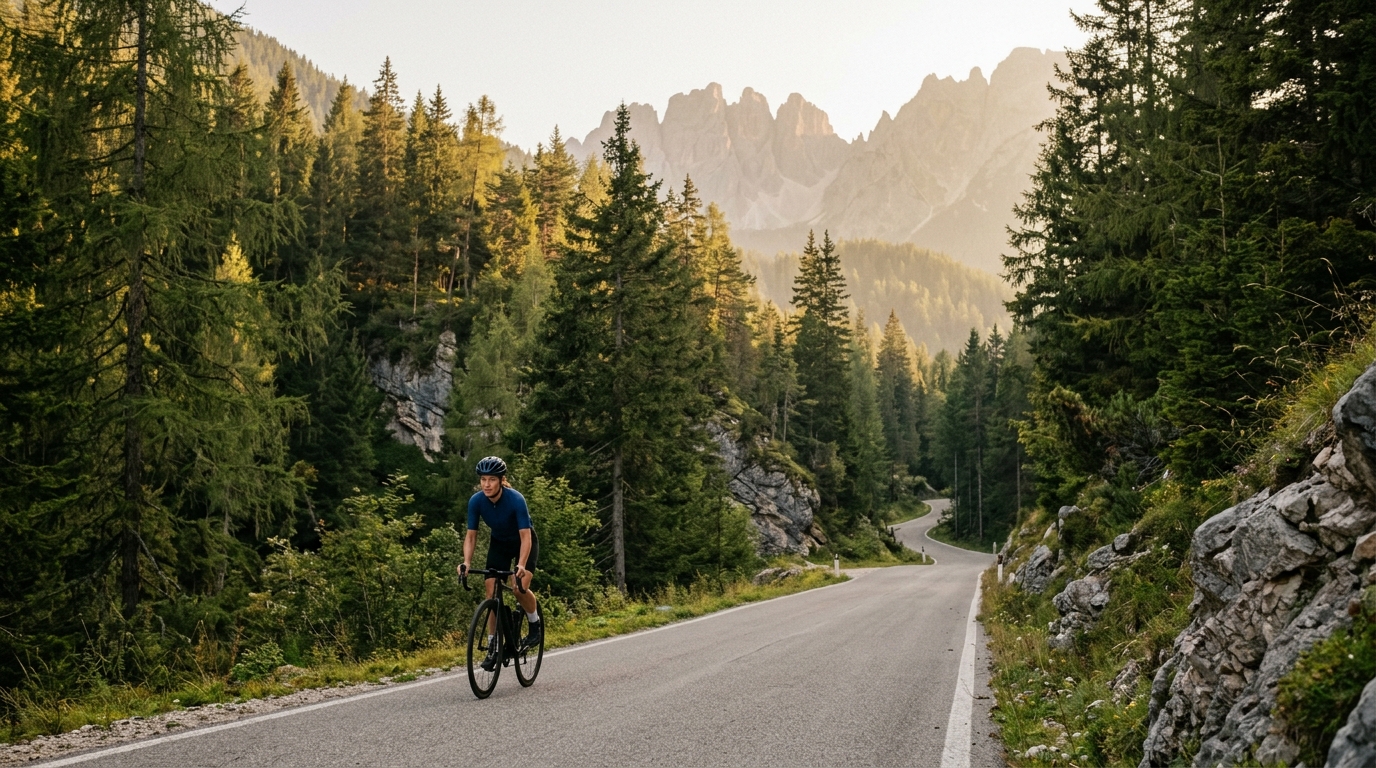
Kreuzbergpass
A practical pacing and gearing guide to the Kreuzbergpass cycling climb, a sustained 7.5 km category 1 ascent averaging 8.48%.
- Lengte
- 7.5km
- Gem.
- 8.5%
- Max
- 10.8%
- Top
- 1,480m
- Hoogtewinst
- 617m
De klim
Hoogteprofiel
Kreuzbergpass cycling climb profile
Kreuzbergpass is a compact but serious climb: 7.5 km at an average gradient of 8.48%, rising from 847 m to 1480 m. On paper, that makes it a category 1 ascent not because it is especially long, but because the gradient is consistently demanding enough to make poor pacing expensive.
The key detail is the relationship between the average and maximum gradient. The climb averages 8.48% and tops out at 10.77%, so the steepest ramps are not wildly detached from the baseline difficulty. That usually points to a climb where the problem is not one decisive wall, but the accumulation of pressure. You are rarely dealing with a number that sounds impossible, yet you are also unlikely to get much psychological relief if you ride it too hard early.
How the gradient rides
From the start elevation of 847 m, the Kreuzbergpass asks for commitment almost immediately because the average gradient is already in the range where momentum fades and cadence management matters. Over 7.5 km, an 8.48% average means the climb should be treated as a sustained threshold-style effort rather than a rolling ascent where you can repeatedly reset.
The maximum gradient of 10.77% matters tactically. It is steep enough to force a gear change and punish riders who are already riding at the limit, but not steep enough to justify burning matches in anticipation of a single make-or-break section. The better approach is to assume that the climb keeps tightening the screws, with short ramps that feel sharper because the base gradient is already high.
Pacing strategy
Do not start this climb like a short hill. The category 1 rating and 633 m of net elevation gain tell you the effort is long enough to expose early overreach. Ride the opening section slightly under your target intensity, especially if you are using /glossary/ftp as your reference point. The goal is to keep the first part controlled enough that the 10.77% maximum gradients do not force you into repeated surges above sustainable power.
A sensible pacing shape is:
- Start controlled and resist chasing speed while the legs are fresh
- Settle into a steady climbing rhythm once breathing and cadence stabilize
- Save the hardest effort for the upper portion, where the accumulated gradient begins to matter
- Treat any steeper ramp as something to absorb, not attack
Gearing notes
Use climbing-friendly gearing. An 8.48% average over 7.5 km is steep enough that a standard road setup can become restrictive if you prefer a higher cadence. The best gear is not the one that lets you survive the steepest 10.77% pitch once. It is the one that lets you stay seated, keep torque under control, and avoid grinding for most of the climb.
If cadence starts dropping early, shift sooner rather than later. On a climb with this profile, protecting muscular fatigue is often more important than holding a slightly faster speed in the first kilometres. Kreuzbergpass rewards patience: smooth power, small gear changes, and a final section ridden from what you saved rather than what you borrowed too soon.