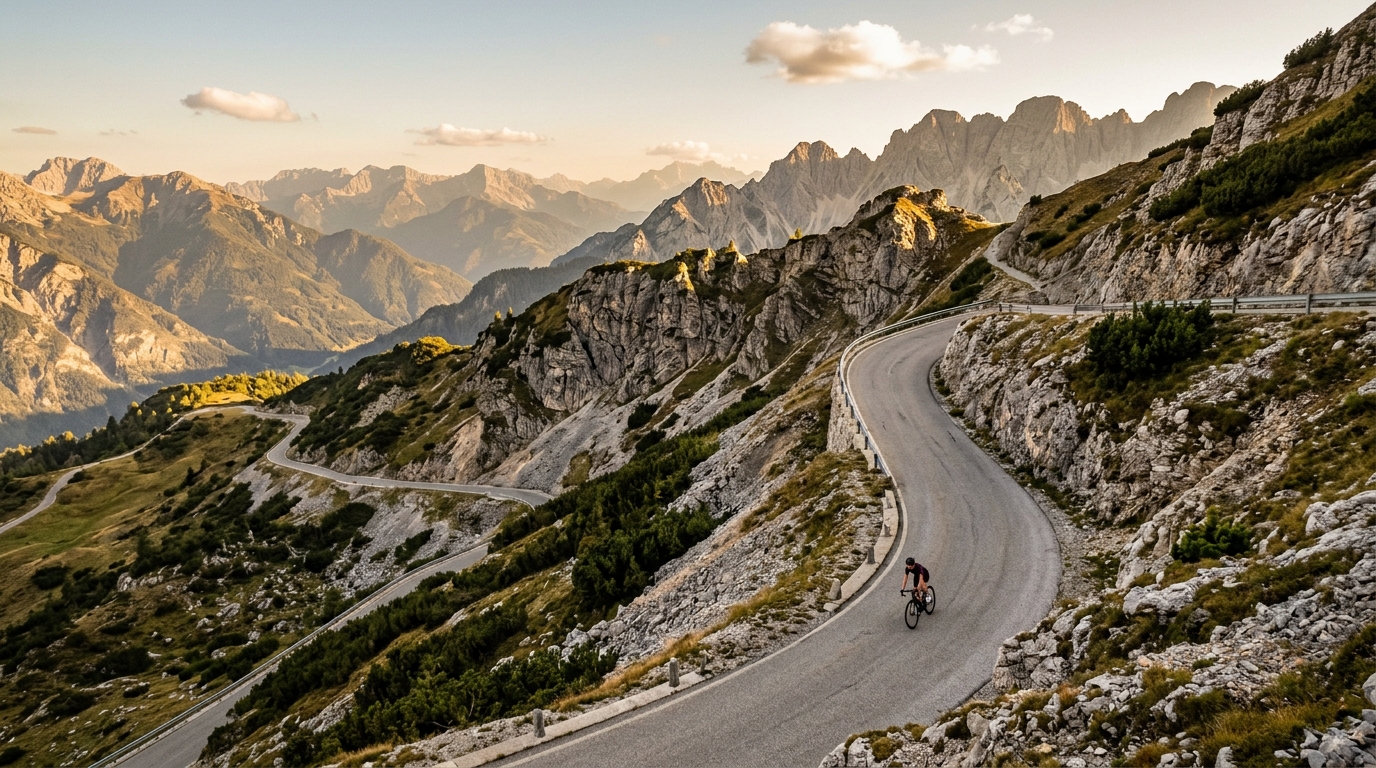
Keilscharte
A long Austrian category 2 climb with a modest average gradient but a steep maximum pitch that makes pacing and gearing matter.
- Lengte
- 19.7km
- Gem.
- 3.7%
- Max
- 13.6%
- Top
- 1,479m
- Hoogtewinst
- 700m
De klim
Hoogteprofiel
Keilscharte cycling climb profile
Keilscharte is a category 2 climb in Austria that asks for patience more than brute force. The headline shape is 19.7 km from 756 m to 1479 m, with 723 m of net elevation gain and a listed 700 m of total ascent. At 3.67% average, it will rarely read like a pure wall on paper, but the 13.56% maximum gradient changes how it should be ridden.
How the gradient rides
The average tells you Keilscharte has plenty of manageable road. Over 19.7 km, 3.67% is the kind of gradient where a well-paced rider can stay seated, keep pressure on the pedals, and avoid the immediate survival feeling of a consistently steep climb.
The trap is trusting that average too much. A maximum gradient of 13.56% means the climb is not simply a long, steady drag to the summit. Somewhere on the route, the road kicks hard enough to punish anyone who has ridden the easier gradients too aggressively. Because the overall average remains modest, those steep ramps are balanced by gentler ground elsewhere, which creates a different kind of difficulty: repeated changes in torque rather than one continuous grind.
That makes Keilscharte feel like a long aerobic climb with short anaerobic traps. The summit sits at 1479 m, but the decisive feature is not just the elevation. It is the mismatch between the gentle average and the steepest pitch. Riders who respect that mismatch will arrive near the top with options. Riders who chase speed early may find the steepest sections forcing them into a low-cadence struggle.
Pacing and gearing notes
Do not pace Keilscharte from the 3.67% average alone. That number is useful for understanding the climb's overall character, but it does not protect you from the 13.56% maximum.
A practical approach:
- Start controlled and keep the opening effort comfortably sustainable.
- Use the gentler gradients to settle your breathing, not to accelerate repeatedly.
- Shift early before the steepest ramps so cadence does not collapse.
- Keep a genuinely low climbing gear available, even if most of the climb feels manageable.
For riders pacing by /glossary/ftp, Keilscharte rewards restraint. Hold an aerobic-to-tempo effort while the road is steady, then allow short rises only when the gradient forces them. The cost of over-gearing here is not just lower cadence. It turns a moderate-average category 2 climb into a series of muscular efforts that can empty the legs before the summit.