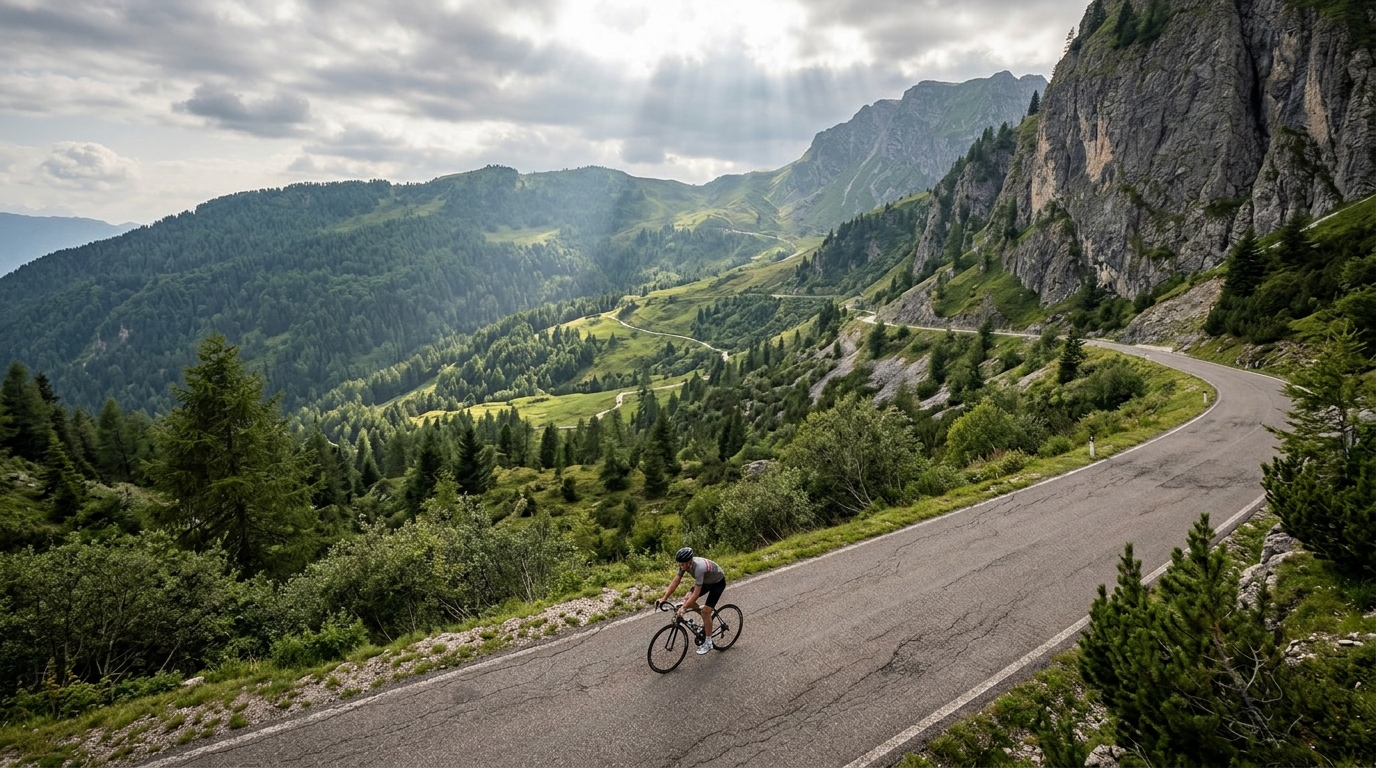
Brocon Pass
A long Category 1 ascent where the modest average gradient hides the pacing cost of 32.9 km, 1411 m of ascent, and ramps above 11%.
- Lengte
- 32.9km
- Gem.
- 4.2%
- Max
- 11.1%
- Top
- 1,622m
- Hoogtewinst
- 1,411m
De klim
Hoogteprofiel
Brocon Pass cycling climb profile
Brocon Pass is a Category 1 climb in Italy that asks for patience more than aggression. On paper, the headline number is the 32.9 km length at a 4.15% average gradient, starting at 258 m and topping out at 1622 m. That average can make the climb look controlled, but it hides the real demand: 1411 m of total ascent and a maximum gradient of 11.09%.
The key to riding Brocon Pass well is understanding that the average gradient is not the experience of the climb. A 4.15% average over this distance suggests a long, aerobic ascent where rhythm matters, but the 11.09% maximum gradient means there are sections where that rhythm will be tested. If you pace the climb as if it is just a gentle drag, the steeper ramps become expensive quickly.
How the gradient unfolds
The climb gains 1364 m net from bottom to summit, while the total ascent is 1411 m. That small difference matters. It tells you the route is not a perfectly uniform uphill line. There is some unevenness in the profile, enough that the rider should expect changes in pressure rather than one uninterrupted gradient.
That shape usually rewards restraint. The lower average allows you to settle into a sustainable climbing pace, but the road’s steeper moments force short increases in torque. The best way to read Brocon Pass is as a long climb with intermittent strain, not as a short, sharp test. The damage comes from accumulating effort over 32.9 km, then adding spikes when the gradient lifts toward its maximum.
Pacing strategy
Start below the effort you think the average gradient permits. The opening of a long Category 1 climb can feel deceptively easy when the gradient is moderate, but the cost of overpacing compounds over this distance. Use the early kilometres to lock into a controlled aerobic output, especially if you are riding by /glossary/ftp.
The practical goal is to keep the steepest sections from becoming surges. When the road pitches up, let speed fall before power rises too much. A rider who tries to defend speed on the 11.09% ramps will burn matches that are hard to recover over such a long ascent.
A good pacing hierarchy is simple:
- Keep breathing controlled on the lower-gradient stretches
- Use any easier terrain to reduce pressure, not to accelerate
- Stay seated as much as possible to preserve rhythm
- Treat the steepest ramps as torque management, not attacks
Gearing notes
Gear for the maximum gradient, not the average. The 4.15% average may suggest a comfortable climbing setup, but Brocon Pass still reaches 11.09%, and that is the number that determines whether you can keep cadence smooth when the road bites.
A low climbing gear is the safer choice because it gives you room to absorb the steep ramps without crossing too far above threshold. This is especially important late in the climb, where the length and total ascent have already raised the physiological cost. Brocon Pass is not about one violent section. It is about staying economical long enough that the hardest gradients do not force a collapse in pacing.