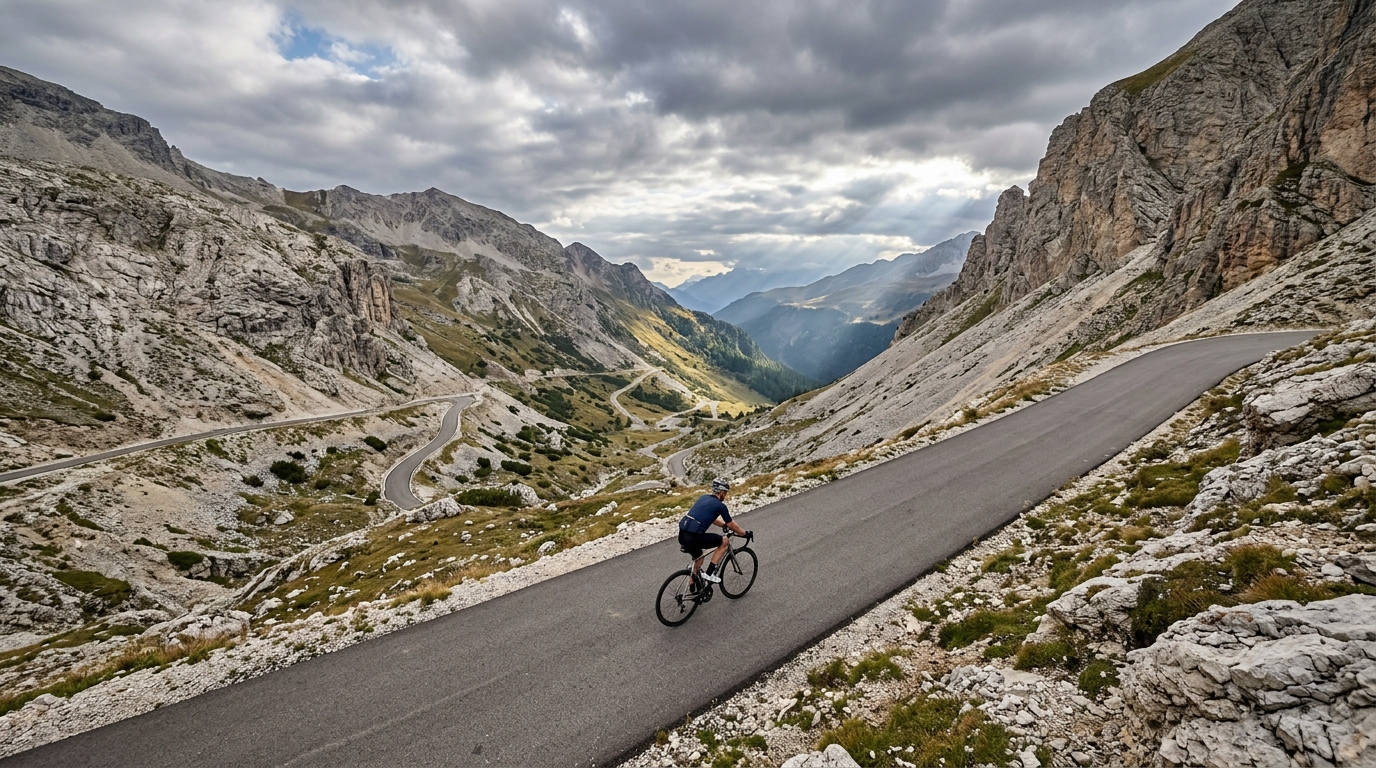
Grießbachjoch
A practical Grießbachjoch cycling climb profile, with pacing and gearing notes for a 25.1 km HC ascent with severe maximum gradients.
- Longueur
- 25.1km
- Moy
- 6.8%
- Max
- 35.8%
- Sommet
- 2,576m
- Dénivelé
- 1,666m
L'ascension
Profil de la pente
Grießbachjoch cycling climb profile
Grießbachjoch is an HC climb in Italy with numbers that make the tactical problem very clear: 25.1 km from 865 m to 2576 m, with 1711 m of net elevation gain at an average gradient of 6.81%. That is not a climb to bluff. The duration implied by the length and gain means the first error is usually not gearing. It is confidence.
Gradient and rhythm
The available profile data does not give a kilometre-by-kilometre breakdown, so the honest way to read Grießbachjoch is through its whole-climb load. A 6.81% average over 25.1 km means the road asks for sustained aerobic work for a long time, rather than a short anaerobic hit. But the listed maximum gradient of 35.77% changes the ride completely. Even if that steepest pitch is brief, it forces a pacing plan that leaves enough torque and composure for a wall-like section.
From bottom to summit, treat the climb as a long accumulation rather than a sequence of attacks. Starting at 865 m and finishing at 2576 m, the altitude gain is large enough that effort discipline matters all the way up. The lower slopes should feel controlled, almost under-ridden, because the average gradient already represents a significant workload. If you are riding near threshold early, the climb has enough distance left to turn that into a slow fade.
Pacing strategy
The correct approach is conservative in the opening phase, steady through the body of the climb, and deliberately defensive whenever the road pitches up. On a climb this long, the goal is not to hold the highest possible power from the base. It is to avoid burning matches before the steepest gradients demand them.
Use /glossary/ftp as the anchor, but do not let FTP become a trap. Sitting just below threshold is sensible for a strong rider on the steadier gradients, while repeated surges above it should be avoided unless the summit is genuinely close. The 35.77% maximum is the key constraint: arrive at that kind of ramp already loaded with lactate and you will be forced into survival cadence, which then compromises the next minutes even after the gradient eases.
Gearing notes
Gear for the maximum gradient, not the average. A 6.81% average can make the climb look manageable on paper, but the extreme maximum means compact or sub-compact gearing and a wide cassette are the rational choice for most riders. The target is not elegance. It is keeping the pedals turning when the road becomes brutally steep.
If you are choosing between a setup that is efficient on the long average-gradient workload and one that protects you on the steepest ramp, choose protection. Losing a little cadence smoothness on moderate grades is far less costly than being over-geared on a pitch that approaches walking territory.
What defines the climb
Grießbachjoch is defined by contrast: a very long HC ascent with a steady-looking average, but a maximum gradient severe enough to dictate the whole ride. Respect the length first, respect the steepest pitch second, and leave enough in reserve to ride the final metres to 2576 m as a controlled finish rather than damage control.