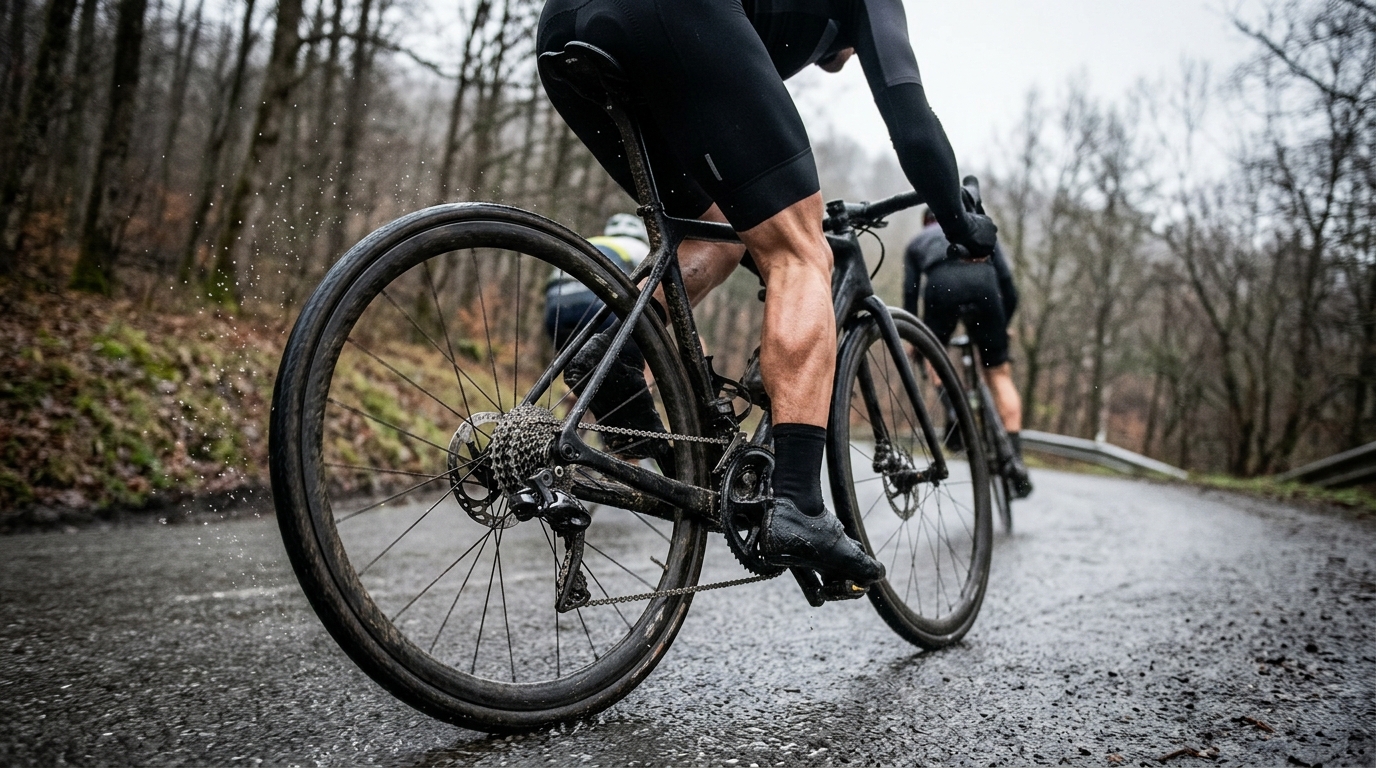
Image générée par notre modèle.
training
Cycling Race Warm-Up: Build a Data-Backed Routine
A practical cycling race warm-up guide for using power, heart rate and RPE to start sharp without spending energy you need later.
What a Warm-Up Is Actually Trying to Achieve
A good cycling race warm-up is not about producing an impressive file before the race has even started. It is about reaching the start line with the first decisive demand already rehearsed, while keeping the cost low enough that the race still gets your best work.
That distinction matters. Many riders confuse being warm with being prepared for the actual opening. Easy pedaling can raise comfort and reduce stiffness, but racing usually asks for something more specific: a hard acceleration out of a corner, a surge over the top of a climb, a start ramp in a time trial, or repeated jumps before the bunch settles.
If the first real intensity of the day happens after the gun, the body often responds with that familiar blocked-leg feeling. Power comes up slowly, cadence feels forced, breathing jumps instead of builds, and the first selection of the race can happen while you are still negotiating with your legs.
The purpose of a cycling warm-up routine is to narrow that gap between resting physiology and race physiology. You are increasing muscle temperature, opening blood flow, preparing coordination at race cadence, and giving the first hard effort a reference point. But the key is dose. Too little leaves the first acceleration feeling abrupt. Too much turns the warm-up into the first interval of the race.
The right routine should answer three questions:
- What will the race demand early?
- How quickly does your body usually respond to intensity?
- What conditions will change the cost of warming up?
That is why a data-backed warm-up is not a fixed ritual. It is a repeatable framework adjusted by event type, weather, staging, and your own files.
How Warm-Up Needs Change by Event Type
The shorter and more intense the opening phase, the more complete your pre-race warm-up needs to be.
For a time trial, cyclocross race, criterium with an aggressive start, track event, or hill climb, there may be no gentle settling-in period. The first demand can sit close to the effort that shapes the result. In that case, the warm-up needs controlled exposure to high power, not just endurance spinning. You want the first above-threshold effort to feel familiar in cadence, breathing, and torque, not shocking.
For a long road race, fondo, or gravel event with a controlled roll-out, the calculation changes. A full high-intensity warm-up can be wasteful if the opening is steady and the decisive work comes much later. In those races, the priority is mobility, comfort, fueling, and avoiding a cold start without burning unnecessary matches. The legs do not need a pre-race fitness test. They need enough rhythm that the opening pace does not feel like a surprise.
The opening terrain also matters. A race that starts on a climb or technical section requires more preparation than one that starts downhill or on wide flat roads. A start with repeated corners rewards a few neuromuscular accelerations. A start into a steady climb rewards a more progressive aerobic ramp. A mass-start race with a nervous bunch may demand sharpness even if the course profile looks tame.
This is the first principle: warm up for the first meaningful demand, not the average demand of the whole race.
A Baseline 20-Minute Race Warm-Up Protocol
A baseline 20-minute bike race warm-up should be simple enough to execute under stress and flexible enough to modify on race day. Treat the ranges below as starting points, not universal prescriptions. Your current fatigue, the temperature, the start procedure, and the event all matter.
If you use power, anchor the protocol to your own zones or FTP. If you do not trust your zones on the day, use breathing, cadence control, and perceived cost. The goal is not a perfect warm-up file. The goal is a first race effort that comes up cleanly without a costly spike.
Minutes 0 to 3: easy spin
Ride very easy, below normal endurance pressure. Cadence should feel natural rather than forced. Breathing should be calm enough that you can check the bike, clothing, computer, and position without feeling rushed.
Execution cue: if power is already creeping toward tempo because of nerves, back off immediately. The opening block is a transition from standing around to pedaling, not the start of the race.
Minutes 3 to 7: progressive build
Lift the effort gradually from easy endurance toward steady endurance. Keep the torque smooth and avoid stomping on the pedals. Let cadence move toward the range you expect to use early in the race.
Execution cue: breathing should deepen, but it should not turn ragged. If you need to change position or rock the bike to hold the effort, you are moving too quickly through the build.
Minutes 7 to 10: controlled race-rhythm pressure
Move toward the pressure you expect in the first sustained demand of the event. For a time trial or climb, this may feel like a firm, steady squeeze below the effort you plan to hold once racing. For a criterium or cyclocross start, keep this block shorter and use it mainly to prepare cadence and breathing before the sharper openers.
Execution cue: power should be stable rather than jagged. You are looking for a smooth line, not proof that you can produce a big number.
Minutes 10 to 11: easy reset
Return to easy pedaling. Let breathing drop and check perceived cost. If the build already feels expensive, trim the intensity later in the protocol.
Execution cue: this minute should make you feel more controlled, not sleepy. Keep cadence turning lightly rather than coasting if you are on a trainer or safe road.
Minutes 11 to 15: short race-specific openers
Add a small number of brief efforts that match the start demand. These are not maximal tests. Each opener should end while form is still clean and while you could repeat the effort without needing a long recovery.
Use the event to choose the shape:
- Criterium or cyclocross: short accelerations from lower speed or corner-exit cadence, then easy spinning.
- Time trial: a controlled ramp toward planned opening pressure, then back off before breathing becomes strained.
- Climbing start: a firm seated squeeze with steady cadence, not a sprint.
- Long road or gravel start: a few cadence lifts may be enough if the opening is controlled.
Execution cue: stop the opener before power fades, cadence collapses, or breathing spikes. A warm-up effort that requires recovery is too hard for the job.
Minutes 15 to 17: steady settling block
Ride at low endurance pressure and bring cadence back to normal. This block connects the openers to the final reset without letting the legs go completely quiet.
Execution cue: breathing should be under control again. If heart rate stays unusually high while power is easy, that is a signal to reduce any remaining intensity and prioritize cooling or calm staging.
Minutes 17 to 20: final reset and staging transition
Finish easy. Use this window to organize clothing, take in planned fuel or fluid, and move toward staging without letting yourself cool down too much.
Execution cue: reach the line with breathing settled, legs turning smoothly, and no sense that you have already spent a hard interval. The last minutes should lower the cost of the priming work, not add more strain.
The baseline structure is simple: easy entry, progressive build, race-specific openers, controlled reset. That is the backbone of a power-based warm-up.
Event-Specific Warm-Up Variants
The 20-minute protocol is the default, not the law. The smarter move is to adjust the dose to the event.
Time trial
Keep the progressive build and the controlled race-rhythm block. Shorten the very easy opening if you are already moving well, but do not skip the build entirely. A time trial often punishes a start that is either too flat or too aggressive.
Intensify the steady portion rather than adding sprint-style efforts. The key rehearsal is smooth power delivery, stable cadence, and breathing that ramps without panic.
Skip explosive accelerations unless the course demands them early. They add neuromuscular cost without helping the main problem, which is settling into hard, controlled pressure from the start ramp.
Criterium or cyclocross
Shorten the steady tempo-style riding and put more value on the openers. These races often ask for repeated changes in speed before the field settles, so the warm-up should include cadence changes and a few sharp accelerations.
Intensify the openers by making them more specific: low-speed starts, corner-exit torque, or high-cadence accelerations depending on the course. Keep them short enough that power stays crisp.
Skip long sustained efforts that leave the legs heavy. A crit or cyclocross warm-up should make the first accelerations feel coordinated, not turn the rider into someone recovering from a threshold interval while waiting on the line.
Long road race or gravel race
Shorten the priming block if the opening is controlled, neutralized, or tactically calm. The cost of too much intensity before a long race is rarely obvious in the first minutes, but it can show up later when fueling, heat, terrain, and positioning start to compound.
Intensify only what the start requires. If the race begins with a climb, technical sector, or fight for position, keep a few controlled openers. If the start is relaxed, use cadence lifts and a progressive build rather than above-threshold work.
Skip any effort that exists only for reassurance. For long events, the better warm-up is often the one that gets you moving, keeps digestion settled, protects glycogen, and lets you handle the first tactical phase without feeling flat.
Cold-weather start
Extend the easy spin or progressive build if time allows, but do it with layers on. In the cold, clothing and staging logistics can matter as much as the pedals. A good warm-up can be erased quickly if you stand exposed before the start.
Intensify closer to staging rather than doing the hardest opener early and then cooling down. A compact activation near the end is usually more useful than a perfect warm-up followed by a long wait.
Skip unnecessary clothing removal until the last practical moment. Also skip long coasting periods during the reset. Keep light pressure on the pedals, keep cadence moving, and protect the heat you just built.
How to Use Power, Heart Rate and RPE Before the Start
Power, heart rate and RPE each answer a different question. The mistake is expecting one metric to do all the work.
Power tells you what you are putting into the pedals right now. That makes it the best tool for controlling the warm-up. If you know your FTP, you can anchor the routine around familiar training zones without guessing. The value is not that you must hit exact targets. It is that power stops pre-race adrenaline from turning moderate into hard.
Heart rate tells you how the body is responding internally. It is useful, but it lags. On a cold day, it may sit lower than expected early. In heat or with nerves, it may rise quickly. If you chase heart rate during the warm-up, you can end up over-riding. Use heart rate as a reality check, not the steering wheel.
RPE is the integration layer. It captures sensations the numbers miss: heavy legs, shallow breathing, unusual tightness, or the sense that intensity is costing more than it should. Experienced riders should not treat RPE as soft data. It is often the first sign that the planned routine needs adjustment.
A clean approach is:
- Use power to set the ceiling.
- Use heart rate to spot unusual internal strain.
- Use RPE to decide whether to trim, extend, or simplify the routine.
- Use cadence and breathing as execution cues when numbers are noisy.
The best pre-race warm-up file is rarely the one with the biggest opener. It is the one that produces the best opening race response.
Adjusting Your Warm-Up for Heat, Cold and Staging Delays
Conditions change the cost of the same routine.
In heat, the problem is not getting warm. The problem is reaching the line already carrying too much thermal strain. Keep the warm-up shorter, shaded where possible, and more selective with intensity. Use only the surges that match the start demand, then prioritize cooling before staging. The goal is enough activation to avoid a sluggish start without raising the cost of the opening phase.
In cold conditions, the opposite problem appears. The body may need more time to produce smooth cadence and coordinated force, and any waiting period can erase the benefit quickly. Warm up with enough layers to build heat, then remove only what you need close to the start. If staging is exposed, staying warm while waiting may matter more than adding another hard effort.
Long staging delays are where many good routines fail. A rider completes a clean warm-up, then stands still long enough to cool down and stiffen up. Treat the warm-up as modular. Do the main work earlier, then keep a small reactivation option available if the delay stretches. That might be easy spinning, a brief acceleration, or staying mobile and covered until you are called forward.
The guiding rule is straightforward: never judge the warm-up by how good it felt when it ended. Judge it by how your first hard race effort responds.
How to Test Your Warm-Up in Training
A race warm-up should be trained like any other performance variable. Do not wait until the target event to find out whether your routine works.
Use demanding workouts as testing grounds. Before a session with early intensity, run your planned cycling race warm-up exactly as you would on race day. Then look at the first hard effort. Did power come up smoothly? Did cadence feel natural? Did breathing settle after the first surge? Did the first effort feel like part of the workout or like a shock?
The most useful test is not one perfect day. It is comparison across similar sessions. Try a slightly shorter version before one workout and a more complete version before another. Keep notes on temperature, fatigue, caffeine, fueling, staging delay, and how quickly the legs responded. Over time, patterns emerge.
Pay particular attention to your first hard effort. If the second hard effort consistently feels better than the first, your warm-up may not be doing enough priming or the final opener may be too far from the start. If the first effort is strong but the session fades early, the warm-up may be too costly. If power is fine but RPE is unusually high, the routine may be right on paper but wrong for your current fatigue state.
This is what makes the process data-backed. Not copying a generic protocol, but connecting the warm-up you did to the output you produced afterward.
Post-Race or Post-Workout Review Criteria
After the race or workout, review the file with one question in mind: did the warm-up improve the first meaningful demand without creating unnecessary cost?
Look for these signals:
- First hard effort response: power should rise cleanly into the intended range rather than requiring a panic spike or a long grind to get there. Cadence should not collapse when the pressure comes on.
- Power stability: the first sustained effort should look controlled for the event. A jagged line can mean the opener was too abrupt, the cadence target was wrong, or nerves overrode pacing.
- Heart-rate drift or lag: some lag is normal, but a heart rate that climbs unusually fast at modest power can point to heat, stress, dehydration, or too much warm-up intensity. A heart rate that never responds while RPE is high may point to fatigue or insufficient preparation.
- RPE mismatch: if the file looks normal but the first effort felt expensive, treat that as real information. The body may be carrying fatigue the power meter cannot explain by itself.
- Second-effort pattern: if the second hard effort repeatedly feels better than the first across workouts or races, the warm-up is probably not preparing the first demand well enough. If the first effort is sharp but everything afterward fades, reduce the pre-start cost.
The point is not to make every warm-up identical. The point is to create a feedback loop. Protocol, race demand, file review, adjustment. That loop is how a routine becomes specific to you.
Common Warm-Up Mistakes That Leave Riders Flat
Riding too hard because nerves are high
Pre-race adrenaline makes effort feel easier than it is. A power meter is especially useful here. If your warm-up power keeps creeping upward without a clear purpose, you are not getting more prepared. You are spending energy.
Copying a routine built for a different event
A time trial warm-up is not automatically right for a road race. A cyclocross start routine is not automatically right for a long gravel day. Event demands shape the protocol. Start there.
Treating heart rate as the target
Heart rate is affected by stress, temperature, hydration, sleep, and timing. If you chase a number before the start, you can overshoot the actual work needed. Power and RPE should keep the session grounded.
Finishing the warm-up too early
The best routine can be undone by a long wait. If staging is unpredictable, plan for it. Bring clothing, stay mobile, and know what small activation you can do without disrupting the start process.
Adding intensity to feel confident
This is common among fit riders. They want proof that the legs are good, so they test them. But a warm-up is not a fitness exam. If you need reassurance, get it from consistency in training, not from a hard effort before the race.
Ignoring bad sensations
Some days the planned routine is too much. Heavy fatigue, unexpected heat, poor sleep, or travel stress can change the equation. Data-driven does not mean rigid. It means using the information available and making a better decision.
Build the Routine, Then Let the Race Decide the Details
A strong cycling race warm-up is specific, repeatable, and adjustable. It prepares you for the first meaningful demand of the event, uses power to control cost, uses heart rate to monitor strain, and uses RPE to keep the plan connected to reality.
Start with the baseline 20-minute structure: easy spin, progressive build, race-specific openers, final reset. Then refine it through training files and race feedback. If the opening of your races starts to feel less like a shock and more like an extension of the work you have already rehearsed, the routine is doing its job.