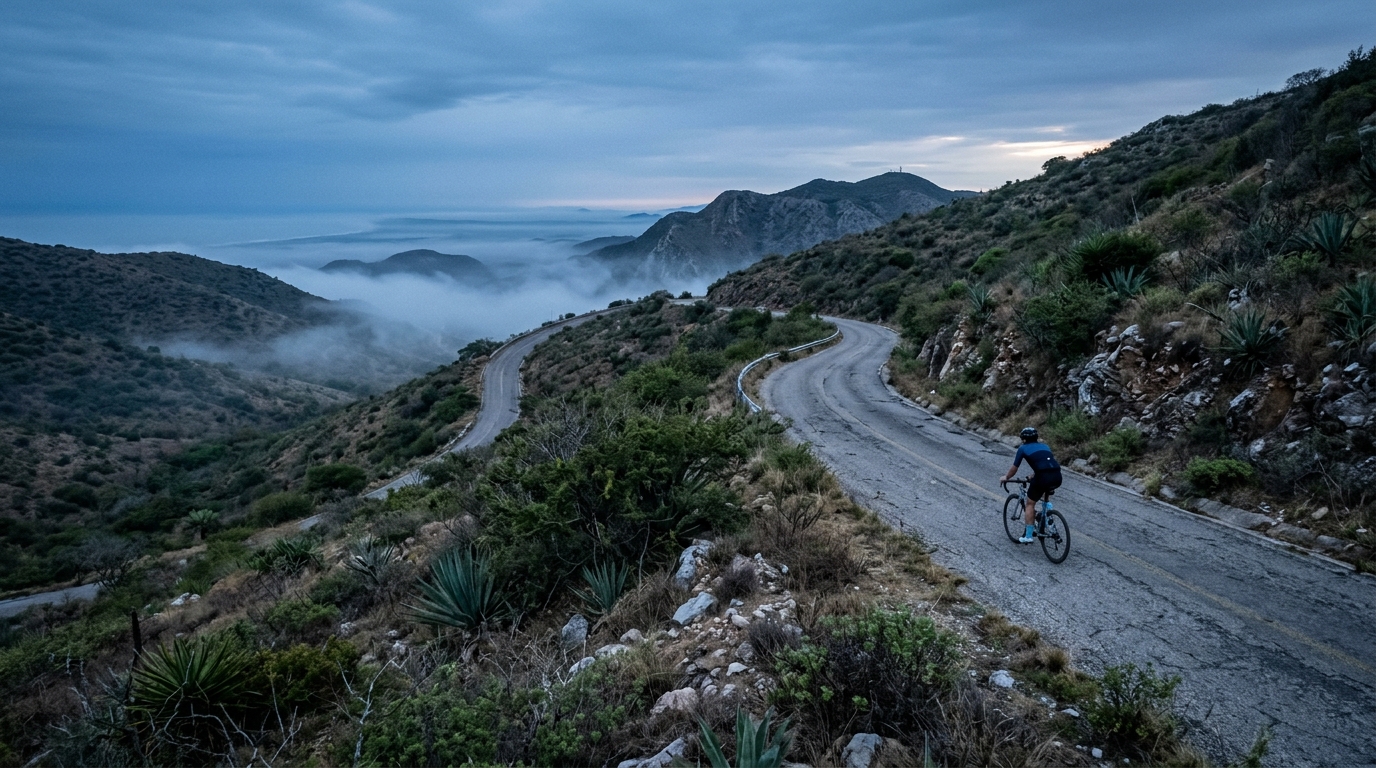
Paso de Ayolia
Paso de Ayolia is a 7.6 km category 4 climb in Mexico, averaging 3.23 percent with ramps up to 8.79 percent.
- Longueur
- 7.6km
- Moy
- 3.2%
- Max
- 8.8%
- Sommet
- 419m
- Dénivelé
- 228m
L'ascension
Profil de la pente
Paso de Ayolia cycling climb profile
Paso de Ayolia is not a brute-force climb on paper, but it is still long enough to punish sloppy pacing. The climb runs for 7.6 km, starting at 173 m and topping out at 419 m. With an average gradient of 3.23 percent, it sits firmly in the category 4 range: manageable for steady riders, but not so short that repeated surges come for free.
The key detail is the gap between the average gradient and the maximum gradient. A 3.23 percent average suggests much of the road is rolling upward rather than grinding skyward, but the 8.79 percent maximum tells you there are sharper ramps embedded in the climb. That matters because climbs like this often tempt riders into riding above threshold on the steeper pitches while convincing themselves the overall gradient is easy. The average then becomes misleading. The damage comes from the uneven cost of those ramps, not from the climb as a whole.
How the gradient unfolds
The supplied profile gives the climb as a net rise from 173 m to 419 m, with 246 m of net elevation gain. It also lists total ascent at 228 m, which creates a small data inconsistency, but both figures point to the same practical reading: Paso de Ayolia is predominantly uphill without the scale or sustained steepness of a major mountain pass.
Because the average gradient is modest, expect sections where the road allows rhythm and speed to stay relatively high. Those parts should feel aerobic if ridden correctly. The 8.79 percent maximum is the warning sign. When the road tilts into those steeper moments, torque demand rises quickly, and the climb shifts from tempo riding into muscular climbing if you are over-geared.
Pacing and gearing notes
The best strategy is controlled, not conservative. Treat the first part of the climb as a setup, holding a smooth effort below the point where breathing becomes ragged. If riding with power, this is the kind of climb where staying close to sustainable climbing power matters more than chasing speed. Riders using /glossary/ftp as a reference should avoid turning every ramp into a short threshold test.
Gearing should be light enough to cover the 8.79 percent sections without forcing a low-cadence grind. The average gradient may make a bigger gear feel fine early, but that becomes a trap if the steeper ramps arrive after fatigue has started to build. Shift before the gradient bites, keep cadence stable, and let the easier sections restore momentum rather than using them to attack unnecessarily.
For stronger riders, Paso de Ayolia is a place to make time by carrying speed over the shallow gradients and limiting losses on the steeper pitches. For newer climbers, the priority is simpler: keep the effort even, do not overreact to the maximum gradient, and remember that 7.6 km is long enough for small pacing mistakes to compound before the summit.