Bibliothèque des cols · Honduras
Cycling climbs in Honduras
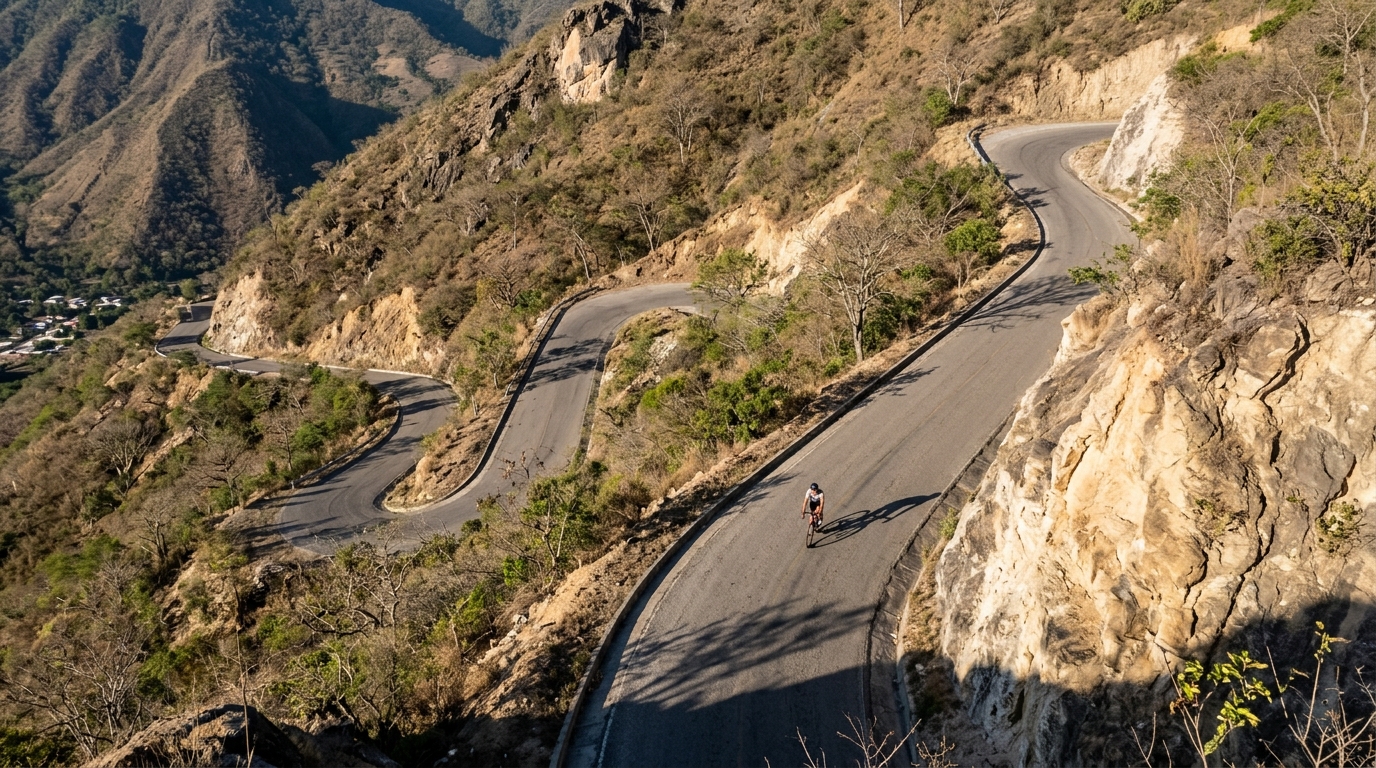
Honduras is a climbing destination built around medium-scale passes rather than headline altitude. The country has 5 listed climbs, with no hors categorie entries and a highest summit of 953 m, which changes the tactical feel of the riding. Instead of one decisive monster ascent, the challenge is how often the road asks for controlled pressure, how well a rider recovers between rises, and how disciplined the pacing stays when the profile refuses to settle.
The names tell the story: Paso de Unire, Paso de Manteca, Paso de Corinto, Paso de Lislique, and Paso de Nacascolo. These are the kinds of climbs that reward riders who can repeat steady efforts, carry momentum over the top, and avoid burning matches too early. Honduras is worth a trip because its climbing looks manageable on paper, then asks for real endurance once the passes start stacking up.
Cols emblématiques de Honduras
Toutes les ascensions dans Honduras
5 cols
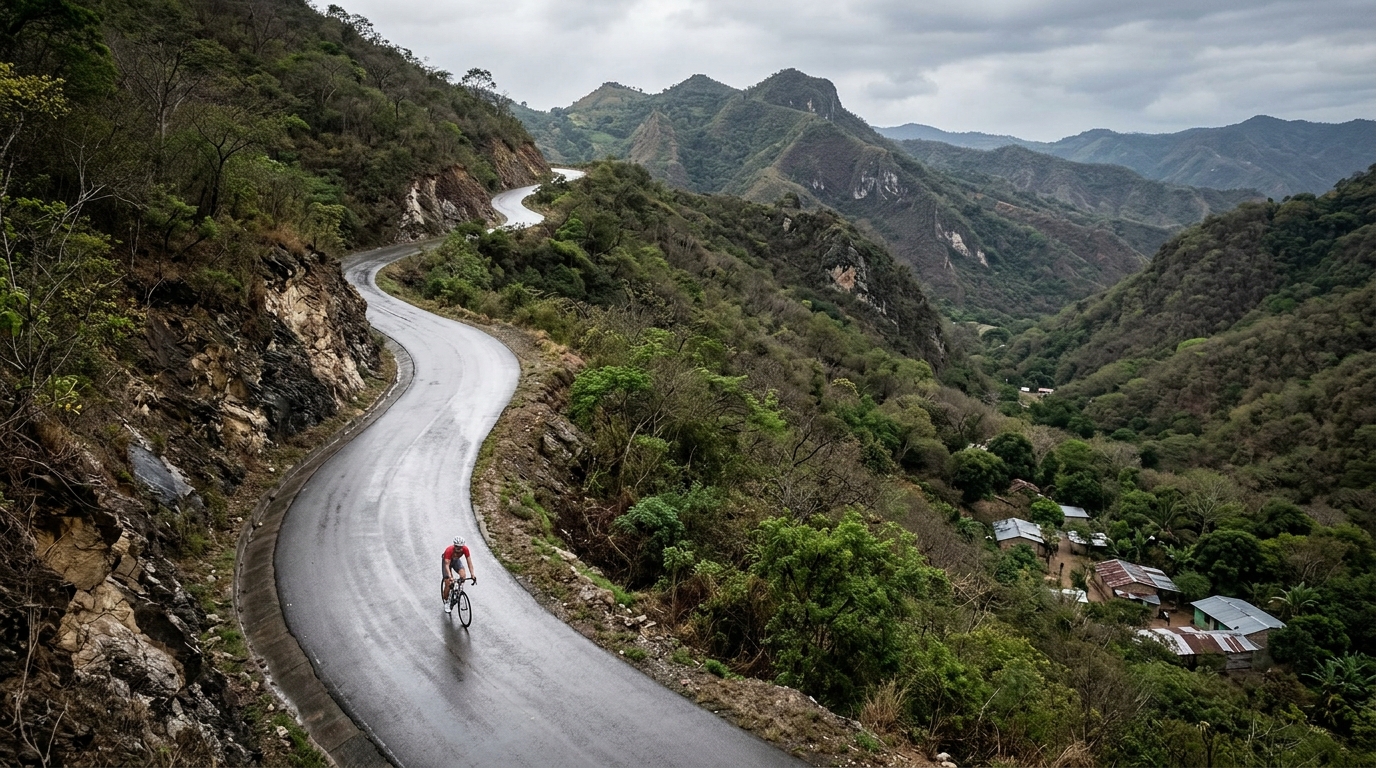
Le guide complet des cols de Honduras
Honduras as a climbing destination
Honduras is not a country defined, at least in the current Neverchill climb index, by giant alpine set pieces. The dataset for the country contains 5 mapped climbs, with 0 hors categorie climbs and a highest listed summit of 953 metres. That matters, because it immediately frames the riding: this is less about surviving a single, famous monster climb and more about managing repeated changes in terrain, heat, road surface, traffic, and pacing discipline.
That does not make the riding easy. In fact, smaller climbs can be deceptively costly because riders tend to under-respect them. Without the psychological warning sign of a high summit or a headline category, it is tempting to ride every pass a little too hard. Do that several times in warm conditions, especially with limited resupply or variable surfaces, and the day can unravel just as quickly as it would on a more famous mountain road.
The climbing character here is pass-oriented. The notable climbs in the country index are Paso de Unire, Paso de Manteca, Paso de Corinto, Paso de Lislique, and Paso de Nacascolo. That naming pattern is useful because a pass is usually not just a climb for its own sake. It is a route between places, which means the tactical problem is broader than gradient alone. You need to think about where the road carries traffic, where services are likely to sit, where the exposed sections come, and whether the descent puts you onto a busier corridor.
For riders used to European benchmark climbs, Honduras asks for a different kind of competence. The best days will come from conservative pacing, good route timing, and a willingness to treat logistics as part of performance.
Terrain and character
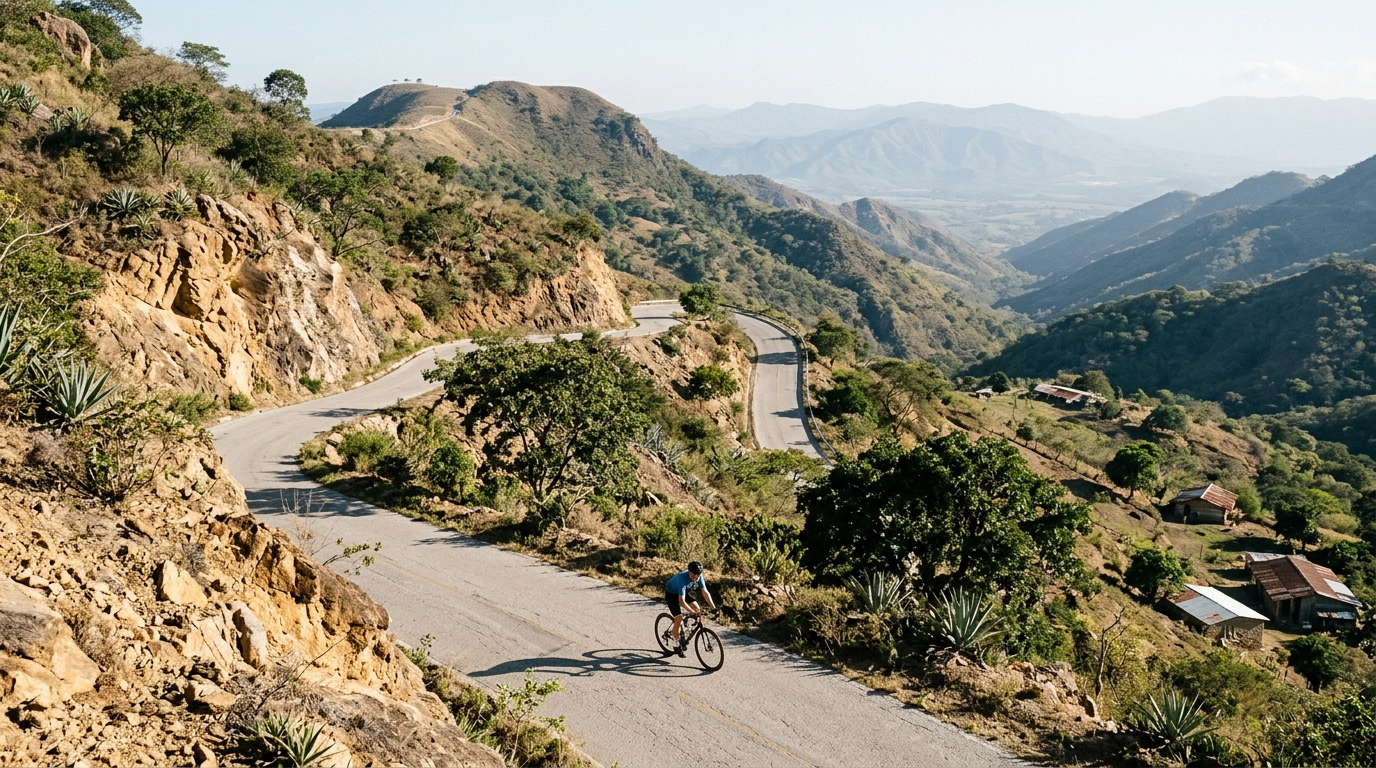
The key point is that Honduras' mapped climb profile is moderate in headline altitude but potentially demanding in execution. A highest summit of 953 metres keeps the riding below the range where altitude itself becomes the dominant limiter for most trained cyclists. That shifts the physiological equation. Instead of altitude exposure, the bigger pressures are likely to be heat management, hydration, surface changes, and repeatability.
This is important for pacing. On higher mountain routes, the climb often forces discipline because the effort is long, obvious, and hard to ignore. On lower passes, especially if gradients vary or the climb comes in steps, riders often surge too much. A punchy ramp becomes a threshold effort, a false flat becomes a tempo drag, and by the time the real work arrives the legs have already been taxed.
The smarter approach is to ride by effort, not emotion. If you know your sustainable numbers, anchor the first half of any climb below the effort you think you can hold. Use /glossary/ftp as a reference point, but do not make the mistake of treating an FTP target as a promise. On warm roads, with uncertain resupply and unknown surfaces, the effective ceiling is often lower than it looks on paper.
The terrain also rewards good descending judgment. Pass-based routes usually mean the climb is only half the problem. A descent can include broken pavement, traffic entering from side roads, animals, debris, or shaded corners that change grip without warning. The rider who gains a minute over the top and gives back confidence on the descent has not ridden a better climb. They have only shifted risk to a part of the route where mistakes cost more.
The standout climbs and how to think about them
Paso de Unire
Paso de Unire should be treated as one of the anchor climbs in the Honduras set because it appears in the notable list rather than as an incidental rise. Without verified distance or gradient data in the available context, the right way to approach it is not by chasing a specific time but by reading the road in real time.
Use the opening section to identify the climb's rhythm. If it is steady, settle early and avoid the common mistake of riding the first sustained pitch at a power you can only hold in clean conditions. If it is broken into ramps and easier sections, cap the surges. The goal is not to flatten every change in grade with force. The goal is to arrive at the upper part of the climb with enough control to respond to what the road gives you.
If Paso de Unire sits inside a longer ride, place it early only if you want quality climbing efforts. Place it later only if you are deliberately training durability.
Paso de Manteca
Paso de Manteca is another climb where the name tells you to think in route terms. A pass tends to connect, and connection usually means mixed use. That has implications for traffic timing and line choice. Start with the assumption that vehicles may appear where the road narrows, and that the cleanest line through a bend may not be available.
From a training standpoint, this kind of climb is well suited to controlled tempo work. Riding just below threshold on unfamiliar roads is often more productive than trying to manufacture a maximal effort. It gives you a strong stimulus while preserving attention for surface and traffic. If you need to estimate your training zones before the trip, /tools/ftp-estimator is more useful than guessing from a recent group ride.
Paso de Corinto
Paso de Corinto belongs in the same practical category: a notable Honduran pass where preparation should focus on consistency rather than spectacle. For riders building a route around it, the key question is what comes before and after. A climb is rarely isolated in a real ride. If the approach is exposed, busy, or rolling, the physiological cost begins long before the road obviously points upward.
Treat Paso de Corinto as a pacing test. Avoid the temptation to accelerate over every crest. On rolling pass roads, that is where energy disappears. Let speed fluctuate. Hold the effort steady. That distinction is often what separates a composed ride from one that looks strong early and fades late.
Paso de Lislique
Paso de Lislique should be approached with the same respect you would give any climb where local knowledge matters. With no verified gradient, distance, or summit data available beyond its inclusion in the notable Honduras list, it is a mistake to over-script the effort. Instead, build flexibility into the day.
That means carrying more fluid than the bare minimum, identifying possible bailout points before starting, and avoiding a rigid nutrition schedule that assumes every store or stop will appear exactly when needed. The less certain the route data, the more conservative the planning should be. That is not cautious for its own sake. It is how you preserve the ability to ride well when the road does something unexpected.
Paso de Nacascolo
Paso de Nacascolo rounds out the listed notable climbs and fits the broader profile of Honduras as a country where the challenge is cumulative. If you ride it as a standalone climb, it can be a clean test of pacing and gear choice. If it comes as part of a multi-pass day, it becomes a test of discipline.
The decision point is simple: are you trying to ride one climb fast, or finish the route strong? Those are not always the same objective. On a route with several passes, the rider who backs off slightly on the first climb often has more speed in the final hour. In this terrain profile, that is usually the better trade.
Best season and timing the ride
The best season for climbing in Honduras is the period with the most stable local weather, the lowest chance of heavy rain, and temperatures you can realistically manage. Because the provided context does not give verified seasonal dates, the practical advice is to confirm conditions locally rather than assume a fixed calendar window.
That may sound less satisfying than a simple month-by-month prescription, but it is the correct way to plan here. Road surface, storm runoff, construction, and local traffic patterns can matter more than a generic seasonal label. Before committing to a climb day, check recent conditions, ask riders or shops in the area, and be willing to move the route if the forecast makes descending or remote resupply risky.
Time of day is just as important as season. Start early enough to clear the hardest climbing before conditions deteriorate or traffic builds. On pass roads, this is not only about comfort. It changes the whole ride dynamic. Cooler conditions lower hydration stress, quieter roads make pacing smoother, and better visibility gives you more margin on descents.
Practical notes: traffic, resupply, altitude, and gearing
Traffic
Assume the notable passes are functional roads, not closed cycling playgrounds. That means ride predictably, keep a line that leaves room for surface hazards, and avoid drifting wide through bends. On narrow roads, the fastest rider is often the one who never has to brake hard because they have chosen a calmer, safer line from the start.
If possible, avoid peak local movement times. A quieter road makes it easier to hold steady effort, especially on climbs where vehicles can interrupt rhythm at exactly the moment the grade bites.
Resupply
Plan resupply conservatively. Do not build a route that depends on one uncertain stop between climbs. Pass-based riding can create long stretches where you are close to settlements on the map but not conveniently close to water when you need it. Carry enough to bridge missed stops, especially if the day includes more than one of the listed climbs.
Nutrition should be simple and repeatable. Eat before hunger becomes obvious. Drink before thirst forces the issue. On moderate-altitude climbs, the limiter is often not the climb itself but the slow dehydration and under-fuelling that make the final ascent feel much steeper than it is.
Altitude
With the highest listed summit in the Honduras climb index at 953 metres, altitude should not be treated as the primary performance constraint for most riders. That is useful because it means you can focus preparation on heat tolerance, pacing, and durability rather than acclimation.
But lower altitude does not mean lower strain. Warm air, repeated climbing, and inconsistent surfaces can push cardiovascular load high even without thin-air effects. If your heart rate is drifting upward at the same power, respond to the condition, not the plan. Backing off early is usually faster than cracking late.
Gearing
Choose gearing for control, not pride. Without verified gradients for the five notable Honduran climbs, the safest setup is one that lets you keep cadence under control if the road steepens, the surface roughens, or fatigue accumulates. A compact or wide-range setup is the sensible default for travel riding because it protects the second half of the route.
This is especially true if you are carrying extra water, tools, or bags. Added weight changes the feel of every ramp. A gear that is acceptable on a light bike during a local training loop can become a liability when the day is hotter, the road is unfamiliar, and the climb arrives after hours of rolling terrain.
How to build a Honduras climbing route
The best Honduras climbing route is not necessarily the one that stacks the most passes. It is the one with the cleanest sequence: manageable approach, reliable resupply, sensible descent, and a finish that does not force tired riding through stressful traffic.
If you are targeting performance, pick one primary climb and make the rest of the route support that effort. If you are targeting endurance, link multiple passes but cap intensity early. The country's mapped climb profile rewards riders who can repeat sub-threshold work without spikes. That is a specific skill, and it is more useful here than a single high-power effort that empties the tank.
For Neverchill climb pages, start with the five notable entries: /climbs/paso-de-unire, /climbs/paso-de-manteca, /climbs/paso-de-corinto, /climbs/paso-de-lislique, and /climbs/paso-de-nacascolo. Use them as anchors, then judge the route around them with the same seriousness as the climbs themselves.
Bottom line
Honduras is a climbing destination where the numbers do not tell the whole story. The index shows 5 mapped climbs, no hors categorie climbs, and a highest listed summit of 953 metres. That profile suggests accessible altitude and manageable headline severity, but it does not guarantee an easy ride.
The challenge is in the execution: pacing pass roads correctly, respecting traffic, carrying enough fluid, choosing forgiving gears, and treating local conditions as decisive. Ride Honduras like a rider who wants to finish stronger than they started, and the climbs will reward patience more than bravado.