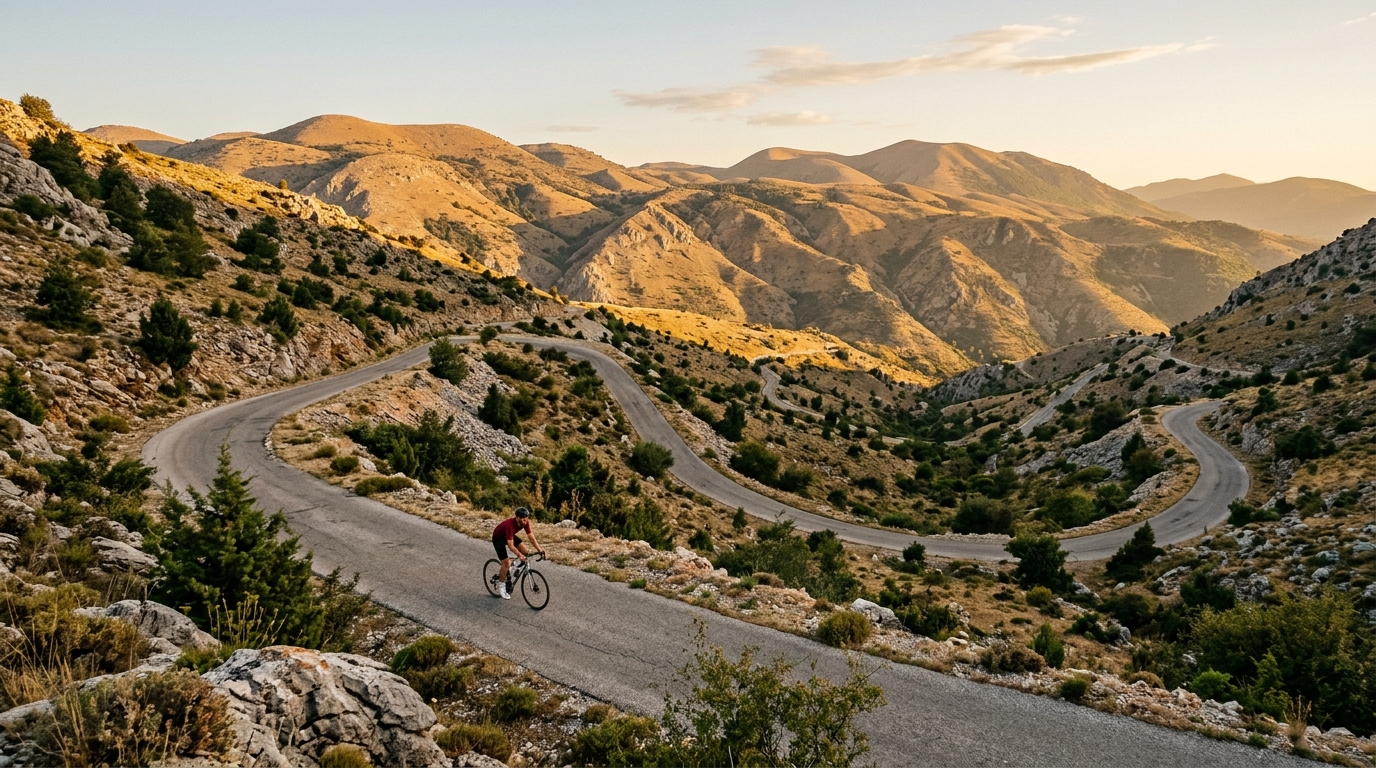
Bualli Pass
A practical profile of the Bualli Pass cycling climb, with pacing and gearing notes based on its 7.1 km length, 5.38% average, and 10.09% maximum gradient.
- Longueur
- 7.1km
- Moy
- 5.4%
- Max
- 10.1%
- Sommet
- 757m
- Dénivelé
- 332m
L'ascension
Profil de la pente
Bualli Pass cycling climb profile
Bualli Pass is a 7.1 km category 2 climb in AL, rising from 377 m to a summit elevation of 757 m. The headline number is the 5.38% average gradient, but the more useful pacing clue is the spread between that average and the 10.09% maximum gradient.
That tells you this is not a brutally steep climb from bottom to top, but it is also not a climb to ride casually on feel. The average is manageable enough to tempt a rider into settling too close to threshold early, while the maximum gradient is steep enough to punish that decision when the road bites.
One note on the elevation data: the start and summit elevations imply a 380 m elevation difference, while the separate total ascent field is listed as 332 m. For practical riding, the cleaner way to think about the climb is its 7.1 km length, 5.38% average, 10.09% maximum, and the 377 m to 757 m elevation change.
How the gradient unfolds
The context does not give kilometre-by-kilometre gradient steps, so the safest read is structural rather than segment-specific. From bottom to summit, Bualli Pass should be treated as a sustained moderate climb with sharper ramps embedded inside it.
A 5.38% average over 7.1 km means the climb gives you enough distance for pacing mistakes to accumulate. The 10.09% maximum means those mistakes will likely show up on the steeper pitches, where momentum drops and cadence becomes harder to protect. In practical terms, the climb is less about surviving one extreme section and more about keeping the effort controlled enough that the hardest ramps do not force you over your limit.
Pacing notes
Do not pace Bualli Pass only by the average gradient. On paper, 5.38% can look like a tempo climb. In the legs, the ramps toward 10.09% change the cost of going too hard early.
If the climb is part of a longer ride, keep the first phase deliberately contained and let the road decide whether you move toward tempo or sweet spot. If this is the main effort of the day, build toward a controlled threshold-style effort, but avoid surging every time the gradient lifts. Repeated accelerations on a 7.1 km climb are rarely free, especially when the steepest pitch is roughly double the average gradient.
For riders using power, this is a climb where discipline around /glossary/ftp matters. Let the steeper sections lift power slightly if needed, but recover that cost on the steadier gradients rather than trying to hold the same high output all the way to the summit.
Gearing notes
Gear for the 10.09% maximum, not the 5.38% average. If your easiest gear only feels comfortable on the middle of the gradient range, you may run out of cadence when the road steepens.
The ideal setup lets you stay seated, shift early, and keep torque under control on the ramps. Bualli Pass is long enough that grinding through the steepest sections can leave a mark, but moderate enough that a smooth rider who keeps cadence and effort stable should be able to carry speed all the way to the top.