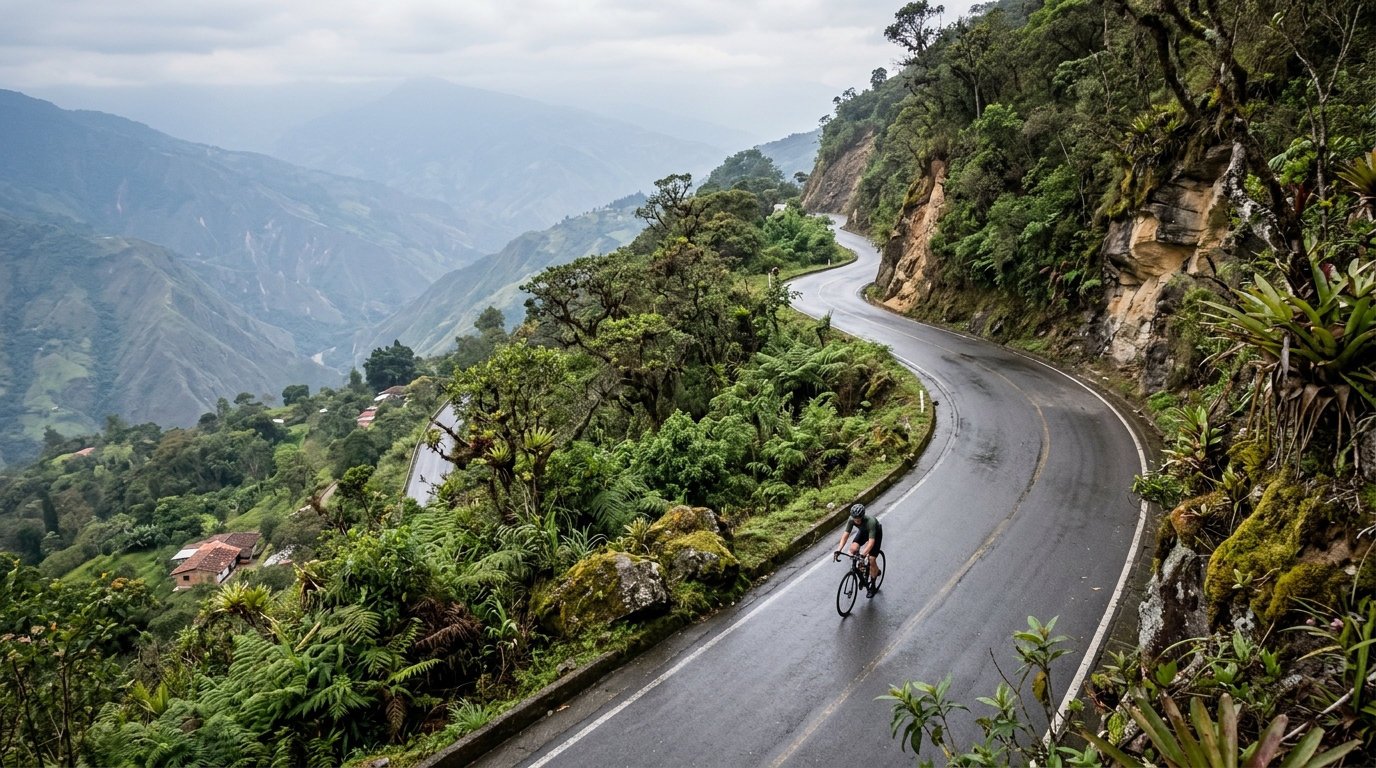
Alto de las Ventanas
A practical profile of Alto de las Ventanas, a 14.8 km category 1 climb averaging 5.29% with ramps up to 21.18%.
- Longueur
- 14.8km
- Moy
- 5.3%
- Max
- 21.2%
- Sommet
- 1,421m
- Dénivelé
- 832m
L'ascension
Profil de la pente
Alto de las Ventanas cycling climb profile
Alto de las Ventanas is a category 1 climb that asks for restraint early and flexibility late. On paper, 14.8 km at 5.29% looks like a long but manageable ascent. The important detail is the spread between that average and the 21.18% maximum gradient. This is not a climb to ride by the headline gradient alone.
The road rises from 638 m to 1421 m, gaining 783 m net elevation. Total ascent is 832 m, which tells you the profile is not a perfectly smooth ramp from bottom to summit. There is enough variation in the road to disrupt rhythm, and that matters tactically. A rider who locks into a steady /glossary/ftp effort based only on 5.29% can be forced over threshold when the steepest ramps arrive, then struggle to recover if the road keeps changing pitch.
How the gradient unfolds
The defining feature is contrast. The average gradient suggests tempo climbing, but the maximum gradient makes this a climb with real anaerobic pinch points. Those steep sections will be where pacing mistakes become visible. If you arrive at them already riding too close to the limit, the climb can quickly shift from controlled aerobic work to survival.
Because the total ascent exceeds the net gain, expect the climb to include enough easing or variation that momentum and gear choice matter. The flatter or less severe parts are not free speed - they are chances to reset breathing, bring cadence back under control, and avoid carrying unnecessary fatigue into the next ramp.
Pacing and gearing notes
The best approach is conservative at the base. Treat the opening effort as setup, not a place to prove form. The climb is long enough that early over-pacing will compound, and the steep maximum gradient means you need a reserve for short, high-torque efforts.
Practical pacing cues:
- Ride the average gradient as a guide to duration, not difficulty.
- Keep the effort below your limit until the road has shown its pattern.
- Use gentler sections to recover, not to accelerate automatically.
- Expect the steepest ramps to demand seated strength or short standing efforts.
Gearing should be chosen for the 21.18% maximum, not the 5.29% average. A setup that feels efficient on moderate gradients may leave you grinding when the road kicks hard. For most riders, the priority is having a low enough gear to keep pressure smooth through the steepest pitches rather than chasing speed. If you are estimating the effort beforehand, base it on sustained climbing capacity, then leave margin for repeated surges above that level. The /tools/ftp-estimator can help anchor that expectation, but the climb rewards judgment as much as raw power.
Bottom line
Alto de las Ventanas is a long, uneven category 1 ascent where the average gradient understates the challenge. Ride it patiently, gear for the steepest ramps, and use the variable terrain to manage effort rather than fight it.