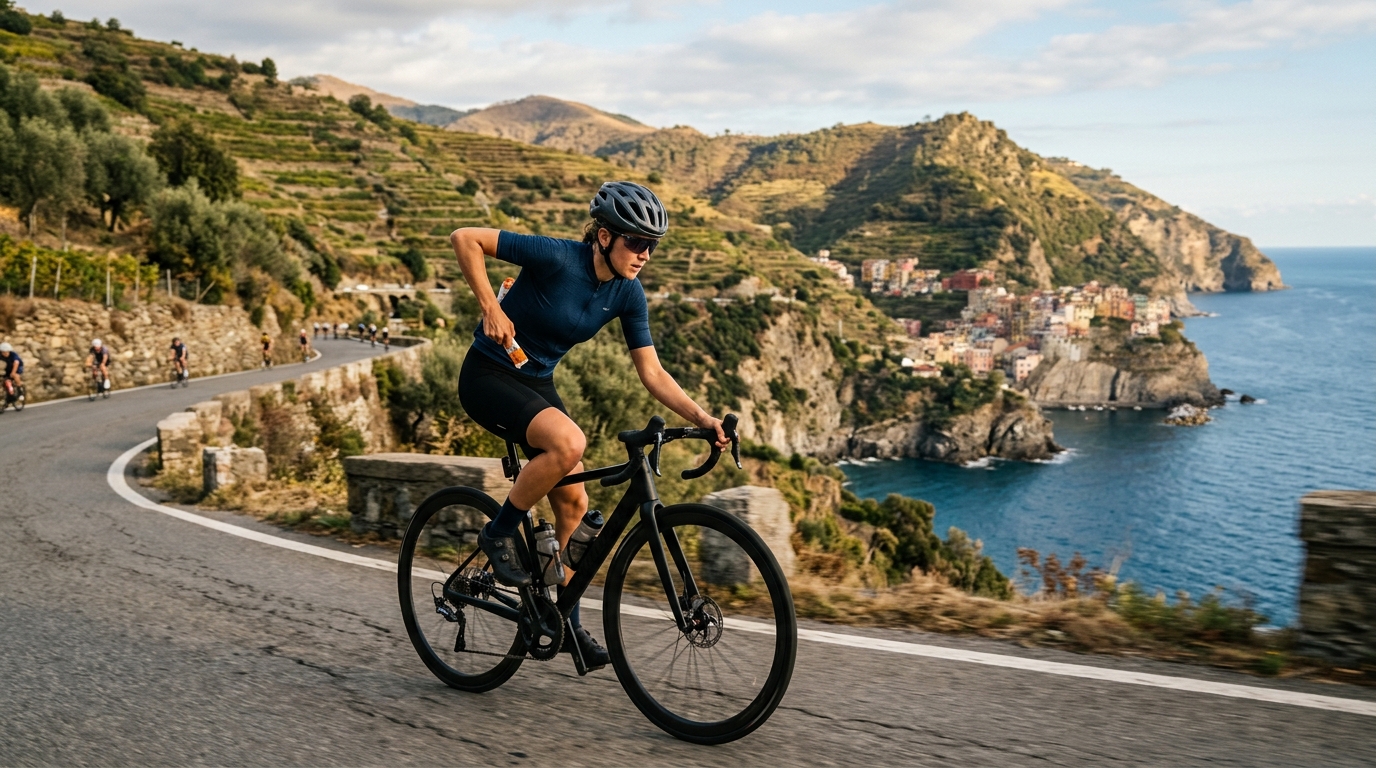
Image generated by our model.
Fueling: Carbs Per Hour Without the Gut Bomb
Carbohydrate intake is the single biggest lever you can pull on a long gran fondo. Undereat and you fade. Overload the wrong sources too fast and you spend the last hour searching for a hedge. Neither outcome is acceptable when you've trained months for a single day.
The goal is simple to state, harder to execute: maximize carb delivery to working muscles while keeping your gut cooperative for the full duration.
Why the Gut Becomes the Limiting Factor
Your intestine absorbs carbohydrates through specific transporter proteins. Glucose and fructose use different transporters — SGLT1 and GLUT5 respectively. When you rely on a single source, those transporters saturate and absorption stalls. The unabsorbed carbohydrate stays in the gut, draws water in through osmosis, and causes bloating, cramping, or worse.
This is why the type of carbohydrate matters as much as the quantity. Blending glucose-based sources with fructose unlocks a second absorption pathway and raises the ceiling on how much you can actually use per hour.
Building Your Hourly Target
For most riders on a gran fondo, intake falls into three practical tiers:
- Low (under 60g/hr): Manageable with almost any source, minimal gut training needed. Fine for shorter or easier events, but leaves performance on the table for long days.
- Moderate (60–90g/hr): The working range for most fondo efforts. Achievable with mixed sources. Some gut adaptation helps.
- High (90g+ per hour): Appropriate for competitive efforts and very long events. Requires a glucose-to-fructose ratio around 2:1, practiced eating habits, and deliberate gut training over weeks.
Don't jump to the high tier on event day because you read it's optimal. Your gut is trainable but it takes time. Start at a tier you can execute cleanly, then build.
Choosing Your Sources
Gels
Convenient and precise. Most gels list carbohydrate content and source clearly. Look for products that combine maltodextrin (glucose-based) with fructose. Take them with water — not sports drink — to control total osmolality and reduce the chance of GI upset.
Single-source gels (pure glucose or pure maltodextrin) work well at lower intake rates. Once you're targeting higher hourly amounts, switch to multi-source gels or pair a standard gel with a fructose-containing drink.
Sports Drinks
Carb-electrolyte drinks serve a dual purpose: fuel and fluid. At moderate concentration they're easier on the gut than solid food at high intensity. Mix strength matters — a drink that's too concentrated slows gastric emptying. Follow product guidance on dilution, especially in heat.
Real Food and Bars
Bananas, rice cakes, and oat-based bars are reliable for the first half of a long event when intensity is lower and digestion is less compromised. As effort rises in the final hours, shift toward liquids and gels. Chewing and digesting solid food demands blood flow that your working muscles also want.
On a gran fondo, a practical approach is food-forward in the first third, mixed in the middle, and gel/liquid-dominant toward the end.
The 2:1 Glucose-to-Fructose Ratio in Practice
You don't need to carry a calculator. Here's what the ratio looks like in product terms:
- A gel containing maltodextrin and fructose in roughly 2:1 proportion
- A sports drink with glucose or sucrose plus added fructose
- Combining a glucose-based product with a piece of fruit (bananas are roughly half fructose)
Many modern endurance products advertise "multi-transportable carbs" or "2:1 ratio" on the label. That phrasing maps directly to this principle. If a product doesn't specify, check the ingredient order — ingredients are listed by weight.
Timing and Rhythm
Waiting until you're hungry or thirsty is too late. By the time those signals arrive, you're already behind.
Set a fueling rhythm before you start:
- Every 20–30 minutes: Take in some form of carbohydrate
- Start early: Begin fueling within the first 20–30 minutes, even if effort feels easy
- Synchronize with terrain: Take gels or food before climbs, not at the base. Eating while seated and spinning is far easier than trying to unwrap something while pushing hard watts uphill.
For a fondo with significant climbing — the kind you'll find in the rides covered throughout this guide — plan your food locations around the course profile. Know where descents give you easy eating windows.
Training Your Gut
The gut adapts. Intestinal carbohydrate transporters upregulate when you consistently present them with carbohydrate during training. This is not a metaphor — regular high-carb training sessions physically increase your absorption capacity over weeks.
Practical gut training protocol:
- Pick two or three long rides per month in your fondo build where you practice target intake
- Use the same products you'll race with — event day is not for experiments
- Start at a conservative intake and add roughly 10–15g per hour each session if the previous session was clean
- Note any symptoms — the cause is almost always concentration, timing, or source choice, not an unfixable sensitivity
Most riders who claim they "can't eat on the bike" have simply never practiced eating on the bike at race-relevant intensity. The gut responds to training like everything else.
Common Mistakes
Taking gels dry. Always chase with water. The concentrated sugar sits in the stomach and slows emptying.
Eating only at feed stops. Feed stops are spaced for logistics, not physiology. Carry enough to eat on your schedule regardless of where support is.
Switching products mid-event. If the event provides different gels or drinks than you trained with, take what you know works and supplement from feed zones only if needed.
Ignoring early hours. Many riders under-fuel the first two hours because they feel good. This creates a deficit that's nearly impossible to close once intensity peaks.
Concentrated drink plus gel plus banana simultaneously. Stacking multiple high-sugar sources in a short window spikes gut osmolality. Space sources out — one thing every 20 minutes is better than three things at once.
Putting It Together for Your Fondo
A workable starting framework for a long gran fondo:
| Phase | Intensity | Target | Primary Sources |
|---|---|---|---|
| Hours 1–2 | Moderate | 60–70g/hr | Bar, banana, drink |
| Hours 2–4 | Variable | 70–90g/hr | Mixed: gels + drink + real food |
| Hours 4+ | High/fatigue | 80–90g/hr | Gels, liquid carbs |
Adjust based on your event duration, your gut training progress, and the conditions on the day. Heat increases fluid needs and can reduce gut tolerance — consider dropping intake slightly and prioritizing hydration if temperatures are high.
For help mapping your FTP to likely intensity and duration on your target event, the FTP estimator gives you a baseline to work from when calculating fuel demand.
Fueling is a skill. It gets better with practice, and the athletes who execute it well on event day almost always practiced it specifically — not just assumed it would work out.