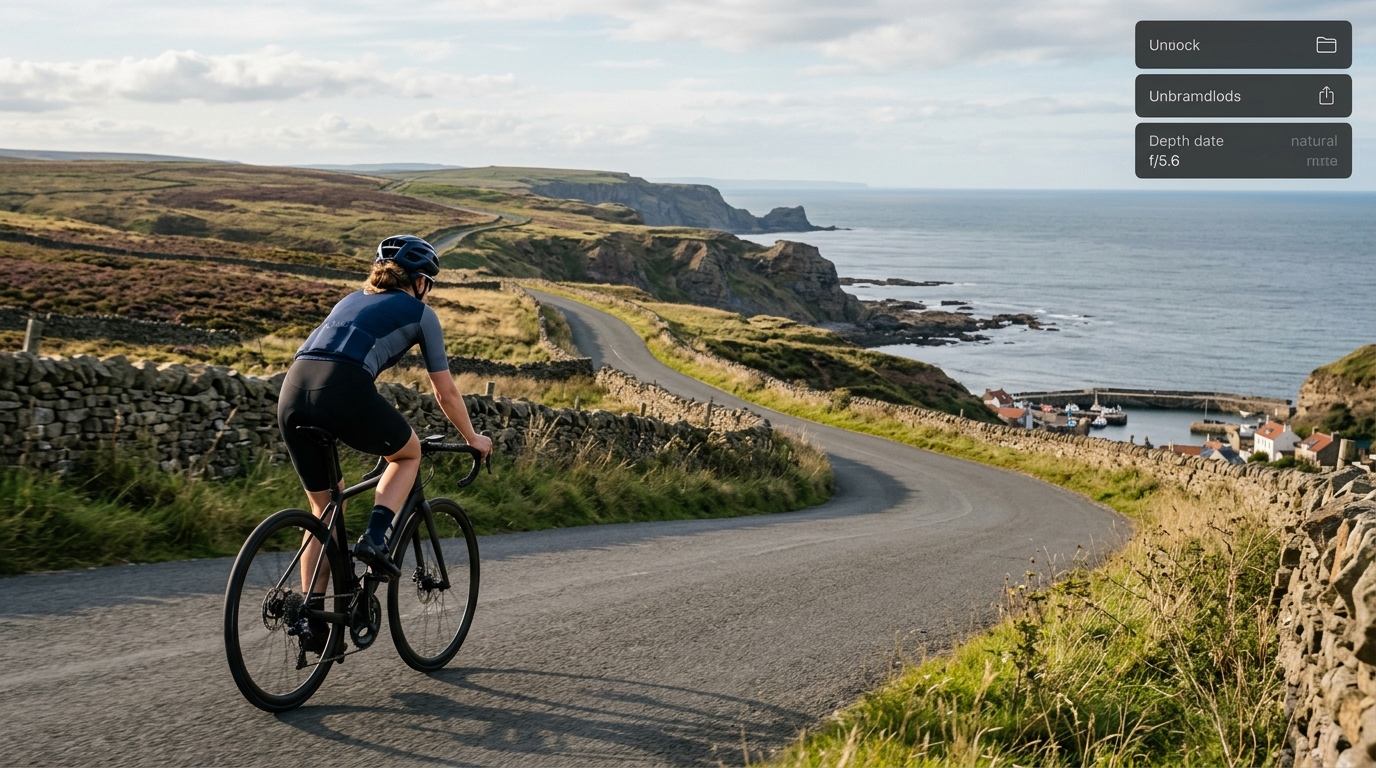
Image generated by our model.
Race Week: Taper, Kit, and Logistics for Your First Gran Fondo
The week before a gran fondo is not the time to squeeze in extra fitness. It is already banked. What you do — and don't do — in the final seven days determines whether you arrive at the start line fresh or flat.
The Taper: Less Is More, Done Deliberately
A taper is a structured reduction in training load. The goal is to let accumulated fatigue dissipate while keeping your neuromuscular system primed. Get this wrong in either direction — too much rest or too little — and you pay for it over the back half of the course.
Volume vs. Intensity
Reduce volume significantly across the week. Cut your total riding time down compared to your peak training weeks. Do not, however, eliminate intensity entirely. Short, sharp efforts tell your legs they still need to be ready to produce power.
A simple race-week structure:
- Sunday–Monday (6–7 days out): Easy spin or full rest. If you rode a long effort the weekend before, prioritize recovery here.
- Tuesday (5 days out): Short ride with 3–4 efforts at or just above your functional threshold power. Keep each effort brief — 3 to 5 minutes is enough.
- Wednesday (4 days out): Easy active recovery ride. Keep heart rate low. This is not a day to prove anything.
- Thursday (3 days out): Another short activation session. A few punchy efforts lasting 20–30 seconds, full recovery between each. The goal is neuromuscular sharpness, not cardio stress.
- Friday (2 days out): Rest or a very short, easy spin — 20 to 30 minutes maximum. Shake the legs out, nothing more.
- Saturday (1 day out): Rest. Pack your kit. Eat well. Sleep early.
Signs You're Tapering Correctly
Expect to feel restless, slightly irritable, and paradoxically tired in the middle of the week. This is normal. Your body is consolidating adaptations. The freshness arrives in the final 24–48 hours, not on Tuesday.
If you feel flat on race morning, it is almost never because you rested too much. It is usually nerves, under-fueling the day before, or poor sleep.
Kit Preparation
Do not leave kit decisions to race morning. Every item should be selected, checked, and laid out by Friday evening.
The Non-Negotiables
- Helmet: Inspect the retention system and straps. If it took any impact in the past year, replace it.
- Shoes and cleats: Check cleat wear and bolt tightness. A loose cleat mid-climb is a fixable problem that should never happen on race day.
- Bib shorts: Use your most proven pair. Race week is not the time to debut new chamois.
- Jersey with pockets: Confirm you can carry what you need — food, phone, emergency tube, cash or card.
- Gloves: Even in warm conditions, gloves protect your hands in a fall and reduce handlebar fatigue on long descents.
- Eyewear: Clean lenses the night before.
Nutrition Kit
Plan your on-bike nutrition before you leave the house. Know what the event provides at feed zones and decide what you will carry yourself. Do not rely entirely on event nutrition unless you have trained with those exact products.
Carry at minimum:
- Enough energy to cover the first segment between the start and the first feed zone, plus a buffer
- One gel or bar in an immediately accessible pocket for the final push when pockets and feed zones are empty
- A small amount of electrolytes if conditions will be warm
For longer fondos, use your jersey pockets and a nutrition planning approach you have already tested in training.
Weather-Specific Additions
- Rain or cold: Arm warmers and a light gilet pack small and can be pocketed once you warm up. Overshoes if temperatures are genuinely cold.
- Heat: Extra water capacity. Know where the water stops are on course.
- Variable mountain weather: A packable rain jacket if descents will take you to higher elevations or if afternoon storms are possible.
Bike Preparation
If your bike needs a service, book it no later than ten days out. You want it back and ridden before race week begins, so any adjustments have been verified.
On Thursday or Friday, run through this check:
- Tyres: Check pressure and inspect for embedded debris or cuts. Consider fresh sealant if you run tubeless.
- Chain: Clean and lubricate. A dry or dirty chain costs watts and wears drivetrain components.
- Brakes: Check pad wear and cable tension. Confidence on descents starts here.
- Bolts: Saddle, stem, bars, bottle cages. A torque wrench is the right tool. Finger-tight is not tight enough; overtightened carbon components are damaged components.
- Gearing: Shift through all combinations. Address any indexing issues now, not at the start line.
Logistics: Remove Every Variable You Can
Race-day stress compounds. Every decision you make in advance is one fewer thing to manage at 5:30 a.m.
Registration and Numbers
Collect your race number and timing chip as early as the event allows — often the day before. Read the event briefing document. Know the rules on drafting, cut-off times, and any mandatory equipment.
Course Familiarization
Download the GPX file to your head unit. Ride the first few kilometers of the course in your head: where is the start pen, where does the road narrow, where is the first significant climb? You do not need to memorize every turn, but mental familiarity with the early race reduces anxiety and prevents reactive, aggressive riding in the first 30 minutes.
Review the elevation profile and climb details for the event so your pacing targets are already decided.
Travel and Parking
- Drive or walk the route to the start the day before if possible.
- Know where to park and how long the walk to the start village takes with a bike.
- Identify where transition areas, bag drop, and mechanical support are located.
The Night Before
- Eat a normal-sized dinner with carbohydrates. Do not stuff yourself — a massively inflated pre-race meal causes discomfort, not extra energy.
- Hydrate consistently through the day; do not attempt to hyper-hydrate in the evening.
- Set two alarms.
- Lay out everything: kit, shoes, helmet, filled bottles, race food, number, timing chip, pump, phone charger.
- Sleep as early as is realistic. Pre-race sleep anxiety is normal. One poor night's sleep has minimal impact on performance; the sleep two nights before matters more.
Race Morning Timeline
Work backwards from your start time:
- Start time minus 3 hours: Wake up.
- Start time minus 2.5 hours: Eat breakfast. Familiar, carbohydrate-based, low in fat and fiber to minimize GI issues.
- Start time minus 1 hour: Arrive at venue. Collect any remaining items. Pump tyres to final pressure.
- Start time minus 30 minutes: Warm up if conditions allow — especially relevant for timed climbs or events that start fast. For long fondos, the first 20 minutes of the event itself can serve as your warm-up if you start conservatively.
- Start time minus 15 minutes: In your start pen.
The Morning Mindset
Nervousness is useful. It signals that you care and that your body is priming itself hormonally for effort. The practical work is already done. Your fitness is built. Your kit is ready. Your bike is checked. The only job on race morning is execution — and the first principle of that is starting slower than you think you should.