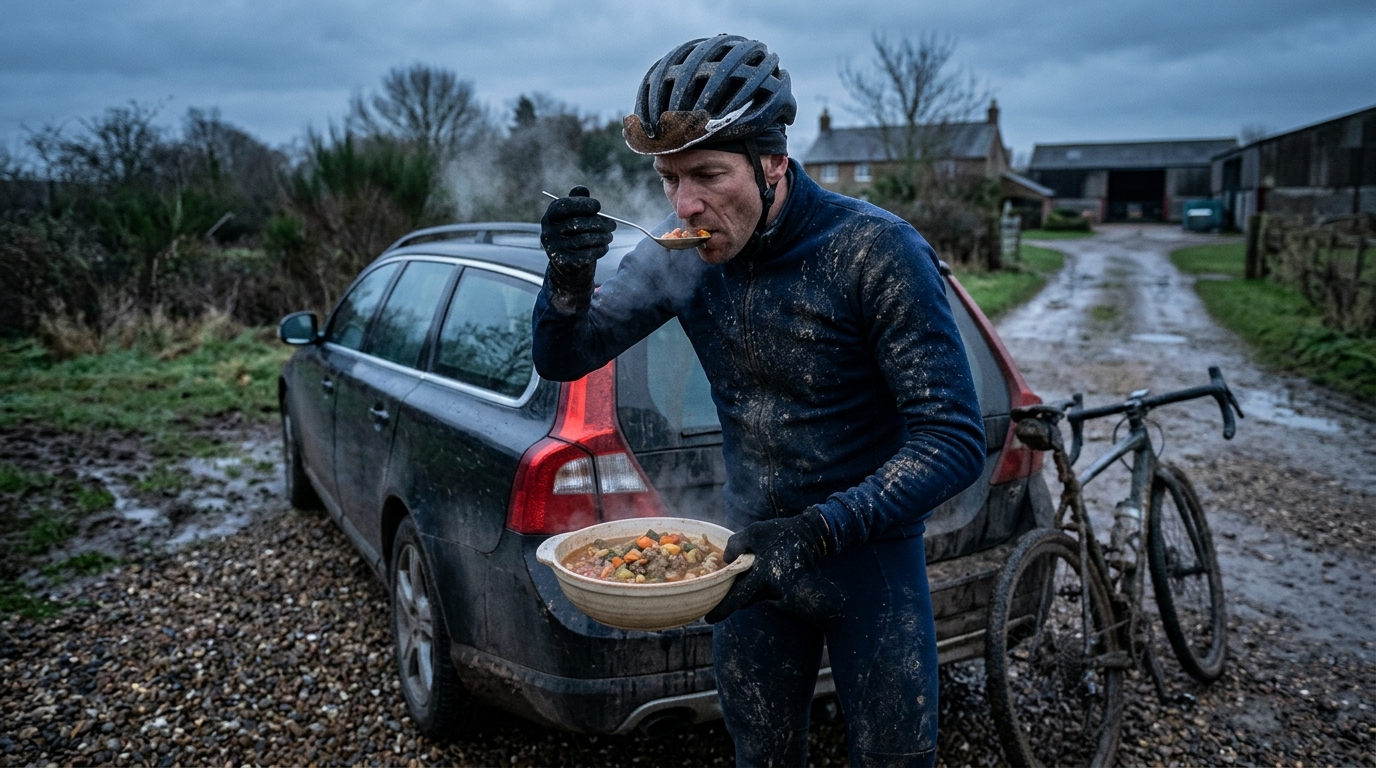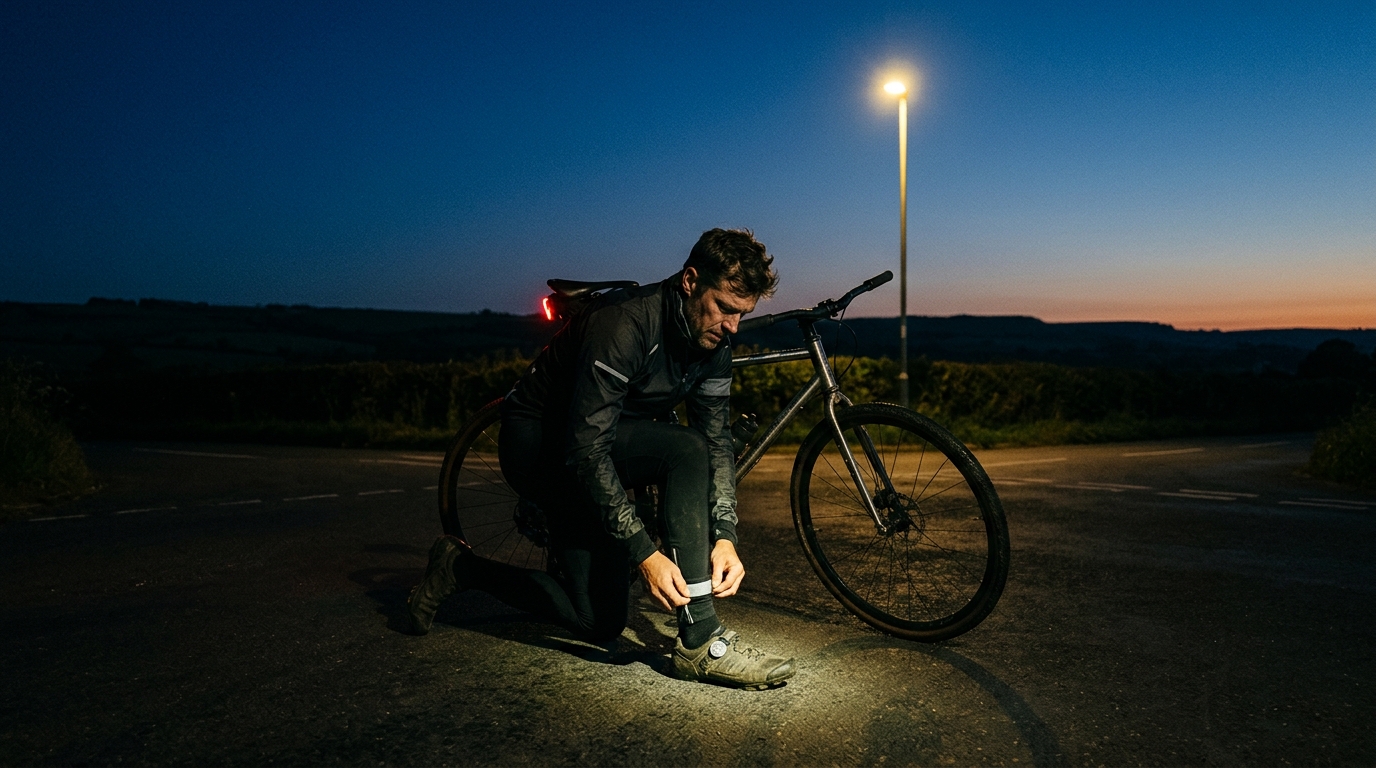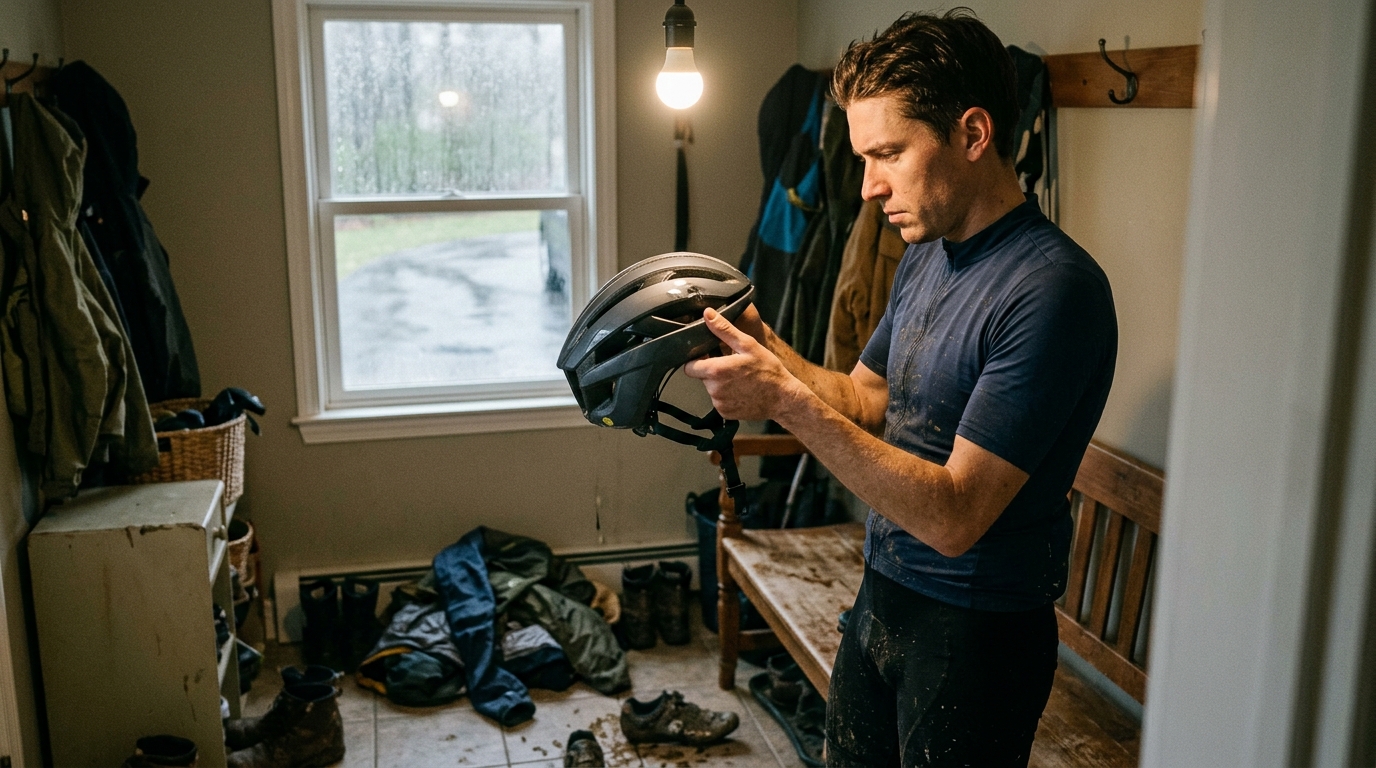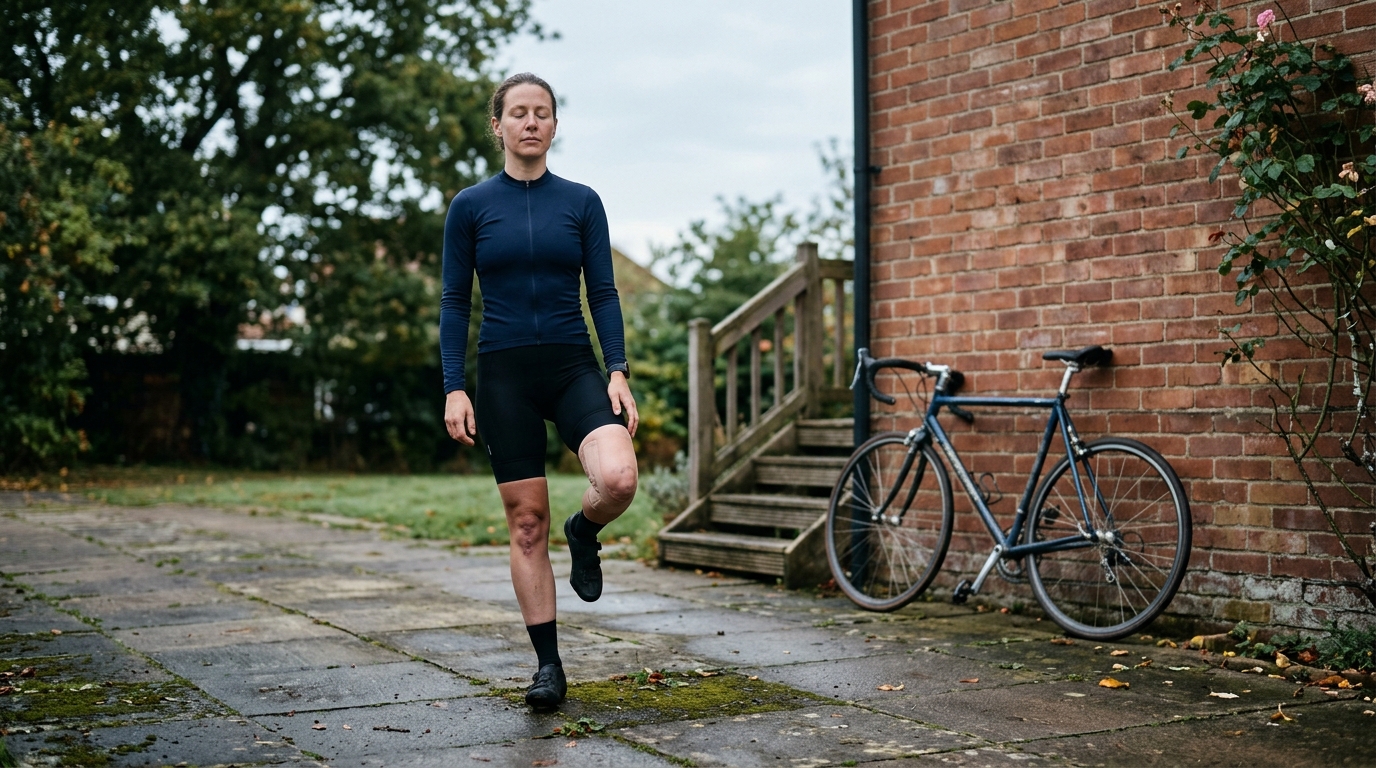
Image generated by our model.
injury
Return to Cycling After Injury: A Safe Comeback Plan
A practical return to cycling after injury plan using clean response rules, conservative load progression, and staged intensity reintroduction.
Return to Cycling After Injury: Rebuild Fitness Safely
The hardest part of a return to cycling after injury is not the first ride back. It is managing the gap between what your aerobic engine remembers and what the injured tissue can currently tolerate.
That gap is where most comeback mistakes happen. Fitness often feels like it is returning before durability has caught up. Motivation rises, power looks less bad than expected, the group ride starts looking tempting, and suddenly the plan shifts from rehabilitation to proving a point.
A smart cycling injury comeback plan does the opposite. It assumes your cardiovascular system, muscles, tendons, joints, confidence and handling skills are all returning at different speeds. The job is not to rush them into alignment. The job is to expose the body to the right stress, watch the response, then progress only when the signal is clean.
This template is deliberately conservative. Injury type, medical advice and clinician guidance override it. A bruise, tendon issue, fracture, concussion, nerve symptom or joint injury should not all be treated as the same training problem.
When to Resume Training After an Injury
The first question is not, 'Can I ride?' It is, 'Can I ride without changing the injury story?'
You are ready to restart structured riding when the injury is stable enough that an easy spin does not increase symptoms during the ride, later that day, or the following morning. That delayed response matters. Many cycling injuries feel acceptable once warm, then punish you after the session. If you only judge the ride in real time, you will miss the most useful feedback.
Before resuming training after a cycling crash or overuse injury, get clear on what kind of injury you are dealing with. General soreness is different from a joint injury, fracture, concussion, nerve symptom, tendon issue, or anything that changes pedaling mechanics. If there is uncertainty, medical clearance is not a formality. It is part of the training plan.
A useful readiness checklist:
- You can complete normal daily movement without escalating symptoms.
- You can pedal easily without compensation, guarding, or altered position.
- You can get on and off the bike safely.
- You can brake, steer and look around without provoking symptoms.
- You are not relying on pain relief to make the ride possible.
- Symptoms are predictable rather than surprising or spreading.
The final point is underrated. Predictable mild discomfort that trends down is very different from sharp, shifting, or expanding pain. The former can sometimes be managed with conservative loading. The latter is a warning that the body is not ready for training stress.
What a Clean Response Actually Means
A clean response is not just 'I finished the ride.' It means the body accepted the load without asking you to pay for it later.
Use the same decision rule after every comeback ride:
- Progress only when symptoms are absent or clearly settling, pedaling mechanics stay normal, and the next morning feels no worse than before the ride.
- Hold the current load when symptoms are noticeable but stable, predictable and not changing your position, cadence or movement off the bike.
- Reduce the load when symptoms increase during the ride, return more strongly afterward, appear earlier than usual, or leave you more guarded the next morning.
- Seek medical input when pain is sharp, spreading, associated with weakness, numbness, dizziness, concussion symptoms, loss of function, or a clear change in how you move.
The key is repeatability. Do not progress from a single good ride. Repeat a similar exposure until the response is consistently clean. If the same easy ride keeps producing the same stable response, that is information. If it produces a worse response, that is also information, and it matters more than the power file.
How Much Fitness You Actually Lose During Time Off
Cycling fitness loss after injury is real, but it is usually not as simple as feeling unfit and assuming everything is gone.
Aerobic fitness, muscular endurance, neuromuscular sharpness, fatigue resistance and confidence do not disappear at the same rate. After time off, your first ride may feel awkward because cadence, posture and pressure on the contact points are unfamiliar again. That does not mean your aerobic base has vanished. Equally, a decent endurance ride does not mean you are ready for threshold work or a hard climb.
This distinction matters because athletes often use the wrong signal. They feel stale and panic, so they chase intensity. Or they see a tolerable power number and assume the injury can handle normal training. Both are flawed readings.
The better interpretation is this: your system has been unloaded. Some fitness qualities may return quickly, but tissue tolerance and repeatability need to be rebuilt. A ride you can complete once is not the same as training you can absorb repeatedly.
That is the core principle of rebuilding cycling fitness. Do not judge the comeback by the best ride you can produce. Judge it by how well you recover from a manageable ride and whether you can stack consistent sessions without symptoms trending in the wrong direction.
Set a Conservative Return-to-Ride Baseline
Your baseline ride should be almost boring. That is the point.
It is not a fitness test, not a disguised workout, and not a chance to see what you have lost. It is a controlled exposure that answers a simple question: can the body tolerate easy cycling today and recover normally afterward?
Choose a route or trainer setup with minimal variables. Avoid punchy climbs, technical roads, aggressive positioning, sprinting away from junctions, and social pressure. If you are returning after a crash, the trainer can be useful because it removes traffic, braking and handling stress. If the issue is position-related, an outdoor ride may reveal problems that the trainer hides. Pick the environment that best tests the relevant risk without adding unnecessary load.
Keep the first baseline ride easy enough that you finish wanting more. That feeling is not wasted potential. It is your margin of safety. The comeback is won by leaving something in reserve and seeing whether the body gives you permission to progress.
After the ride, track:
- Pain or discomfort during the session.
- Pain or discomfort later in the day.
- Symptoms the next morning.
- Pedaling symmetry and comfort on the bike.
- Mood, fatigue and willingness to ride again.
- Any change in sleep or general soreness.
If the baseline produces a clean response, repeat a similar stress before expanding the plan. If it produces a mixed response, hold steady or reduce the load. If symptoms escalate, stop pretending this is a fitness problem and treat it as an injury management problem.
A Practical Comeback Progression Framework
The safest return is built like a sequence of controlled tests. You are not trying to prove fitness. You are trying to identify the highest load you can absorb without changing the injury response.
A conservative framework looks like this:
Establish the baseline
Start with easy riding in a controlled environment. The ride should be short enough, calm enough and predictable enough that the injury is the main thing being tested, not traffic, terrain, fatigue or ego.
Your baseline is valid when you can ride easily without compensation and recover without a next-day symptom increase. If the first attempt is not clean, reduce the stress or return to clinician-guided rehab before trying to progress.
Repeat before increasing
A single clean ride is not enough evidence. Repeat the same type of ride until the response is consistently clean. This matters because many injuries tolerate one exposure but object once the same stress is repeated.
Progression should come only after clean responses are repeatable. If the response is mixed, hold the same load. If it worsens, step down.
Add duration before intensity
Once easy riding is repeatable, add a little more endurance load before adding hard efforts. That can mean slightly longer easy rides or a modest increase in how often you ride, but not both aggressively at once.
The logic is simple: endurance riding increases total exposure while keeping peak force and acute strain lower than intervals, surges or hard climbs. It gives you a better read on tissue tolerance without immediately adding race-like stress.
Add controlled tempo before threshold
Tempo should return before threshold because it lets you test sustained pressure while still keeping the session controlled. Keep the effort seated, smooth and predictable. Avoid chasing old numbers.
If tempo produces a clean response across repeated sessions, threshold-style work can return later in the progression. Threshold is not just a cardiovascular stress. It adds more torque, more concentration and a stronger tendency to override discomfort, which is why it should not be the first intensity you bring back.
Add group rides after controlled efforts
Group riding should come after you have handled controlled intensity on your own. A group ride adds surges, braking, positioning, ego, road furniture and decisions you do not fully control.
Choose the calmest version available. Sit out surges. Stay away from situations where you have to close gaps repeatedly or handle aggressively while still protecting the injury.
Race only after training is boring again
Racing should be the final layer, not the test that tells you whether you are ready. You should be able to train consistently, complete controlled efforts, handle group dynamics and wake up the next morning without a symptom penalty.
If you are still modifying your pedal stroke, avoiding contact, hesitating under load or negotiating with pain, racing is too early. The problem is not toughness. It is that racing removes the control you need during the comeback phase.
A Sample Comeback Structure
This is not a universal plan. The right structure depends on the injury, the rider, the bike fit, the terrain available and the guidance of the clinician involved. But the order below is a useful conservative template.
- Controlled exposure: an easy ride in the safest practical environment, with the goal of collecting a clean response.
- Repeat the exposure: do the same kind of ride again rather than increasing immediately.
- Extend easy riding: add endurance load only after clean responses are repeatable.
- Add controlled tempo: introduce smooth, seated, submaximal efforts before anything sharp.
- Add threshold later: bring back more demanding sustained work only after tempo is absorbed cleanly.
- Reintroduce group riding: choose low-pressure groups and avoid surges until variable riding is tolerated.
- Return to racing: race only once training, intensity and group dynamics are all repeatable without symptom escalation.
The important part is the sequence. Duration before intensity. Controlled efforts before chaotic efforts. Group riding before racing. If symptoms move in the wrong direction at any step, the answer is not to force the next step. It is to hold or step back until the response is clean again.
Use Power, Heart Rate and RPE to Control Intensity
Power, heart rate and RPE are most useful during a comeback when they are used together, not as competing authorities.
Power tells you the external workload. It is the cleanest way to prevent accidental intensity, especially on rolling roads where enthusiasm can turn every rise into a mini interval. If you know your previous training levels, be careful with them. Your old FTP may not represent your current ability or your current tissue tolerance. Early comeback rides should be governed by restraint, not by proving your old numbers are still relevant.
Heart rate tells you how hard the body is working internally. After time off, stress, poor sleep, medication, anxiety after a crash and general deconditioning can all change the relationship between heart rate and power. If heart rate is unusually high for easy power, do not force the ride to match old expectations. That mismatch is information.
RPE is the final filter. During a return to cycling after injury, perceived effort includes more than breathing. It includes guarding, fear on descents, discomfort in a joint, or the mental cost of being back in traffic. If the numbers say easy but the ride feels stressful, the ride is not truly easy.
A practical intensity rule is simple: early rides should pass all checks. Power stays controlled, heart rate behaves like an endurance ride, and RPE remains calm. If any of those signals drifts, back off. The goal is not to complete the planned ride at all costs. The goal is to collect clean training stress.
If you need to reset your benchmarks later, use a cautious progression before doing anything maximal. Tools like the FTP estimator can help frame expectations, but only after you are riding consistently and symptom-free enough for the data to mean something.
Progress Volume Before Intensity
The safest way to rebuild cycling fitness is usually to restore repeatable endurance riding before adding hard efforts.
That does not mean volume should jump aggressively. It means the first progression should come from slightly longer or more frequent easy riding, not from surges, hill attacks or threshold intervals. Endurance volume creates aerobic stimulus with lower peak force and lower acute strain than intensity. It also gives you more opportunities to monitor whether the injury tolerates pedaling over time.
Think of the comeback as a staircase rather than a ramp. Add load, then hold. If the body absorbs it, add again. If the response is uncertain, stay on the same step. If symptoms worsen, step down.
The mistake is treating a good day as permission to skip ahead. A single strong ride is not proof of readiness. Repeatability is proof. If easy rides are becoming more comfortable, recovery is predictable, and there is no compensation on the bike, then the foundation is forming.
This is especially important for riders who were highly trained before the layoff. Their ceiling is high enough that moderate power can still look respectable, but the injured area may not be prepared for repeated loading. The engine can write checks the chassis cannot cash.
Warning Signs That You Are Ramping Too Fast
A comeback plan should have stop signs before the body forces the issue.
The clearest warning sign is symptom escalation. Pain that increases during the ride, returns more strongly afterward, or appears earlier on each subsequent ride means the current load is too high. Do not negotiate with that trend.
Other red flags:
- You are altering cadence, posture, or saddle position to avoid discomfort.
- The injured area feels progressively more sensitive after each ride.
- Easy power requires unusually high effort for repeated sessions.
- You feel flat, irritable, or unusually tired despite low training load.
- You keep adding recovery days because planned rides are not being absorbed.
- You are avoiding honest notes in your training log because the trend is obvious.
The last point matters. Data-driven athletes can be very good at measuring performance while ignoring context. If the file looks fine but the body feels worse, the file is not the full story.
Use a simple traffic-light system. Green means symptoms are absent or improving and recovery is normal, so progression can be considered after repeat clean responses. Yellow means symptoms are stable but noticeable, so hold the load. Red means symptoms are increasing, mechanics are changing, or confidence is compromised, so reduce training and reassess.
This keeps the decision objective. You are not asking whether you are motivated enough to train. You are asking what the response to the previous load actually tells you.
How to Reintroduce Intervals, Group Rides and Racing
Intensity should return in layers.
Start with controlled efforts that are seated, smooth and well below maximal. The purpose is to reintroduce changes in torque, breathing and concentration without creating a race-like load. If those are tolerated, progress toward longer tempo-style work, then structured threshold efforts, then sharper work. The exact order depends on the injury, but the logic is always the same: control the variable you are testing.
Do not bring back intervals, group rides and racing at the same time. Each adds a different stress.
Intervals add physiological stress. Group rides add surges, positioning, braking, ego and unpredictability. Racing adds all of that plus consequence. If you reintroduce them together and symptoms flare, you will not know which stressor caused the problem.
For group rides, choose the easiest version available and give yourself permission to sit out surges. This is not a test of identity. It is a controlled re-entry into variable riding. Stay out of situations where you need repeated hard accelerations or aggressive handling before you have rebuilt confidence and repeatability.
For racing, the standard should be stricter. You should be able to train consistently, handle intensity in a controlled setting, and complete group riding without symptom response before pinning on a number. Racing rewards instinct. If you are still protecting an injury, hesitating in contact, or unable to produce force symmetrically, you are not ready to race well or safely.
The Smart Comeback Is Conservative, Not Passive
A conservative return to cycling after injury is not the same as doing nothing. It is active, measured loading with a clear bias toward long-term progression.
The athlete who gets back fastest is often not the athlete who rides hardest first. It is the athlete who keeps the comeback boring long enough for the body to adapt, then adds stress in an order that makes sense: easy riding, repeatable volume, controlled intensity, group dynamics, racing.
That sequence protects the thing that matters most. Not your first good ride back, but your ability to train again next week, next month, and through the season without resetting the clock.