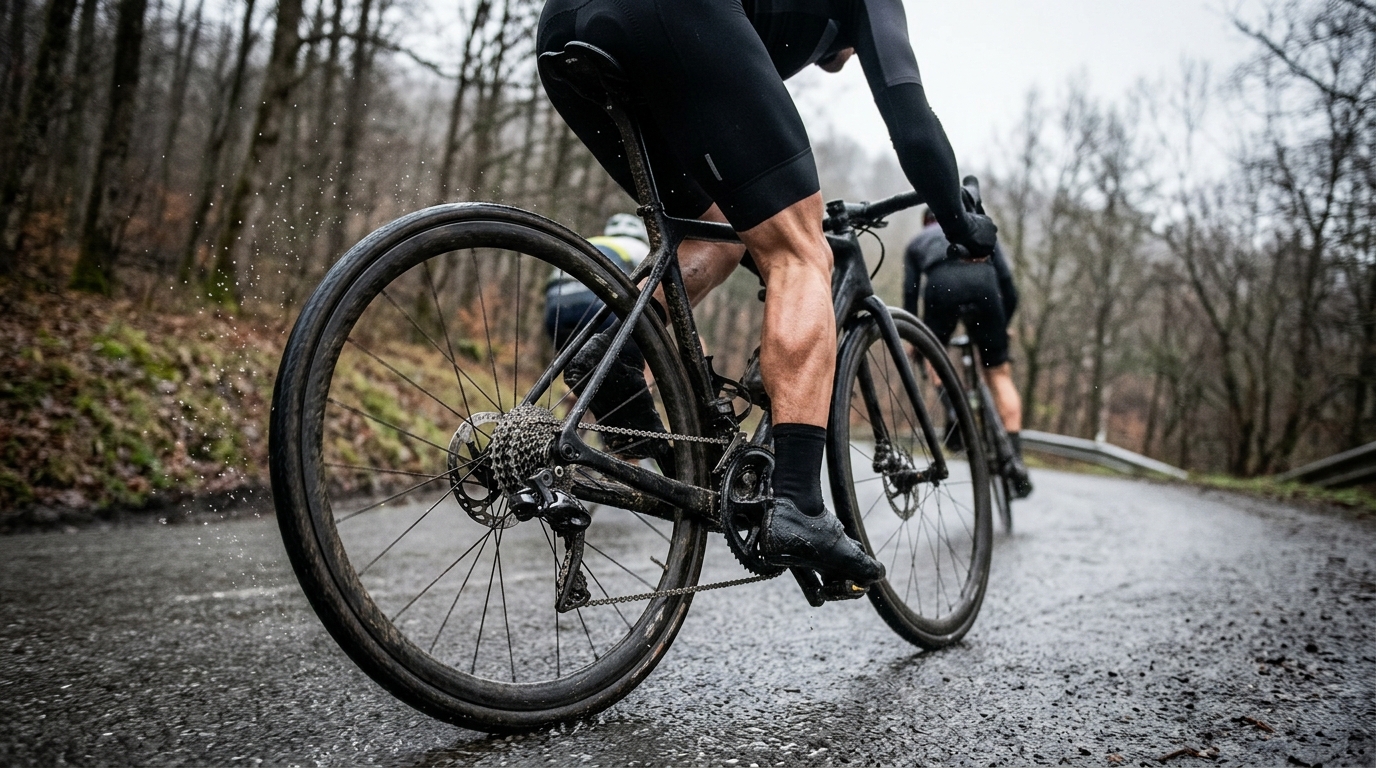
Image generated by our model.
masters cycling
Masters Cycling Training: Stay Fast With Data
Use power, heart rate, recovery signals and life stress to keep training hard enough to improve without turning fatigue into a setback.
Masters cycling training is not about lowering expectations
Masters cycling training gets framed too often as damage control. The better framing is precision. Most masters riders do not need a softer version of the training they used to do. They need a more selective version.
The difference matters. A younger rider can often absorb messy training through raw recovery capacity. Hard group ride stacked on hard intervals, poor sleep, a rushed commute, then another hard day because the plan says so. That approach can work until it does not. For a masters cyclist, the margin for error narrows. The cost of a poorly timed hard session is higher, and the return from a well-timed one is still very real.
Data is what keeps this from becoming guesswork. Power, heart rate, perceived exertion, sleep, soreness and mood are not separate dashboards. They are a single story about readiness and adaptation. The goal is to read that story early enough to adjust before fatigue becomes a setback.
What changes for masters cyclists - and what does not
The biggest mistake in masters cycling training is assuming every dip in performance is age-related decline. Some of it may be age. A lot of it is execution.
What changes is the recovery cost of training. High intensity still works, but it usually needs more respect. Big volume still builds durability, but it has to fit around work, family, sleep and stress. Sprint power and top-end repeatability can fade when they are not trained, but they are not protected by ignoring them.
What does not change is the basic physiology of adaptation. You still need progressive overload. You still need enough easy riding to support aerobic development. You still need hard work near and above threshold if your events demand it. You still need specificity.
The masters rider who stays fast is usually not the one doing the most heroic training. It is the rider who can consistently stack productive weeks because the easy days are actually easy, the hard days are high quality, and recovery is treated as part of the workload rather than an apology for not training.
That is where data earns its place. Not as a scorecard for ego, but as a control system.
Set realistic performance benchmarks with your own data
The most useful benchmark for a masters cyclist is not what you did years ago. It is what your current data says you can repeat, recover from and build on.
Start with your own baselines:
- Current FTP or threshold estimate
- Power duration curve across short, medium and sustained efforts
- Heart rate response at endurance intensity
- Perceived exertion for standard workouts
- Recovery pattern after key sessions
- Body feel during warm-ups and early intervals
The key is not a single test. It is trend quality. If your threshold estimate rises but every endurance ride feels strained, the number may not be as useful as it looks. If your top-end power drops during a heavy aerobic block but endurance pace becomes easier at the same heart rate, that may be a successful tradeoff depending on the season.
Use benchmarks that connect directly to your riding goals. A rider targeting long gran fondos needs repeatable steady-state output and fatigue resistance. A criterium rider needs anaerobic repeatability, sprint preservation and the ability to surge after prior workload. A climber needs sustainable power and pacing discipline. A time trialist needs a narrow but highly developed output range.
This is also where tools can help, if they are used with judgment. An FTP estimator gives a useful starting point, but it should be checked against field reality. Can you ride controlled intervals around that number without falling apart? Does heart rate drift in a way that is unusual for you? Does the effort feel like threshold or like survival? The answer matters more than the label.
Balance intensity, volume and recovery as a masters rider
Training zones for masters cyclists should be used to protect intent. They are not just tidy boxes on a workout file.
Endurance rides should build aerobic capacity without creating hidden intensity. Tempo and sweet spot work can be efficient, but they are also easy to overuse because they feel productive without being clearly hard. Threshold work remains valuable, but it has to be placed when you can execute it well. Maximal aerobic efforts and race-like surges are potent, but they carry a larger recovery bill.
The practical question before any hard session is simple: what adaptation is this workout supposed to create, and am I ready enough to get that adaptation?
If the answer is unclear, the workout is often just fatigue dressed up as discipline.
Decision rules for modifying a workout
Use readiness to make a specific choice, not a vague promise to 'listen to your body'.
- If the purpose is threshold quality and the warm-up already feels forced, move the hard session. Ride endurance or take recovery instead. Threshold work only pays when you can hold the target with control.
- If power is normal but perceived exertion is much higher than usual, assume the cost of the work is higher than the file will show. Shorten the session, reduce the number of efforts, or switch to endurance if the first interval confirms the mismatch.
- If power is low, heart rate is muted, and the legs feel flat, do not chase the target. That pattern often points to accumulated fatigue. Replace the session with easy riding or rest, then try the key work when responsiveness returns.
- If heart rate is elevated but power and perceived exertion are normal, look for context before overreacting. Heat, caffeine, dehydration, poor sleep or emotional stress can all change the signal. Keep the workout under tighter control and avoid adding extra work.
- If heart rate is high, power is low, and the ride feels unusually hard, stop treating it as a training opportunity. Make it recovery or end the ride.
- If the first hard effort is poor but the warm-up was rushed, extend the warm-up before deciding. If the second quality effort still lacks shape, modify the workout.
- If the workout was designed as a race-specific stressor and you are not mentally engaged, move it. Race-specific work requires focus, not just legs.
The point is not to avoid hard training. The point is to put hard training where it can create adaptation rather than prove stubbornness.
For masters cyclist recovery, the spacing between hard sessions matters as much as the sessions themselves. A hard ride is not complete when you upload the file. It is complete when your body has absorbed it and can produce quality again.
A clean structure often works better than a complicated one:
- Hard days are genuinely hard and specific
- Easy days are easy enough to restore capacity
- Endurance volume supports the hard work rather than competing with it
- Recovery blocks arrive before performance collapses
- Group rides are treated as hard sessions, not social endurance
That last point is important. Many masters riders sabotage their plans with uncounted intensity. The group ride may be fun and useful, but the body does not care whether the surges were on the plan. If the ride includes repeated hard accelerations, it belongs in the intensity budget.
Sample weekly structures for common masters profiles
These are templates, not prescriptions. The right version depends on training history, race calendar, durability, sleep and current fatigue. The useful part is the logic: protect the key work, support it with endurance, and keep strength and recovery from becoming afterthoughts.
Time-crunched criterium racer
Goal: preserve repeatability, acceleration and sprint quality without turning every ride into a race.
- Monday: Rest, mobility, or very easy spin if it improves freshness
- Tuesday: Race-specific intervals with repeated surges, corner-exit style accelerations, or short over-threshold work
- Wednesday: Easy endurance only, kept honest enough that it restores capacity
- Thursday: Short fresh sprints with full recovery, followed by controlled endurance or a compact skills ride
- Friday: Rest or maintenance strength, depending on how the legs respond to lifting near racing
- Saturday: Criterium, hard group ride, or race simulation
- Sunday: Endurance ride if recovered, otherwise easy spin or rest
The mistake for this rider is adding medium-hard riding everywhere because training time is limited. The better move is sharper separation. Make the race-specific days count, then arrive fresh enough to repeat them.
Gran fondo rider
Goal: build durable aerobic power, sustained climbing or rolling tempo capacity, and late-ride posture without neglecting strength.
- Monday: Rest, mobility, or easy spin
- Tuesday: Sustained threshold or controlled sweet spot work, depending on the phase and freshness
- Wednesday: Endurance ride, kept comfortably aerobic
- Thursday: Strength maintenance or endurance with low-intensity cadence variation
- Friday: Rest or very easy ride
- Saturday: Longer endurance ride with event-specific steady work if ready
- Sunday: Endurance, skills, or recovery depending on how Saturday landed
The mistake for this rider is making every long ride progressively harder until it becomes a disguised race. Gran fondo fitness comes from repeatable durability. If the long ride leaves you unable to execute the next key session, it was probably too costly for the block.
Use strength, mobility and sprint work to protect power
After the masters transition, the mistake is not only doing too much intensity. It is also letting key qualities disappear because they are uncomfortable to train.
Strength training supports force production, joint tolerance and posture on the bike. It does not need to become a second sport. The best approach is simple, repeatable and tied to the cycling season.
In general preparation, that often means heavier compound strength work such as squat patterns, hinge patterns, split-stance work, loaded carries, pushes and pulls. The exact exercise matters less than the intent: build usable force and tissue capacity with sound technique and enough recovery to still ride well.
During heavy riding or racing periods, strength should shift toward maintenance. That can mean fewer total lifts, less soreness, more conservative loading and exercises that preserve strength without stealing from the bike. If a lift compromises the next key ride, it is no longer support work. It has become competing training stress.
Mobility work matters for a different reason. It keeps positions available. Focus it where your position has limiters: hips for pelvic control, thoracic spine for reach and rotation, ankles for stable pedaling mechanics, shoulders and neck for comfort in lower positions.
Be careful not to oversell mobility as a guaranteed power solution. Limited range can contribute to poor position stability, excess upper-body tension, discomfort or compromised breathing mechanics, especially when fatigue arrives. But it is one input among many. The practical test is simple: if you cannot hold your best position late in rides, or you create tension just to stay low, mobility and bike fit deserve attention alongside fitness.
Sprint work is often the missing piece. Masters riders sometimes avoid sprints because they think sprinting is only for sprinters. But short maximal efforts help preserve neuromuscular sharpness. They remind the body how to recruit force quickly. They also reveal whether you are fresh enough to produce real power.
The key is to keep sprint work high quality and low clutter. Do it when fresh, use full recovery, and stop when power or coordination fades. Standing starts, short seated accelerations, and fast cadence jump efforts can all fit, as long as they are truly sharp and not buried inside a fatigued endurance ride.
The point is not to turn every ride into a smash session. The point is to keep the ceiling from quietly dropping while you focus on endurance.
Monitor fatigue signals before they become setbacks
A power meter tells you what happened. A good fatigue system helps explain why it happened.
Useful warning signs include:
- Normal endurance power feels unusually hard
- Heart rate does not match the effort in its usual way
- Cadence feels forced at normal loads
- Sleep quality drops without an obvious reason
- Mood or motivation declines before key workouts
- You need a longer warm-up to feel functional
- Repeated efforts lose shape earlier than expected
None of these signals is decisive alone. Together, they are strong evidence. The better question is not, 'Am I tired?' Every cyclist in training is tired sometimes. The better question is, 'Is this fatigue productive or is it blocking adaptation?'
Productive fatigue has a direction. You can still execute the key work, easy rides feel manageable, and recovery begins to appear when training lightens. Non-productive fatigue feels chaotic. Power is unreliable, perceived exertion rises, sleep worsens, and every ride becomes negotiation.
When that pattern appears, the smartest move is usually not a heroic breakthrough workout. It is a short reset: reduce intensity, keep movement easy, prioritize sleep, and wait for normal responsiveness to return. Fitness is not lost because you avoided digging the hole deeper. Fitness is lost when a small fatigue signal becomes an interruption that derails the block.
Adjust training blocks around life stress and recovery
The body does not separate training stress from life stress as neatly as a calendar does. Work pressure, poor sleep, travel, family obligations and emotional load all change how much cycling stress you can absorb.
This is where masters cycling training has to be more honest than generic plans. A plan that assumes perfect recovery is not ambitious. It is fragile.
Adjustments do not have to be dramatic. If life stress is high, preserve the most important session and reduce the rest. If sleep has been poor, move intensity rather than forcing it. If a work trip disrupts riding, use the week as a lighter block instead of trying to repay missed training with a compressed overload.
Use these choices in order:
- Keep the key workout if readiness is good and the workout has a clear purpose.
- Move the key workout if the signals are mixed but likely to improve with rest.
- Replace intervals with endurance if you can ride smoothly but cannot produce quality.
- Replace riding with recovery if easy power feels strained and motivation is unusually low.
- Cut accessories first when life stress rises. Do not protect optional work while ruining the main session.
The rider who adapts the plan is not less disciplined. They are protecting the purpose of the plan.
A useful rule is to make changes based on readiness, not guilt. If the data and body feel say you are ready, train. If they say you are not, choose the option that keeps the next key session alive. That might be endurance, mobility, strength maintenance or complete rest.
The goal is not to avoid fatigue. It is to avoid fatigue that has no payoff.
Build a sustainable season plan for long-term speed
Long-term speed in masters cycling comes from sequencing, not random effort. The season should move from general capacity toward event-specific demands, with enough recovery to make each phase stick.
A sustainable plan usually has several priorities:
- Build aerobic durability before relying on intensity
- Maintain strength and mobility rather than rebuilding from zero every year
- Keep some high-end work present so sprint and surge capacity do not vanish
- Use key events to define specificity, not every weekend ride
- Schedule lighter periods before fatigue forces them
- Review data after blocks, not only after races
The review is where many riders miss free performance. Look at the block and ask what actually worked. Did threshold power improve but sprint power fall sharply? Did endurance pace become easier? Did heart rate behavior improve on long rides? Did you arrive at key sessions ready or flat? Did life stress explain the pattern better than the training file?
Those answers should shape the next block. Data-driven training is not about obeying software. It is about making better decisions because you have evidence.
A repeatable decision framework
Before each key session and after each block, run the same process:
Review readiness
Check power trends, heart rate behavior, perceived exertion, sleep, soreness, mood and motivation. Do not hunt for a single perfect signal. Look for alignment or mismatch.
Define the workout purpose
Ask what the session is meant to create: threshold control, repeatable surges, sprint sharpness, endurance durability, strength maintenance or recovery. If you cannot name the purpose, the session is easier to modify or remove.
Execute or modify
If readiness and purpose line up, do the work. If they do not, choose the smallest change that protects the block: shorten it, reduce intensity, convert to endurance, move the hard day, or rest.
Review the block
After the training block, ask whether the key sessions improved, whether easy rides stayed easy, whether strength or sprint power was maintained, and whether fatigue resolved when training lightened. Let that answer guide the next block.
For masters riders, this is the advantage. You may not recover like a younger version of yourself, but you can train with more accuracy. You can stop wasting hard days. You can avoid turning medium fatigue into deep fatigue. You can protect strength, mobility and sprint power while still building the aerobic base that supports nearly everything on the bike.
Masters cycling training is not a concession. Done well, it is a more refined model of performance. The rider who stays fast is not guessing less because they are cautious. They are guessing less because they are paying attention.