Image generated by our model.
heat acclimation
Heat Acclimation for Cyclists: Train and Race Smarter
Heat changes power, pacing, hydration, and decision-making. Here is how cyclists can adapt without turning every hot ride into a survival test.
Heat changes the race before the first attack
Heat acclimation cycling is not just about learning to suffer more. It is about reducing the physiological cost of producing power when your body is already spending energy trying to keep core temperature under control.
In cool conditions, a strong rider can usually rely on familiar relationships between power, heart rate, breathing, and perceived exertion. In hot conditions, those relationships shift. A pace that normally feels controlled can become unstable because more blood is being directed toward the skin for cooling, sweat loss changes fluid balance, and heart rate rises for the same external workload.
That is why cycling in hot weather often punishes riders who pace from ego instead of feedback. The problem is rarely one catastrophic decision. It is usually a chain: slightly too much intensity early, slightly too little fluid, slightly too much sun exposure, then a rising heart rate that forces the rider to either back off or implode.
The goal of heat training for cyclists is to make that chain less likely. You are not trying to make heat harmless. You are trying to make your response to it more predictable.
Why heat changes cycling performance
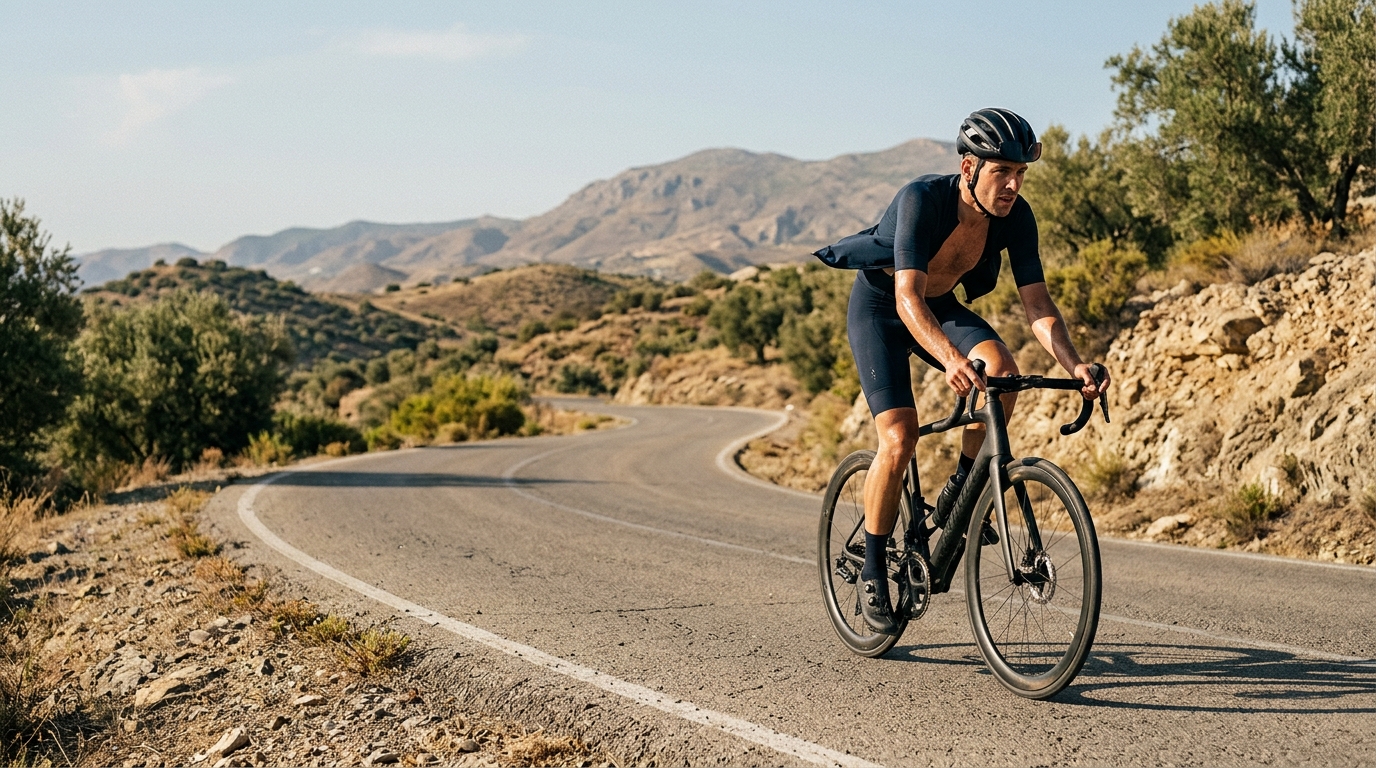
Cycling has a particular relationship with heat because airflow helps cooling, but only when the conditions allow it. A steady road effort can feel manageable because speed creates convective cooling. A slow climb, a tailwind, a technical section, a trainer session, or a packed race situation can all reduce that cooling effect. The body then has to lean harder on sweating and skin blood flow.
That creates a performance trade-off. The muscles need oxygen delivery to sustain power. The skin needs blood flow to dump heat. The cardiovascular system has to serve both demands at once. As the ride goes on, especially if fluid losses accumulate, the same wattage can require a higher internal cost.
This is why hot races often become selective in strange places. It is not always the steepest climb or the hardest attack that breaks the field. Sometimes it is the long exposed section after riders have been riding just above comfort for too long. Heat turns small inefficiencies into real losses.
For data-driven athletes, the key point is simple: power is still useful, but it is no longer enough by itself. Heart rate, RPE, cooling opportunities, fluid intake, and how quickly you recover after surges all matter more than they would in mild conditions.
How long heat acclimation takes
Heat adaptation is progressive. You should expect useful changes after repeated exposure, but you should not expect to feel transformed after a single hot ride.
The early phase usually feels awkward. Heart rate may run high, sweat may feel excessive, and even endurance pace can feel more demanding than expected. That does not mean the training is failing. It means the stress is real.
With consistent exposure, most riders notice that the same hot session becomes less disruptive. Heart rate settles more quickly, perceived exertion becomes less spiky, and the post-ride fatigue feels less like a full-system drain. The best sign is not that the heat feels easy. It is that the heat feels less chaotic.
The practical mistake is trying to rush the process. If you turn every heat session into a threshold workout, you are stacking thermal stress on top of metabolic stress. That may produce a big training file, but it often compromises the next sessions that actually matter.
Treat heat as a training load. It is not just weather. It is part of the workout.
Indoor vs outdoor heat sessions
Indoor and outdoor heat sessions both work, but they solve slightly different problems.
Indoor heat sessions
Indoor riding gives you control. You can decide how much airflow to use, how hard to ride, and when to stop. That makes it useful for heat acclimation because the environment is predictable and the risk is easier to manage.
The downside is that indoor heat can become artificially severe if you remove too much cooling. A trainer session with poor airflow can push thermal strain higher than a normal road ride at the same power. That can be useful in small doses, but it can also turn a simple endurance session into a recovery debt.
A smart indoor approach is to keep the power controlled and let the heat be the stressor. If the purpose is adaptation, the session does not need to look impressive on /glossary/ftp percentage. It needs to be repeatable.
Outdoor heat sessions
Outdoor riding is more specific. You get sun exposure, changing wind, road surface heat, climbs, descents, and the pacing decisions that come with real riding. If you are preparing for racing in the heat, you need some outdoor exposure because race execution is not just physiology. It is behavior.
The risk is variability. A route that is manageable in the morning can become a different problem later in the day. A climb with little airflow can feel much harder than the average power suggests. A group ride can push you into surges when you should be staying controlled.
Use outdoor heat sessions for specificity, not heroics. Practice feeding, drinking, cooling, and backing off before the data becomes ugly.
Hydration and sodium planning
A hydration strategy cycling plan should start before the ride, not halfway through it. In heat, waiting for thirst can put you behind because fluid loss and rising thermal strain can develop faster than your appetite for drinking.
The right plan depends on sweat rate, session duration, intensity, clothing, heat exposure, and how much sodium you lose in sweat. Since those vary widely between riders, copying another athlete's bottle mix is a weak strategy.
Use training to build your own system. Pay attention to:
- How much you normally drink in hot endurance rides
- Whether your stomach tolerates that intake at race intensity
- Whether you finish with heavy salt marks on kit or helmet straps
- Whether you crave salty foods after hot sessions
- Whether your heart rate drifts unusually high despite controlled power
- Whether you stop needing to urinate for a long period after the ride
Sodium matters because replacing only water can leave you feeling bloated, flat, or unable to keep drinking. But more sodium is not automatically better. The aim is to support fluid absorption and maintain a drinkable plan. If the mix tastes so strong that you avoid the bottle, the strategy has failed.
Practice your race setup in training. Use the same bottle concentration, the same drink timing, and the same carbohydrate approach you plan to use on race day. Heat does not reward improvisation.
Adjusting intensity in hot conditions
The most important pacing rule in hot conditions is that your normal power targets need context. A target that is sustainable in mild weather may be too aggressive when heat load is high.
This does not mean abandoning power. It means interpreting it properly.
For endurance rides, keep the first part more controlled than instinct suggests. If heart rate rises quickly for a modest power output, accept the warning rather than trying to force the file back to normal. In heat, early restraint is not weakness. It is the cost of keeping options open later.
For intervals, decide whether the primary goal is fitness or heat adaptation. If the goal is high-quality intensity, choose cooling and hydration that allow you to hit the work. If the goal is heat acclimation, reduce the intensity and let the environment provide the additional stress.
For racing, separate decisive moments from wasteful moments. You may still need to follow a move, close a gap, or commit on a climb. But you cannot afford casual surges, poor positioning, or unnecessary time in the wind. Heat magnifies the cost of tactical laziness.
Useful pacing cues include:
- Heart rate rising faster than normal at familiar power
- Breathing feeling strained before the legs are loaded
- Power dropping after each surge instead of recovering
- RPE becoming disconnected from the actual workload
- Needing more time than usual to settle after efforts
When those show up, the answer is not always to quit. Often it is to reduce variability. Smooth power, improve cooling, drink, fuel, and stop spending energy where it does not change the outcome.
Cooling is a tactic, not a comfort choice
Cooling should be part of the plan, especially for racing in the heat. Before the start, unnecessary heat exposure is just wasted capacity. During the race, every chance to reduce thermal load can help preserve decision-making and power production.
Practical cooling options are simple:
- Stay shaded before the ride or race when possible
- Use airflow intelligently indoors
- Choose kit that vents well and does not trap heat
- Pour water over the body when it is available and safe
- Prioritize cooling before hard sections rather than after you are already cracked
- Avoid overdressing because the start feels slightly cool
The logic is straightforward. Once core temperature and perceived strain are high, it is harder to reverse the trend while still producing race power. Cooling early is usually more effective than trying to rescue the situation late.
Warning signs you should stop
There is a difference between productive heat stress and unsafe heat stress. Athletes are often good at ignoring discomfort, which is useful until it becomes dangerous.
Stop the session or get out of the heat if you experience signs such as confusion, loss of coordination, chills in hot conditions, dizziness that does not settle, repeated nausea, unusual weakness, or a feeling that you cannot regulate effort anymore. A sudden change in mental clarity is especially important. Racing instinct should not override basic safety.
Also be cautious when heat is combined with poor sleep, illness, alcohol intake, travel fatigue, or a hard training block. Heat tolerance is not fixed. A session that was manageable last week can be the wrong choice when recovery is low.
The best athletes are not the ones who ignore warning signs. They are the ones who know when the signal is useful and when it is telling them to stop.
How to track progress over time
Heat acclimation becomes more useful when you track it like any other training variable. You do not need a complicated dashboard. You need consistency and honest notes.
Use repeatable sessions where possible. Ride a familiar route or indoor workout at similar effort and compare how your body responds. The goal is to see whether the internal cost of the same external work is becoming more stable.
Track:
- Power for the main effort or ride segment
- Heart rate response at steady power
- RPE during and after the session
- How quickly heart rate settles after surges
- Fluid intake and how well your stomach handled it
- Body weight change if you already use that method carefully
- Sleep quality and next-day fatigue
- Weather notes such as sun exposure, wind, and general heat feel
Heart rate drift is especially useful. If power is steady but heart rate climbs more than expected, that tells you the session is becoming more costly. Over time, improved heat tolerance often shows up as less drift, less panic in RPE, and better ability to complete normal training after hot exposure.
Do not judge progress from one ride. Heat response is noisy. Look for trends across repeated exposures.
A practical heat acclimation framework
Build heat exposure around the training that matters, not on top of it blindly.
A sensible sequence looks like this:
- Start with controlled endurance riding in warm conditions
- Keep the first exposures easier than your ego wants
- Add heat to lower-priority sessions before key intensity days
- Practice the hydration and sodium plan you will actually race with
- Use outdoor sessions for race-specific pacing and cooling habits
- Reduce intensity when heat is the main stressor
- Back off if warning signs appear
- Track heart rate, RPE, fluid intake, and next-day recovery
This approach works because it respects the central trade-off. Heat acclimation is valuable, but only if it improves performance instead of draining the training block.
For more context on setting intensity anchors, use /glossary/ftp and /tools/ftp-estimator, but remember that hot weather changes how those anchors feel in practice. A number on the head unit is a target, not a guarantee.
The bottom line
Heat rewards preparation and punishes denial. The riders who handle it best are rarely the ones who simply suffer harder. They are the ones who arrive adapted, pace with discipline, drink with a plan, cool before they are desperate, and read the body's signals before the race is already gone.
Heat acclimation cycling should make hot conditions more predictable. That is the win. Once the response is predictable, you can race instead of survive.