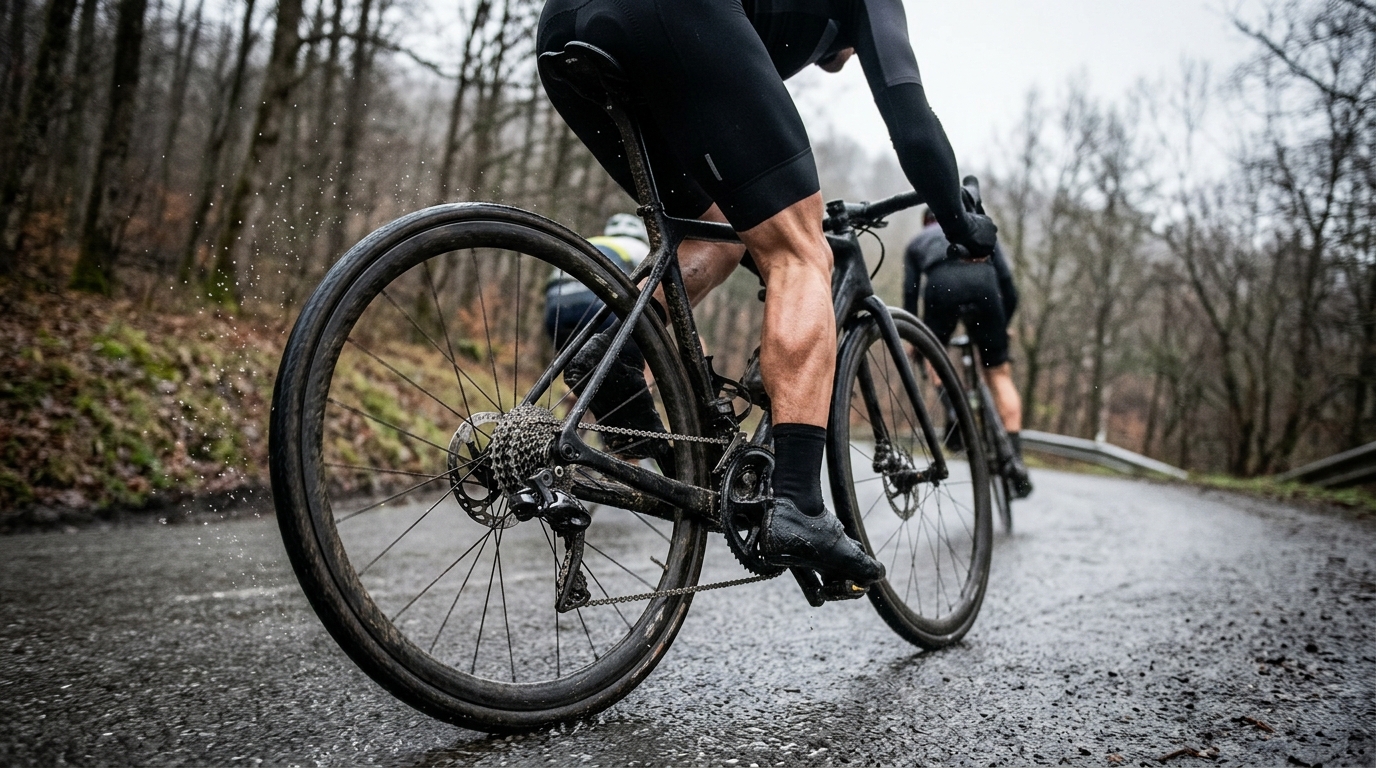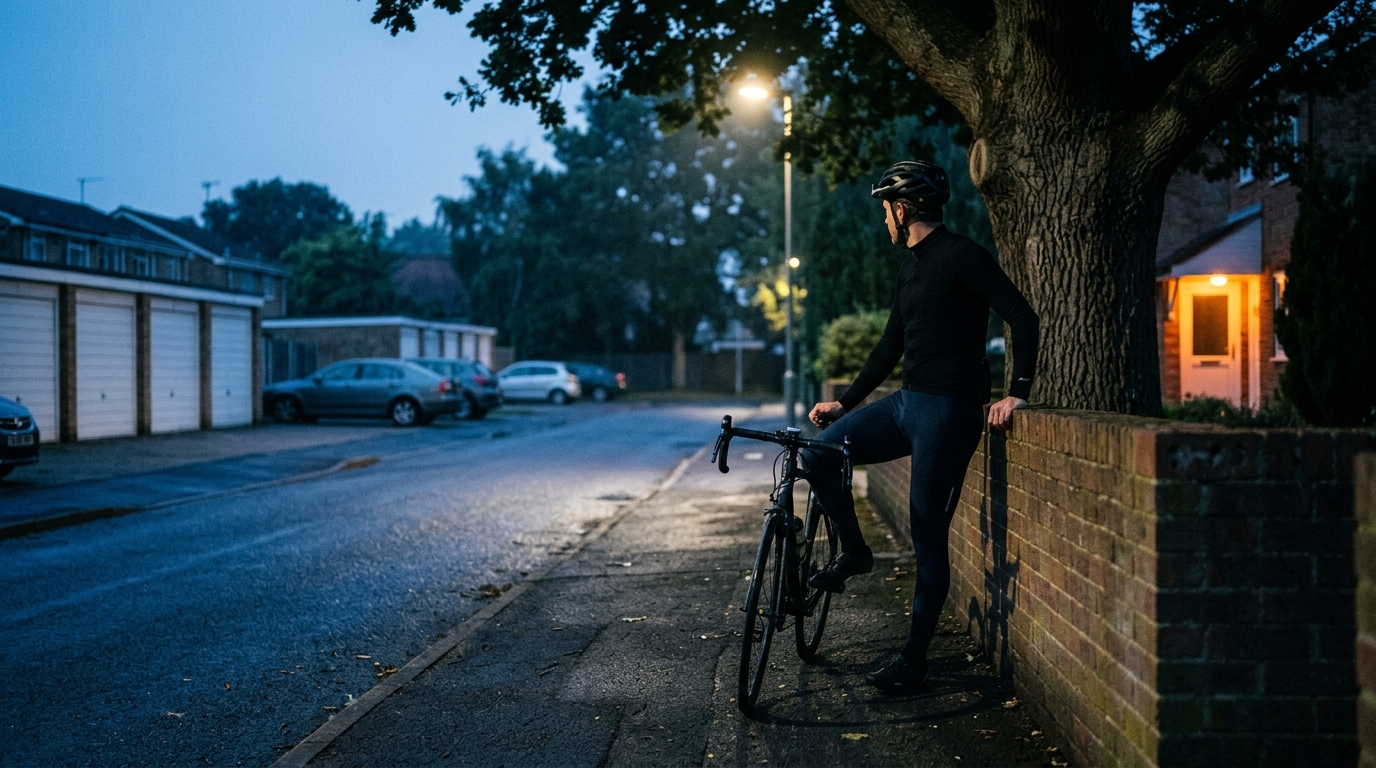
Image generated by our model.
recovery
Cycling Recovery Metrics: Read Sleep, HRV, and Fatigue
Recovery data helps only when it changes training decisions. Here is how cyclists should read sleep, HRV, resting heart rate, soreness, and fatigue.
Recovery data is evidence, not a verdict
Cycling recovery metrics are useful when they improve the decision you make before a ride. They are much less useful when they become a daily scoreboard.
That distinction matters because most riders fall into one of two traps. They either trust a wearable too much, or they dismiss it the first time it misreads how they feel. Both reactions miss the point. Recovery data gives you another signal to compare against training load, sleep, soreness, motivation, stress, and actual performance. It does not perfectly describe readiness every morning.
The body is noisy. Sleep tracking can be affected by sensor position, movement, late meals, alcohol, travel, stress, hydration, temperature, and the algorithm deciding what counts as a sleep stage. HRV can be influenced by training stress, life stress, illness, caffeine timing, and measurement inconsistency. Resting heart rate data should always be read in context because it can move for reasons that have nothing to do with fitness.
The goal is not to find a single recovery number. The goal is to build a simple decision process that answers the question that actually matters: should today be a day to push, maintain, reduce, or rest?
Sleep duration comes before sleep detail
Sleep duration is the first recovery metric to take seriously because it is the least abstract. If your sleep window is consistently short, the finer details of sleep staging matter less. A watch can estimate sleep phases, but it cannot compensate for a pattern of not giving yourself enough opportunity to sleep.
For cyclists, this matters because adaptation is not just completing the workload. It is absorbing it. Hard intervals, long endurance rides, racing, and strength work all create a recovery demand. Sleep is a major part of how the body regulates that demand.
Sleep quality is still worth tracking, but it needs restraint. Most consumer wearables estimate sleep stages indirectly, so the data is better used for broad patterns than precise training calls from a single night.
Ask a few practical questions:
- Did you give yourself enough opportunity to sleep?
- Did you wake often?
- Did you feel restored when you got up?
- Is poor sleep becoming a pattern?
- Did poor sleep land before or after a hard training load?
One bad night does not automatically require a rest day. If the key session matters and you feel functional, you may still perform well. But a bad night after a demanding ride is different from a bad night before an easy spin. The context changes the decision.
The useful test is confirmation. If power feels blocked, heart rate responds oddly, and perceived effort is high, the sleep signal has probably shown up on the bike. If the legs come around naturally, the score was likely noise.
HRV and resting heart rate: useful, but not absolute
HRV and resting heart rate are valuable because they give a window into how stressed or settled the system appears at rest. They are not direct measures of fitness, freshness, or muscular readiness.
For deeper definitions, see HRV and resting heart rate.
HRV is most useful when it moves as a trend. A low reading after a hard day can be normal. A suppressed trend alongside poor sleep, higher resting heart rate, heavy legs, and low motivation is more meaningful.
Resting heart rate works the same way. A higher than normal morning value can suggest the body is under load, but it can also reflect dehydration, poor sleep, heat, illness, caffeine, alcohol, or emotional stress.
A practical hierarchy:
- One abnormal HRV reading: note it, but do not redesign the day around it.
- HRV down and resting heart rate up: pay closer attention.
- HRV down, resting heart rate up, sleep poor, legs heavy: change the plan.
- Metrics look normal but the bike feels terrible: believe the ride.
That last point matters. Recovery metrics are pre-ride indicators. The bike gives live feedback. If a planned threshold session feels like a maximal effort during the warm-up, that is more important than a green readiness score.
When soreness should overrule the watch
Soreness is not as elegant as HRV, but it is often more actionable.
Cyclists can underweight muscle soreness because endurance training rewards consistency. If the calendar says intervals, they try to do intervals. But soreness tells you something specific: local tissue may not be ready for more load.
This is especially relevant after:
- Strength training
- Low-cadence torque work
- Long climbs
- Hard accelerations
- Racing
- Returning after time off
- Changes in bike fit or position
A wearable might show normal recovery while your quads are still tender from gym work. That does not make the wearable useless. It means HRV and resting heart rate are not direct measures of muscular readiness.
Soreness should change the plan when it alters your pedal stroke, limits range of motion, or makes normal endurance riding feel mechanically awkward. The issue is not just workout quality. It is the risk of compensating poorly and extending the recovery cost.
There is a difference between general heaviness and sharp or unusual discomfort. General heaviness may clear during an easy warm-up. Specific pain, altered mechanics, or worsening sensations should not be pushed through.
A simple field test works well: start easy and ask whether the body improves as it warms. If the legs open up and effort normalizes, continuing can make sense. If soreness becomes more obvious or power requires unusual strain, turn the ride into recovery or stop early.
How accumulated fatigue shows up
Accumulated fatigue usually appears as a cluster, not one dramatic signal.
That is what makes it easy to miss. Poor sleep can be blamed on work. Low HRV can be explained by yesterday's ride. Higher resting heart rate can be linked to heat or hydration. A flat endurance ride can be dismissed as low motivation. Each explanation might be reasonable on its own.
When those signs stack together, the story changes.
Watch for patterns like:
- Normal endurance power requires more effort than usual.
- Easy rides feel emotionally draining.
- You lose the ability to change pace.
- Sleep gets lighter even though you feel tired.
- Resting heart rate trends above your baseline.
- HRV trends below your baseline.
- Motivation drops specifically for hard work.
- Soreness lingers longer than normal.
- Appetite or mood shifts alongside training load.
The important phrase is 'alongside training load'. Fatigue is not just how you feel. It is how you feel relative to the work you have been doing.
A heavy block should create some suppressed freshness. That is not automatically a problem. Productive training often includes periods where the body carries fatigue. The question is whether that fatigue is controlled and reversible.
Controlled fatigue still lets you execute the purpose of the work. Endurance rides stay aerobic. Hard sessions are hard but achievable. Sleep is not collapsing. Mood is stable. Recovery days make you feel better.
Uncontrolled fatigue means the plan keeps asking for adaptation the body is no longer positioned to make. At that point, pushing harder does not make the block more effective. It just increases the recovery debt.
What to track daily vs weekly
A useful recovery system should be simple enough to use every morning and broad enough to catch slow changes. Daily data helps you adjust today's session. Weekly review helps you see whether the training block is still working.
| Timing | Track | Use it for |
|---|---|---|
| Daily | Sleep duration, subjective sleep quality, HRV trend, resting heart rate trend, soreness, motivation, stress | Decide whether to keep, soften, or delay the day's workout |
| Daily | Warm-up feel, perceived effort, early power and heart rate response | Confirm whether the morning signal matches the bike |
| Weekly | Sleep consistency, mood, soreness pattern, workout execution, easy-ride feel | Decide whether the block is productive or drifting into excessive fatigue |
| Weekly | Performance in key sessions | Check whether fitness work is translating into usable output |
The split matters. A single morning can be noisy. A week of missed workout targets, poor sleep, heavy legs, and declining motivation is harder to dismiss.
A recovery decision framework for cyclists
Start by separating signals into three groups.
Objective signals
These are the measurable pieces:
- Sleep duration
- Sleep consistency
- HRV trend
- Resting heart rate trend
- Recent training load
- Performance in recent sessions
Objective does not mean perfect. It means these signals are less dependent on your mood in the moment.
Subjective signals
These are the rider-reported pieces:
- Leg heaviness
- Muscle soreness
- Motivation
- Mood
- Perceived stress
- Sense of readiness
Good athletes can misread themselves, especially when they are motivated. But subjective data is still essential because it captures things sensors miss.
Session importance
Not every workout deserves the same response.
If today is a low-priority endurance ride and several recovery signals are negative, backing off is easy. You lose very little by riding easier.
If today is the key interval session of the week, the decision is more nuanced. You might start the warm-up, check how the body responds, and then decide whether to proceed. If the body is clearly not ready, forcing the workout usually produces a low-quality session and delays the next good one.
Use a traffic-light model:
- Green: Signals are normal, soreness is manageable, motivation is stable. Do the planned session.
- Yellow: One or two signals are off, but not strongly. Start conservatively and be willing to adjust.
- Red: Multiple signals are off, soreness is limiting, or the warm-up feels wrong. Reduce intensity, ride easy, or rest.
Here is how that looks in practice:
| Day type | Green | Yellow | Red |
|---|---|---|---|
| Threshold day | Complete the planned work if the warm-up confirms normal legs and focus | Extend the warm-up, start the first effort controlled, and continue only if power and perceived effort line up | Replace intervals with endurance, or stop after an easy spin if the body does not improve |
| Endurance day | Ride as planned and keep the purpose aerobic | Shorten the ride, flatten the route, or cap the effort so it does not become hidden intensity | Turn it into recovery riding or take the day off if fatigue is systemic |
| Recovery day | Keep it genuinely easy and use it to restore | Make it shorter and easier than planned, or replace it with mobility and rest | Do not force a recovery ride just to tick the box. Rest |
This framework avoids binary thinking. You do not need every day to be perfect. You need to know when the cost of pushing is likely to exceed the benefit.
That is especially important around threshold and VO2-style work. These sessions depend on freshness and mental engagement. If you are too fatigued to produce the intended effort without forcing it, the workout is no longer delivering the target stimulus. For related concepts, see FTP.
Common wearable mistakes
Wearables are useful when you understand their failure modes.
Reacting to single-day scores
A one-day recovery score is a prompt, not a command. Use it to pay attention, then confirm with context and warm-up feel.
Ignoring baseline
Your normal is what matters. Comparing your HRV or resting heart rate to someone else's is mostly a distraction. The useful question is whether your data is moving away from your own stable pattern.
Treating sleep stages as precise
Sleep stage estimates can be directionally helpful, but they should not be treated as lab-grade truth. Use them to identify broad patterns, not to micromanage training.
Confusing readiness with fitness
A low recovery score does not mean you are losing form. It may mean training is creating fatigue, which is often expected. Fitness and freshness are related, but they are not the same thing.
Chasing green days
If you only train hard when every metric looks perfect, you may undertrain. Endurance development requires load. The aim is not to feel fresh every day. The aim is to place hard work where it can be completed well and absorbed afterward.
Ignoring life stress
Work, family pressure, travel, and poor nutrition all affect recovery capacity. The body does not separate training stress from non-training stress just because your calendar does.
What cyclists should actually use
The best recovery metrics are the ones that change decisions without creating noise paralysis.
Use sleep duration as the foundation. Use HRV and resting heart rate as trend indicators. Use soreness to judge local muscular readiness. Use perceived effort during the warm-up as confirmation. Use performance data to check whether fatigue is affecting the actual work.
A practical morning checklist can stay short:
- Did I sleep enough for the work I am asking my body to do?
- Are HRV and resting heart rate close to my normal pattern?
- Are my legs heavy, sore, or mechanically restricted?
- Is motivation low in a normal way, or does the whole system feel flat?
- Does today's workout need freshness, or can it be adjusted without losing much?
Then make the smallest useful change. Keep the plan if the signal is good. Extend the warm-up if the signal is uncertain. Turn intervals into endurance if the cost of intensity looks too high. Rest if the body is clearly not ready to absorb more work.
The point is not to become passive in the face of data. It is to become more precise. Recovery metrics should help you train hard when the body is ready and back off when the signal is clear enough to respect.