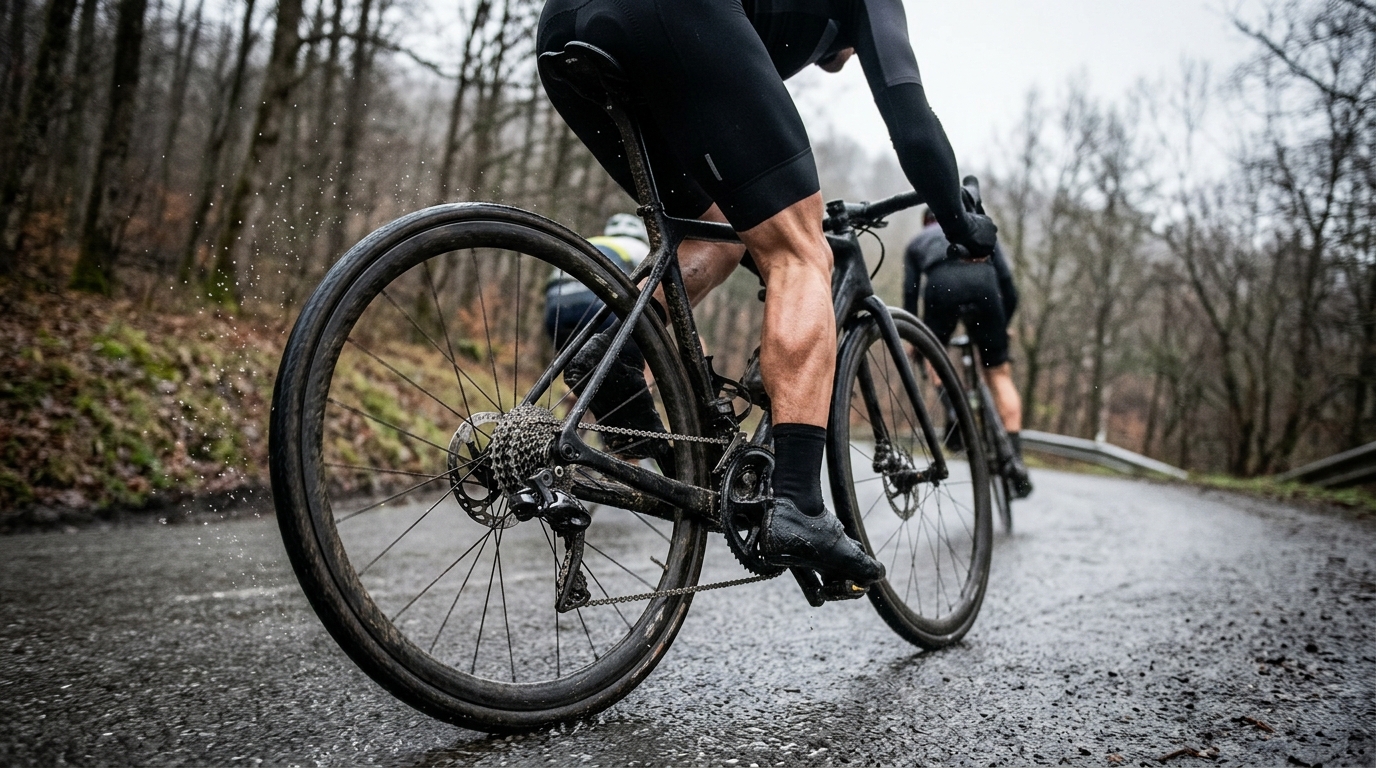
Image generated by our model.
power meter
Cycling Power Balance: Read Left-Right Data Wisely
Cycling power balance can guide fit, rehab and pacing, but only if you understand what left-right data can and cannot tell you.
What Left-Right Power Balance Actually Measures
Cycling power balance sounds simple: how much work comes from the left leg versus the right leg. In practice, it is more limited, and more useful, than that definition suggests.
A dual-sided power meter reports how total power is split between left and right. But the precision of that signal depends on the meter type and implementation. Pedal-based systems, crank-based systems, and meters that infer balance do not all measure the same thing in the same way. Some are closer to direct side-specific measurement, while others estimate the split from forces measured elsewhere in the drivetrain.
That makes power-meter balance a window into how power is being produced, not a complete diagnosis of how the body is moving.
This distinction matters. A rider can show uneven cycling power balance because one leg is genuinely contributing more. But the same reading can also be influenced by position, cleat setup, saddle stability, fatigue, drivetrain dynamics, or the way a specific meter interprets force through the stroke.
Left-right data should therefore be read as a trend signal. It is most useful when compared against your own baseline under similar conditions: same bike, same meter, similar intensity, similar cadence, similar terrain, and similar fatigue state. It is far less useful when treated as a universal score of pedaling quality.
A Simple Interpretation Workflow
Before changing fit, training, or rehab based on power balance, run the data through a simple decision path:
- Establish your baseline: know what normal looks like for you across repeatable rides and efforts.
- Check device setup: confirm the meter is installed correctly, zeroed or calibrated as required, updated, and using the right crank-length setting.
- Compare like-for-like efforts: do not compare a fresh endurance ride with a late-ride threshold interval or a smooth indoor session with rough outdoor terrain.
- Match the data against symptoms and performance: ask whether the shift appears with pain, discomfort, reduced power, poor repeatability, or a change in bike feel.
- Decide the response: ignore a stable pattern with no downside, monitor a new pattern without symptoms, and investigate a persistent shift that matches pain or performance loss.
That workflow keeps the metric in its proper role. Power balance is not a verdict. It is a prompt to ask a better question.
Why Perfect Symmetry Is Not Always the Goal
The most common mistake with left-right power-balance cycling data is assuming that an even split is automatically better.
Human movement is not perfectly symmetrical. Most riders have a dominant side, small anatomical differences, past injuries, or subtle coordination patterns that show up under load. The bike also constrains the body into a repeated motion, which can make minor asymmetries more visible without making them harmful.
The goal is not to force every ride toward a perfect split. The goal is to understand what is normal for you, what changes under stress, and whether those changes match a real performance or injury problem.
There are riders who perform well, stay healthy, and produce consistent power with a stable asymmetry. For them, chasing perfect balance can create a worse outcome: overthinking the pedal stroke, changing a sound position, or adding corrective work that solves a dashboard problem but not a real-world one.
A better standard is functional symmetry. Can you hold position late in a hard ride? Can you produce steady power near FTP without one side collapsing? Can you sprint, climb, and ride tempo without pain or compensation? If the answer is yes, a slightly uneven balance may simply be your normal pattern.
Common Causes of Power Imbalance
A cycling power-balance shift usually has a cause, but the cause is not always the leg that appears weaker.
Bike fit and contact points
Saddle height, setback, reach, cleat rotation, stance width, and shoe support can all affect how each leg applies force. A saddle that encourages hip rocking can make one side look dominant because the pelvis is not stable. A cleat that limits natural foot angle can cause one leg to unload early in the stroke. A reach that closes one hip more than the other can change force production without any obvious pain signal.
This is why balance data can be valuable after fit changes. If a new position improves comfort but creates a large and persistent shift in balance, it is worth asking whether the change altered how one side accesses the pedal stroke.
Injury history and protection patterns
Old injuries often leave behind movement habits. A rider may protect a knee, hip, ankle, or lower back long after the original pain has faded. The body is efficient at finding workarounds, and cycling rewards repeatable workarounds until intensity rises or fatigue exposes them.
In this case, balance data is useful because it can show when the compensation appears. If it only shows during hard climbing or late in long rides, the issue may be strength endurance or control under fatigue rather than simple leg strength.
Strength and coordination differences
A true strength difference can contribute to imbalance, especially when torque demand rises. But pedaling is not just a strength test. Timing matters. A leg that produces force too early, unloads too soon, or struggles to coordinate through changing cadence can show up as a weaker side even if gym strength looks similar.
This is where pedal-stroke analysis can help, but only if it changes the question from 'which leg is weak?' to 'when and how does the pattern change?'
Measurement and setup issues
Before making a training decision, rule out obvious data problems. Check calibration or zero offset according to the meter instructions, confirm crank-length settings, keep firmware current, and make sure the power meter is installed correctly. If a ride suddenly shows a very unusual balance with no matching change in feel, start with the device before diagnosing the athlete.
How Fatigue, Intensity and Cadence Change Balance
Balance is not fixed. It often changes with fatigue, intensity, and cadence, which is exactly why it can be useful.
At lower intensities, riders often pedal with a stable pattern because the task is easy enough for the preferred movement strategy to handle. As intensity rises, the body recruits more force and coordination becomes more demanding. If one side lacks control, mobility, or endurance, the balance may drift.
Fatigue adds another layer. Late in a ride, the nervous system has to maintain timing while the muscles are less fresh and posture is harder to hold. A balance shift that appears only late in a session can point toward durability rather than peak power. The rider may be strong enough when fresh but unable to maintain the same pattern after repeated work.
Cadence can also change the picture. Lower cadence places more torque demand on each stroke, so strength and joint stability become more important. Higher cadence places more demand on timing and relaxation. A rider who looks balanced at one cadence may look less balanced at another, not because the legs changed, but because the task changed.
This is why isolated balance screenshots are weak evidence. A single ride file can raise a question, but a pattern across similar sessions is what deserves attention.
A Practical Example: A Fit Change and Late-Interval Drift
Consider a rider who changes saddle position and initially feels better. Endurance rides are comfortable, tempo work feels normal, and early threshold intervals look similar to the rider's usual balance pattern. But late in threshold work, the balance begins to shift toward one side, and the rider also notices that holding the same seated position becomes harder.
That is not a reason to immediately reverse the fit change. It is also not something to ignore.
The useful interpretation is that the new position may be fine when the rider is fresh, but less stable when force demand and fatigue combine. The issue might be saddle support, hip stability, cleat interaction, or simply a durability gap exposed by the new position. The left-right number is not identifying the cause by itself. It is showing when the system starts to break down.
The next step is to compare like-for-like threshold sessions, check the meter setup, and see whether the same late-effort drift repeats. If it does, and especially if it lines up with discomfort or reduced repeatability, the rider has a clear place to investigate with a fitter, coach, or physiotherapist. If the drift disappears after adaptation and performance remains stable, it was likely a monitoring point rather than a problem.
That is the value of balance data at its best: not forcing symmetry, but narrowing the investigation.
When an Imbalance Signals a Real Problem
Most asymmetry is not an emergency. But there are times when cycling power balance should move from curiosity to action.
Take it seriously when the imbalance is new, persistent, and paired with another signal: pain, loss of power, difficulty holding position, saddle discomfort, repeated niggles on one side, or a noticeable change in how the bike feels. The combination matters. Data plus symptom is stronger than data alone.
Also pay attention when balance changes after a crash, injury, illness, surgery, or a major fit adjustment. In those situations, the metric becomes a useful monitoring tool because you have a clear before-and-after comparison.
A concerning pattern is a side that fades disproportionately as intensity rises or as the ride progresses. That can indicate the rider is running out of local muscular endurance, losing pelvic control, or avoiding load on a sensitive joint. If the pattern appears alongside declining power or discomfort, it is worth involving a bike fitter, physiotherapist, or coach rather than guessing from the head unit.
The key is to avoid both extremes. Do not ignore a meaningful change just because asymmetry can be normal. But do not treat every uneven reading as a problem. The practical question is whether the imbalance is stable, explainable, and compatible with good riding.
How to Track Balance Without Overreacting
The best way to use power-meter balance is to build a personal reference point.
Look at balance in repeatable situations:
- Steady endurance rides on familiar terrain
- Controlled tempo or threshold intervals
- Seated climbing efforts
- Higher-cadence aerobic work
- Late-ride efforts when fatigue is present
Do not compare a sprint to an endurance ride, a rough outdoor file to a smooth indoor-trainer session, or a fresh interval to the final effort of a hard block. Balance is task-specific.
When reviewing data, focus on trends rather than perfection. Ask:
- Is this normal for me?
- Did it change after a fit, equipment, training, or injury event?
- Does the change appear only at certain intensities or cadences?
- Does it match how I felt on the bike?
- Is power, comfort, or repeatability affected?
If the answer points to a stable pattern with no downside, file it as information. If the answer points to a consistent shift with a real-world consequence, then the data has done its job: it identified where to investigate.
It also helps to separate ride review from real-time riding. Watching balance constantly during a session can make pedaling worse because the rider starts forcing one side to behave. Use the number after the ride for analysis, not as a constant instruction during the ride. During intervals, the priority is still the target power, position, breathing, and execution.
Using Balance Data for Fit, Rehab and Training Decisions
Cycling power balance becomes most valuable when it supports a decision.
Fit decisions
After a bike-fit change, balance data can help confirm whether the new position is sustainable. The goal is not to make the split look perfect. The goal is to see whether the rider can produce power comfortably, hold posture, and avoid a new compensation pattern.
If a cleat change or saddle adjustment improves balance and also improves comfort, that is meaningful. If it improves balance but creates knee pain or reduces power, the metric is winning the argument for the wrong reason.
Rehab decisions
In rehab, left-right data can help track return to normal loading. A rider coming back from injury may feel ready because general riding feels easy, but imbalance may reappear during harder efforts or late in a session. That can guide progression more intelligently than relying only on perceived effort.
The right question is not 'am I symmetrical yet?' It is 'can I tolerate the demands of the next training step without compensation?' Balance can help answer that when paired with pain response, strength work, mobility, and professional guidance.
Training decisions
For training, balance data is most useful as a durability and execution marker. If one side consistently fades during longer threshold work, the solution is probably not to stare at the head unit and push harder with that leg. It may be better strength-endurance work, improved trunk control, refined fit, or better pacing.
For riders estimating training zones or monitoring threshold work, balance should sit behind the core metrics: power, heart rate, perceived exertion, and repeatability. If you need to benchmark threshold, use reliable testing and tools like the Neverchill FTP estimator, then use balance as supporting context.
A practical review process looks like this:
- Establish your normal pattern across comparable rides
- Note when balance changes by intensity, cadence, terrain, or fatigue
- Match the data to sensations and performance outcomes
- Rule out power-meter setup issues before changing training
- Make a single change if you adjust fit, rehab, or strength work
- Recheck the same type of ride before drawing conclusions
That process keeps the data in its proper role. A dual-sided power meter gives you more visibility into how power is produced, but visibility is not the same as certainty. The value comes from connecting the number to the rider, the session, and the outcome.
The Bottom Line
Cycling power balance is a useful metric when it is treated as context, not a verdict. An uneven split does not automatically mean something is wrong, and a perfectly even split does not automatically mean the pedal stroke is efficient, healthy, or fast.
Use left-right data to identify patterns, monitor changes, and ask better questions. If the imbalance is stable and you ride well, do not chase symmetry for its own sake. If it changes suddenly, appears with pain, or degrades performance under fatigue, take it seriously and investigate with the same discipline you would apply to any other training signal.
The best riders do not collect more data just to create more anxiety. They use the right data to make better decisions. Power balance can do that, provided you read it with restraint and context.