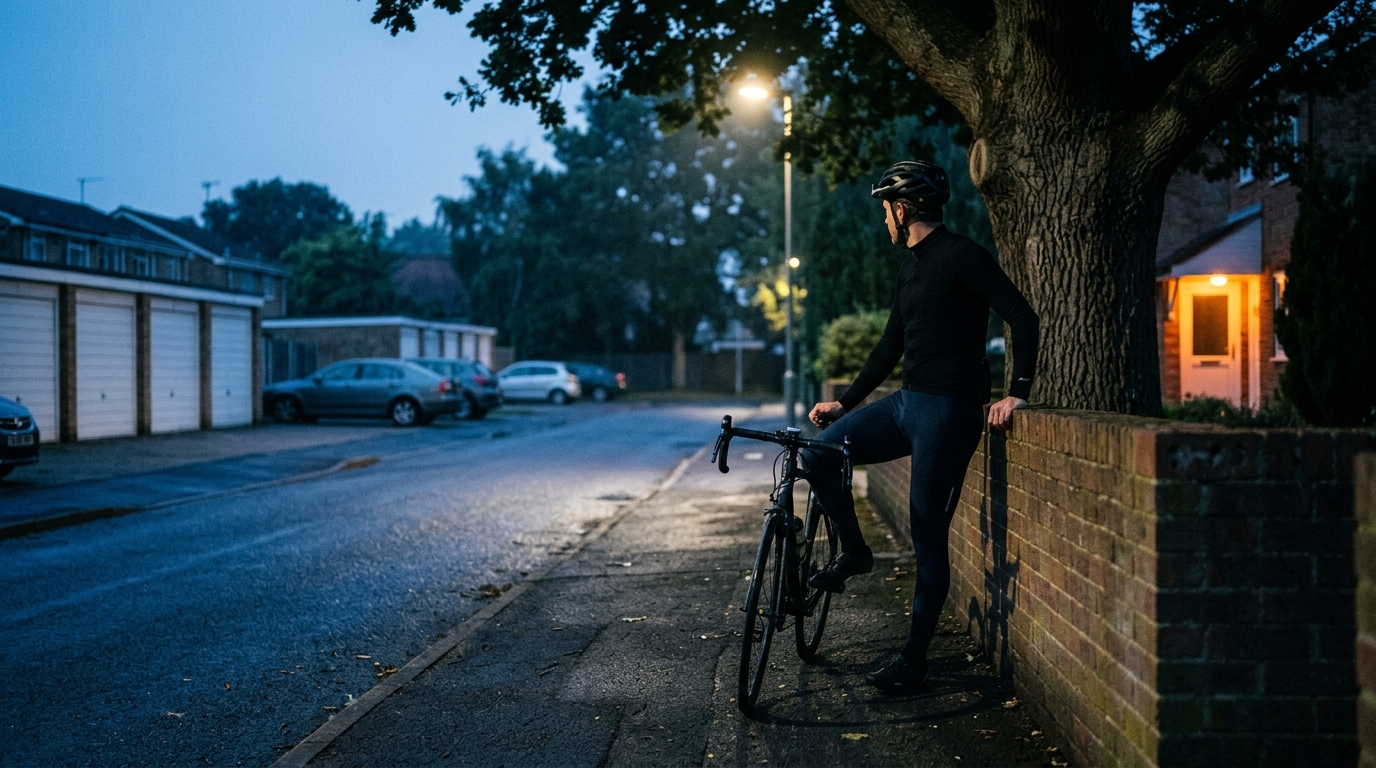
Image generated by our model.
intervals
Cycling Interval Progression Without Overreaching
How to progress cycling intervals with clearer workout examples, simple decision rules and better control of fatigue.
Why cycling interval progression beats random hard workouts
Cycling interval progression is the difference between training that builds fitness and training that simply proves you can suffer.
Random hard workouts can feel productive because they create fatigue. But fatigue is not the same thing as adaptation. A good cycling interval training plan applies stress in a way your body can absorb, repeat and build from. That means the work gets harder over time, but not in every direction at once.
Progressive overload cycling works because it gives a clear signal. If the demand is slightly beyond your current level, and recovery is adequate, the body responds by becoming better at meeting that demand. If the demand jumps too far, the signal becomes noise. Power fades, technique breaks down, motivation dips and the next key session becomes compromised.
The point is not to make every interval session heroic. The point is to make the next block of training more effective than the last one.
The three levers: duration, intensity and repetition count
Every interval workout has three main levers:
- Duration - how long each work interval lasts
- Intensity - how hard each work interval is relative to your capacity
- Repetition count - how many work intervals you complete
A common mistake is pulling multiple levers at the same time. Extending the work, raising the target power and adding more repeats in the same session may look like progression on paper, but it often turns a controlled stimulus into an uncontrolled test.
For most athletes, the safer rule is simple: progress one lever at a time.
If the target is aerobic durability, extend duration before raising intensity. If the target is maximal aerobic power, protect intensity and add repetitions only after the quality is repeatable. If the target is sprint or anaerobic work, improve execution and recovery quality before chasing more work, because sloppy high-intensity intervals teach the wrong lesson.
This is where tools such as FTP and the FTP estimator help, but only if you treat them as anchors rather than commandments. Power targets are useful because they make progression visible. They are not useful if they encourage you to force a session when the legs, heart rate and perceived effort are all telling a different story.
A simple decision rule: progress, hold or step back
Self-coached riders need a rule that is clear enough to use before motivation starts negotiating with fatigue.
Use this as a practical filter:
- Progress when you complete the same key workout cleanly twice, with stable power, normal perceived effort and no unusual fatigue the next day
- Hold when the workout is completed, but recovery is questionable, motivation is low or the next easy ride does not feel easy
- Step back when two key sessions in a row fall apart, or when a failed session comes with poor sleep, heavy legs and rising life stress
This rule is not perfect, but it keeps the athlete honest. One good day does not justify a major jump. One bad day does not require panic. Patterns matter more than single rides.
The most useful progression is the one that makes the next session more likely to succeed. If the current workload is being absorbed, add a small step. If it is only being survived, hold. If it is repeatedly breaking down, return to the last version you completed well.
How to progress different workout types without overreaching
Endurance and tempo intervals
For endurance and tempo work, duration is usually the cleanest progression lever. The goal is not to create maximal strain. The goal is to spend more controlled time riding steadily while keeping breathing, cadence and power smooth.
A practical example would be moving from three controlled tempo efforts of ten minutes to three efforts of twelve minutes at the same target, rather than making the intervals longer and harder at the same time. Another option would be keeping the work duration the same and making the recoveries slightly less generous, but only after the work already feels repeatable.
A smart progression looks like this:
- Hold intensity stable
- Extend the work periods gradually
- Keep recovery generous enough to preserve control
- Only reduce recovery once the work feels repeatable
If tempo work turns into a threshold fight, the session has drifted away from its purpose. That does not mean the athlete is weak. It means the progression was probably too aggressive or the day was not right for that load.
Threshold intervals
Threshold work is where bike training progression often goes wrong. These workouts sit close enough to the limit that small increases matter. Adding duration can be highly effective, but only if the last effort looks like the first one.
Good threshold progression prioritizes steadiness. The best sign is not a huge final surge. It is the ability to hold the target without bargaining, fading or changing cadence just to survive.
A useful example is progressing from three by ten minutes to three by twelve minutes at the same target. Another rider might be better served by repeating three by ten minutes until the final effort is controlled, then adding time later. The structure is less important than the logic: extend total controlled work before chasing higher power.
Once you can complete the work with stable output and controlled breathing, a modest increase in intensity can make sense. If the final interval repeatedly falls apart, do not add load. Repeat the same session or step back slightly.
VO2 max intervals
For VO2 max work, the mistake is often treating every session like a power contest. The purpose is to accumulate time at very high oxygen demand, not to win the first interval and detonate later.
Progression should protect repeatability. A rider who can complete five hard three-minute efforts cleanly might progress to six three-minute efforts at the same target. Another rider might keep the same number of efforts and focus on making the final repetition match the first. Both can be valid. The wrong move is to add another repetition, raise the target and shorten recovery all in the same workout.
If power drops sharply, cadence collapses or the last efforts become pure survival, the workout has moved beyond useful overload. At that point, more work may only add fatigue without improving the signal.
Anaerobic and sprint intervals
Short, hard efforts require freshness. This is the area where adding more is often less effective than improving quality.
Progression can come from cleaner execution:
- Better starting speed
- Better gear selection
- More consistent peak and finishing power
- Less technique breakdown
- Full commitment without excessive residual fatigue
A practical progression might be adding one more high-quality sprint only if the previous efforts remain sharp. If the final efforts are dull, ragged or clearly slower, the session has already delivered its useful stimulus. Adding more work usually trains fatigue resistance, not top-end power.
Do not rush repetition count here. If the goal is neuromuscular power or anaerobic capacity, the work needs to be sharp. Once the efforts become dull, the session has usually done its job.
Fueling and recovery are progression limiters
Interval progression is not only a workout design problem. It is also a fueling and recovery problem.
Hard sessions rely on carbohydrate availability. If you start underfueled, the workout can look like a fitness problem when it is really an energy problem. Power fades, perceived effort rises and the athlete may falsely conclude the progression was too ambitious. Sometimes it was. Sometimes the session simply was not supported.
The practical approach is straightforward:
- Do not start key interval sessions hungry or depleted
- Put harder workouts after meals and recovery windows that support quality
- Fuel longer or more demanding sessions during the ride when needed
- Replenish after key work so the next session is not compromised
- Treat poor sleep and high stress as real training load, not background noise
This matters because adaptation happens after the work, not during the final desperate interval. If fueling, sleep and recovery timing are poor, adding load is not progression. It is just adding cost.
Data signals that show you are ready to increase the load
Knowing when to increase cycling workouts is partly art, but the data can narrow the decision.
You are likely ready to progress when several of these signals line up:
- Power is stable from the first work interval to the last
- Heart rate response is normal for the workout type
- Perceived effort matches the intended zone
- Cadence stays natural instead of forced
- Recovery intervals feel like recovery, not damage control
- You finish with confidence that you could repeat the structure soon
- The next day does not carry abnormal fatigue
The most useful signal is consistency across sessions. One great day can happen for many reasons. A pattern of controlled completion tells you the current load is being absorbed.
This is also why athletes should avoid judging progression from power alone. If you hit the target but finish with heavy legs, poor sleep and no appetite for the next ride, the workout may have been too costly. The session was completed, but the training plan was weakened.
Warning signs your intervals are progressing too fast
Progression is too fast when performance becomes less predictable and recovery becomes more expensive.
Watch for these warning signs:
- You need repeated mental negotiation to start key workouts
- Warm-ups feel unusually heavy before hard work begins
- Power fades even when motivation is high
- Heart rate is unusually high for moderate work or unusually flat during hard work
- Cadence drops because the target power is no longer manageable
- Easy rides stop feeling easy
- Sleep, mood or appetite changes alongside training load
- Minor aches become more noticeable from session to session
The important point is pattern recognition. Any single bad workout can be explained by life stress, poor fueling, heat, bad sleep or timing. But repeated underperformance means the plan is asking for more than you can currently absorb.
When that happens, the answer is not always a full reset. Often, the best move is to return to the last version of the workout you completed well. That keeps the training specific while reducing the cost.
Example progression blocks for common cyclist goals
The following blocks show how progression can work without needing to turn every week into a bigger test. Use them as templates, not rigid prescriptions. Athlete level, current capacity, training history and available recovery all matter.
Goal: build sustainable climbing strength
For a rider already comfortable with controlled tempo work, a sample progression could look like this:
- Week one - three by ten minutes at the same controlled tempo target, with generous recovery
- Week two - three by twelve minutes at the same target, with the same recovery
- Week three - two longer sustained efforts at the same general intensity, only if week two stayed smooth
- Week four - repeat week two or reduce the work slightly to consolidate
The logic is simple: more controlled time under pressure before more intensity. If cadence starts grinding or breathing turns into a threshold effort, the progression has overshot the goal.
Goal: improve threshold power
For a rider who already has a repeatable threshold session, a sample structure could be:
- Week one - establish three by ten minutes at a target you can control
- Week two - progress to three by twelve minutes at the same target
- Week three - either extend total work again or keep the same work and reduce recovery slightly, but not both
- Week four - repeat the best completed session or back off slightly if fatigue is accumulating
The important caveat is that this only works if the final interval remains disciplined. If week two barely survives, week three should not progress. It should hold or step back.
Goal: sharpen VO2 max capacity
For VO2 max work, a sample progression for a rider who can repeat hard efforts cleanly might be:
- Week one - five by three minutes hard and repeatable
- Week two - six by three minutes at the same target
- Week three - keep the same number of efforts and focus on matching the final effort to the first, or make only one small change to recovery
- Week four - reduce the session cost while keeping some intensity
This is not a prescription for every athlete. It is an example of the principle. Protect the quality first, then add a small amount of work when quality is repeatable.
Goal: improve sprint and anaerobic repeatability
For sprint and anaerobic work, the best progression is often not more suffering. It is better execution under controlled fatigue.
A sample structure might be:
- Week one - fewer fresh efforts with full recovery and clean mechanics
- Week two - add one repeat only if the final efforts remain sharp
- Week three - keep the same repeat count and improve consistency, rather than forcing more volume
- Week four - return to fewer, better efforts so freshness comes back
The goal is to leave the session with high-quality work completed, not to keep sprinting until every effort looks the same because all of them are poor.
How to adjust after missed workouts, illness or fatigue
The biggest mistake after missed training is trying to repay the plan immediately. Fitness does not work like debt collection. Stacking missed intervals into the next few rides usually creates a bigger problem than the missed session itself.
If you miss a workout for normal life reasons but feel fresh, continue with the next planned key session. Do not cram the missed one into a recovery day.
If you miss a workout because of fatigue, repeat the current week or step back to the last successful version of the session. That is not losing progress. It is protecting the progression curve.
If illness is involved, the return should be conservative. Start with easy riding, then reintroduce intensity only when normal energy, breathing and recovery are back. The first interval workout after illness should confirm readiness, not test fitness.
If you start a key session and the warm-up feels wrong, adjust before the damage is done. Good options include:
- Reduce the target power and complete the same structure
- Keep intensity but reduce the number of work efforts
- Convert the workout into endurance riding
- Stop the session and preserve the next training opportunity
This is where discipline matters. The athlete who can adjust early often progresses faster than the athlete who forces every workout to completion.
The progression rule that matters most
A cycling interval progression should make the next version of the workout more likely to succeed, not less.
That means the best progression is usually boring on paper: one lever, one clear purpose, one controlled increase, followed by enough recovery to adapt. Over time, that creates a far stronger athlete than a string of disconnected hard rides.
Progressive overload cycling is not about constantly proving fitness. It is about applying the right stress, at the right time, in a form you can repeat. When the data, sensations and recovery all point in the same direction, increase the load. When they do not, hold the line. When the same problem repeats, step back before fatigue turns a small correction into a lost block.