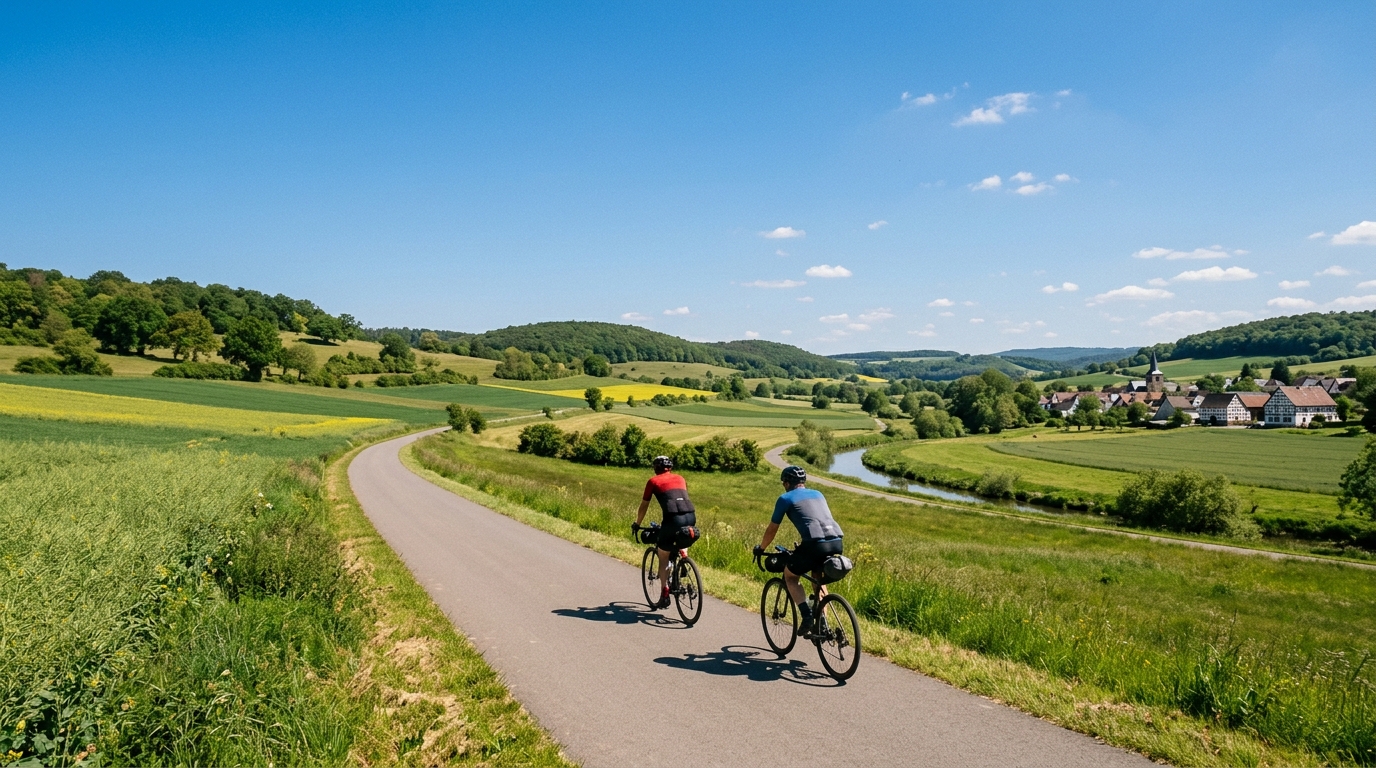
Glan-Blies Way
A practical guide to the Glan-Blies Way cycling route: 129.2 km of asphalt, modest climbing, and point-to-point endurance pacing in Germany.
- Distance
- 129.2km
- Climbing
- 320m
- Surface
- —
- Shape
- Point-to-point
The route
Elevation profile
Glan-Blies Way cycling route overview
The Glan-Blies Way cycling route is a 129.2 km point-to-point ride in Germany on asphalt, with 320 m of elevation gain and no notable climbs listed. That combination gives the route a very clear character: this is an endurance ride shaped less by decisive gradients and more by how well you manage time on the pedals, fueling, pacing, and logistics.
The low climbing load relative to the distance means the route should not ride like a mountain day. Instead, expect a steadier effort profile, where small changes in terrain, wind exposure, surface speed, and stops can matter more than any single uphill section. For a fit rider, the limiter is likely to be sustained aerobic durability rather than climbing power.
Terrain and ride feel
With asphalt as the listed surface, the Glan-Blies Way is best approached as a road or fast all-road route rather than a gravel objective. The absence of notable climbs does not mean the ride is effortless. Over 129.2 km, even modest elevation gain accumulates into fatigue if the early pace is too sharp or if you spend too much time surging out of corners, through towns, or over minor rises.
The smart way to ride it is to keep the effort controlled from the start. On a route without major climbs, there is rarely a natural reset point where everyone eases off after a summit. That can make pacing deceptively hard. If the first half feels too easy, that is probably the correct intensity.
For riders using power, this is the kind of route where staying comfortably below FTP for most of the day makes more sense than chasing short accelerations. If riding by feel, aim for a pace where conversation is possible early, then let the final section decide whether there is room to lift the effort.
Practical notes
Because the route is not a loop, logistics matter as much as fitness. Plan the start and finish before committing to the ride. A point-to-point route rewards clean preparation: transport at the end, a return option, or a clear handoff plan if riding with support.
A few practical priorities:
- Bring enough food for a full endurance ride, not just a short spin.
- Do not rely on climbing landmarks to structure your pacing, since no notable climbs are listed.
- Choose tires and setup for efficient asphalt riding.
- Keep the early effort smooth, especially if riding in a group where rolling terrain can invite unnecessary surges.
- Treat the final distance with respect. Modest elevation gain does not remove the cost of 129.2 km.
Who it suits
The Glan-Blies Way cycling route suits riders looking for a long, controlled day on paved roads rather than a climb-focused challenge. It is a good fit for endurance training, steady group riding, or a point-to-point ride where the objective is consistency.
The key is not to overcomplicate it. The route’s profile suggests a simple tactical equation: manage energy, avoid early spikes, keep fueling, and solve the point-to-point logistics before the ride starts. Do that well, and the Glan-Blies Way becomes exactly what its stats suggest - a long asphalt endurance route where execution matters more than climbing strength.
Related routes
3-Länder-Radweg
A 302.2 km asphalt route in Germany with 1512 m of climbing and point-to-point logistics shaped by the Reußenkreuz climb.
7 Peaks Alpine Challenge
A 110.9 km point-to-point assault through the Victorian Alps, stacking 3404 metres of climbing across relentless, wind-swept high-country ascents.
Aberdare Range
A 46 km asphalt point-to-point through Kenya's Central Highlands that trades big climbs for a relentless 1,700 m of rolling grind.
Abra Málaga
A 45-kilometer point-to-point ribbon of asphalt through Peru's Sacred Valley, climbing 1,699 relentless meters into the high Andes.
Afriski Mahlasela Pass
A 112.8 km asphalt ascent through the Maloti Mountains, climbing 3,384 m to the roof of southern Africa via the storied Mahlasela Pass.
Ahr Cycleway
An 82.9 km asphalt point-to-point route with 541 m of gain, the Ahr Cycleway is a steady endurance ride rather than a climb-focused day.