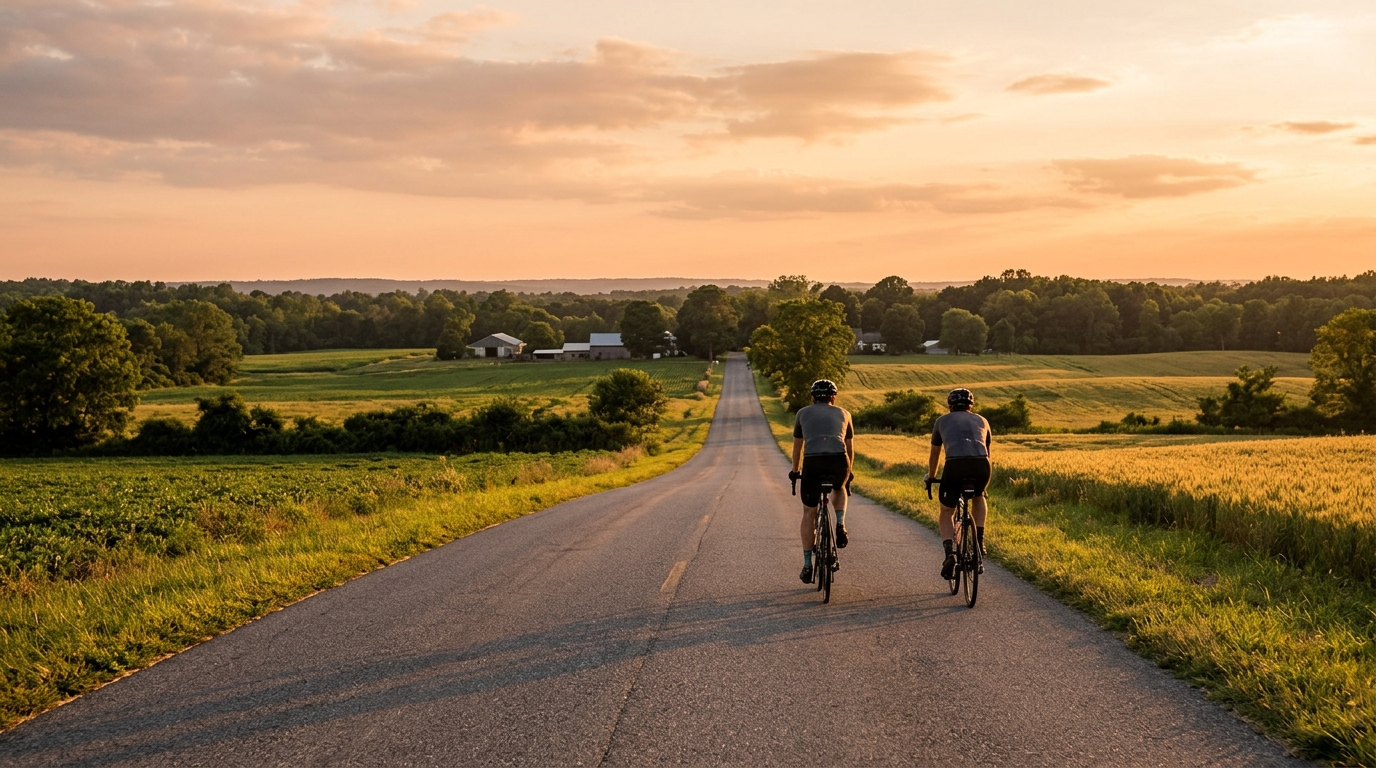
U.S. Bicycle Route 201 in Maryland
A practical guide to U.S. Bicycle Route 201 in Maryland, a 99.8 km asphalt point-to-point ride with 485 m of elevation gain.
- Distance
- 99.8km
- Climbing
- 485m
- Surface
- —
- Shape
- Point-to-point
The route
Elevation profile
U.S. Bicycle Route 201 in Maryland cycling route
U.S. Bicycle Route 201 in Maryland is a 99.8 km point-to-point ride on asphalt, with 485 m of elevation gain. That combination tells you most of what matters before rolling out: this is not a climb-focused route, but it is long enough that pacing, fueling, and logistics matter.
The absence of listed notable climbs suggests the route’s difficulty is more cumulative than concentrated. Expect the effort to come from time on the bike, exposed rolling terrain, and the repeated cost of small rises rather than one defining ascent. With 485 m of gain spread across 99.8 km, the route should reward steady riding more than surging. If you ride it like a sequence of attacks, the back half will feel more expensive than the profile implies.
Terrain and ride character
The asphalt surface makes this a road-bike-friendly route, and the moderate elevation gain points toward a rhythm ride rather than a pure climbing day. The key is to settle early. On a route of this length, small pacing mistakes compound: a few hard accelerations over rises, a few turns taken above sustainable effort, and the final portion becomes less about fitness and more about damage control.
For endurance athletes, this is the type of ride that sits well as a controlled aerobic session or a steady endurance benchmark. Keep the early effort disciplined, especially if using power or heart rate. If you are working from threshold-based zones, anchor the day around sustainable endurance intensity rather than chasing every change in grade. For reference, see /glossary/ftp if you use FTP to structure pacing.
Practical notes
Because the route is not a loop, the biggest planning variable is transport. Decide before the ride whether you are arranging a pickup, riding back by another route, or using the route as part of a longer point-to-point day. That choice changes how conservative you need to be with pacing and supplies.
The distance also means nutrition should not be improvised. Start eating and drinking early enough that the final stretch is fueled, not rescued. With no major climb listed, there may be fewer obvious natural reset points, so use time and perceived effort to stay on top of fueling rather than waiting for terrain cues.
How to ride it well
The smart approach is simple: ride the first portion slightly easier than feels necessary, keep pressure smooth on rolling sections, and avoid turning every rise into a test. The route’s 485 m of gain will not define the day by itself, but across 99.8 km it can still expose poor pacing.
U.S. Bicycle Route 201 in Maryland is best viewed as an endurance route with manageable climbing and real logistical demands. The surface is straightforward, the profile appears controlled, and the point-to-point format is the detail that deserves the most planning before the ride starts.
Related routes
3-Länder-Radweg
A 302.2 km asphalt route in Germany with 1512 m of climbing and point-to-point logistics shaped by the Reußenkreuz climb.
7 Peaks Alpine Challenge
A 110.9 km point-to-point assault through the Victorian Alps, stacking 3404 metres of climbing across relentless, wind-swept high-country ascents.
Aberdare Range
A 46 km asphalt point-to-point through Kenya's Central Highlands that trades big climbs for a relentless 1,700 m of rolling grind.
Abra Málaga
A 45-kilometer point-to-point ribbon of asphalt through Peru's Sacred Valley, climbing 1,699 relentless meters into the high Andes.
Afriski Mahlasela Pass
A 112.8 km asphalt ascent through the Maloti Mountains, climbing 3,384 m to the roof of southern Africa via the storied Mahlasela Pass.
Ahr Cycleway
An 82.9 km asphalt point-to-point route with 541 m of gain, the Ahr Cycleway is a steady endurance ride rather than a climb-focused day.