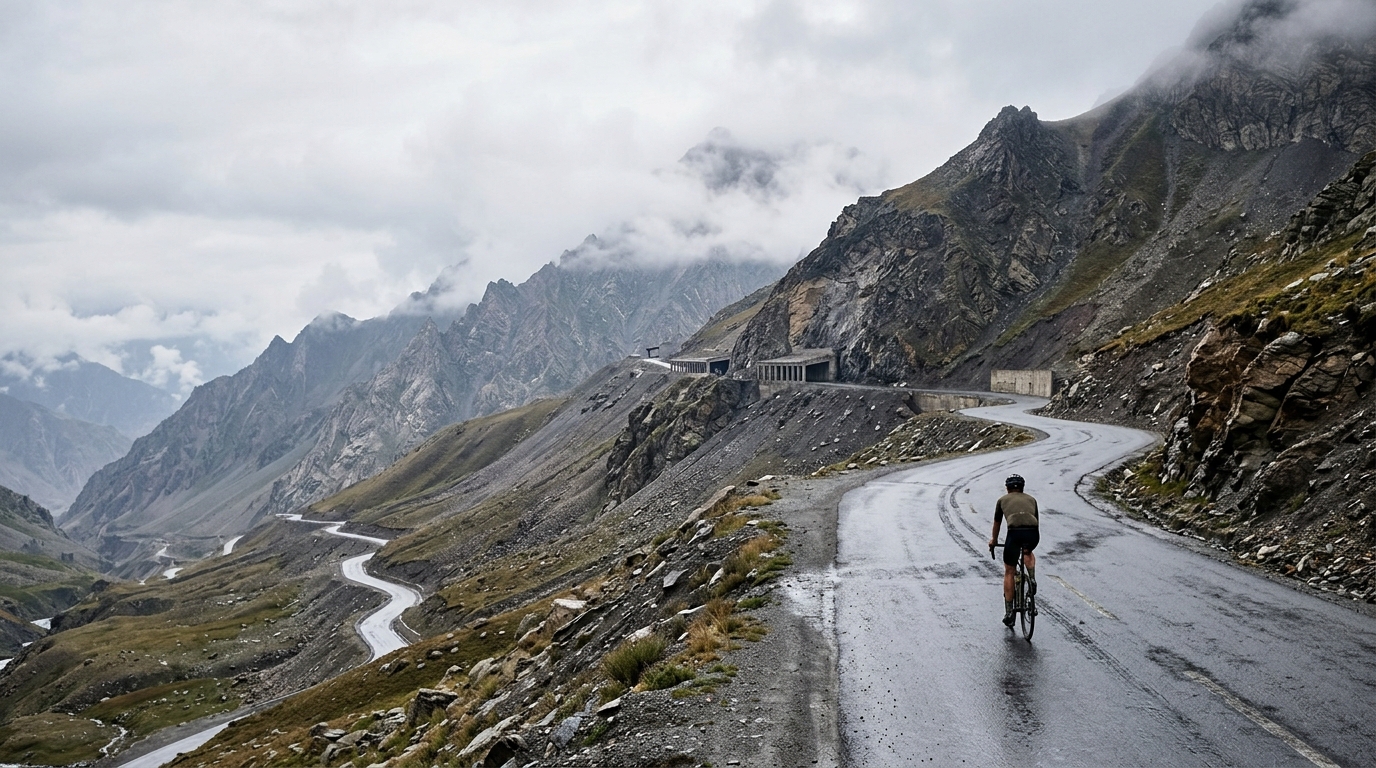
Salang Pass
A 139.5 km asphalt ascent through the Hindu Kush, climbing 3,656 m to the legendary Salang Pass.
- Distance
- 139.5km
- Climbing
- 3,656m
- Surface
- Asphalt
- Shape
- Point-to-point
The route
Elevation profile
Overview
The Salang Pass is one of high-altitude cycling's most formidable point-to-point challenges, a 139.5 km line drawn across the spine of the Hindu Kush in Afghanistan. With 3,656 m of total climbing packed into its length, this is a route defined by the sheer scale of the mountains it crosses. There is nothing incidental about it. From start to finish, the road works with a single purpose: to carry riders over one of the great mountain barriers of Central Asia, on smooth asphalt the entire way.
Riding it is an exercise in patience and respect. The Hindu Kush does not offer easy passage, and the Salang Pass is the corridor through which everything moves. For a cyclist, that means committing to a full day of sustained effort, with the reward being a crossing that few road routes anywhere can rival for atmosphere and altitude.
The Route
As a point-to-point course, the Salang Pass route is a genuine journey rather than a loop back to where you began. The 139.5 km distance unfolds as a continuous traverse, gathering its 3,656 m of climbing across the approach and the pass itself. The mileage feels earned rather than padded: this is a road that goes somewhere, and getting there means moving through the vertical heart of the Hindu Kush.
Because it is linear, planning your logistics around the two endpoints matters as much as planning your pacing. The route rewards riders who treat it as an expedition, carrying what they need and settling into the long, grinding rhythm that big mountain roads demand.
Key Climbs
The defining feature of this route is, unmistakably, the Salang Pass itself. Everything about the ride is organized around reaching it. The pass is the reason the road exists and the reason cyclists come here, a high crossing of the Hindu Kush that stands among the iconic mountain gateways of the region.
The 3,656 m of accumulated climbing tells the story: this is not a route with a single sharp effort and easy miles on either side, but a sustained haul toward and over the pass. The climb to Salang is the centerpiece, the moment where the road, the mountains, and the rider all converge. Cresting it is the emotional and physical high point of the entire day.
Terrain & Surface
The entire 139.5 km is surfaced in asphalt, which shapes the character of the ride in important ways. On a route with this much elevation gain, a paved surface means the challenge is purely one of gradient, altitude, and endurance rather than loose or broken ground. Riders can run road tyres and focus their energy on the climbing itself.
The asphalt also allows for controlled, confident descending on the far side of the pass, where the road gives back some of the height it demanded. Smooth pavement across such dramatic mountain terrain is part of what makes the Salang Pass rideable as a true road cycling objective.
When to Ride
High mountain passes are seasonal by nature, and the Salang Pass is no exception. The best window is the warmer part of the year, when the road over the Hindu Kush is clearest of snow and the high altitude is at its most forgiving. Cold and weather at elevation are the primary constraints, so timing a crossing for favourable conditions is essential.
Aim for a full-day weather window and an early start. At this altitude and with this much climbing, giving yourself the whole day to reach and cross the pass is the sensible approach.
Logistics
Being a point-to-point route, the Salang Pass requires planning for two separate endpoints rather than a single base. Arrange transport or accommodation at each end, and carry enough food, water, and clothing to be self-sufficient across the full 139.5 km. With 3,656 m of climbing and significant altitude, layering for temperature swings between the valleys and the pass is important.
Treat this as a serious mountain undertaking: know your bailout options, respect the conditions, and build in margin for the effort the terrain demands.
Summary
The Salang Pass is a 139.5 km asphalt traverse of the Hindu Kush, delivering 3,656 m of climbing to one of Central Asia's most iconic mountain crossings. Point-to-point, paved, and unrelentingly big, it rewards riders who come prepared for a full day in the high mountains and the singular satisfaction of cresting the Salang Pass itself.