National Cycle Route 82
A practical guide to National Cycle Route 82, a 358.2 km asphalt point-to-point route with 2178 m of climbing and three named climbing tests.
- Distance
- 358.2km
- Climbing
- 2,178m
- Surface
- —
- Shape
- Point-to-point
The route
Elevation profile
National Cycle Route 82 cycling route overview
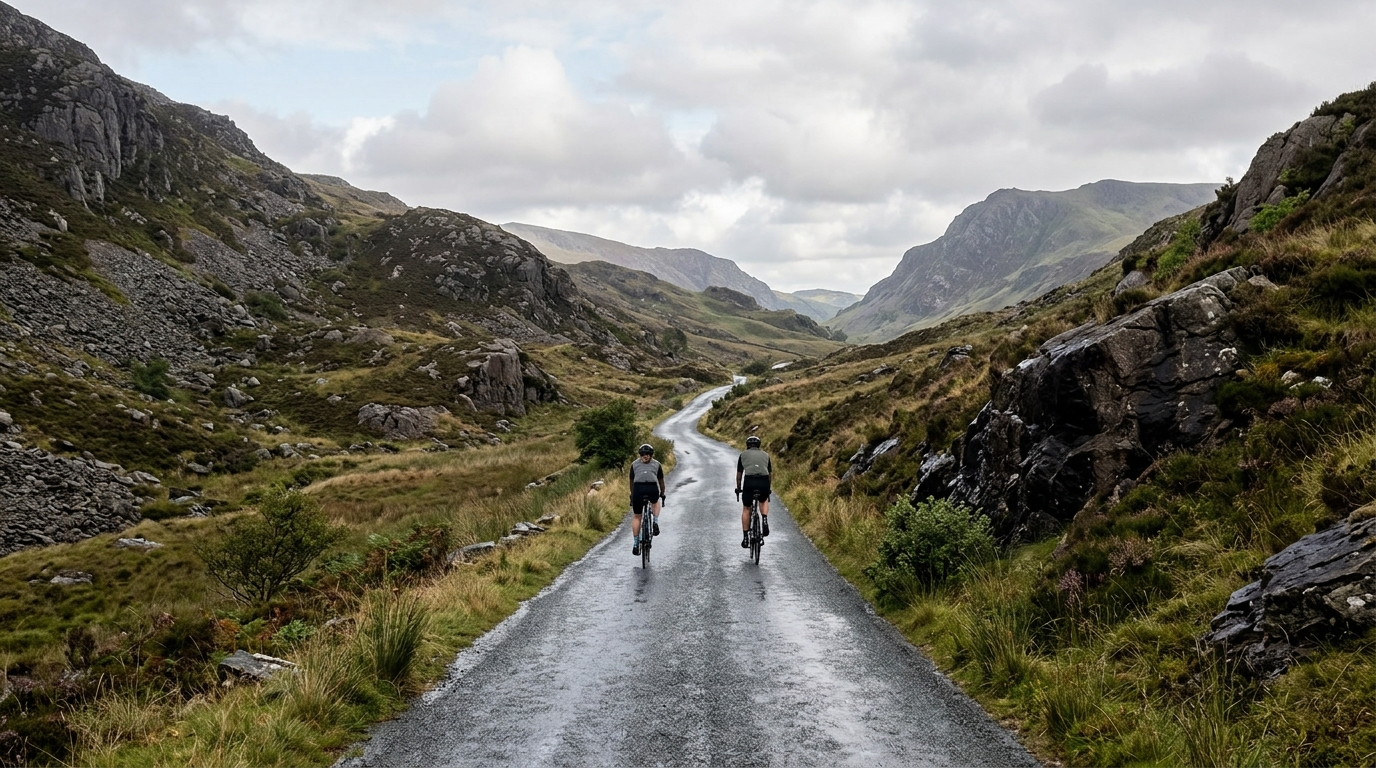
National Cycle Route 82 is a long asphalt point-to-point ride in GB, covering 358.2 km with 2178 m of elevation gain. The headline number is the distance. The climbing matters, but the route is not defined by constant vertical pressure in the way a shorter mountain route might be. Instead, its difficulty comes from duration, pacing discipline, and how the named climbs interrupt what is otherwise a long endurance problem.
The route is not a loop, so the logistics are part of the ride rather than an afterthought. Transport, overnight stops, or a clear end-point plan need to be sorted before the first pedal stroke. That matters because a point-to-point route changes the psychology of the day: there is no simple bailout back to the start unless you have built one into the plan.
Terrain and ride character
The listed surface is asphalt, which makes this a natural fit for a road bike, endurance road setup, or fast all-road bike with sensible gearing. The distance is large enough that comfort and efficiency should take priority over aggressive positioning. If the goal is to cover the route well rather than simply survive it, the setup should help you stay steady for hours.
The elevation gain of 2178 m over 358.2 km suggests a route where climbing is meaningful but not the only story. The key is that the harder sections are likely to arrive as decisive interruptions. Llanberis Pass, Pen-y-Pass, and Crimea Pass are the named climbs, and they should be treated as the route’s control points. They are where pacing errors become visible, especially if you arrive carrying fatigue from pushing too hard on flatter or rolling sections.
How to pace it
The cleanest way to ride National Cycle Route 82 is to separate the route into endurance riding and climb management. On the steadier asphalt sections, keep the effort below the level that feels productive in the moment but becomes expensive later. The trap on a route of this length is not one spectacular mistake. It is repeated small surges that slowly remove your ability to ride the climbs efficiently.
If you pace by power, anchor the day around sustainable endurance intensity rather than chasing numbers on every rise. Riders using threshold as a reference can use /glossary/ftp to keep the bigger effort in context. The named climbs should be ridden with restraint early, especially if more distance remains after them.
Practical notes
- Plan it as a point-to-point ride, not a circular day out.
- Use tyres and gearing suited to long asphalt riding rather than a pure short-climb setup.
- Treat Llanberis Pass, Pen-y-Pass, and Crimea Pass as the main pacing checkpoints.
- Fuel before the climbs, not just on them. On a route this long, waiting until the legs feel flat is already too late.
- Build the day around consistency. The route rewards riders who can keep moving, limit spikes, and make the final kilometres feel like part of the plan rather than damage control.
National Cycle Route 82 is not just a distance target. It is a long-form endurance ride where the asphalt surface keeps things efficient, the point-to-point format raises the logistical stakes, and the named climbs decide whether the pacing strategy was sound.
Climbs on this route
Llanberis Pass
Cat 4A concise pacing and gearing guide to the Llanberis Pass cycling climb, a short category 4 ascent with a steady gradient profile.
Pen-y-Pass
Cat 3A 3.6 km category 3 climb in Great Britain with 205 m of net gain and enough undulation to punish a careless pacing plan.
Crimea Pass
Cat 4Crimea Pass is a 6.8 km category 4 climb in Great Britain averaging 3.61% gradient with a sting in the tail at 13.05% maximum. Here's how to pace it.
Related routes
3-Länder-Radweg
A 302.2 km asphalt route in Germany with 1512 m of climbing and point-to-point logistics shaped by the Reußenkreuz climb.
7 Peaks Alpine Challenge
A 110.9 km point-to-point assault through the Victorian Alps, stacking 3404 metres of climbing across relentless, wind-swept high-country ascents.
Aberdare Range
A 46 km asphalt point-to-point through Kenya's Central Highlands that trades big climbs for a relentless 1,700 m of rolling grind.
Abra Málaga
A 45-kilometer point-to-point ribbon of asphalt through Peru's Sacred Valley, climbing 1,699 relentless meters into the high Andes.
Afriski Mahlasela Pass
A 112.8 km asphalt ascent through the Maloti Mountains, climbing 3,384 m to the roof of southern Africa via the storied Mahlasela Pass.
Ahr Cycleway
An 82.9 km asphalt point-to-point route with 541 m of gain, the Ahr Cycleway is a steady endurance ride rather than a climb-focused day.