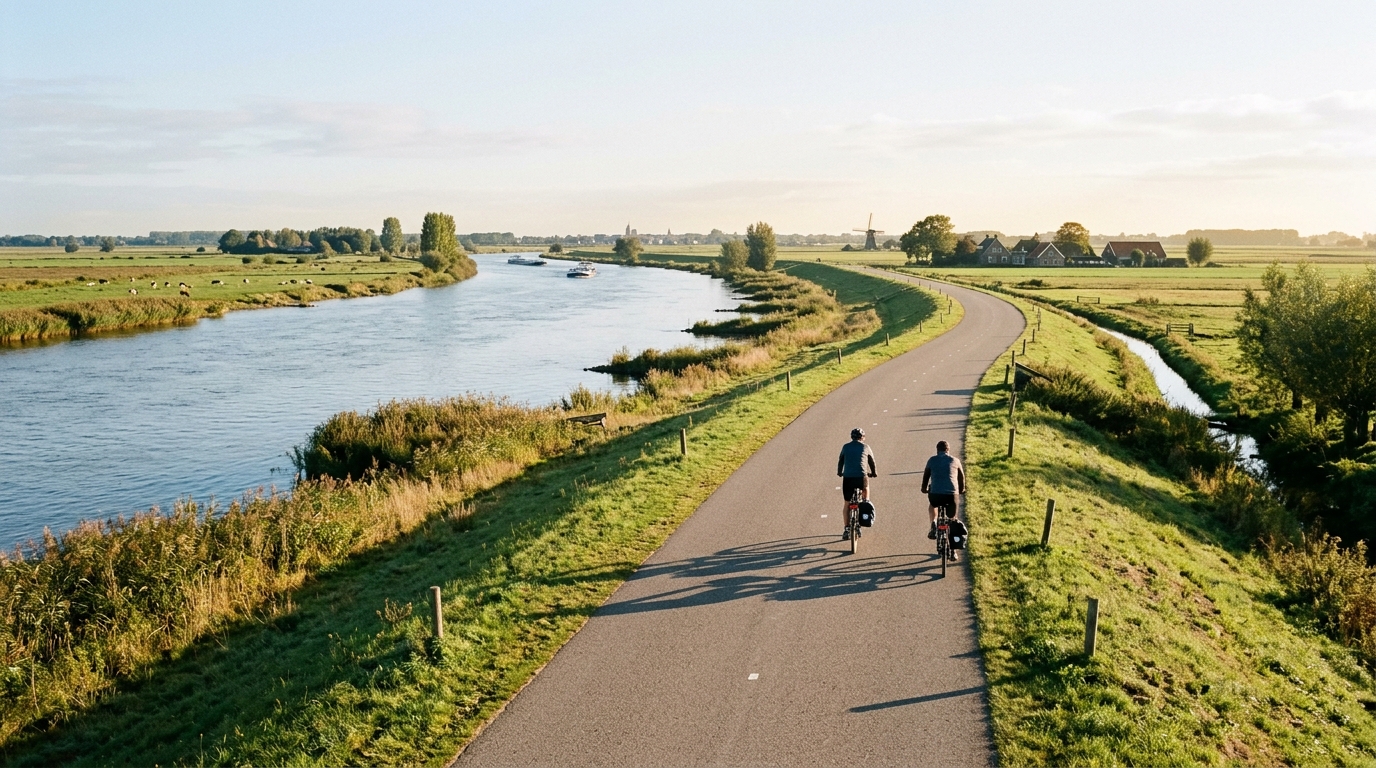
Maasroute
A 65.4 km asphalt point-to-point ride in the Netherlands with just 153 m of elevation gain, built for steady endurance rather than climbing.
- Distance
- 65.4km
- Climbing
- 153m
- Surface
- —
- Shape
- Point-to-point
The route
Elevation profile
Maasroute cycling route overview
The Maasroute cycling route is a 65.4 km asphalt ride in the Netherlands with 153 m of elevation gain. That combination tells you most of what matters before you roll out: this is not a route defined by climbing, repeated accelerations on steep ramps, or technical surface management. Its character is steadier than that.
Because it is not a loop, the main planning variable is logistics. The ride has a start and finish that do not naturally return you to the same place, so transport, a pickup, or a return ride needs to be sorted before the effort begins. That point-to-point structure also changes the psychology of the ride. You are committing to forward progress rather than circling back, which makes pacing discipline more important than it first appears.
Terrain and ride feel
With only 153 m of elevation gain across 65.4 km, the Maasroute is best understood as an endurance route where small changes in pace, wind exposure, surface rhythm, and fueling habits will matter more than climbing ability. The asphalt surface keeps the ride efficient, so there is little reason to overbike it. A road bike, endurance setup, or fast all-road build makes sense as long as the tyres suit normal paved riding.
The lack of notable climbs means there is no obvious reset point where the ride naturally breaks into sections. That can make the effort deceptively continuous. On a hillier route, gradients force changes in intensity. Here, the rider creates the structure. If you ride too hard early, there may not be a climb or descent pattern to naturally bring the effort back under control.
How to pace it
Treat the Maasroute as a controlled aerobic ride unless the goal is specifically a sustained tempo session. For endurance work, keeping the pressure smooth is the point. The route length is long enough that poor pacing will show up late, but the modest elevation gain means there is no tactical benefit in surging just to get over terrain.
If using power, anchor the ride around a sustainable range relative to /glossary/ftp rather than chasing speed. On a route this steady, power and perceived exertion are usually more useful than reacting to every short-term speed change.
Practical notes
- Surface: asphalt, so efficiency and rolling speed should be good.
- Distance: 65.4 km, long enough to require basic fueling rather than just a bottle and optimism.
- Elevation gain: 153 m, so climbing is not the limiter for most trained riders.
- Route format: not a loop, so plan the finish logistics before starting.
The Maasroute is a good choice when the goal is clean, uninterrupted riding rather than elevation hunting. Its difficulty will come less from the terrain and more from how honestly you manage pacing, fueling, and the point-to-point format.
Related routes
3-Länder-Radweg
A 302.2 km asphalt route in Germany with 1512 m of climbing and point-to-point logistics shaped by the Reußenkreuz climb.
7 Peaks Alpine Challenge
A 110.9 km point-to-point assault through the Victorian Alps, stacking 3404 metres of climbing across relentless, wind-swept high-country ascents.
Aberdare Range
A 46 km asphalt point-to-point through Kenya's Central Highlands that trades big climbs for a relentless 1,700 m of rolling grind.
Abra Málaga
A 45-kilometer point-to-point ribbon of asphalt through Peru's Sacred Valley, climbing 1,699 relentless meters into the high Andes.
Afriski Mahlasela Pass
A 112.8 km asphalt ascent through the Maloti Mountains, climbing 3,384 m to the roof of southern Africa via the storied Mahlasela Pass.
Ahr Cycleway
An 82.9 km asphalt point-to-point route with 541 m of gain, the Ahr Cycleway is a steady endurance ride rather than a climb-focused day.