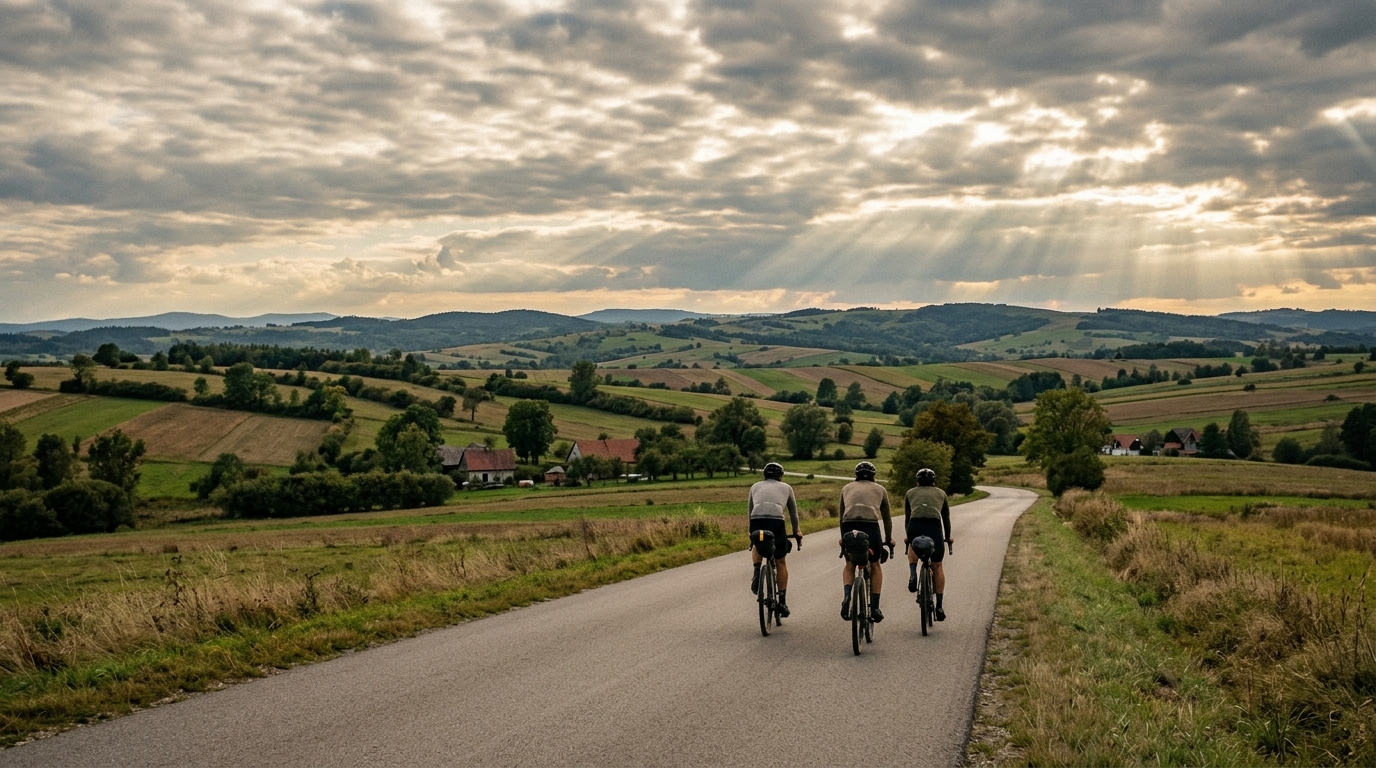
JP2 – Papal Trail: Mysteries of Light
A 179.6 km asphalt point-to-point route in Poland with modest climbing and a clear endurance focus.
- Distance
- 179.6km
- Climbing
- 438m
- Surface
- —
- Shape
- Point-to-point
The route
Elevation profile
Route character
The JP2 - Papal Trail: Mysteries of Light cycling route is best understood as a long endurance day rather than a climbing challenge. The headline numbers are clear: 179.6 km on asphalt with 438 m of elevation gain, and no notable climbs listed in the route data.
That combination shapes the ride. The distance is the main load. The climbing is present, but it is not the defining feature. On a route like this, the decisive factor is less about surviving a major ascent and more about maintaining a sustainable rhythm for several hours without letting the flat or gently rolling profile tempt you into riding too hard too early.
Terrain and pacing
With asphalt as the listed surface, the setup leans toward a road bike, efficient tyres, and steady pacing. The modest elevation gain suggests a route where momentum matters. Small rises, false flats, and changes in wind exposure can still wear riders down over 179.6 km, especially because there is no single climb to force an obvious reset in effort.
The best approach is controlled endurance riding. Keep the effort below threshold, avoid repeated accelerations, and treat the first half as an energy-management problem rather than a test of fitness. If you ride by power, anchor the day around endurance intensity relative to your /glossary/ftp. If you ride by feel, the effort should stay comfortably repeatable, with enough margin to handle the final stretch without drifting into survival mode.
Point-to-point logistics
This is not a loop, which is one of the most important practical details. A point-to-point route changes the day before it changes the ride. You need a start and finish plan, whether that means a pickup, a transfer, or a second-leg travel option after the ride.
Because the route does not return to the start, also be more deliberate with kit. Carry what you need to finish the full distance rather than assuming you can shorten the day by cutting back toward the original start point. The route profile may not be mountainous, but the distance makes basic self-sufficiency important.
What to expect
Expect a long asphalt ride where discipline matters more than punch. The absence of listed notable climbs does not make it easy. It simply moves the challenge from gradient management to duration, fueling, and consistent pacing.
For stronger riders, this can be a fast endurance day if the effort stays smooth. For developing riders, it is a serious long-distance objective because 179.6 km demands fueling habits and pacing restraint. The route rewards patience: ride the early kilometres economically, keep pressure on the pedals without chasing every variation in terrain, and let the low climbing total work in your favour late in the day.
Related routes
3-Länder-Radweg
A 302.2 km asphalt route in Germany with 1512 m of climbing and point-to-point logistics shaped by the Reußenkreuz climb.
7 Peaks Alpine Challenge
A 110.9 km point-to-point assault through the Victorian Alps, stacking 3404 metres of climbing across relentless, wind-swept high-country ascents.
Aberdare Range
A 46 km asphalt point-to-point through Kenya's Central Highlands that trades big climbs for a relentless 1,700 m of rolling grind.
Abra Málaga
A 45-kilometer point-to-point ribbon of asphalt through Peru's Sacred Valley, climbing 1,699 relentless meters into the high Andes.
Afriski Mahlasela Pass
A 112.8 km asphalt ascent through the Maloti Mountains, climbing 3,384 m to the roof of southern Africa via the storied Mahlasela Pass.
Ahr Cycleway
An 82.9 km asphalt point-to-point route with 541 m of gain, the Ahr Cycleway is a steady endurance ride rather than a climb-focused day.