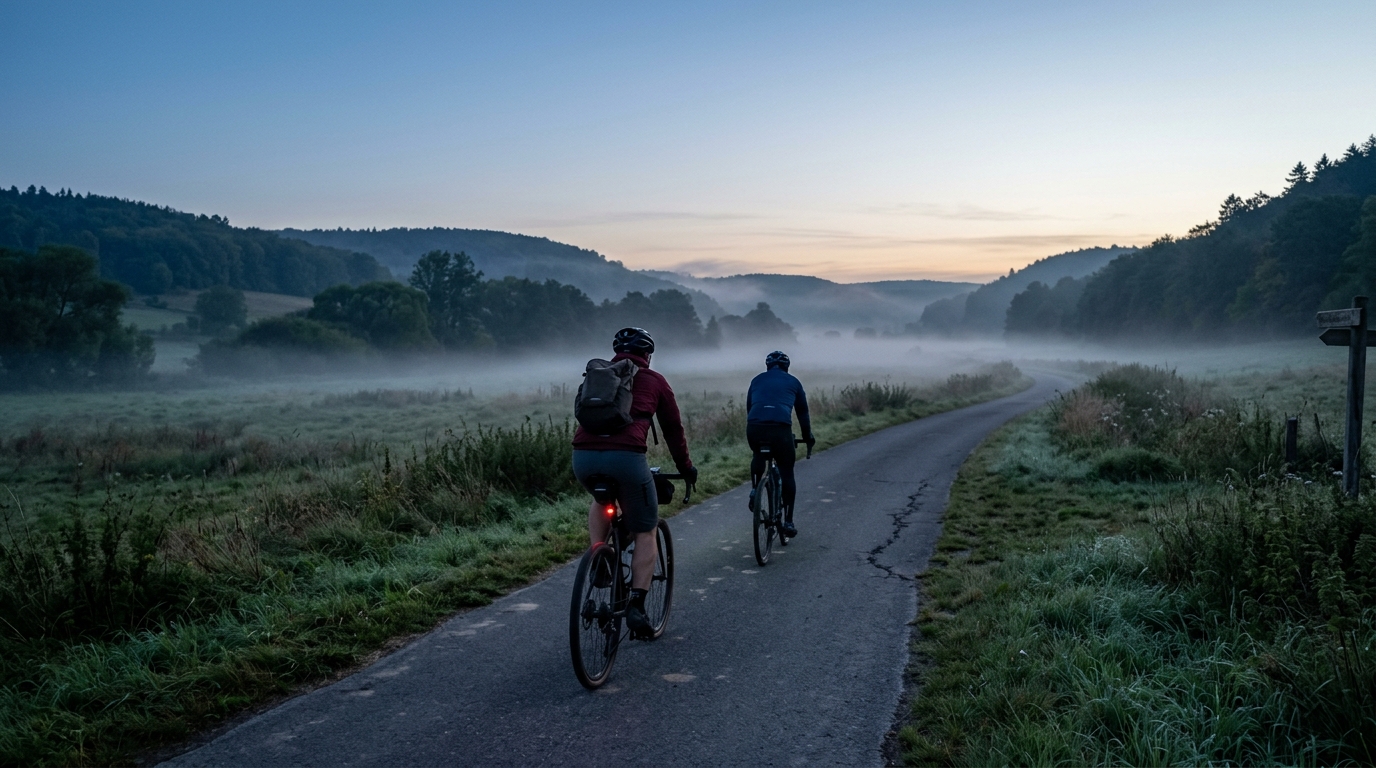
Hessian long-distance cycle route R5
A 290.2 km asphalt point-to-point route in Germany with 1618 m of climbing, built more around sustained endurance than decisive mountain sectors.
- Distance
- 290.2km
- Climbing
- 1,618m
- Surface
- —
- Shape
- Point-to-point
The route
Elevation profile
Hessian long-distance cycle route R5 cycling route overview
The Hessian long-distance cycle route R5 is a 290.2 km point-to-point ride in Germany on asphalt, with 1618 m of elevation gain. Those two numbers define the character of the route more clearly than any single feature: this is a long endurance line where the distance is the main selective force, not a route built around named climbs.
Because there are no notable climbs listed, the climbing should be treated as cumulative rather than route-defining. The practical implication is that the day is unlikely to hinge on one decisive ascent. Instead, fatigue will come from repeated time on the pedals, small changes in rhythm, and the gradual cost of holding pace across a long asphalt route.
Terrain and ride character
The asphalt surface makes this a good match for a road bike, endurance bike, or fast all-road setup, depending on luggage and weather. The route length matters more than surface uncertainty here. On a smoother, more predictable surface, the limiting factor becomes pacing discipline: riders who start too hard will pay later, even if the climbing total looks manageable on paper.
With 1618 m of elevation gain spread across 290.2 km, the profile reads as rolling endurance rather than mountainous. That does not make it easy. It simply changes the problem. Instead of saving everything for one climb, the better strategy is to keep pressure controlled, avoid repeated surges, and make fueling boringly consistent.
Pacing and effort management
For a single-day attempt, treat the Hessian long-distance cycle route R5 as an aerobic durability test. Keep the effort below the point where small rises become attacks against yourself. If riding with power, the useful reference is not a heroic number but a sustainable ceiling around your known endurance range. Riders who use /glossary/ftp for pacing should think in terms of protecting the second half, not winning the first half.
For a multi-day ride, the same logic applies with a different emphasis. The route is long enough that comfort, position, and recovery between sections become performance variables. A setup that feels slightly slower but keeps the body quiet can be the faster choice over the full distance.
Practical notes
- The route is not a loop, so transport planning matters. Decide early whether the ride needs a return train, shuttle, or overnight structure.
- Asphalt favors efficient tires and stable road handling rather than rough-surface compromise.
- The absence of listed notable climbs means preparation should focus on endurance consistency, not climb-specific gearing panic.
- Fuel from the beginning. On a route this long, waiting until hunger arrives is already a tactical mistake.
The R5 is best approached as a long, controlled effort across Germany: efficient, steady, and won by restraint as much as strength.
Related routes
3-Länder-Radweg
A 302.2 km asphalt route in Germany with 1512 m of climbing and point-to-point logistics shaped by the Reußenkreuz climb.
7 Peaks Alpine Challenge
A 110.9 km point-to-point assault through the Victorian Alps, stacking 3404 metres of climbing across relentless, wind-swept high-country ascents.
Aberdare Range
A 46 km asphalt point-to-point through Kenya's Central Highlands that trades big climbs for a relentless 1,700 m of rolling grind.
Abra Málaga
A 45-kilometer point-to-point ribbon of asphalt through Peru's Sacred Valley, climbing 1,699 relentless meters into the high Andes.
Afriski Mahlasela Pass
A 112.8 km asphalt ascent through the Maloti Mountains, climbing 3,384 m to the roof of southern Africa via the storied Mahlasela Pass.
Ahr Cycleway
An 82.9 km asphalt point-to-point route with 541 m of gain, the Ahr Cycleway is a steady endurance ride rather than a climb-focused day.