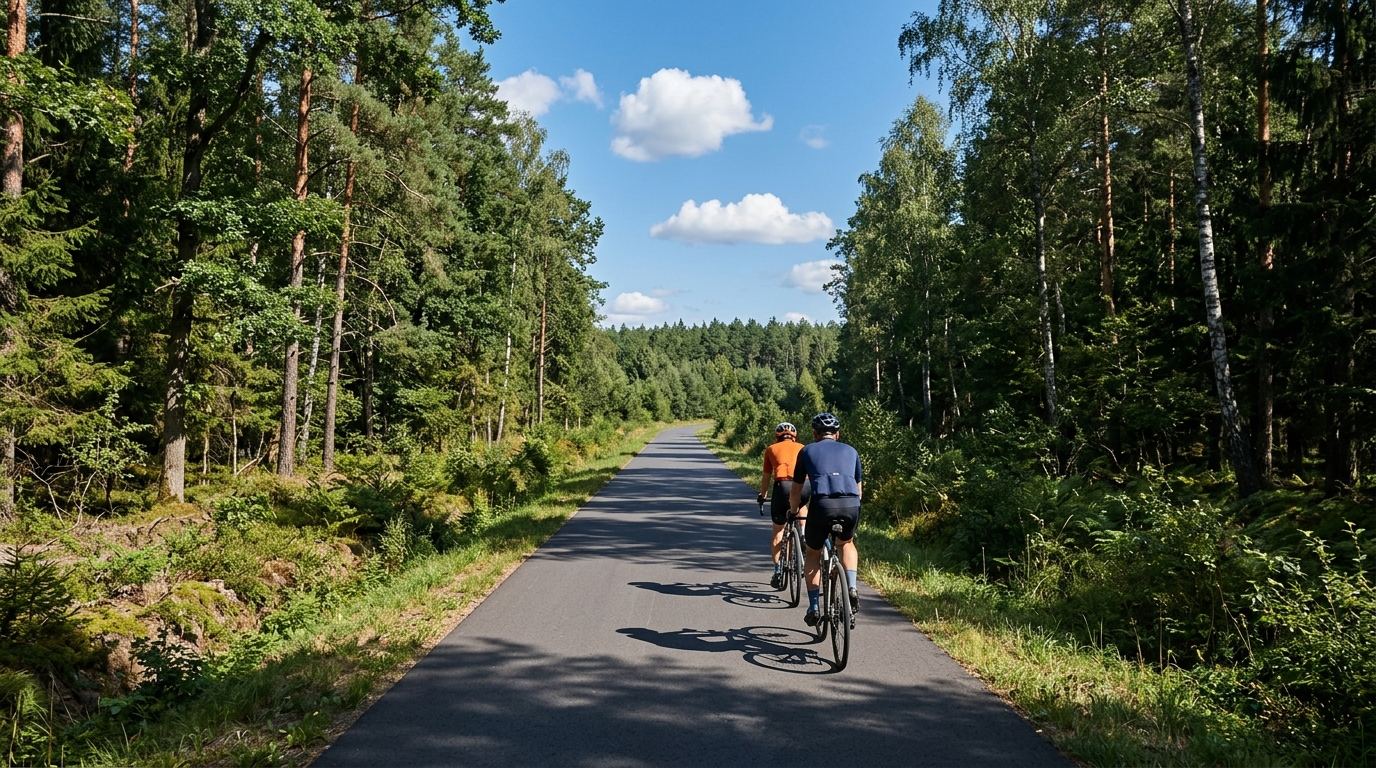
Cycle Route Hajnówka – Topiło – Hajnówka
A 42.1 km asphalt loop with 122 m of elevation gain, built for steady endurance riding rather than climbing fireworks.
- Distance
- 42.1km
- Climbing
- 122m
- Surface
- —
- Shape
- Loop
The route
Elevation profile
Route character
The Cycle Route Hajnówka - Topiło - Hajnówka cycling route is a 42.1 km asphalt loop that starts and finishes in Hajnówka, with Topiło acting as the outward marker before the route closes back on itself. On paper, the defining feature is restraint: 122 m of elevation gain across the full distance and no notable climbs listed.
That makes this a route for rhythm rather than survival. The terrain profile suggests a ride where pacing, position, and consistency matter more than climbing punch. If you are looking for repeated threshold efforts or long gradients, this is not the obvious choice. If you want a controlled endurance loop, a clean aerobic ride, or a route where you can hold steady pressure without constant terrain interruptions, it fits the brief well.
Terrain and effort
With an asphalt surface and modest total elevation gain, the route should reward smooth riding. The limited climbing means power is less likely to spike because of terrain alone, so any hard sections will come from how you choose to ride them rather than from the road forcing the issue.
For endurance athletes, that is useful. A loop like this is well suited to aerobic volume, tempo work, or a controlled skills-focused ride where the goal is to stay efficient and avoid unnecessary surges. If you track effort with /glossary/ftp or heart rate, the main challenge is discipline: keeping the ride honest without letting a benign profile turn into a series of unplanned accelerations.
What to expect
The loop format is practical. You are not committing to a point-to-point ride, and returning to Hajnówka simplifies logistics. The Hajnówka - Topiło - Hajnówka structure also gives the route a clear out-and-back feel in purpose, even though it is recorded as a loop.
The absence of notable climbs is important. It does not mean the ride is effortless, but it does change the tactical demand. Rather than saving matches for a decisive ascent, the smarter approach is to settle into a sustainable cadence early, keep fueling simple, and avoid wasting energy with stop-start riding.
Practical notes
Use this route when you want predictability. The 42.1 km distance is long enough to be a meaningful training ride, but short enough to fit into a focused session without needing the structure of a bigger day out.
Best use cases:
- Endurance ride at controlled intensity
- Tempo block on steady asphalt
- Recovery spin if ridden conservatively
- Fitness check where smooth pacing matters more than elevation
The main performance variable is not the climbing. It is how evenly you ride the distance. On a low-gain asphalt loop, the fastest and cleanest execution usually comes from staying settled, limiting surges, and keeping pressure on the pedals without turning every straight section into a test.
Related routes
3-Länder-Radweg
A 302.2 km asphalt route in Germany with 1512 m of climbing and point-to-point logistics shaped by the Reußenkreuz climb.
7 Peaks Alpine Challenge
A 110.9 km point-to-point assault through the Victorian Alps, stacking 3404 metres of climbing across relentless, wind-swept high-country ascents.
Aberdare Range
A 46 km asphalt point-to-point through Kenya's Central Highlands that trades big climbs for a relentless 1,700 m of rolling grind.
Abra Málaga
A 45-kilometer point-to-point ribbon of asphalt through Peru's Sacred Valley, climbing 1,699 relentless meters into the high Andes.
Afriski Mahlasela Pass
A 112.8 km asphalt ascent through the Maloti Mountains, climbing 3,384 m to the roof of southern Africa via the storied Mahlasela Pass.
Ahr Cycleway
An 82.9 km asphalt point-to-point route with 541 m of gain, the Ahr Cycleway is a steady endurance ride rather than a climb-focused day.