🇻🇳 Route library
Cycling routes in Vietnam
Vietnam packs big contrasts into a compact catalogue, with two routes stretching from the northern highlands to the shores of the Central Coast. The headline ride is the Ha Giang Loop, a mountain circuit through the Ha Giang region that piles on the vertical, topping out at 5,175 metres of climbing across the collection's most demanding day. It is the kind of route that rewards patient legs and a taste for switchbacks, with the numbers to back up the reputation.
Down on the Central Coast, the Hai Van Pass trades altitude for sweeping ocean views, a classic ribbon of road that has long drawn riders looking for a scenic centrepiece. The longest catalogued route here runs to 136 kilometres, enough to turn a single outing into a proper day in the saddle. With just two routes on the books and none yet rated epic, Vietnam offers a focused pair of rides that let the terrain, from mountain loop to coastal pass, do the talking.
- Routes
- 2
- Longest
- 136.4km· Ha Giang Loop
- Most climbing
- 5175m· Ha Giang Loop
Regions in Vietnam
Signature routes of Vietnam
2 routes
Ha Giang Loop
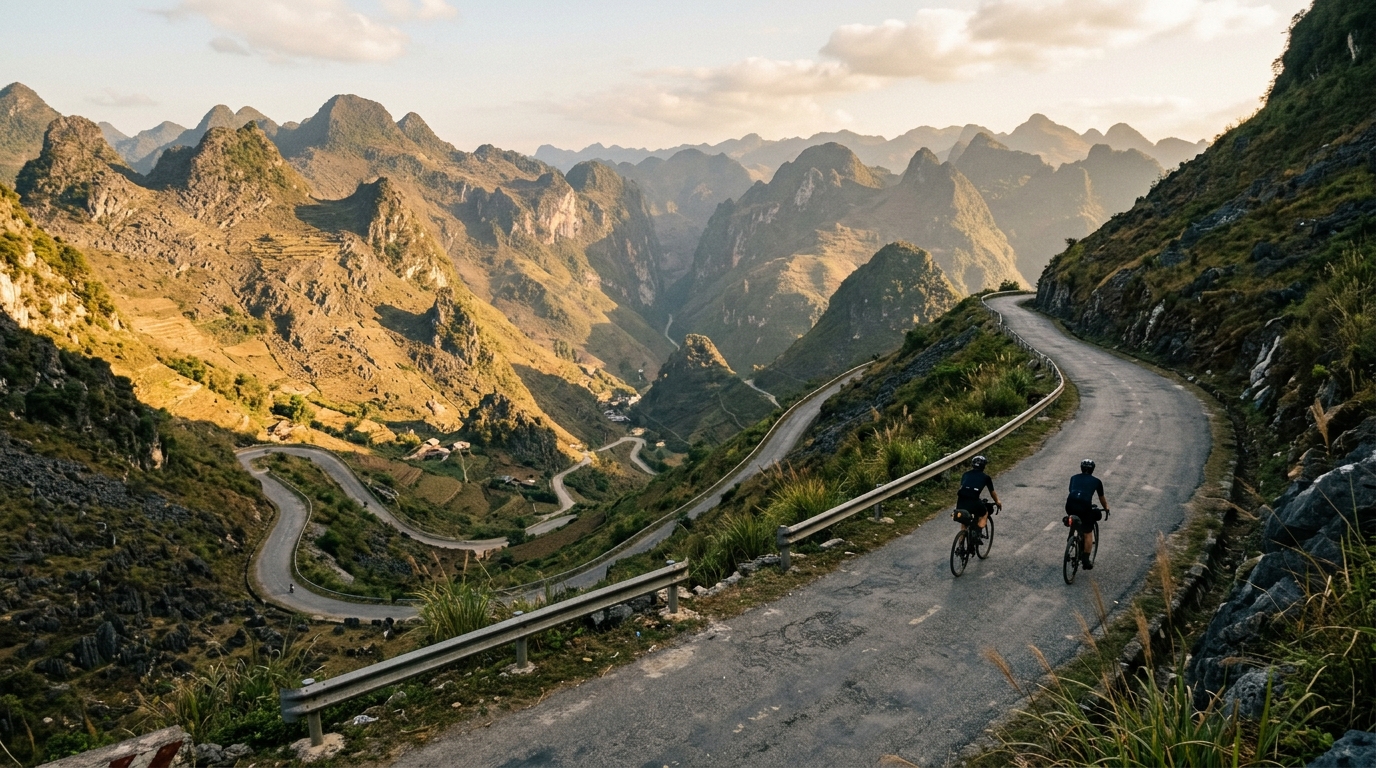
A 136-kilometer point-to-point ribbon of asphalt through Vietnam's far north, stacking 5,175 meters of relentless mountain climbing.
View route
Hai Van Pass
A 112.6 km ribbon of asphalt threading Vietnam's Central Coast, where sea, mountain and mist trade places at every bend.
View routeThe complete guide to riding in Vietnam
The Riding
Vietnam's cycling, as catalogued here, is compact but characterful. Two routes anchor the collection, and together they capture two very different faces of the country: the folded northern highlands of Ha Giang and the sea-hugging Central Coast. Neither is rated an epic in the strict sense, yet both carry the kind of terrain and elevation that reward a patient rider more than a fast one.
The numbers set honest expectations. The longer of the two catalogued routes runs to 136 km, and the biggest single climbing tally reaches 5,175 m of ascent. That climbing figure tells you most of what you need to know about riding here: this is not flat, roll-along country. Gradients come from real mountains and real coastal passes, so gearing, pacing and brakes matter. Expect road surfaces that swing between smooth stretches and rougher, weather-worn sections, and plan your days around vertical metres rather than distance alone.
Signature Routes
Two routes define cycling in Vietnam within this guide.
The Ha Giang Loop is the highland centrepiece. Set in the Ha Giang region in the far north, it threads through mountainous terrain where the climbing stacks up quickly. This is the route to reach for when you want sustained ascent, switchbacks and the slow, earned rhythm of high country. With the collection's heaviest climbing load in play, treat the Loop as a serious mountain effort: ride within yourself early, because the elevation keeps coming.
The Hai Van Pass is the Central Coast counterpart. Where Ha Giang is all inland altitude, the Hai Van Pass is a coastal climb, a headland crossing that trades highland valleys for sea views and salt air. It is a natural pairing with the Loop for anyone building a trip that samples both of Vietnam's catalogued riding styles, and it stands on its own as a classic pass to tick off.
Between them, these two routes give you the essential contrast: mountains versus coast, inland versus shoreline, with the longer 136 km distance and the deepest climbing spread across the pair.
When to Ride
Because both routes lean on elevation, timing is about comfort and safety on the climbs and descents more than anything else. Aim for stable, dry conditions when road surfaces are most predictable and long descents from passes stay grippy. The Ha Giang region sits high and inland, so mountain weather can shift fast and temperatures fall with altitude; carry a layer even when the valley feels warm. The Central Coast setting of the Hai Van Pass brings its own coastal weather patterns, with wind and moisture rolling in off the sea. Check local forecasts close to your ride window and keep plans flexible, since a heavy weather day on either route turns a rewarding climb into a hard one.
Practical Notes
- Respect the vertical. With up to 5,175 m of climbing on offer, fit low gears and make sure your brakes are in top condition for the long descents that follow every big pass.
- Plan by elevation, not just distance. The longest route is 136 km, but on this terrain the ascent, not the mileage, sets the pace of your day.
- Pack for changeable conditions. The Ha Giang highlands can be cold and exposed; the Central Coast can be windy and humid. Layers and rain protection earn their place.
- Carry the essentials. Mountain and coastal-pass riding can mean long stretches between resupply, so bring enough water, food and basic repair kit to stay self-sufficient.
- Ease into the climbs. Neither the Ha Giang Loop nor the Hai Van Pass is a route to attack cold; warm up and settle into a sustainable rhythm.
Summary
Vietnam's catalogued cycling comes down to two standout routes that between them cover the country's contrasting terrain. The Ha Giang Loop delivers the high, climbing-heavy north from the Ha Giang region, while the Hai Van Pass offers a coastal pass on the Central Coast. With two routes, a longest distance of 136 km and a peak climbing figure of 5,175 m, this is a small but rewarding collection built for riders who enjoy earning their views one gradient at a time.
Looking for the climbs in Vietnam?
Climbs in Vietnam