🇨🇦 Route library
Cycling routes in Canada
Canada rewards riders who chase scenery on a grand scale. Both of our catalogued routes here earn an epic rating, tracing two of the country's most storied landscapes: the glacier-fringed Canadian Rockies and the ocean-cut coast of Nova Scotia. The Icefields Parkway is the high-altitude showpiece, stacking up to 3,439 m of climbing on a single ride, while the Cabot Trail wraps its switchbacks around headlands and sea. These are big-country roads built for big days in the saddle.
Distances match the ambition, reaching as far as 287 km on our longest catalogued route. Whether you favour the sustained mountain gradients of the Rockies or the rolling, wind-swept turns of the Nova Scotia coast, both rides deliver the kind of scenic payoff that keeps cyclists coming back. With just two hand-picked routes, this is a small but formidable collection — every kilometre earns its place.
- Routes
- 6
- Epic
- 2
- Longest
- 286.8km· Cabot Trail
- Most climbing
- 3439m· Cabot Trail
Regions in Canada
6 routes
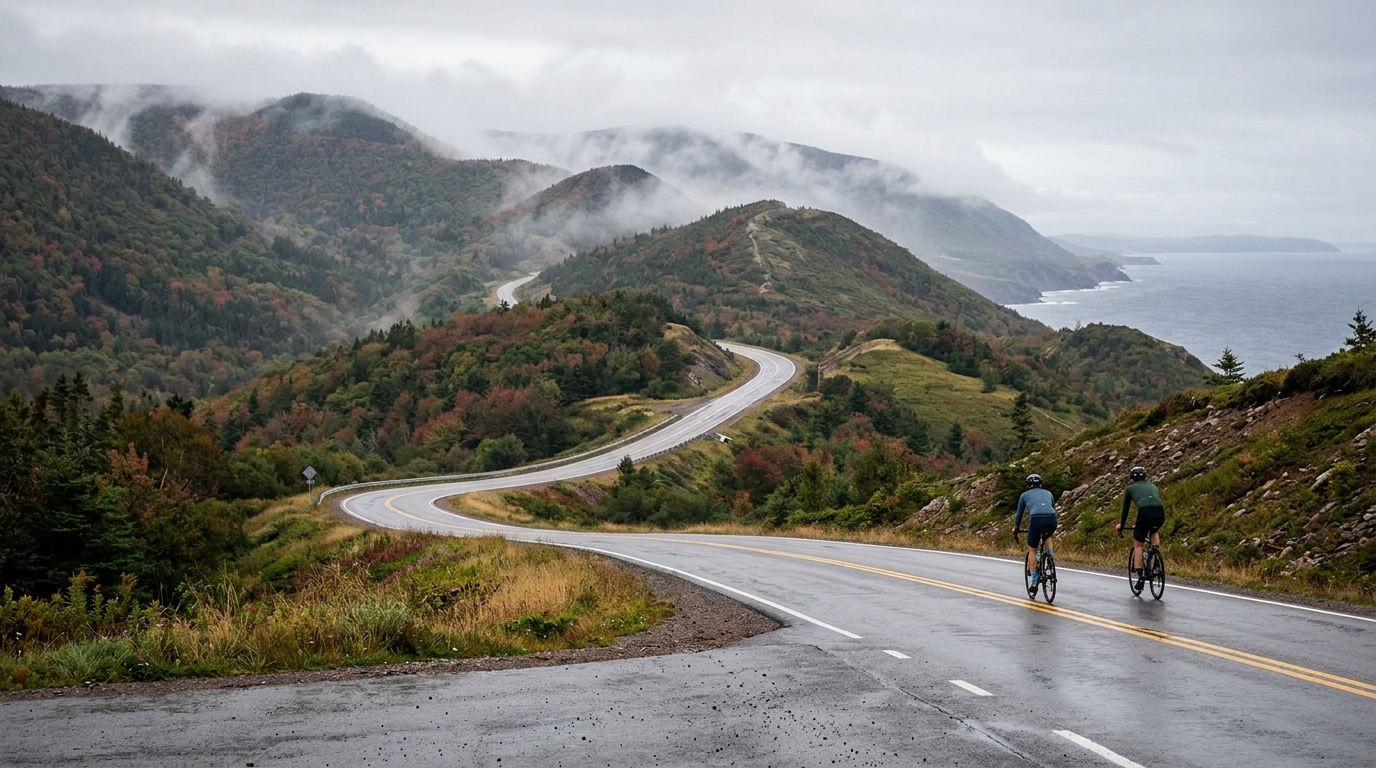
Cabot Trail
A 286.8 km loop around Cape Breton's coastline, packing 3439 m of climbing into one of Canada's most storied rides.
View route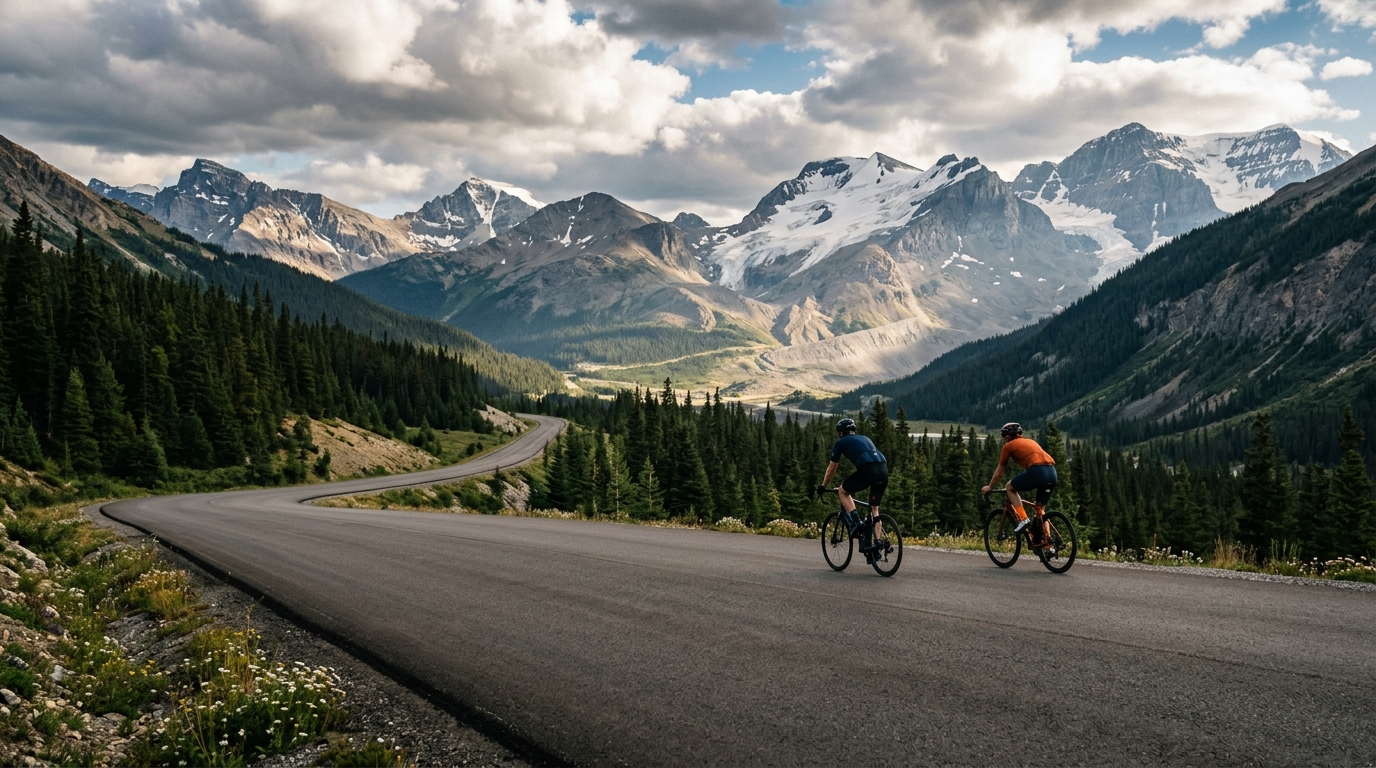
Icefields Parkway
A 231.8 km point-to-point ribbon of asphalt through the Canadian Rockies, stacking 2328 m of steady, wide-open climbing.
View route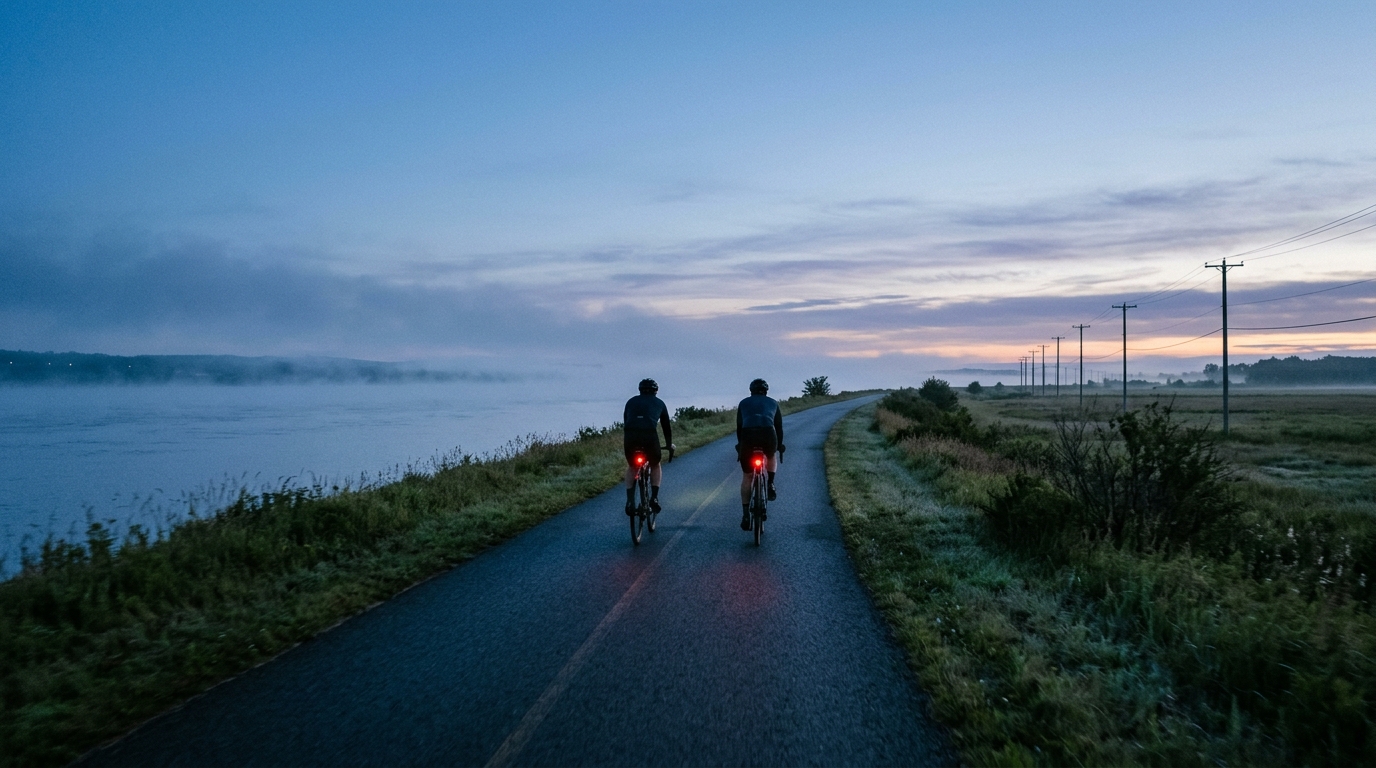
Corridor du Littoral
A flat asphalt point-to-point ride built for steady pacing, easy endurance work, and clean logistics rather than climbing drama.
View route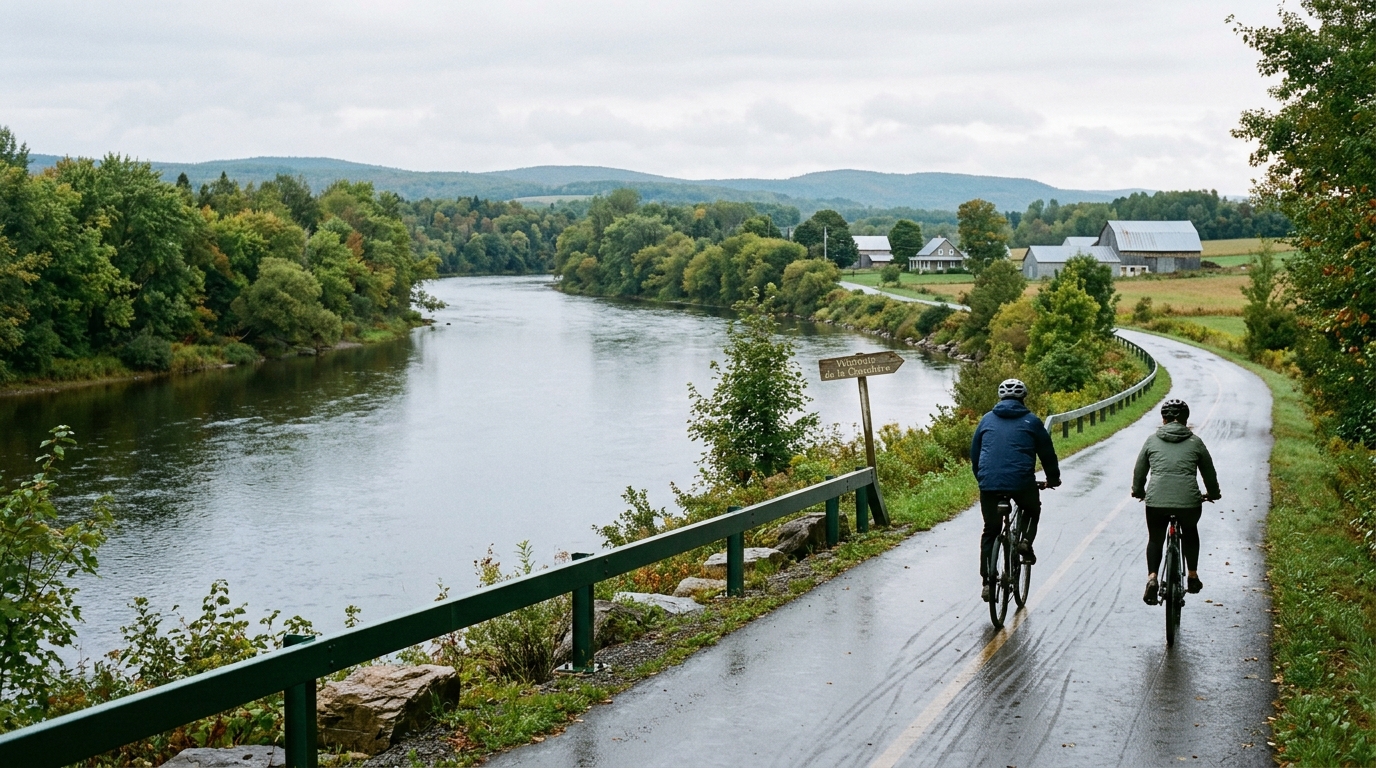
Véloroute de la Chaudière
An 85.7 km asphalt point-to-point route in Canada with just 137 m of gain, built more around steady endurance than climbing.
View route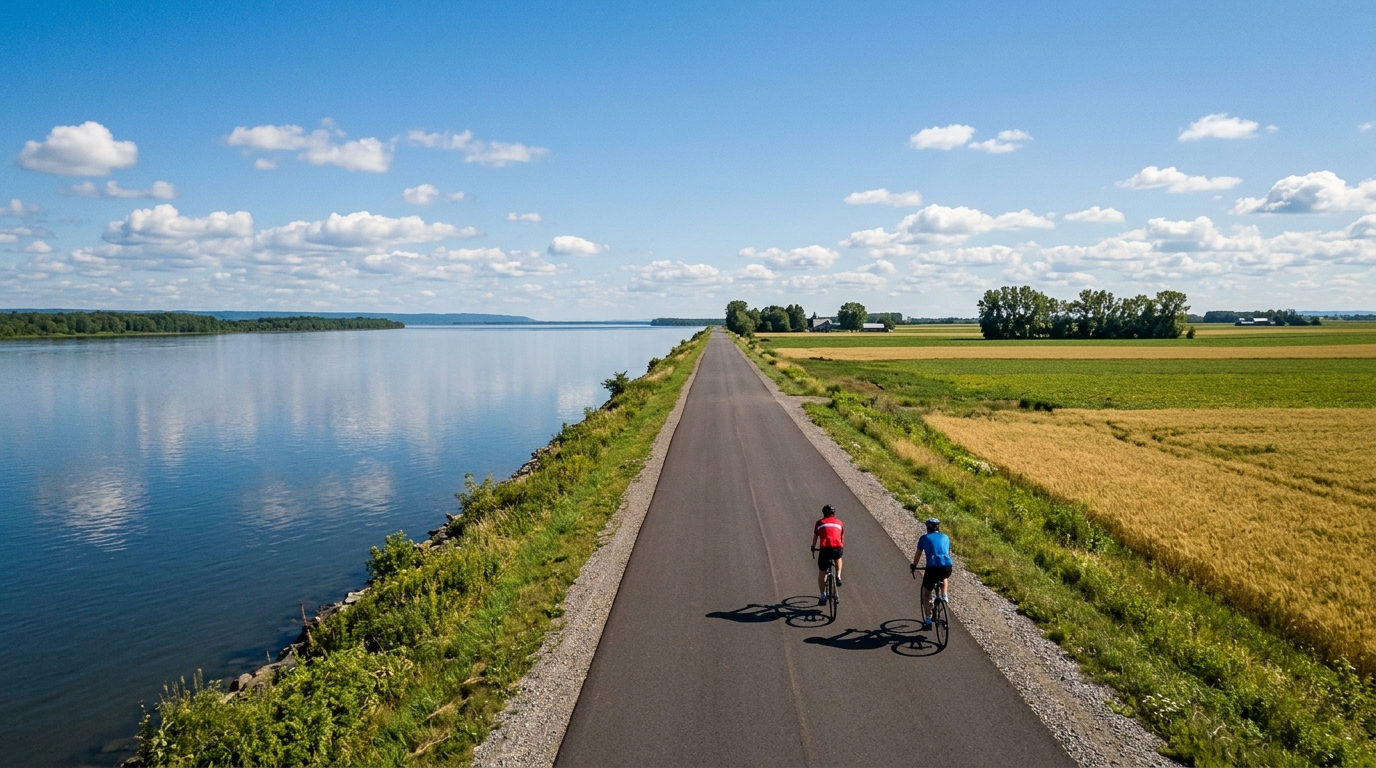
Véloroute Marie-Hélène-Prémont
A flat, paved 51.3 km Canadian route with just 60 m of gain, built more for steady rhythm than climbing drama.
View route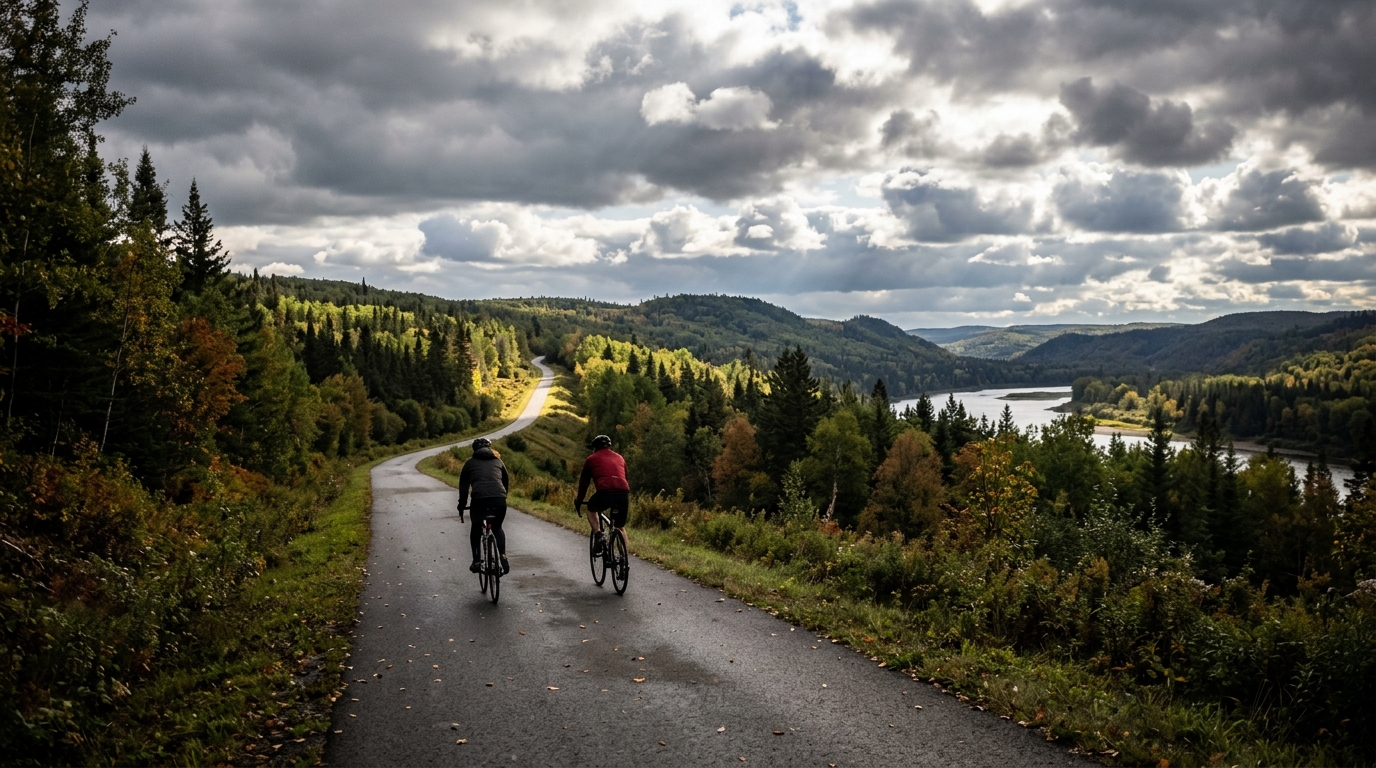
Sentier des Jarrets noirs
A measured asphalt route in CA: 17 km, 114 m of climbing, and a non-loop format that rewards steady pacing and a simple return plan.
View routeThe complete guide to riding in Canada
The Riding
Canada's catalogued cycling is small but heavyweight. Just two routes make the list, and both earn an epic rating—a rare hit rate that tells you something about the terrain here. This is not a country of gentle, rolling loops. The numbers set the tone: the longest catalogued route runs 287 km, and the biggest single climbing tally reaches 3,439 m. Those are figures that ask for fitness, patience, and a plan.
What unites the two rides is scale. Whether you are threading a coastal headland or climbing toward a high mountain pass, the reward comes from sustained effort over long distances rather than short, sharp bursts. Elevation is the recurring theme—these are climbing routes, and the vertical adds up quickly. Riders who come to Canada for these routes come to be tested by long ascents and rewarded with the kind of scenery that only opens up when you have earned the height.
Signature Routes
Two marquee routes define cycling in Canada, and both are rated epic.
The Cabot Trail, in Nova Scotia, is the country's great coastal ride. It hugs a rugged Atlantic edge, linking headlands and climbs into a circuit that has become a bucket-list objective for road cyclists. The character is unmistakable: exposed coastline, repeated climbing, and the constant presence of the sea. It is a route that rewards riders who respect its gradients and pace themselves across the day.
The Icefields Parkway, in the Canadian Rockies, is the alpine counterpart. Where the Cabot Trail delivers the ocean, the Parkway delivers the mountains—long climbs toward high ground, big open valleys, and the sustained elevation that pushes the region's climbing figures to their peak. This is where distance and vertical gain combine most dramatically, and it is the kind of ride cyclists plan their season around.
Together these two routes span the breadth of Canadian cycling: one coastal, one alpine, both demanding, both epic.
When to Ride
Both of Canada's catalogued routes are warm-season objectives. The Cabot Trail's Atlantic exposure and the Icefields Parkway's high-mountain terrain in the Canadian Rockies mean the practical window is the summer stretch, when roads are clear, daylight is long, and the high country is open to riders.
Time your visit for the middle of the warm season and you give yourself the best odds of stable conditions on both coast and mountain. Shoulder-season riding is possible but riskier—mountain weather in the Rockies in particular can turn quickly, and the higher you climb on the Parkway, the more exposed you are to cold and shifting conditions. Plan around the settled months and treat any early or late-season attempt as a weather gamble.
Practical Notes
These are big routes, so prepare accordingly. With the longest catalogued ride at 287 km, some objectives are best broken into stages rather than swallowed in a single push—plan food, water, and rest points across the distance.
Climbing is the defining challenge. A route topping out at 3,439 m of ascent demands real climbing legs and a bike geared for sustained grades. Choose gearing that lets you spin up long ascents rather than grind, and carry layers: descents off a big climb, whether toward the Nova Scotia coast or through a Rockies valley, can be cold even on a warm day.
Both regions reward self-sufficiency. The Icefields Parkway runs through remote mountain country in the Canadian Rockies, and the Cabot Trail covers exposed coastal ground in Nova Scotia. Carry repair kit, know your bail-out options, and check conditions before you commit to a long day.
Summary
Canada's cycling catalogue is compact—two routes—but both are rated epic, and both deliver at the highest level. The Cabot Trail brings the rugged Atlantic coast of Nova Scotia; the Icefields Parkway brings the high passes of the Canadian Rockies. The defining figures—287 km at the longest, 3,439 m at the most climbing—make clear what to expect: long distances, serious ascent, and terrain that spans ocean and alpine. Come with the fitness for sustained climbing, time your trip for the warm season, and these two routes will give you the best of Canadian riding.
Looking for the climbs in Canada?
Climbs in Canada