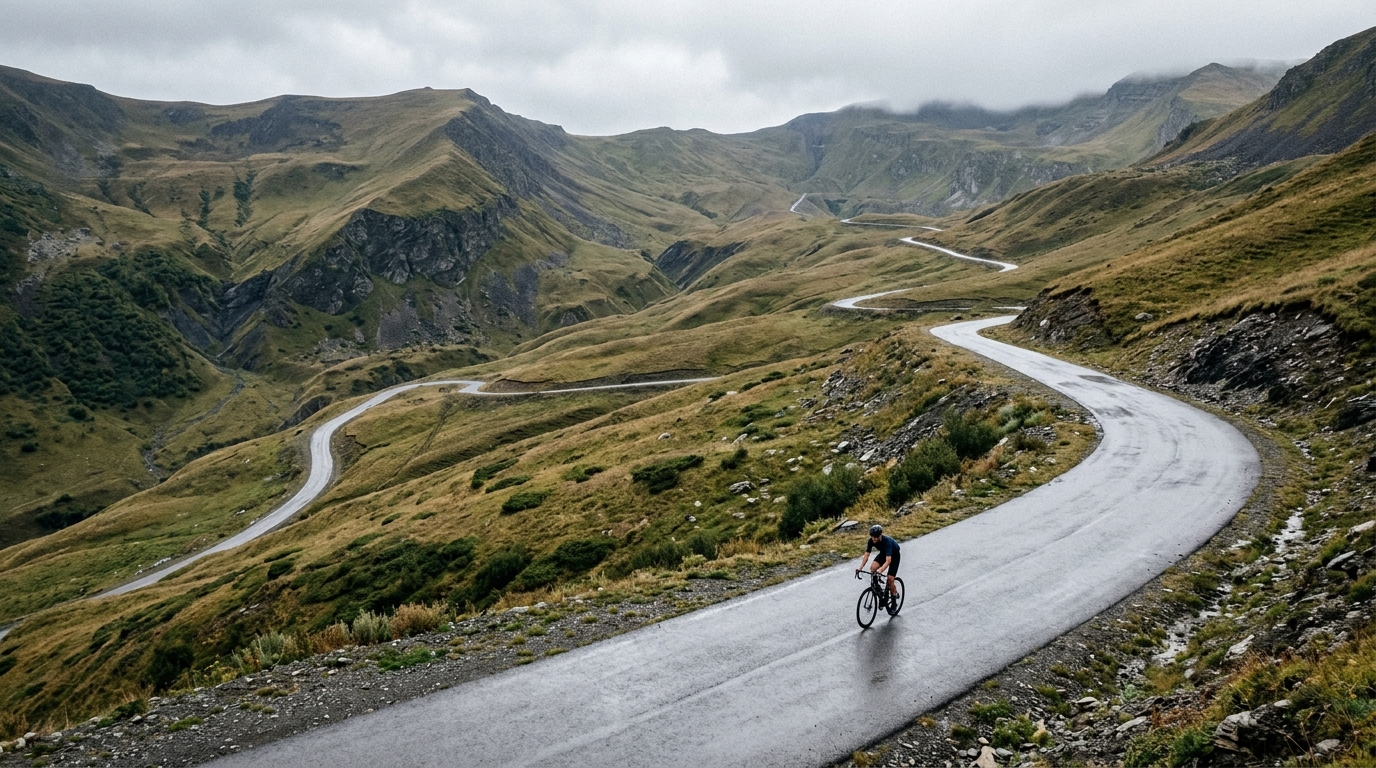
Goderdzi Pass
A practical pacing and gearing guide to the Goderdzi Pass cycling climb, a long Category 1 ascent with a steady average and severe ramps.
- Length
- 25.8km
- Avg
- 5.5%
- Max
- 18.0%
- Summit
- 2,162m
- Ascent
- 1,479m
The climb
Gradient profile
Goderdzi Pass cycling climb profile
Goderdzi Pass is a long, high-consequence climbing effort rather than a short test of punch. The climb runs for 25.8 km, rises from 742 m to 2162 m, and gains 1420 m net, with 1479 m of total ascent. On paper, the 5.5% average gradient looks controlled. In practice, the 17.96% maximum gradient changes the way the climb has to be ridden.
That contrast is the key to understanding Goderdzi Pass. A climb with this length and this average could tempt a rider into settling too high early, especially if the opening gradients feel manageable. But the maximum gradient shows there are sections steep enough to punish over-pacing. The total ascent also sits above the net elevation gain, which points to a profile that is not simply one smooth ramp from bottom to summit. There is enough variation that rhythm matters, and losing discipline on the easier parts can leave you exposed when the road bites.
How the gradient unfolds
With only the headline profile available, the safest reading is that Goderdzi Pass climbs in phases rather than as a perfectly even grade. The average of 5.5% suggests a broadly sustainable climbing gradient across the full 25.8 km, but the near-18% maximum means the ride will include short sections where seated tempo may no longer be enough.
The important tactical point is that the hard parts are not represented by the average. A rider pacing purely off the 5.5% figure risks treating the climb like a long steady threshold effort, then being forced above target power on the steepest ramps. Those spikes carry a cost. On a climb this long, repeated surges above your sustainable range can turn the upper slopes into damage control.
Pacing strategy
Ride the lower part with restraint. The climb gains 1420 m net, so the summit is earned through durability, not early aggression. If using power, keep the opening phase below your target climbing effort and save room for gradient changes. If riding by feel, the correct early sensation is controlled pressure, not strain.
Use the easier gradients to reset rather than accelerate. That matters because the steepest pitch reaches 17.96%, where cadence can drop quickly and muscular load rises. On those ramps, accept a temporary lift in effort, but avoid fighting the bike. Smooth torque is better than trying to hold the same speed.
For gearing, err on the side of having a true climbing gear. The average gradient does not demand extreme gearing by itself, but the maximum gradient does. A setup that feels efficient at 5.5% may feel over-geared when the road approaches its steepest sections, especially late in the climb.
What it rewards
Goderdzi Pass rewards patience, range, and clean pacing. It is a Category 1 climb because the full package is demanding: 25.8 km of climbing, 1479 m of total ascent, and enough steepness to break rhythm. Treat it as a sustained aerobic climb with intermittent strength tests, and it becomes manageable. Treat it as a simple 5.5% average, and the summit will feel much farther away than the profile suggests.
For setting target intensity before an effort like this, anchor pacing to known sustainable power rather than the headline gradient. If that number is unclear, estimate it first with /tools/ftp-estimator or review the basics at /glossary/ftp.