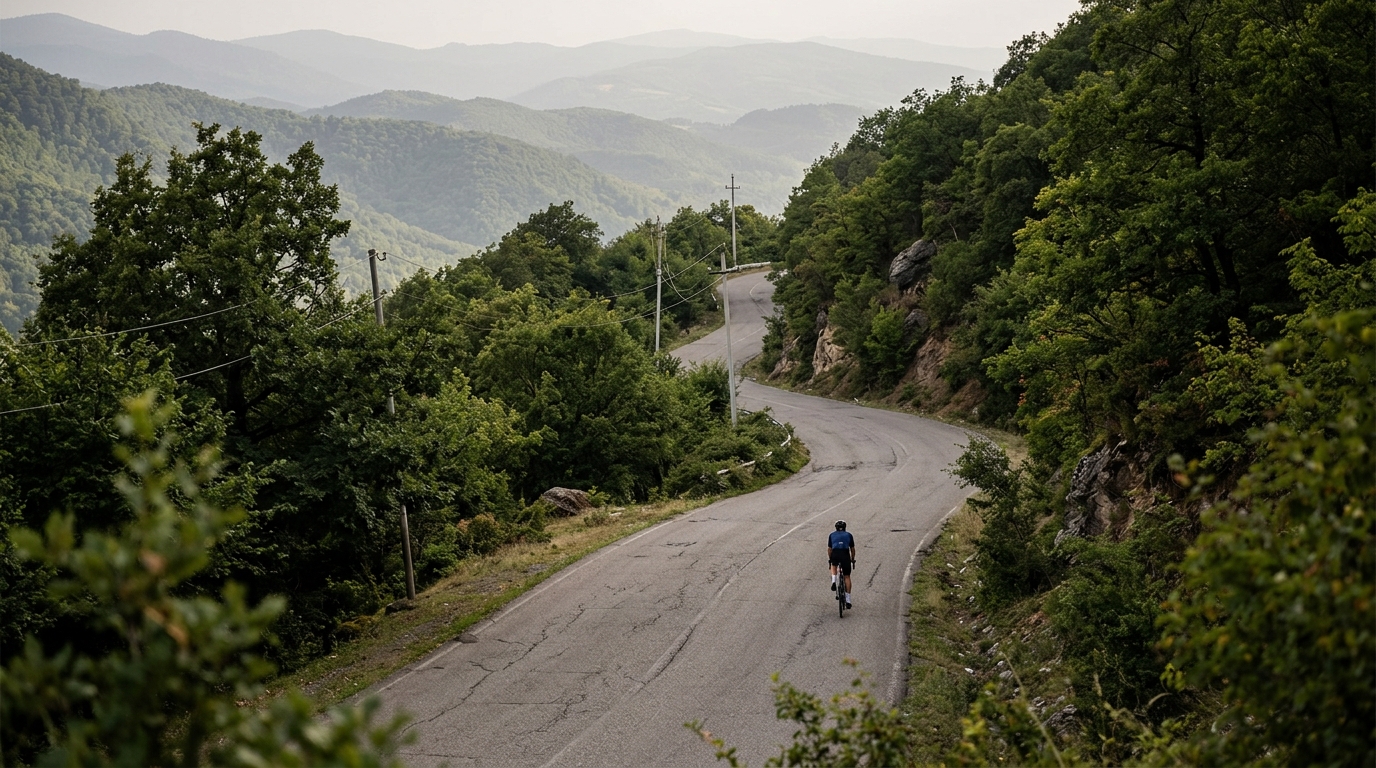
Surami Pass
A practical pacing and gearing guide to Surami Pass, a short 2.6 km category 4 climb averaging 6.07% with ramps up to 9.52%.
- Length
- 2.6km
- Avg
- 6.1%
- Max
- 9.5%
- Summit
- 895m
- Ascent
- 126m
The climb
Gradient profile
Surami Pass cycling climb profile
Surami Pass is a short, category 4 climb, but the numbers point to a climb that still needs respect. At 2.6 km, it is not long enough to become a pure endurance test, yet the 6.07% average and 9.52% maximum gradient make it easy to over-commit early and pay for it before the summit.
The climb starts at 737 m and tops out at 895 m, gaining 158 m from bottom to summit. That tells you the effort is compact and direct: there is not much road to settle in, recover, and rebuild. Once the gradient bites, the climb is already short enough that most riders will be tempted to ride above sustainable climbing pace. That is exactly where the mistake usually happens.
How the gradient shapes the ride
The available profile gives the overall climb rather than a turn-by-turn breakdown, so the best way to read Surami Pass is through its relationship between average and maximum gradient. A 6.07% average over 2.6 km suggests a steady climbing load, while the 9.52% maximum means at least one section is meaningfully steeper than the headline number.
That gap matters. If you pace the climb as though it is a smooth 6% drag, the steeper pitch can force a sudden torque spike. On a short climb, that may feel manageable for a few minutes, but it can push the effort above /glossary/ftp quickly. The better approach is to ride the opening with control, hold a gear that leaves one shift in reserve, then treat the steepest section as the decisive part of the climb rather than something to brute-force from the bottom.
Pacing and gearing notes
For most riders, Surami Pass is a controlled hard effort, not a long threshold climb. The key is avoiding the false confidence that comes from the short distance.
Practical approach
- Start slightly under target effort for the first part of the climb, especially if riding by feel.
- Keep cadence protected before the road reaches its steepest pitch at up to 9.52%.
- Avoid grinding a big gear early, because the climb is short but steep enough to punish repeated accelerations.
- If using power, cap the opening effort near sustainable climbing intensity, then allow a lift once the summit is clearly within reach.
A compact climbing gear is sensible here, not because the pass is long, but because the maximum gradient is high enough to make cadence control the difference between a smooth effort and a ragged one. Riders with a strong punch can ride Surami Pass aggressively, but the smartest version of that aggression is delayed: absorb the lower-gradient work, stay seated where possible, and use the final part of the climb to empty the tank.
Bottom line
Surami Pass is a short category 4 climb with enough gradient variation to make pacing matter. The 2.6 km length invites an early attack, but the 9.52% maximum gradient argues for restraint until the climb has shown its hardest section. Ride it patiently for the first half of the effort, keep the gear light enough to respond, and the summit comes as a strong finish rather than a slow fade.