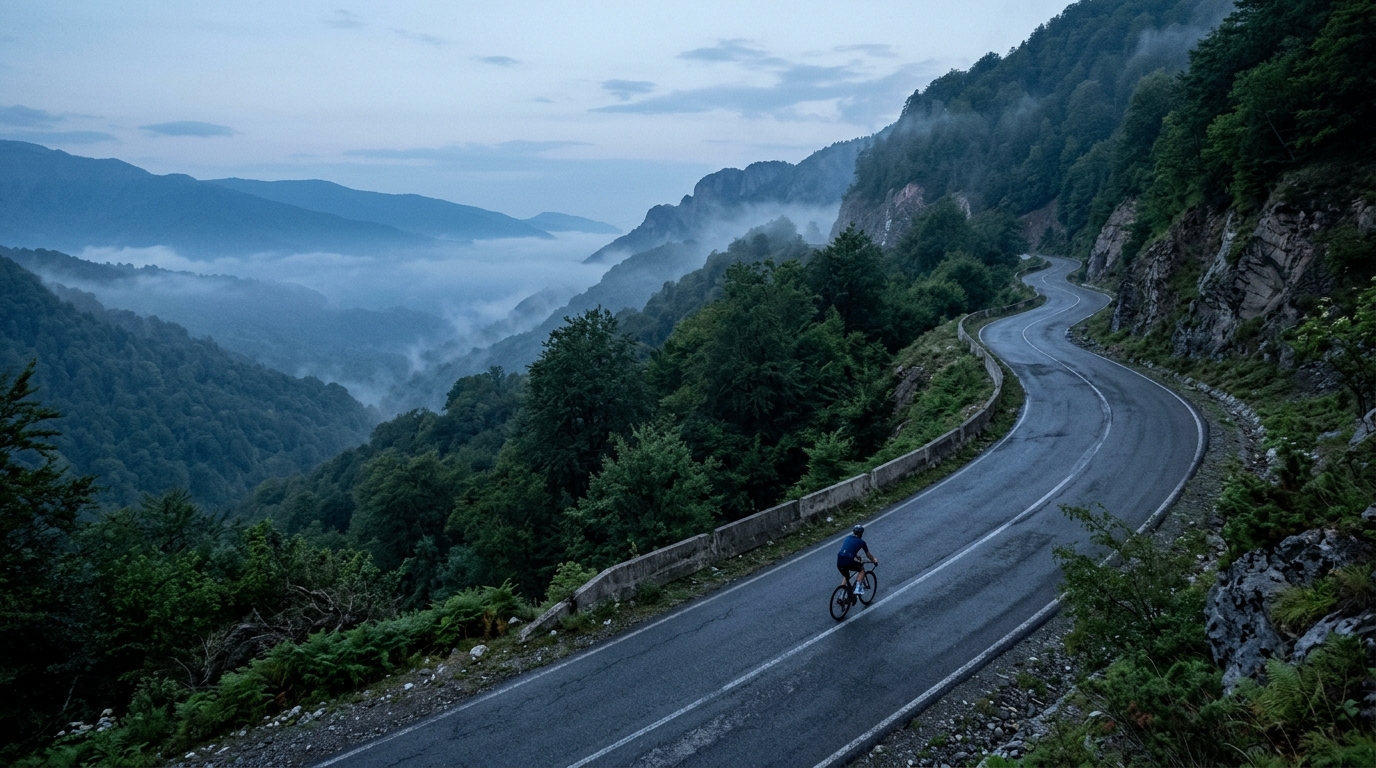
Rikoti Pass
A steep HC climb in Georgia: 8.2 km at 10.48%, with a maximum gradient of 15.46% and little room for pacing mistakes.
- Length
- 8.2km
- Avg
- 10.5%
- Max
- 15.5%
- Summit
- 1,344m
- Ascent
- 842m
The climb
Gradient profile
Rikoti Pass cycling climb profile
Rikoti Pass is short enough to tempt riders into treating it like a hard threshold effort, but the numbers argue for more respect. At 8.2 km with an average gradient of 10.48%, this is not a climb where the difficulty is hidden in one isolated ramp. The average itself is already severe, and the maximum gradient of 15.46% confirms that the steepest sections will punish any early pacing mistake.
The climb starts at 481 m and reaches 1344 m, with the profile listing 863 m of net elevation gain and 842 m of total ascent. However you frame the vertical, the defining feature is density: a large amount of climbing packed into a relatively compact distance. That is why it carries an HC category. The challenge is not simply getting over a long climb, but absorbing sustained steepness without letting cadence collapse.
How the gradient feels
With an average above 10%, Rikoti Pass should be ridden as a climb that applies pressure almost immediately. There is no statistical basis here to expect long recovery sections, so the safest assumption is that any easing in the road should be treated as a chance to stabilize breathing and reset cadence rather than as a place to surge.
The maximum gradient of 15.46% matters because it changes how the whole climb should be approached. Even if those steepest pitches are brief, they force higher torque demands. A rider who is already riding close to the limit before reaching them will have very little room to respond. This is the classic trap of a steep HC climb: the average gradient encourages a hard but controlled effort, while the ramps expose whether that control was real.
Pacing and gearing notes
Start below the effort you think you can hold. On a climb this steep, perceived exertion can lag behind the actual cost in the opening minutes because speed is low and the work feels controlled. The better strategy is to ride the first part with discipline, keeping pressure steady and saving the hardest effort for the upper slopes.
Gearing should be chosen for cadence preservation, not pride. If your easiest gear only works when you are fresh, it is not low enough for a climb averaging 10.48%. The key is avoiding repeated low cadence grinding on the steepest pitches, because that muscular cost compounds quickly and can force you above sustainable power even when your breathing feels manageable.
For pacing by power, anchor the effort around what you can truly sustain relative to /glossary/ftp, then accept short rises on the 15.46% ramps without chasing them. The goal is not to flatten the climb. The goal is to keep each steep section from becoming a debt you have to repay before the summit.