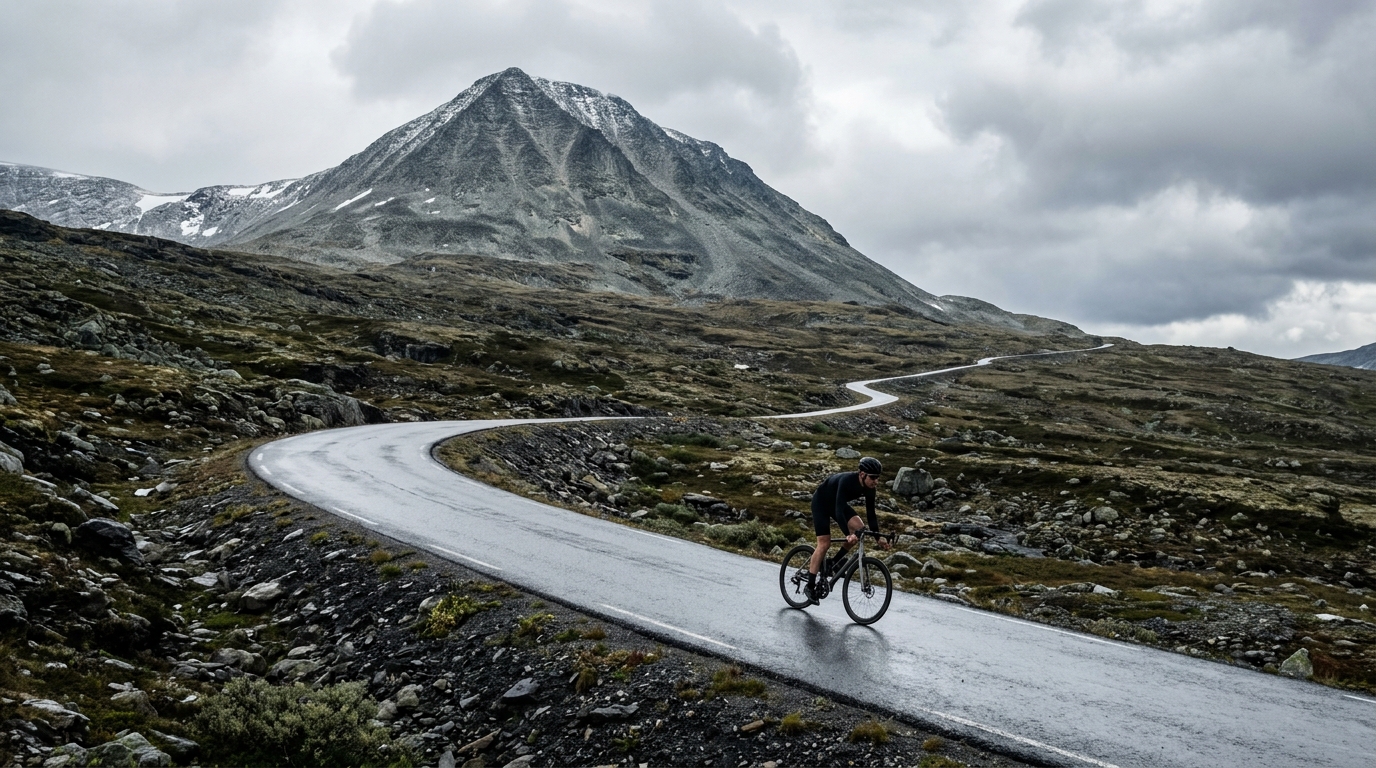
Climb library · Norway
Norway Cycling Climbs
Norway rides like nowhere else. Roads peel off the fjords and claw straight up rock walls, threading tunnels and hairpins into thin mountain air. The gradients are honest, the surfaces are quiet, and the scenery does half the work of pushing you higher. This is riding for people who came for the effort and stayed for the view.
We have three climbs catalogued here, none of them hors catégorie but every one worth the ferry ticket. Tronåsen stacks its old switchbacks in a relentless ramp, Dyrskar carries you up toward the country's high, exposed ground, and Svartediket climbs off the water into steep, dark forest. The highest summit tops out at 1,179 metres — modest on paper, brutal in a headwind, and unforgettable once you crest it.
Signature climbs of Norway
All climbs in Norway
8 climbs
- GaustatoppenHCNO · 9.3 km · 10.6% · 990 m1057pts
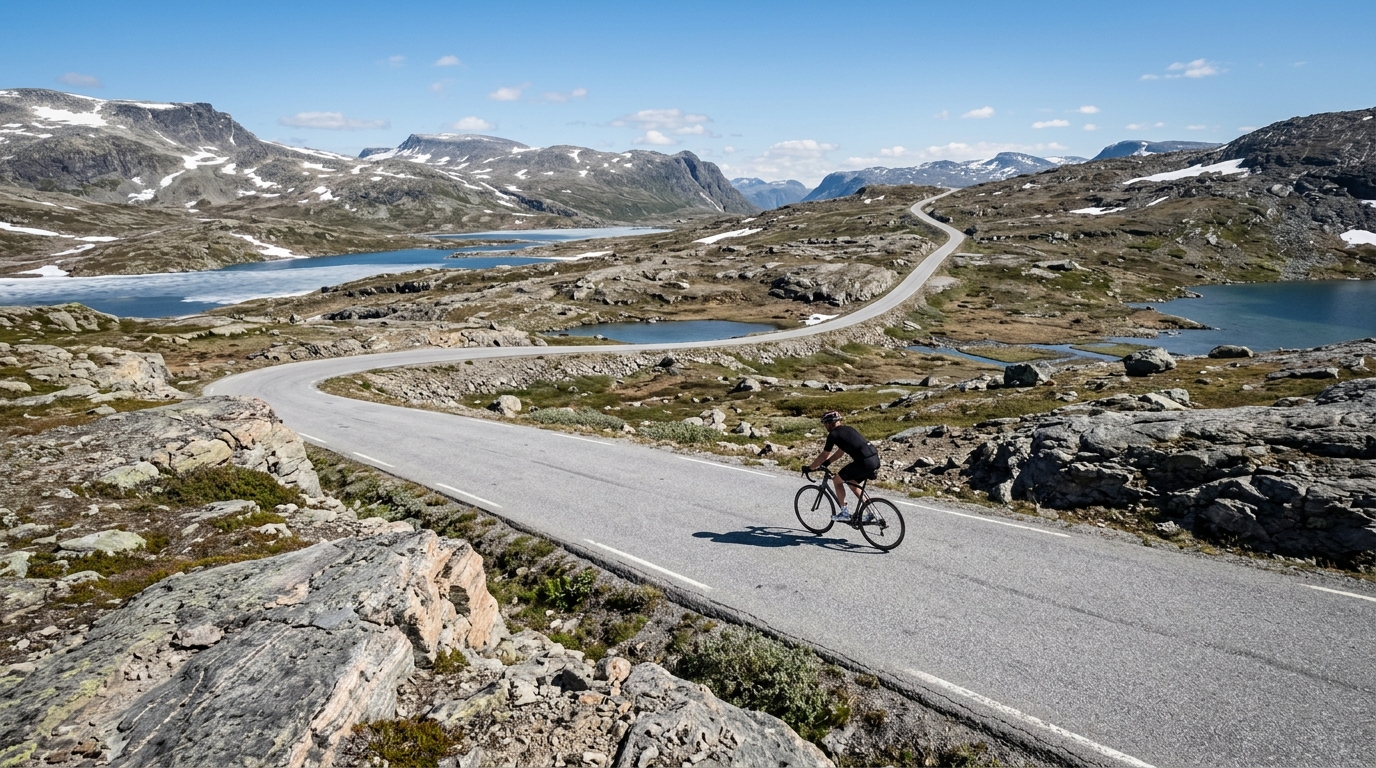 SognefjellsvegenCat 1NO · 26.6 km · 5.2% · 1408 m731pts
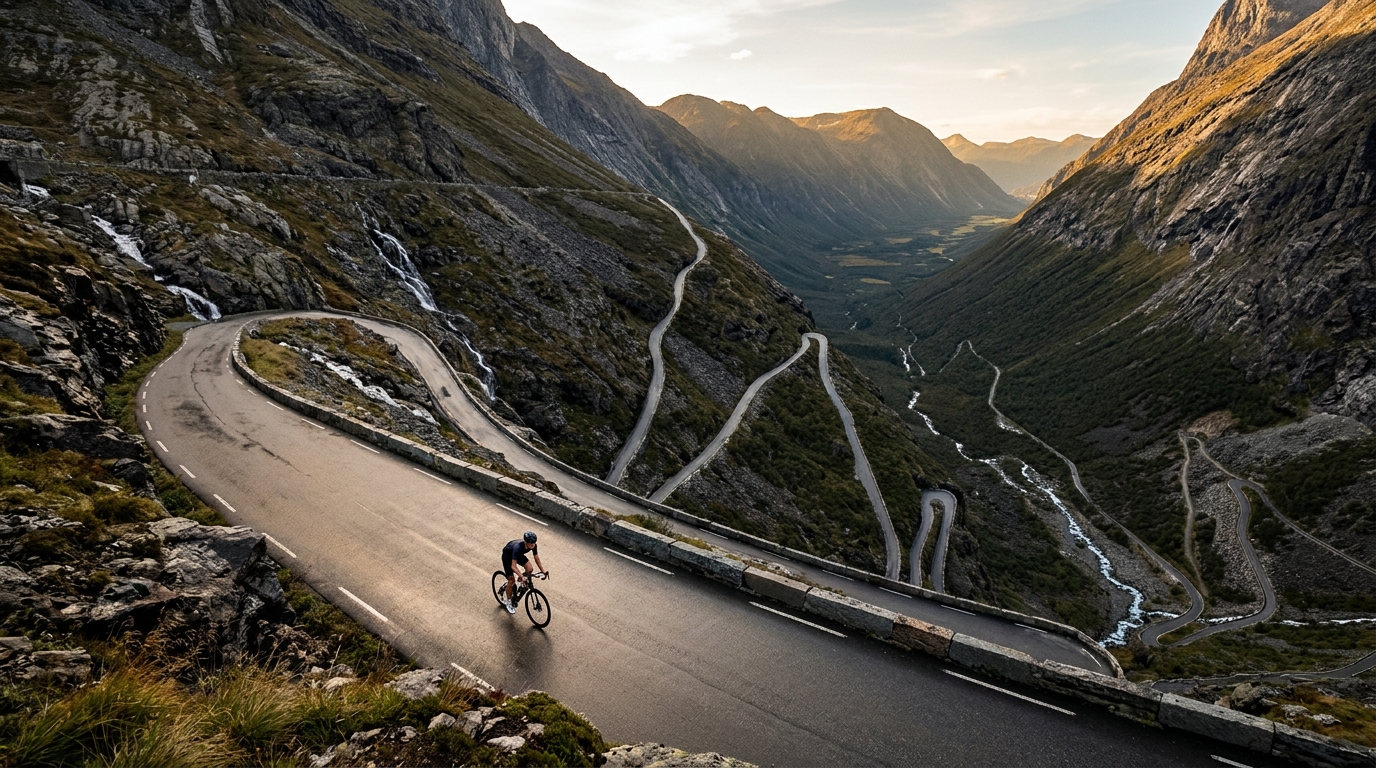 TrollstigenCat 1NO · 6.1 km · 10.8% · 654 m710pts
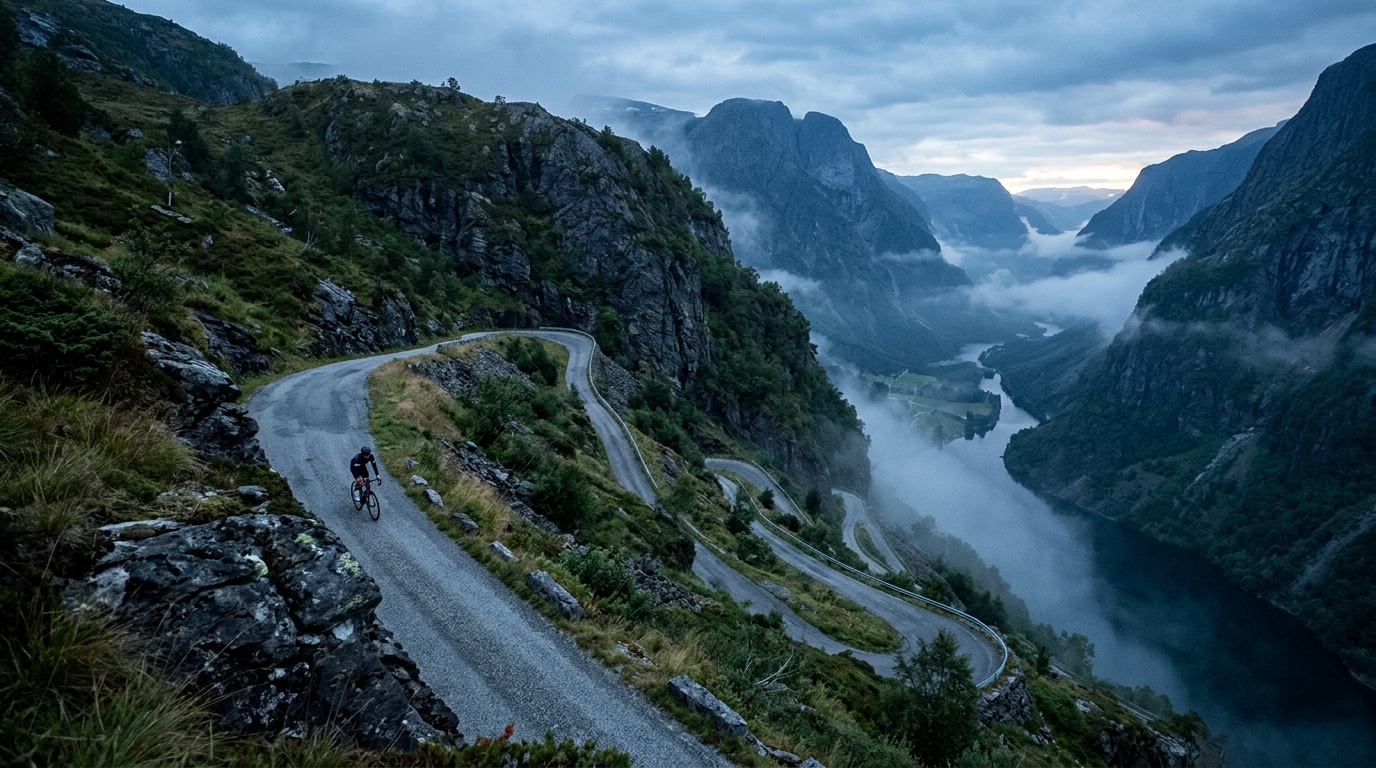 StalheimskleivaCat 2NO · 3.2 km · 8.3% · 268 m224pts
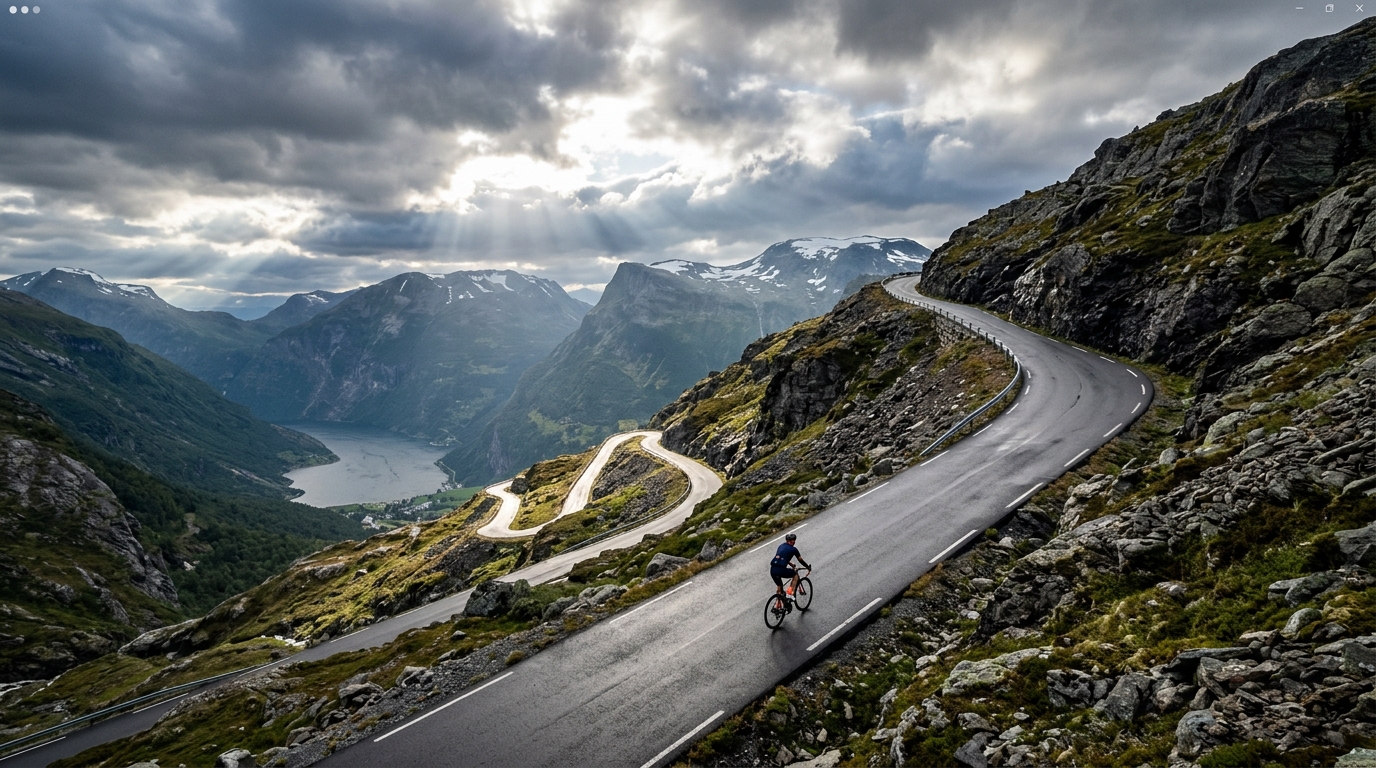 DalsnibbaCat 3NO · 3.3 km · 7.5% · 241 m186pts
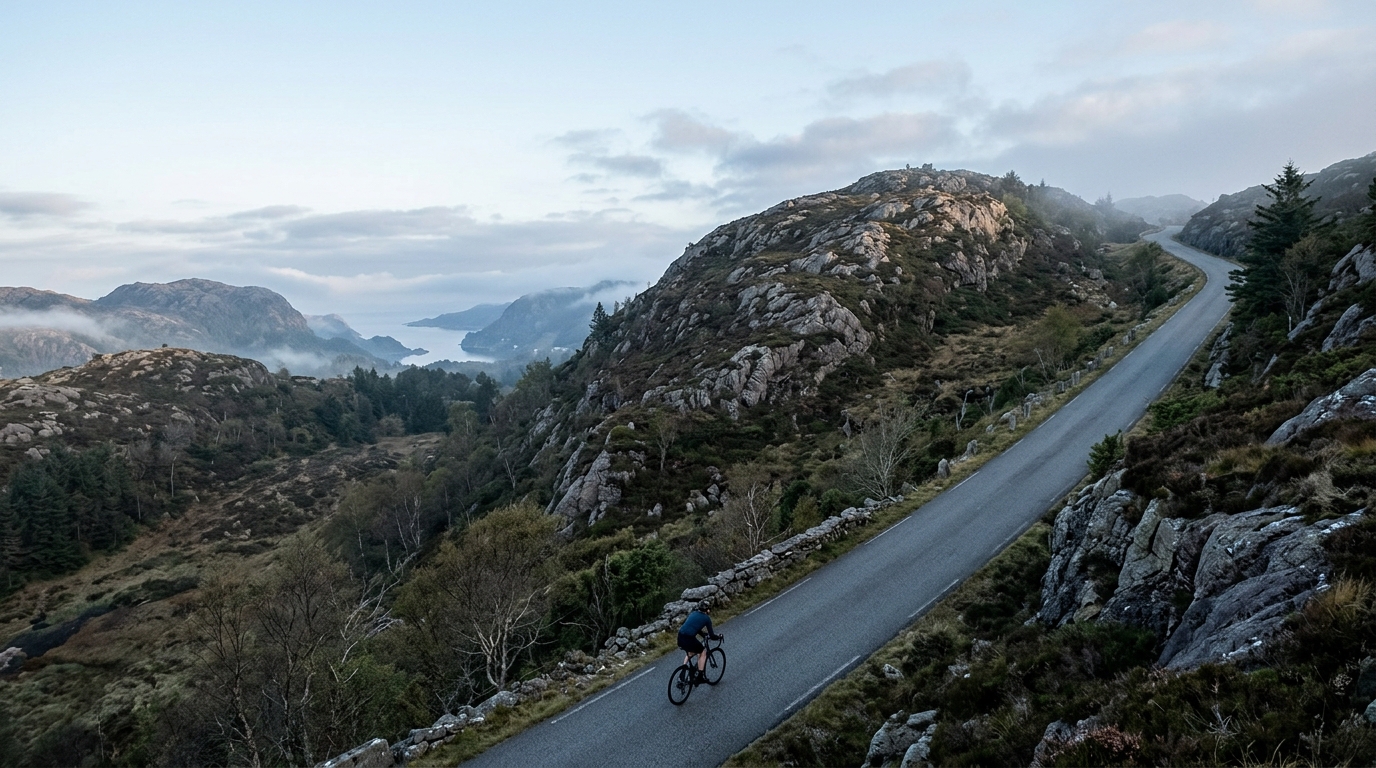 TronåsenCat 2NO · 1.5 km · 16.4% · 251 m395pts
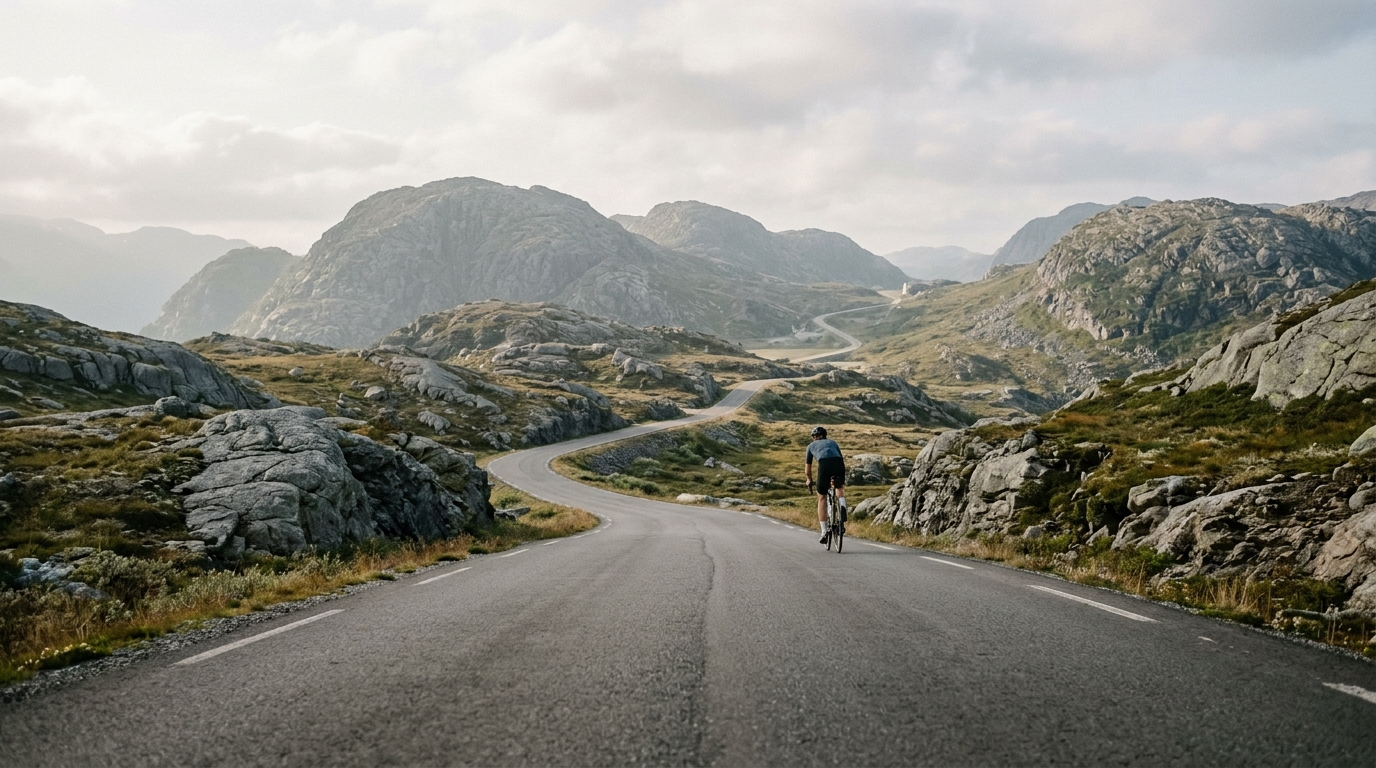 DyrskarCat 4NO · 5.3 km · 3.9% · 289 m79pts
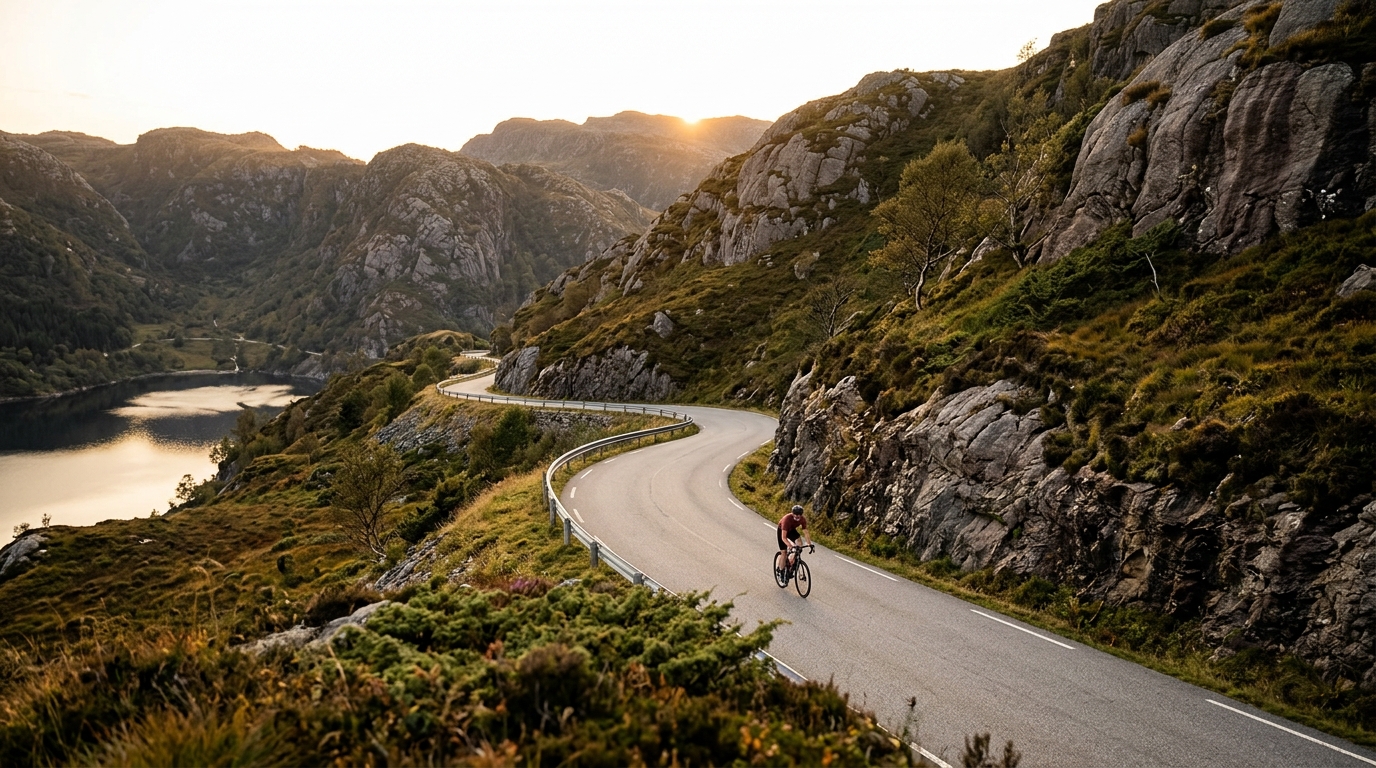 SvartediketCat 4NO · 5.9 km · 3.9% · 333 m89pts
The complete guide to climbing in Norway
The Riding
Norway is a country built for climbing, even if the map here is still small. We have 3 climbs mapped so far, and while none of them yet register as hors catégorie, the character of Norwegian ascents makes up for the modest count. This is not the Alps, where a single valley might hand you a dozen graded cols in an afternoon. Norwegian climbing is scattered, dramatic, and often shaped as much by fjord and rock as by gradient — roads that thread between water and cliff, hairpins cut into granite, and long exposed drags that gain altitude steadily rather than viciously.
What makes riding here distinctive is the vertical relief packed against the coast and the interior plateaus. The highest summit we have mapped tops out at 1,179 m, which in a country this far north means you climb through several climate zones in a single effort: dense forest at the base, thinning tree cover, then bare rock and open sky near the top. The surfaces are generally excellent, the descents are technical, and the sense of remoteness is real. You are rarely fighting for road space, but you are also rarely close to a resupply point. That trade-off defines the experience — you get solitude and scenery, but you plan for it.
For riders who train with numbers, Norway rewards patience and pacing discipline over raw punch. These are efforts where holding a steady, repeatable output beats attacking early. The gradients tend to be sustainable enough that a well-judged tempo will carry you further than surges you cannot recover from at altitude and in cold air.
Standout Climbs
With three climbs on the map, every one earns its place. Here is why each matters.
Tronåsen is the headline. It is a piece of cycling and road-building history — a serpentine ascent whose tight, stacked hairpins were engineered in an era when roads had to claw their way up terrain the shortest way they could. Riding it is as much about the sensation of the switchbacks folding beneath you as it is about the raw numbers. If you ride only one climb in Norway, this is the one that tells the story of the place.
Dyrskar is the high-country contrast to Tronåsen's engineered drama. This is the ascent that takes you up toward the exposed, treeless terrain where Norway feels vast and unforgiving. It is the climb that most demands respect for the weather and the season, and it delivers the kind of open, high-mountain riding that justifies carrying an extra layer no matter what the forecast says.
Svartediket rounds out the trio and offers a different flavour again — a climb tied to water and the steep-sided terrain that defines so much of the Norwegian landscape. It is the sort of ascent that rewards riders looking for a shorter, sharper effort close to civilisation rather than a full expedition into the highlands.
Three climbs, three distinct characters: history, high country, and waterside. Ride all of them and you have a genuine cross-section of what Norwegian climbing offers.
When to Ride
Season is the single most important planning decision in Norway, and the 1,179 m summit is the reason. At that altitude and latitude, snow lingers late and returns early. The realistic window for the higher efforts — Dyrskar in particular — is a narrow summer band, roughly the height of the warm months when the high roads are reliably clear of snow and ice. Attempting the upper climbs outside that window means gambling against closed roads, drifts in the shaded hairpins, and dangerously cold descents.
Lower climbs closer to the coast open earlier and close later, but even they are governed by Norwegian weather, which turns quickly. A summit that is bathed in still sunshine at the base can be wrapped in cloud, wind, and near-freezing air by the top. The temperature drop from bottom to summit on a 1,179 m ascent is significant, and the wind chill on a fast, technical descent compounds it.
Plan for long daylight as your ally — the far-northern summer gives you generous riding hours — but treat the weather as the constraint. Ride the high climbs in peak summer, keep a close eye on mountain forecasts, and always carry enough insulation to survive a cold, exposed descent even on a warm morning.
Practical Notes
Traffic is rarely the problem it is in more crowded cycling regions. Norwegian roads are generally quiet, and the climbs here are far from congested corridors. The bigger concerns are isolation and supply. Resupply points can be sparse, especially on the higher and more remote ascents, so carry more food and water than you think you need and know where your last reliable stop is before you commit to a summit.
Altitude at 1,179 m is not high enough to cause serious physiological trouble for most riders, but combined with cold and exposure it changes how the effort feels. Your perceived exertion climbs with the thinning air and dropping temperature, so pace conservatively.
Gearing deserves real thought. Bring lower gears than you would for equivalent gradients at sea level — the combination of sustained climbing, cold muscles, and long efforts makes a compact or wide-range cassette worth its weight. The goal is to protect a steady, repeatable sustainable power output rather than grinding a gear that forces you over threshold early. If you are unsure what that number is for you, run the numbers through the FTP estimator before you travel and set your pacing targets accordingly. Knowing the output you can hold for the length of a Norwegian climb is worth more than any amount of local knowledge about the switchbacks.
Descend with caution. The same technical hairpins that make Tronåsen a joy to climb demand full attention on the way down, and cold hands slow your braking reactions. Layer up before you point the bike downhill.
Summary
- Climbs mapped: 3
- Highest summit: 1,179 m
Norway's climbing catalogue is still compact, but the three ascents on the map — Tronåsen, Dyrskar, and Svartediket — cover a genuine spread of the country's terrain, from engineered switchback history to exposed high country to steep waterside efforts. None yet rate as hors catégorie, but the combination of altitude, remoteness, and unpredictable northern weather makes these climbs a serious proposition regardless of their category. Time your visit for the summer window, pack low gears and warm layers, know your sustainable output before you start, and you will find some of the most rewarding and least crowded climbing available anywhere.
Looking for full rides in Norway?
Routes in Norway