Climb library · United Kingdom
Cycling climbs in United Kingdom
The United Kingdom builds its reputation on short, savage roads rather than high altitude. Across 20 catalogued climbs, none reach hors catégorie status and the loftiest summit tops out at just 770 metres, yet these ascents earn every metre through ferocious gradients and exposed, weather-beaten tarmac. What the country lacks in vertical scale it repays in raw difficulty, forcing riders to grind up ramps that leave little room to breathe or recover.
The marquee names capture that character. Bealach na Ba climbs into remote, wind-scoured highland country, while Hardknott Pass, Honister Pass, Wrynose Pass and Kirkstone Pass string together a cluster of leg-breaking gradients famed for their unrelenting pitch. Snake Pass offers a longer, more rhythmic ascent by comparison. Together they make the United Kingdom a proving ground where technique, grit and respect for the weather matter far more than sheer elevation.
Regions in United Kingdom
Signature climbs of United Kingdom
All climbs in United Kingdom
28 climbs
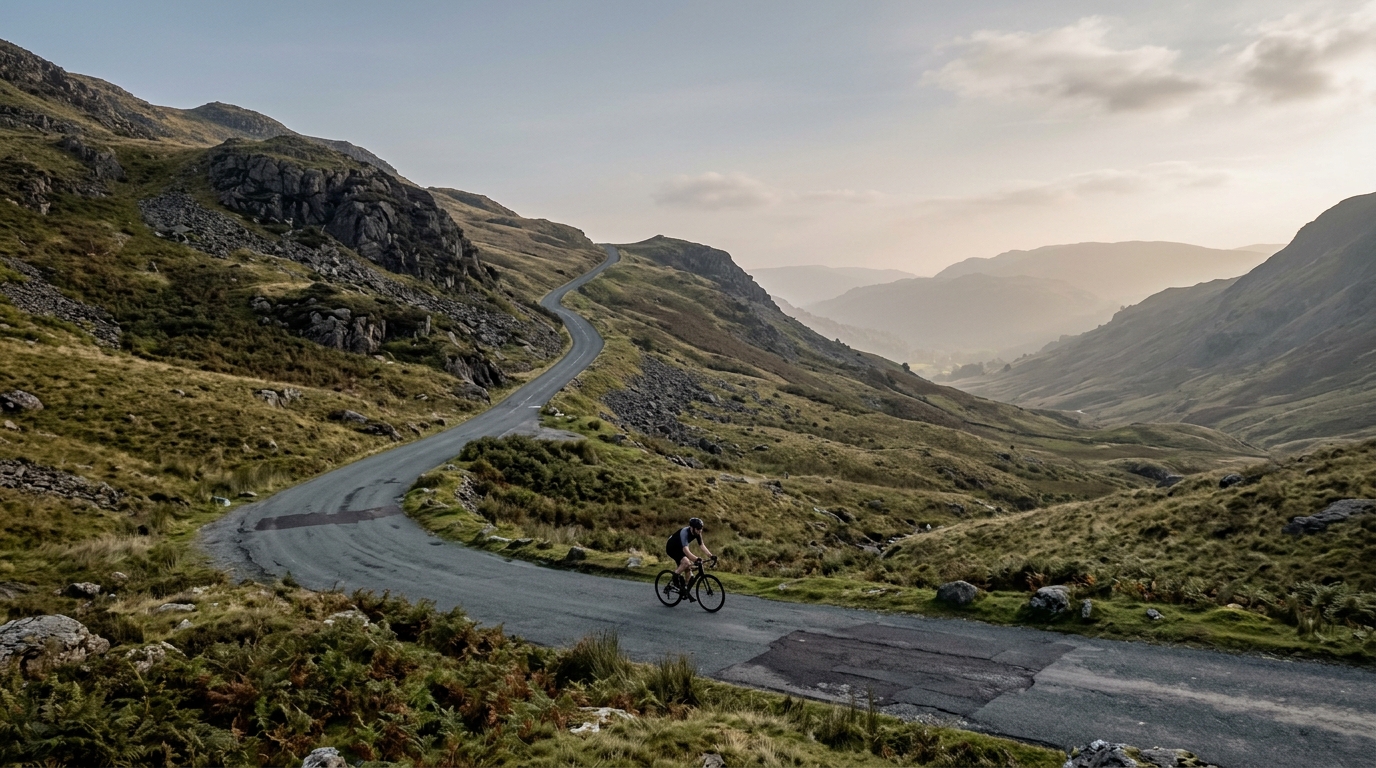
- Wrynose PassCat 3GB · 10.6 km · 3.1% · 603 m102pts
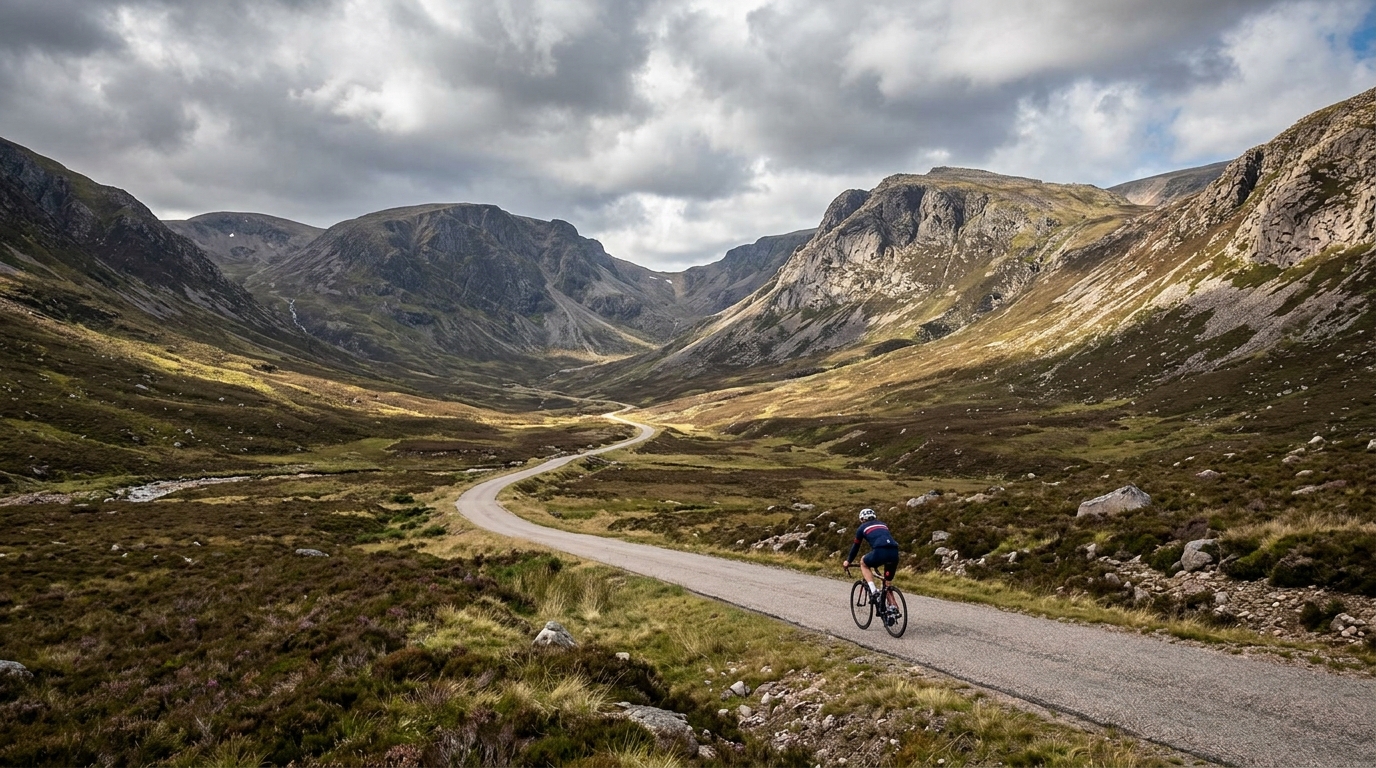 Lairig GhruCat 2GB · 19.9 km · 3.5% · 721 m237pts
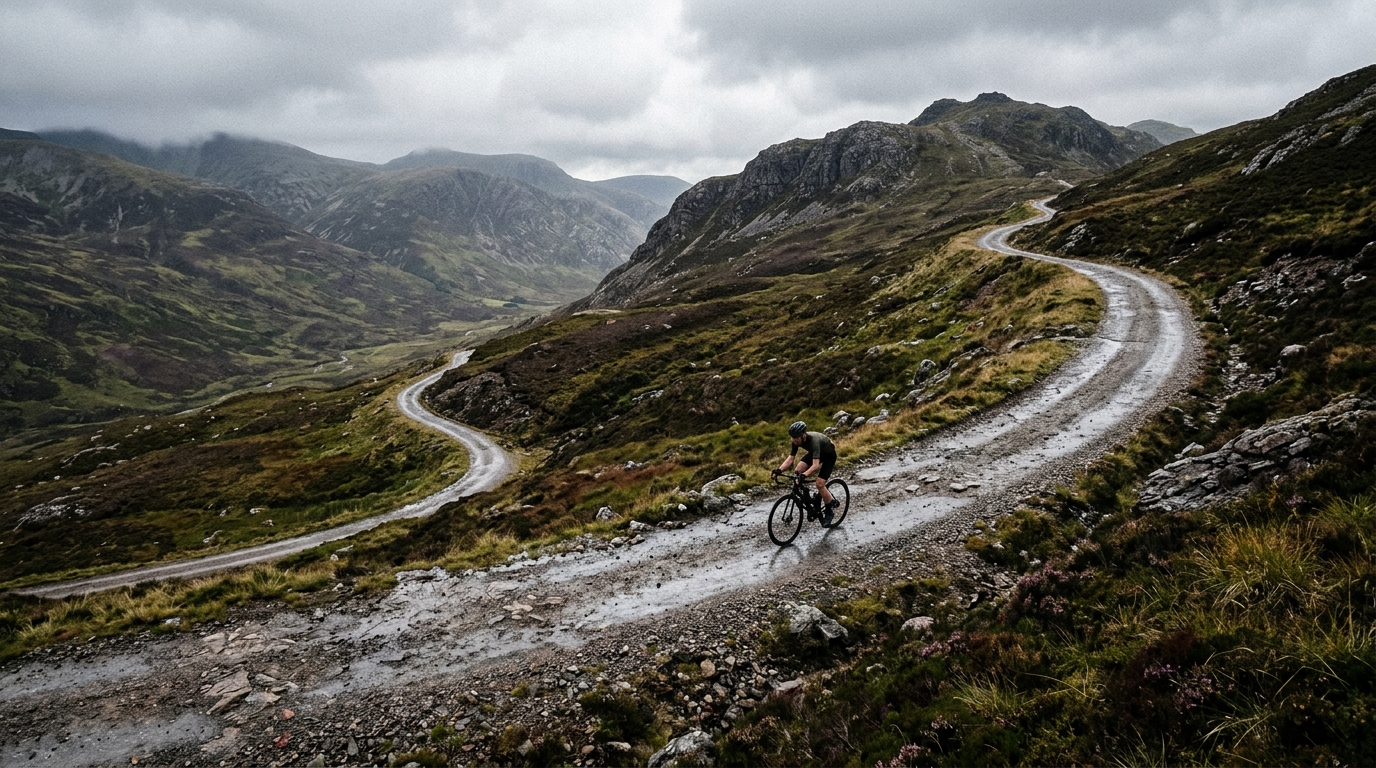 Corrieyairack PassCat 2GB · 7.1 km · 5.6% · 544 m227pts
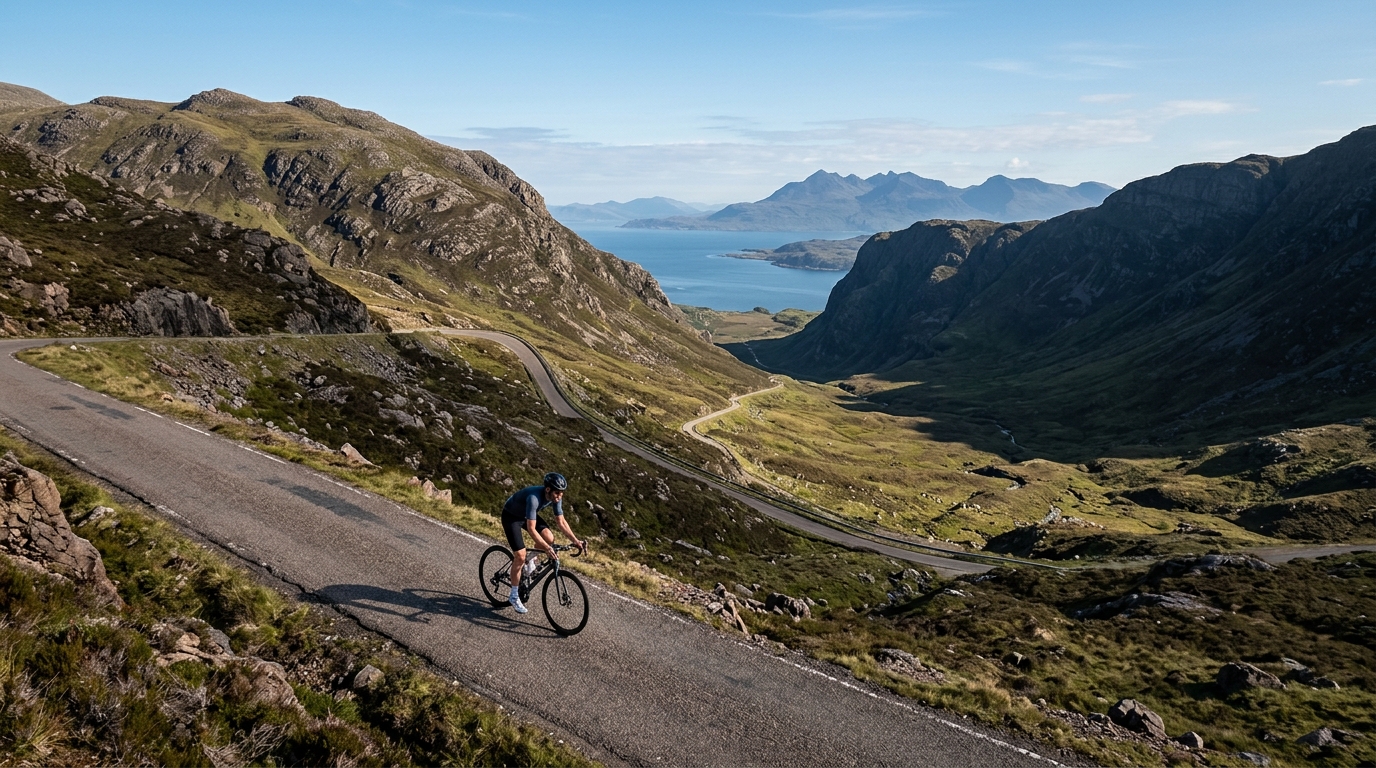 Bealach na BàCat 3GB · 4.4 km · 6.7% · 332 m195pts
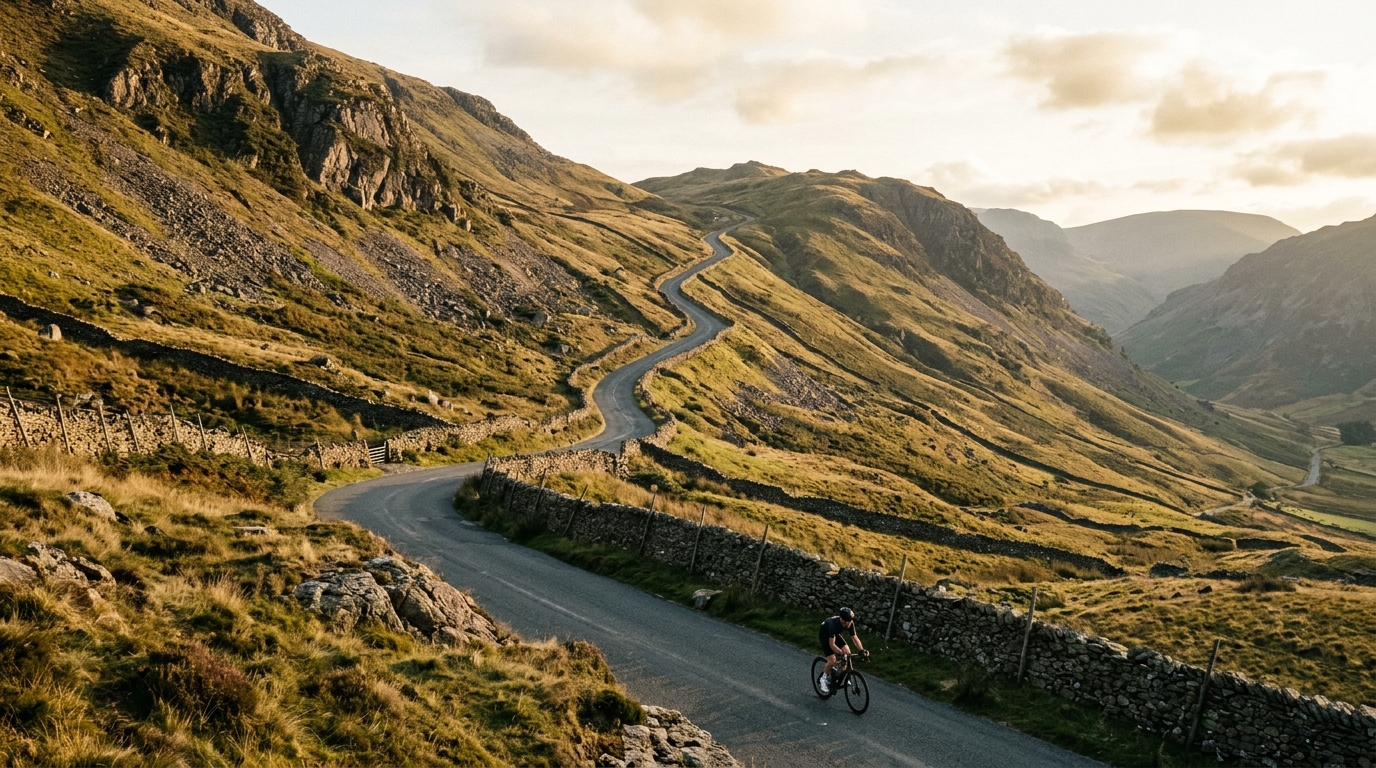 Kirkstone PassCat 3GB · 6.9 km · 4.7% · 432 m151pts
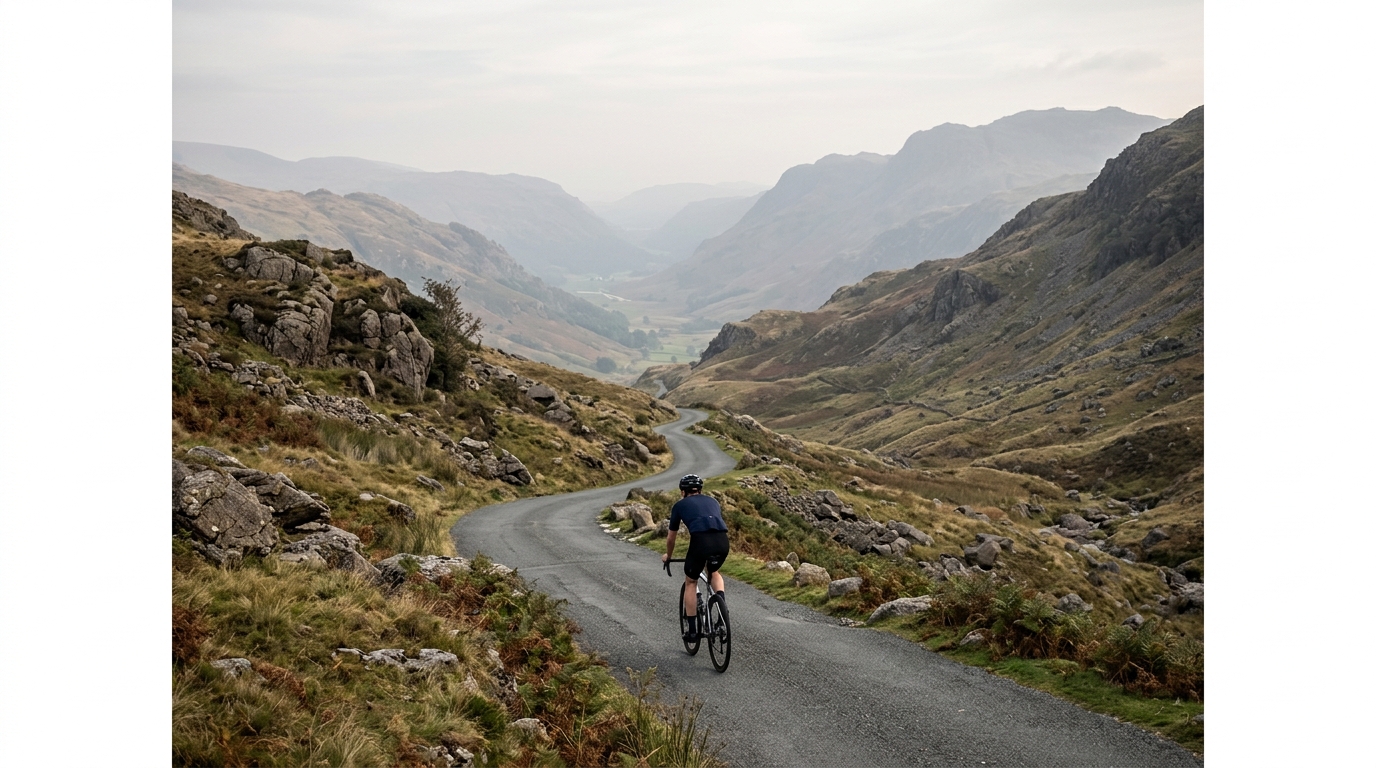 Hardknott PassCat 3GB · 4.2 km · 4.9% · 185 m103pts
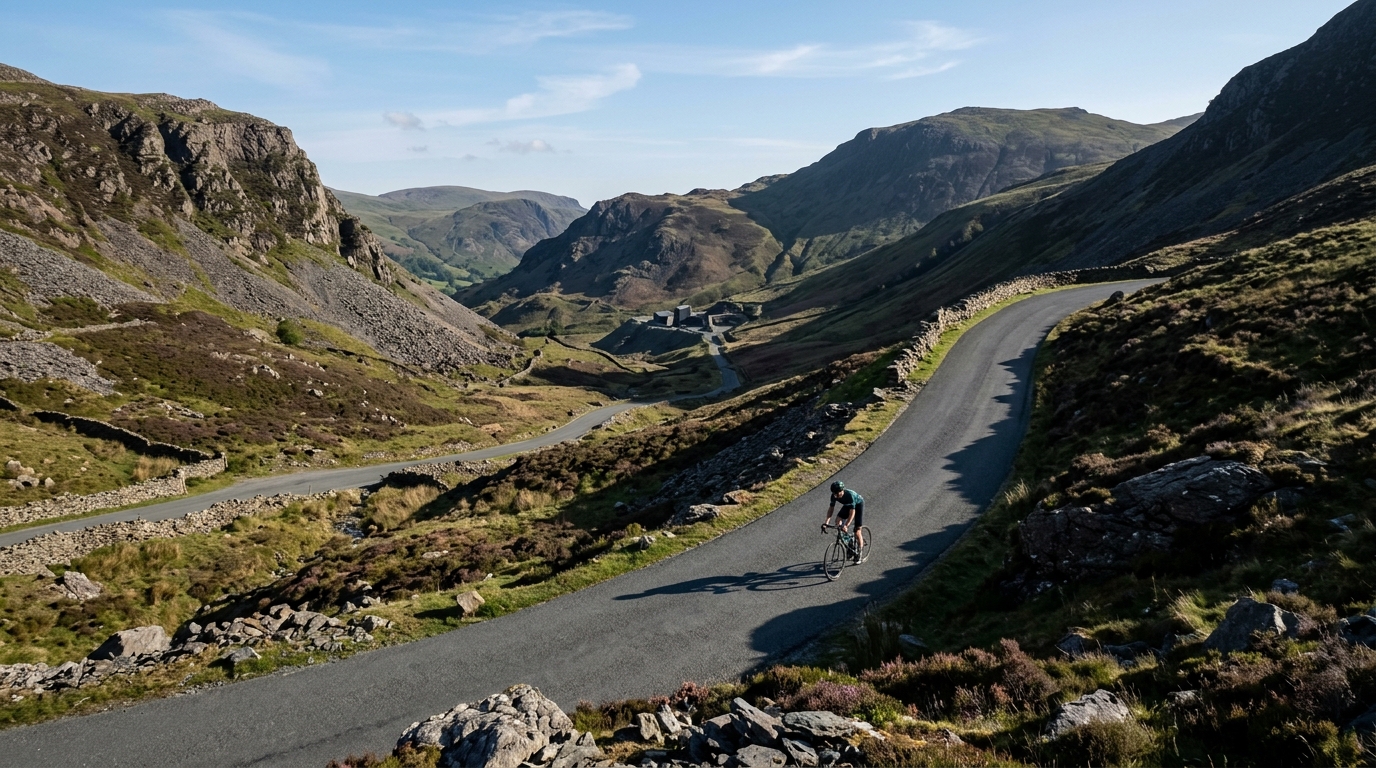 Honister PassCat 3GB · 7.1 km · 4.0% · 354 m112pts
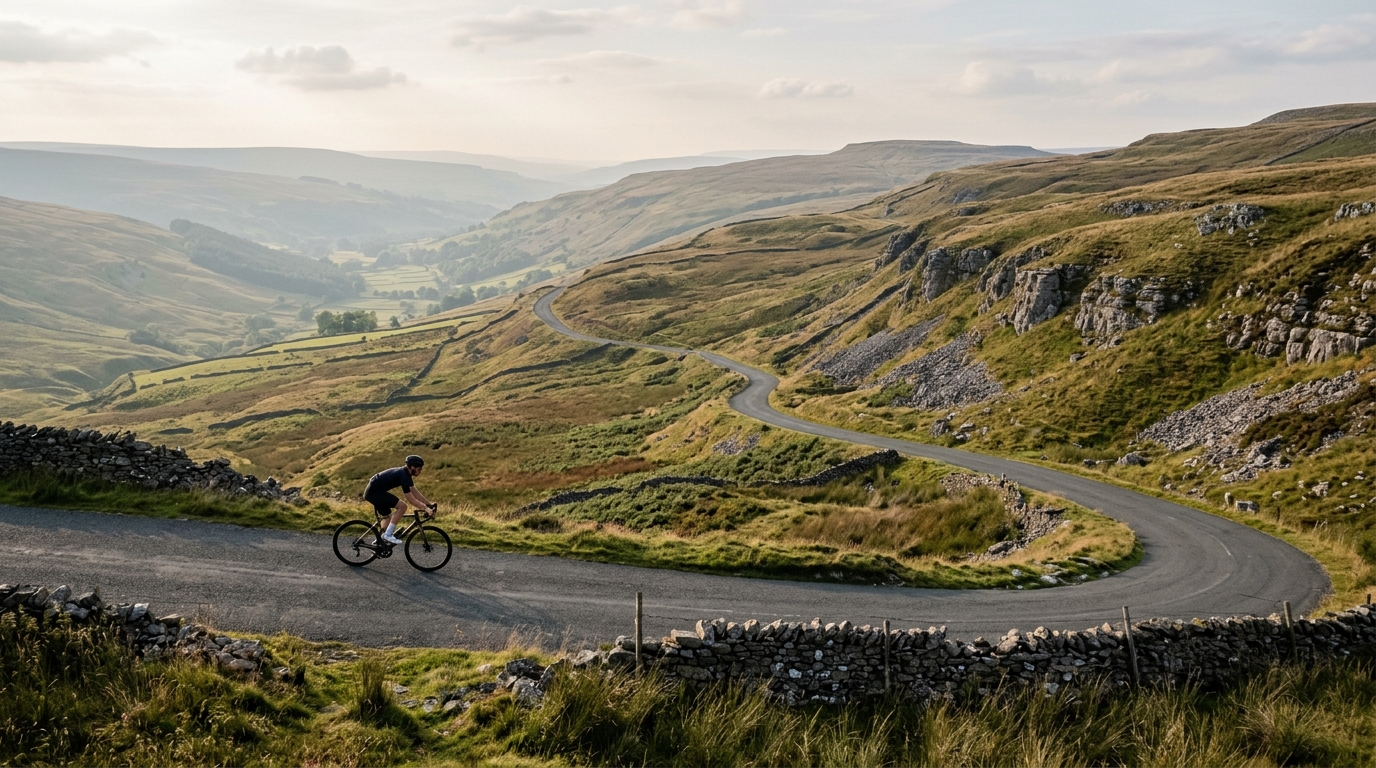 Buttertubs PassCat 3GB · 6.3 km · 4.2% · 349 m109pts
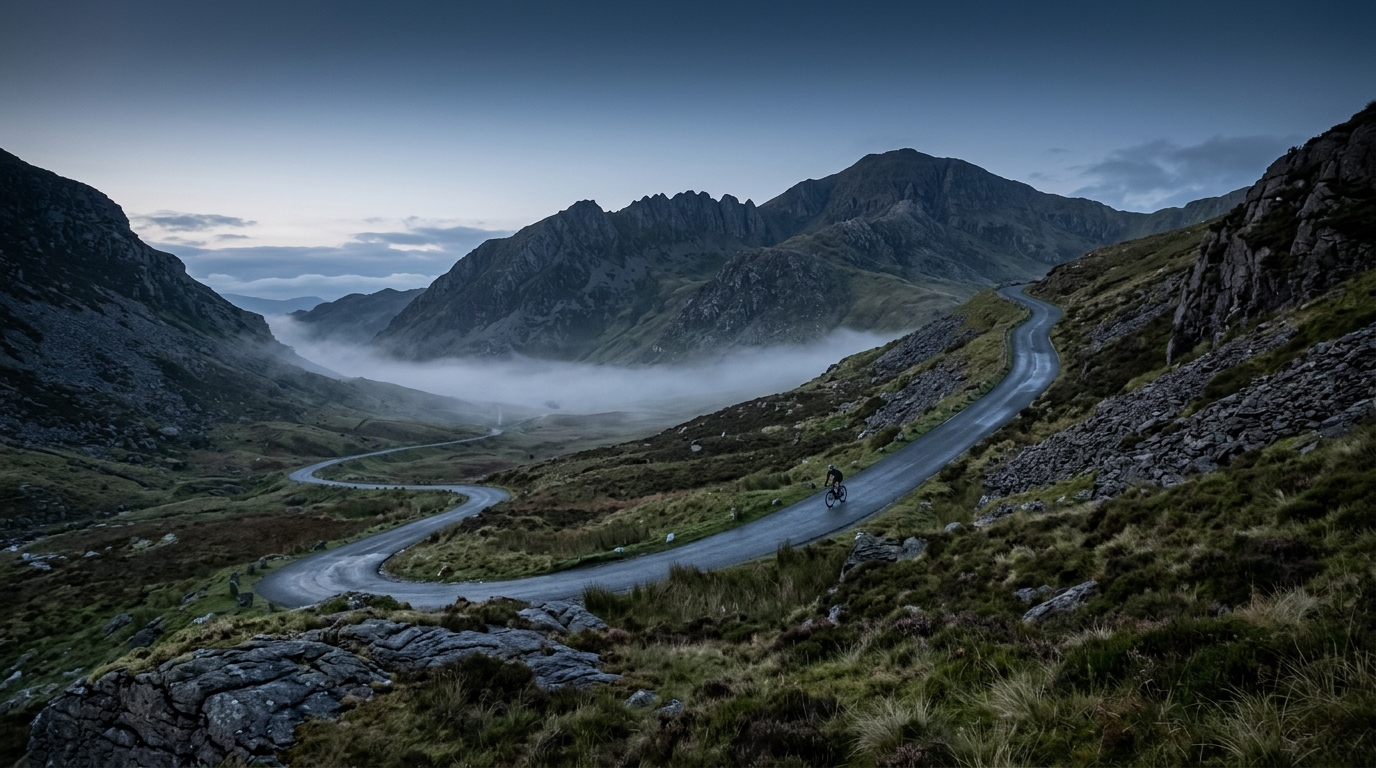 Pen-y-PassCat 3GB · 3.6 km · 5.7% · 303 m116pts
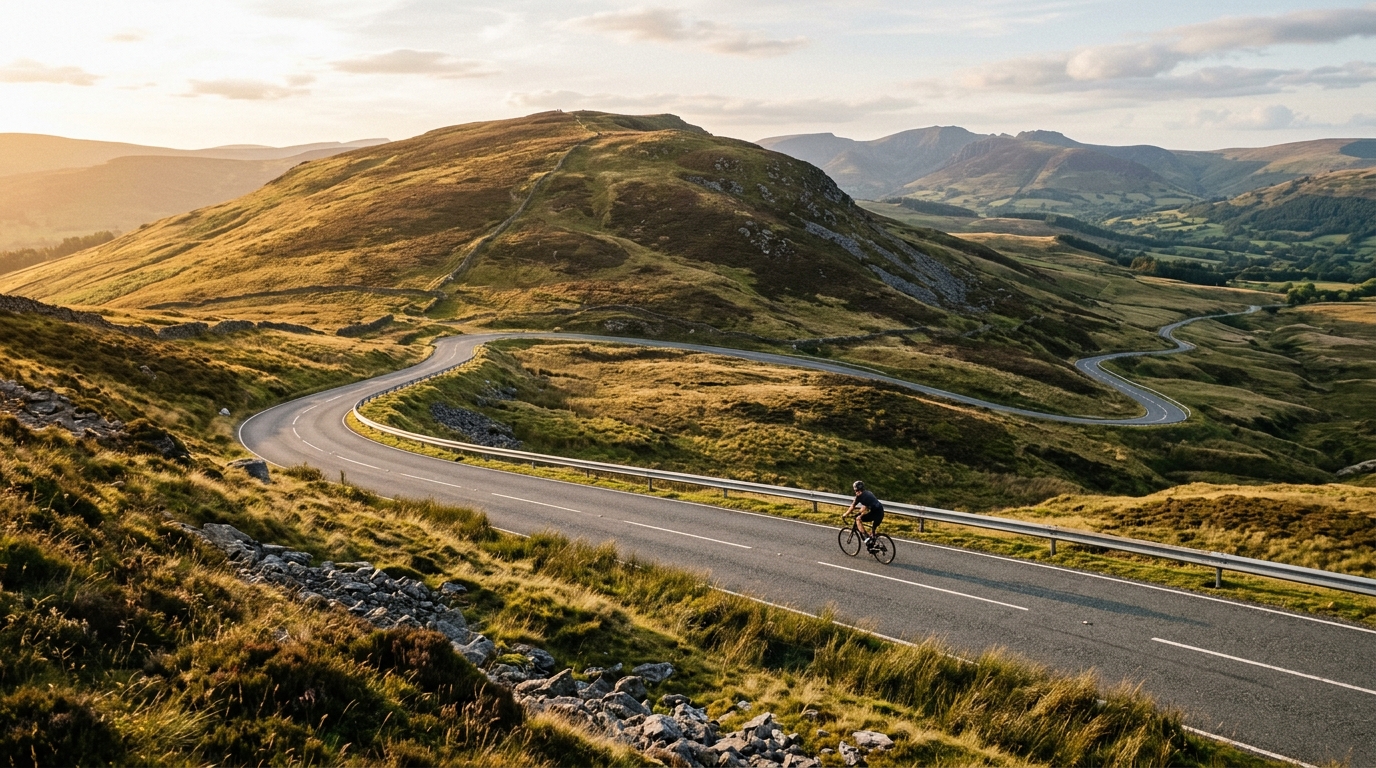 Horseshoe PassCat 3GB · 6.6 km · 4.0% · 481 m107pts
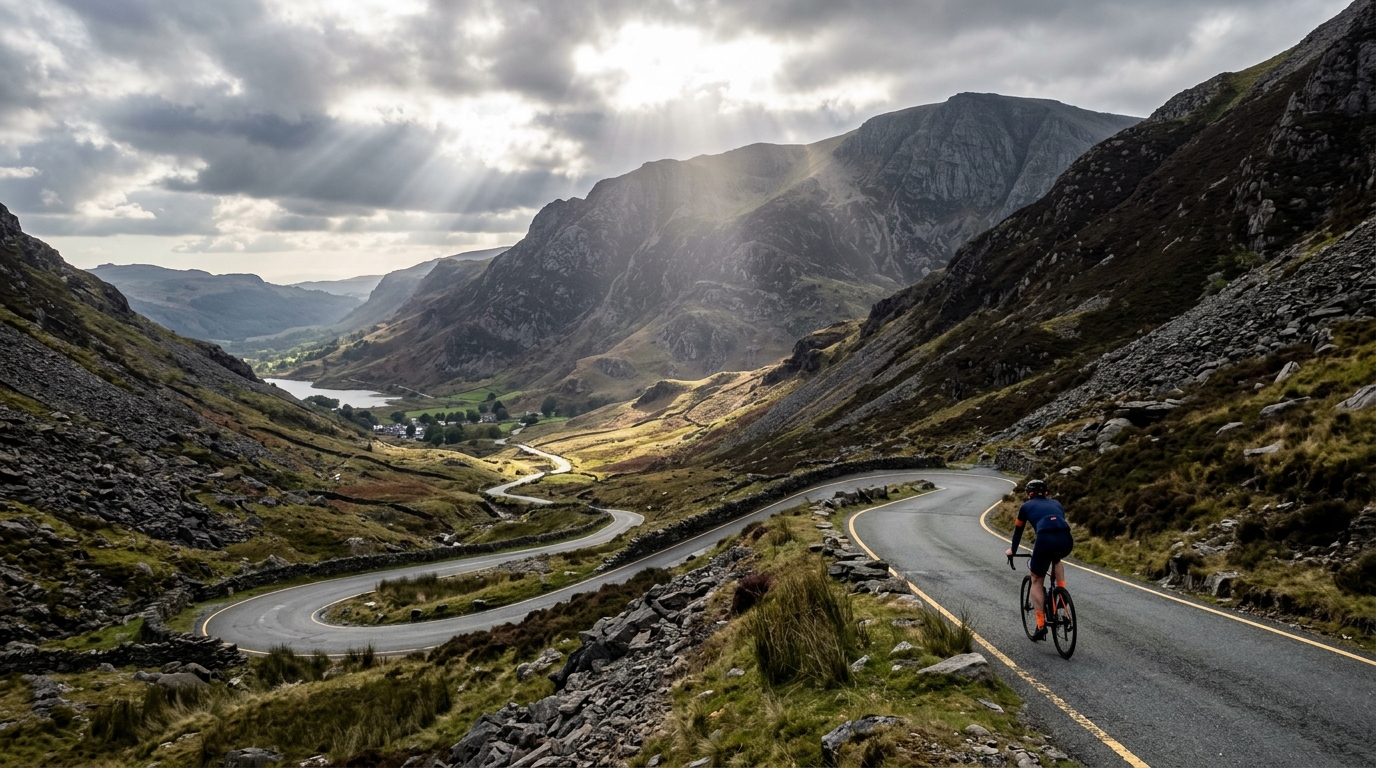 Llanberis PassCat 4GB · 1.6 km · 4.9% · 59 m38pts
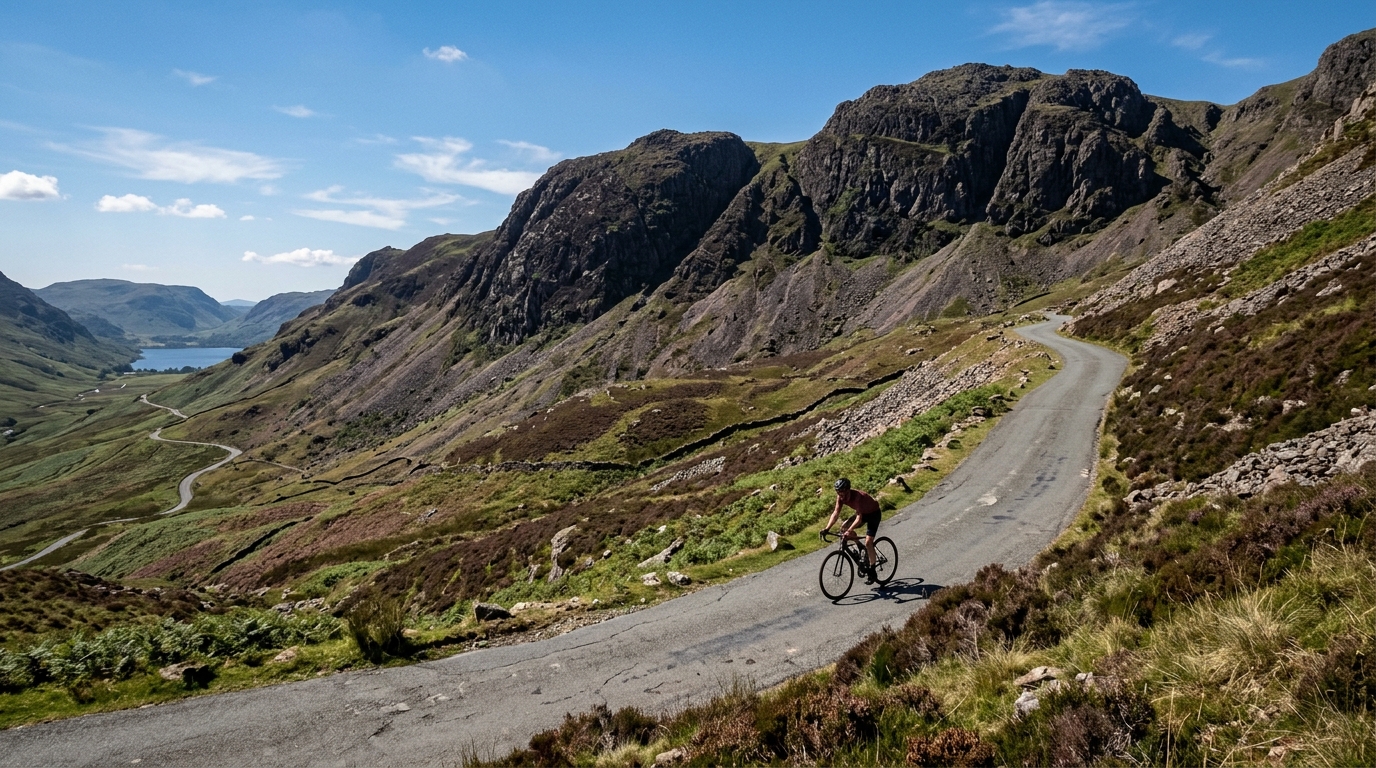 Sty HeadCat 2GB · 6.8 km · 6.7% · 426 m305pts
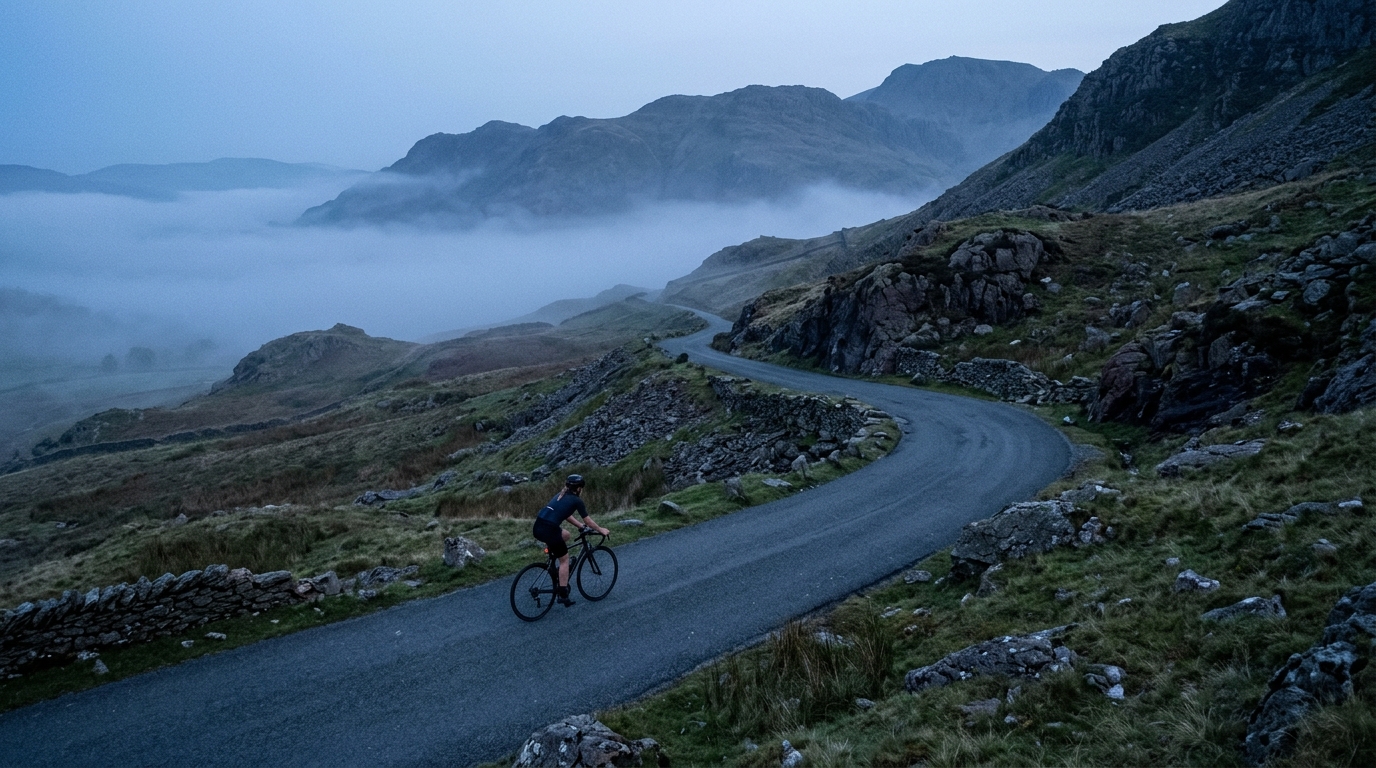 MickledoreCat 2GB · 6.0 km · 6.7% · 363 m269pts
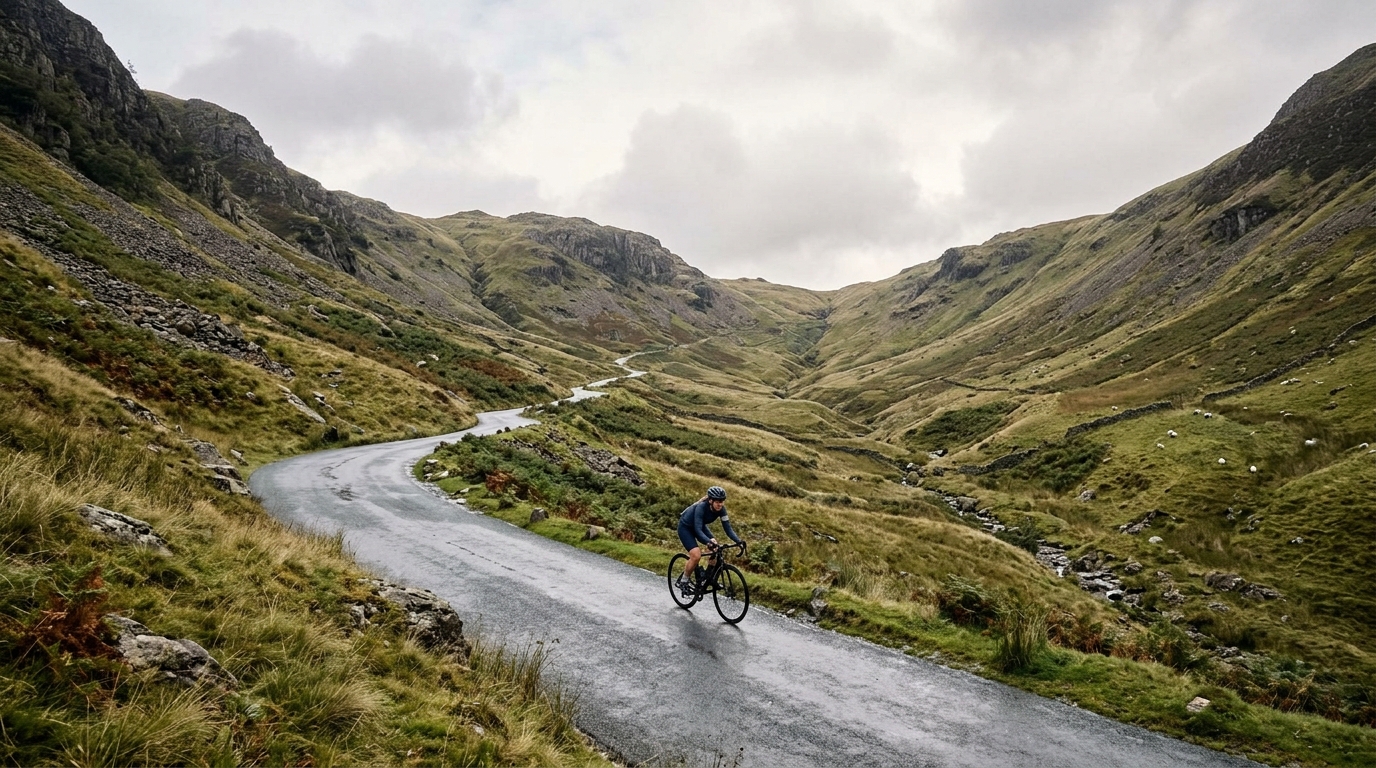 Newlands PassCat 2GB · 2.2 km · 9.7% · 179 m207pts
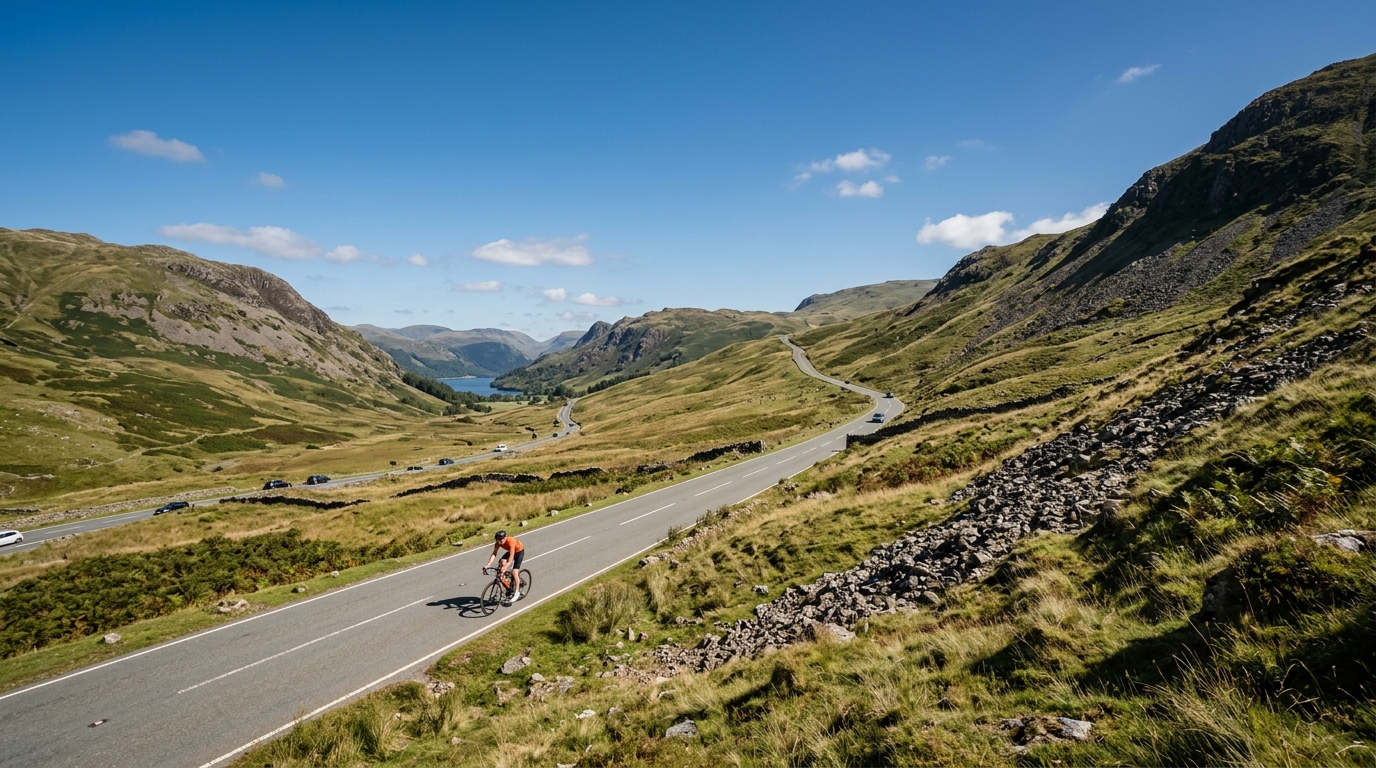 Dunmail RaiseCat 4GB · 2.8 km · 5.1% · 129 m72pts
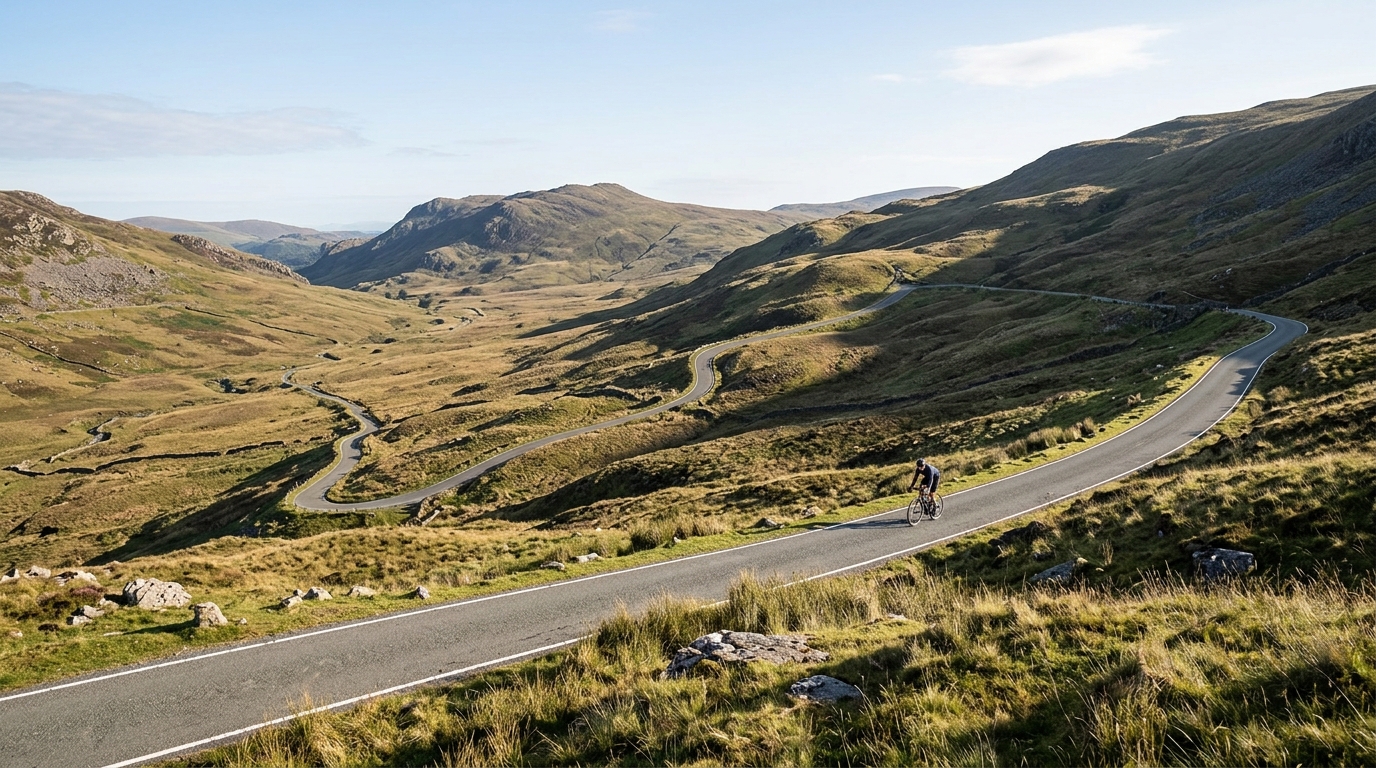 Bwlch y GroesCat 4GB · 8.5 km · 3.4% · 542 m99pts
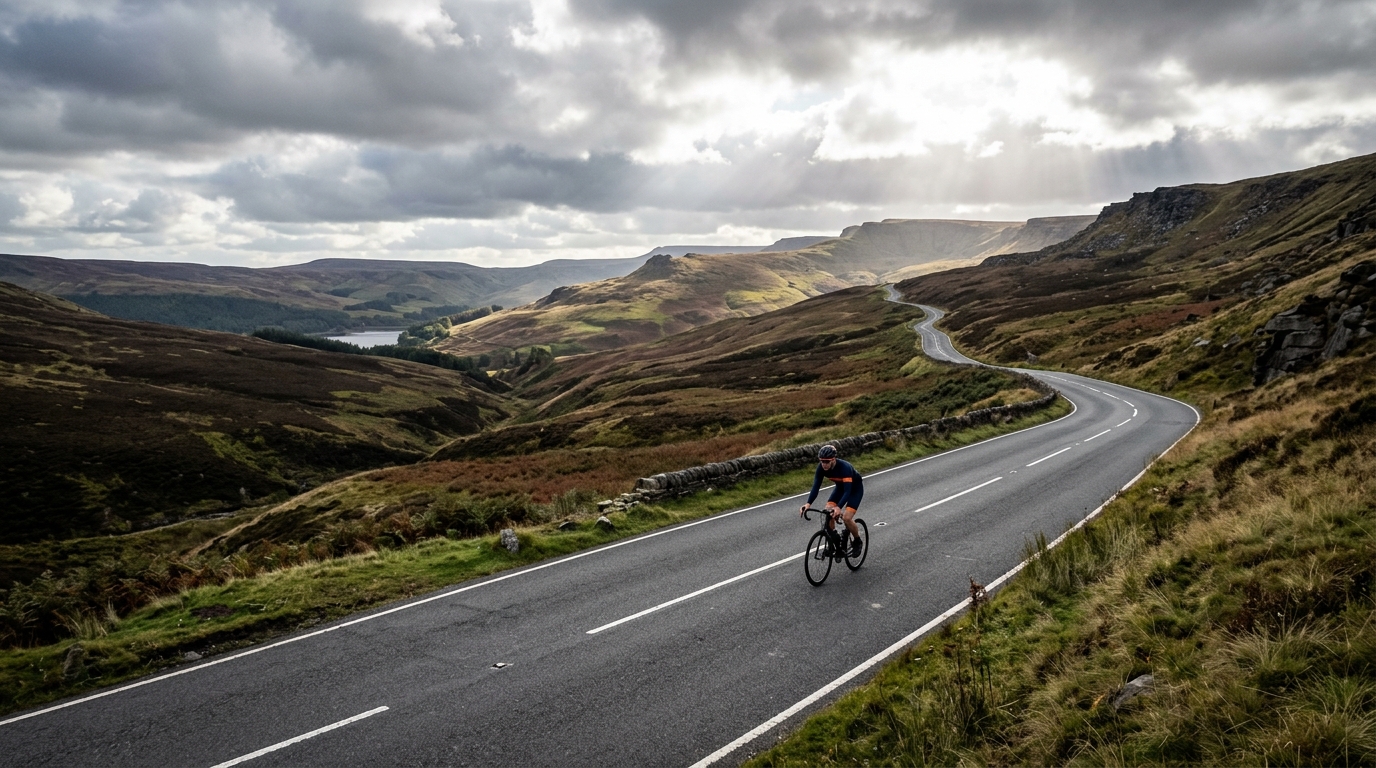 Snake PassCat 3GB · 6.5 km · 5.5% · 438 m197pts
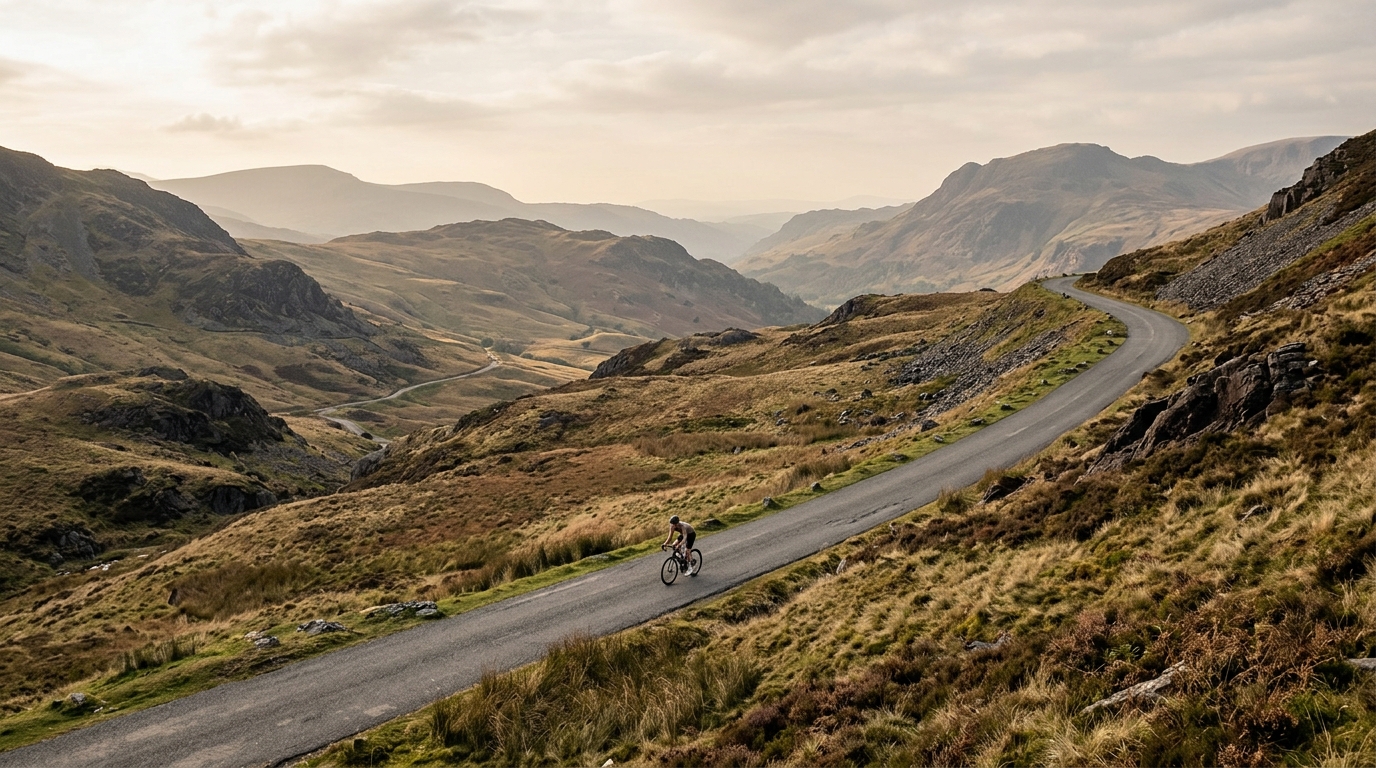 Bwlch yr OerddrwsCat 3GB · 6.3 km · 4.3% · 315 m118pts
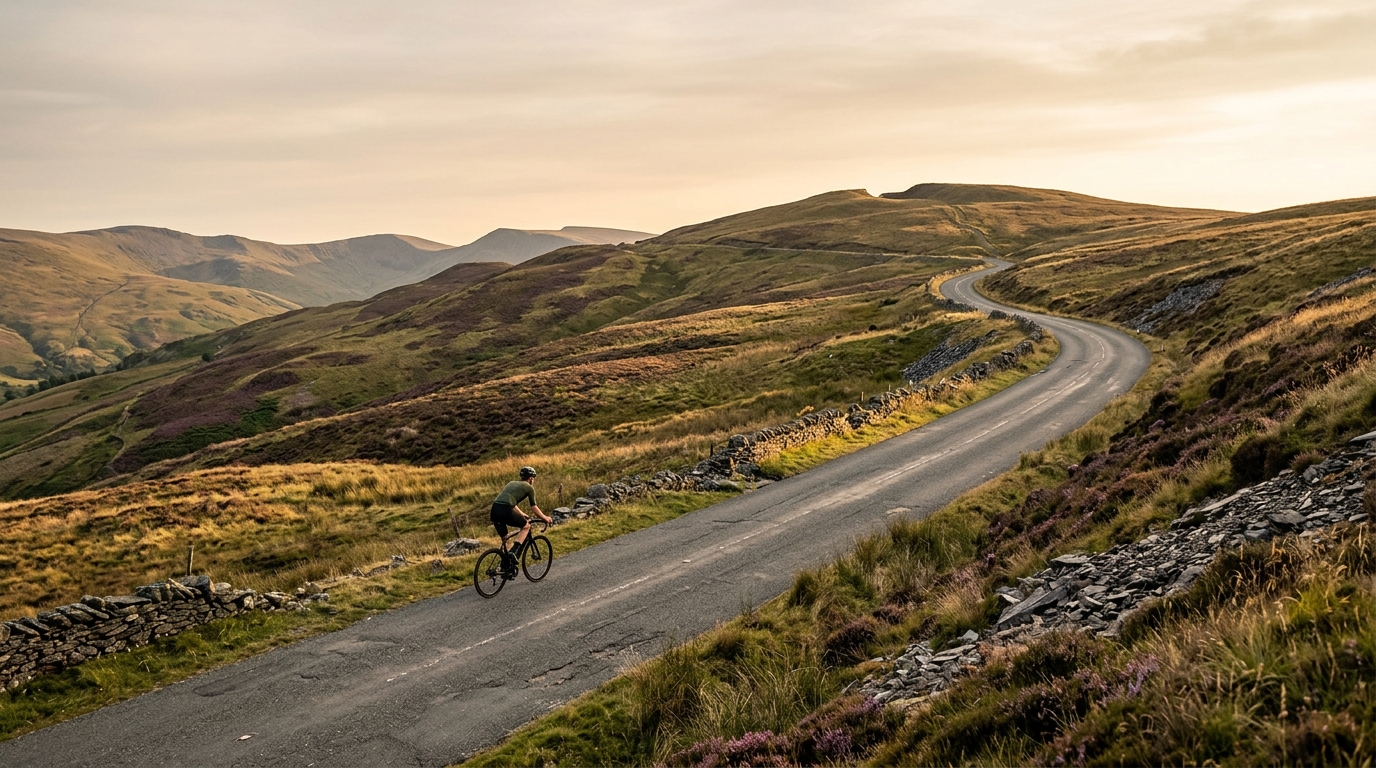 Milltir CerrigCat 3GB · 5.6 km · 5.5% · 645 m170pts
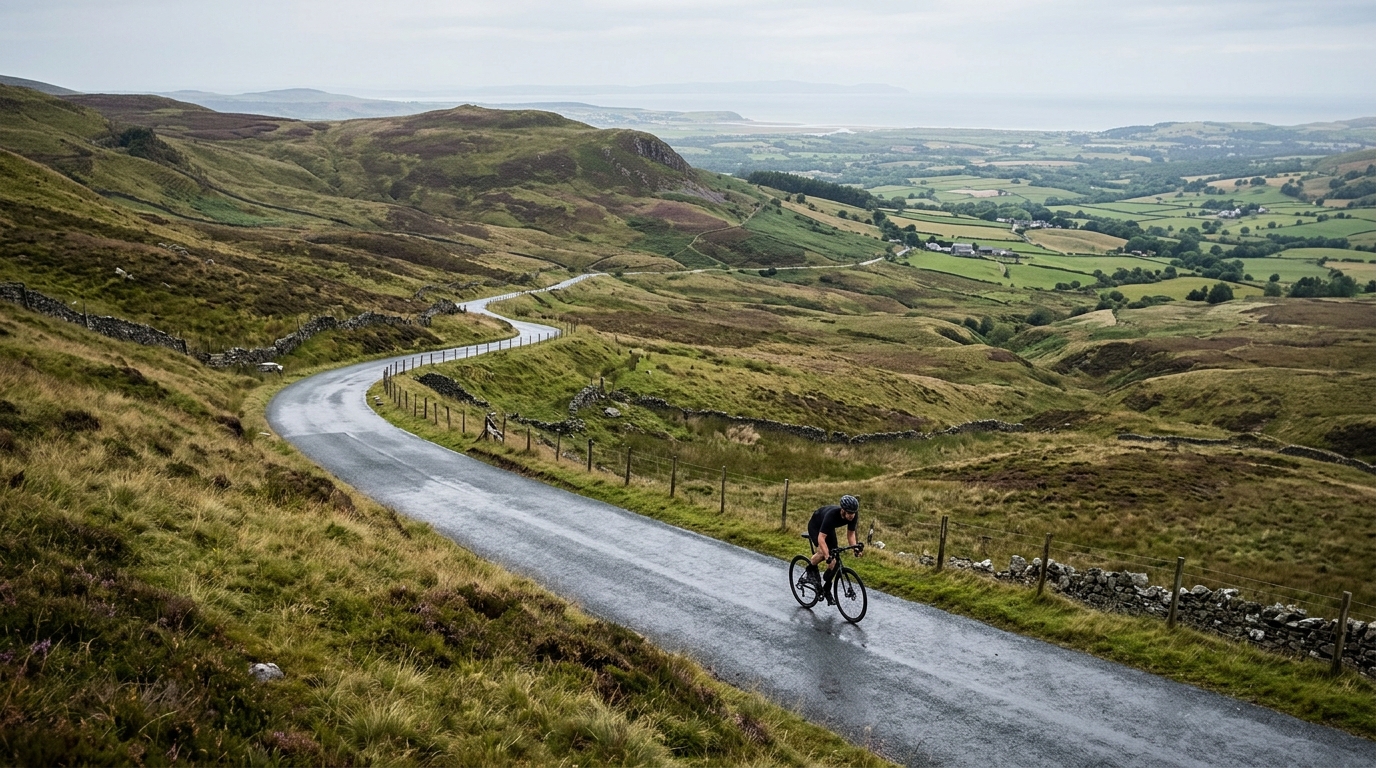 Bwlch PenbarrasCat 3GB · 5.7 km · 5.0% · 332 m146pts
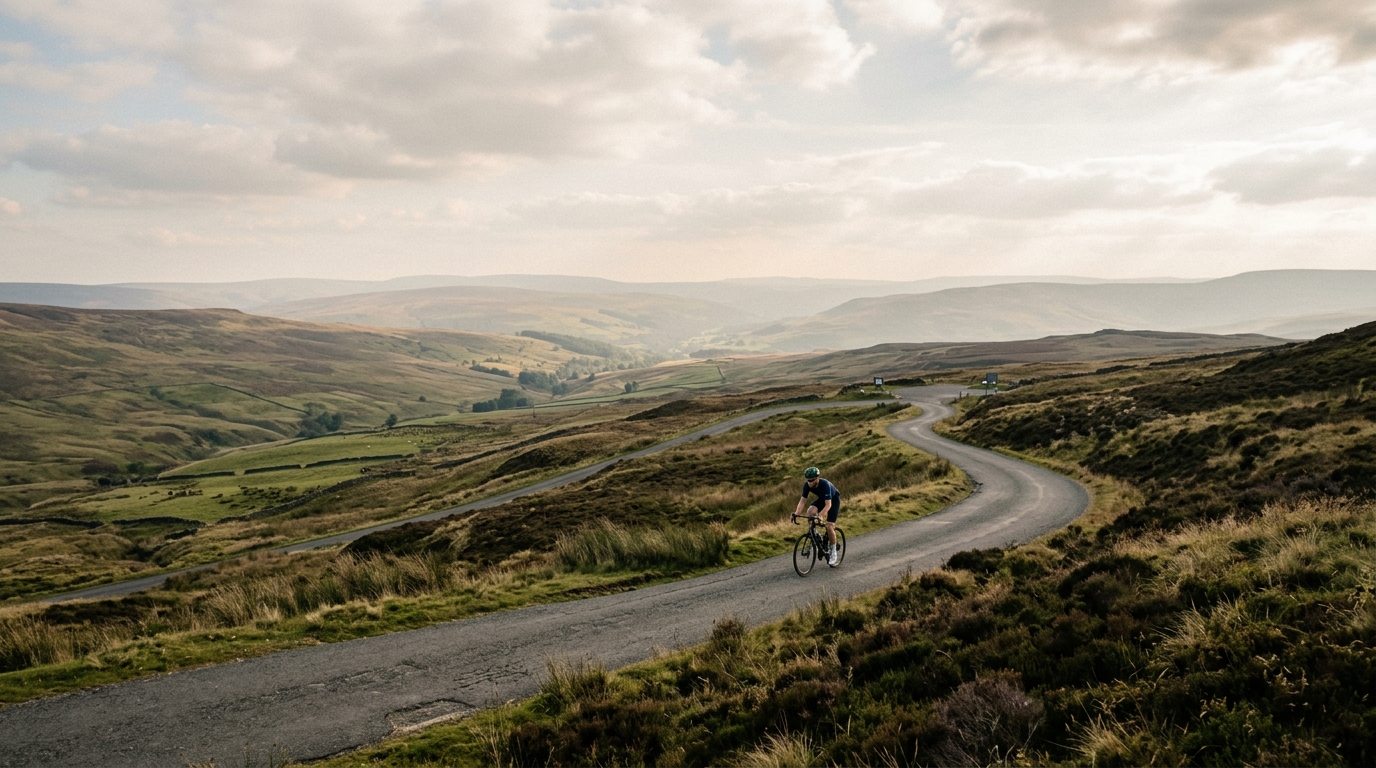 Killhope CrossCat 3GB · 7.2 km · 3.9% · 390 m107pts
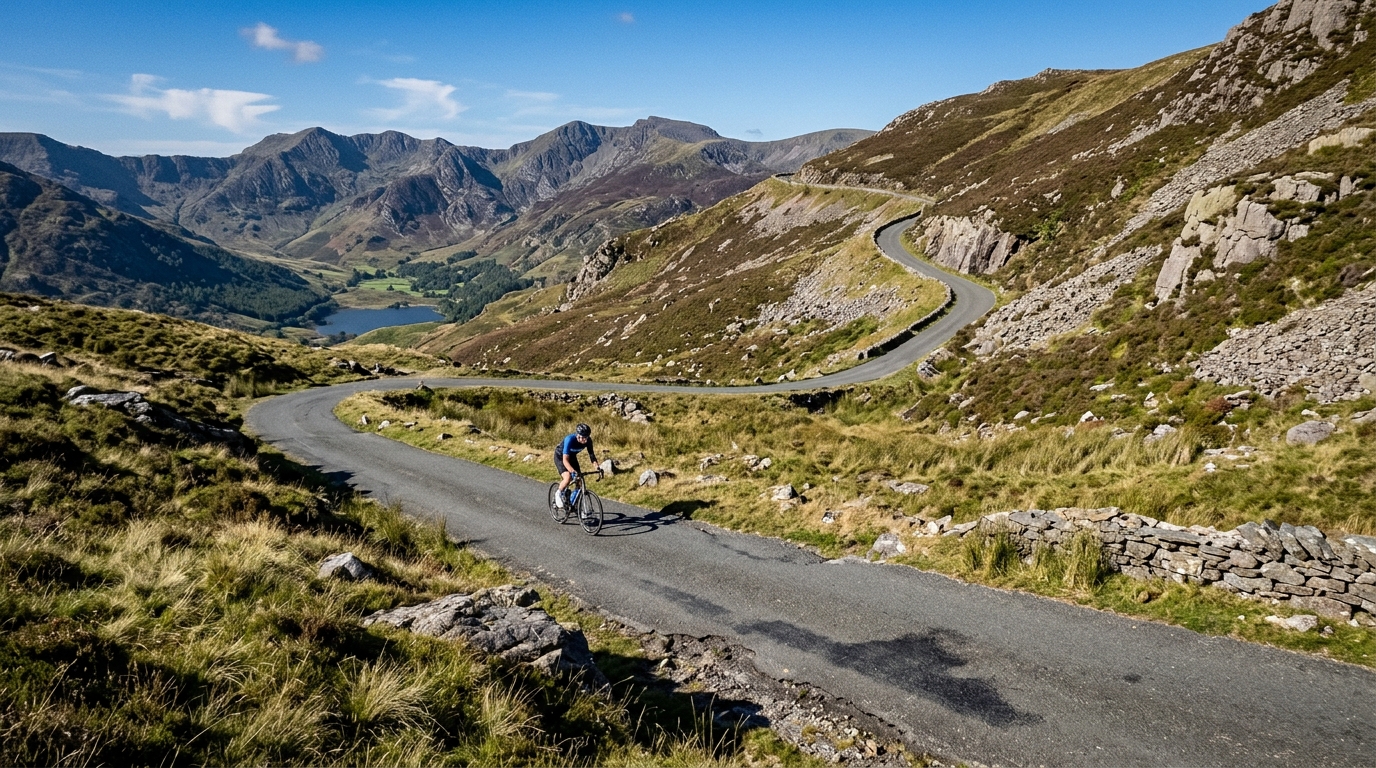 Crimea PassCat 4GB · 6.8 km · 3.6% · 303 m88pts
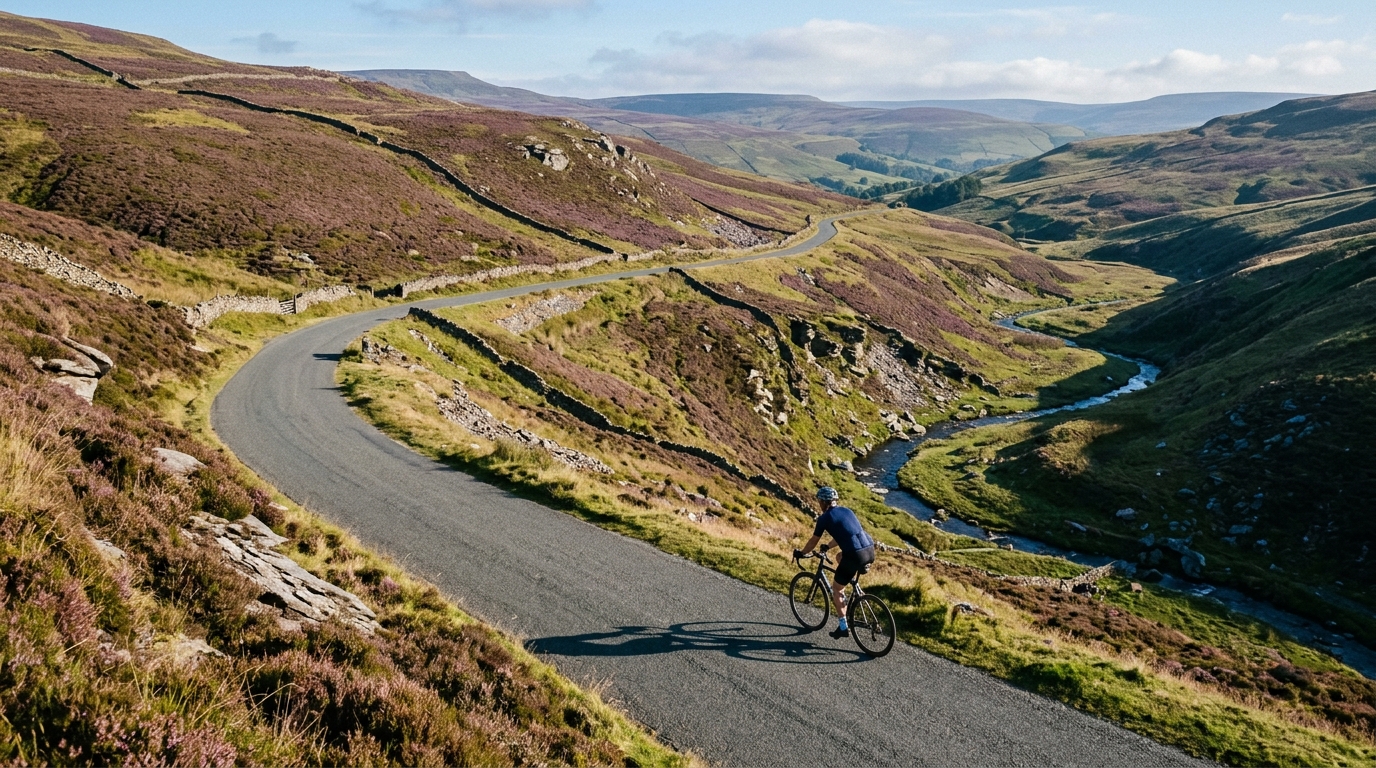 Trough of BowlandCat 4GB · 4.5 km · 3.4% · 140 m52pts
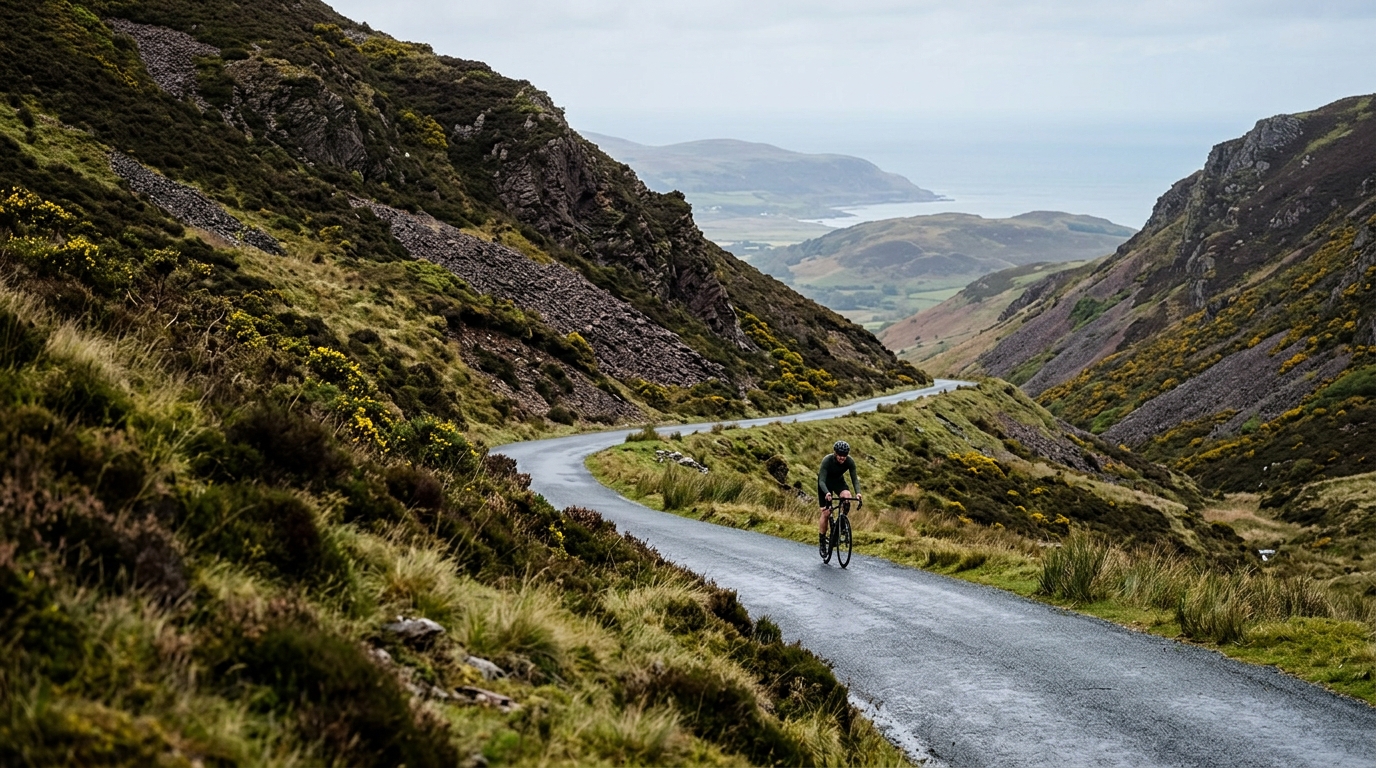 Sychnant PassCat 4GB · 4.2 km · 3.3% · 195 m45pts
The complete guide to climbing in United Kingdom
The Riding
The United Kingdom offers a climbing menu built on short, sharp effort rather than sustained high-altitude endurance. With 20 catalogued climbs and no hors catégorie ascents on the list, the character here is defined by gradient and grit more than raw vertical scale. The highest summit reaches 770 m, so riders never face the thin air of a genuine mountain pass, yet the roads more than compensate with punishing pitches that ramp well into double-digit percentages.
What makes riding here distinctive is the compression. Because the summits sit at modest elevations, the climbs pack their difficulty into short, brutal segments. You rarely settle into a long, metronomic rhythm; instead you brace for walls, hairpins, and ramps that force you out of the saddle. The reward is variety within a single ride, and the ability to link several catalogued climbs into one demanding day without needing a mountain range's worth of altitude to do it.
Standout Climbs
The undisputed marquee ascent is Bealach na Bà, the longest and most celebrated of the catalogued climbs, snaking upward on a narrow single-track road toward one of the higher summits on the list. It is the closest the United Kingdom comes to an alpine-style experience, with exposed switchbacks and a genuine sense of remoteness.
The Lake District supplies a dense cluster of legends. Hardknott Pass is notorious for gradients that pin your front wheel to the tarmac, and its immediate neighbour Wrynose Pass is often ridden in the same brutal sequence. Nearby, Honister Pass and Kirkstone Pass round out a quartet of steep, characterful ascents that make this compact region a rite of passage for any climber.
The Peak District delivers its own trio. Snake Pass is the longer, more rhythmic option, while Winnats Pass is a short, savage cleft between limestone walls that ranks among the steepest catalogued climbs. In Wales, Bwlch y Groes stands out as one of the most demanding ascents on the list, a long grind that tests patience as much as power.
Ride these eight and you have sampled the full spread of the United Kingdom's climbing identity, from the sustained effort of Bealach na Bà and Bwlch y Groes to the explosive severity of Winnats Pass and Hardknott Pass.
When to Ride
Timing matters more here than the modest elevations suggest. The best window runs through the warmer, drier months, when the narrow, often single-track surfaces are clear and the exposed high points like Bealach na Bà and Kirkstone Pass are most reliably passable. The higher summits, topping out at 770 m, can be cold, wet, and wind-battered even outside deep winter, so conditions rather than altitude are the limiting factor.
Because none of these climbs sit at extreme elevation, the riding season is generous compared with true mountain terrain. Shoulder-season days can be superb, with quiet roads and dramatic light, but be ready for fast-changing weather on the more exposed passes.
Practical Notes
Gearing is the single most important consideration. The steepest catalogued climbs, including Hardknott Pass, Wrynose Pass, and Winnats Pass, demand low ratios that many riders underestimate; err generously on the cassette. Many of these roads are narrow and single-track, so descend with care and watch for oncoming traffic on blind hairpins, particularly on Bealach na Bà.
Plan resupply around the ride rather than mid-climb, as the remoter ascents offer little in the way of services once you commit to the gradient. Waterproofs and a wind layer are sensible on the higher passes, where the summit temperature can differ sharply from the valley. Finally, respect the surface: wet tarmac on steep pitches like Honister Pass or Snake Pass can undermine traction on both the way up and the way down.
Summary
The United Kingdom's climbing is a study in intensity over altitude. With 20 catalogued climbs, no hors catégorie ascents, and a highest summit of 770 m, the appeal lies in ferocious gradients packed into short, memorable efforts. Bealach na Bà and Bwlch y Groes reward those who prefer a longer grind, while Hardknott Pass, Wrynose Pass, Honister Pass, Kirkstone Pass, Snake Pass, and Winnats Pass deliver the steep, punchy character that defines riding here. Come prepared with the right gears, respect the weather, and these compact but uncompromising climbs will test any cyclist.
Looking for full rides in United Kingdom?
Routes in United Kingdom