Climb library · Australia
Cycling Climbs in Australia
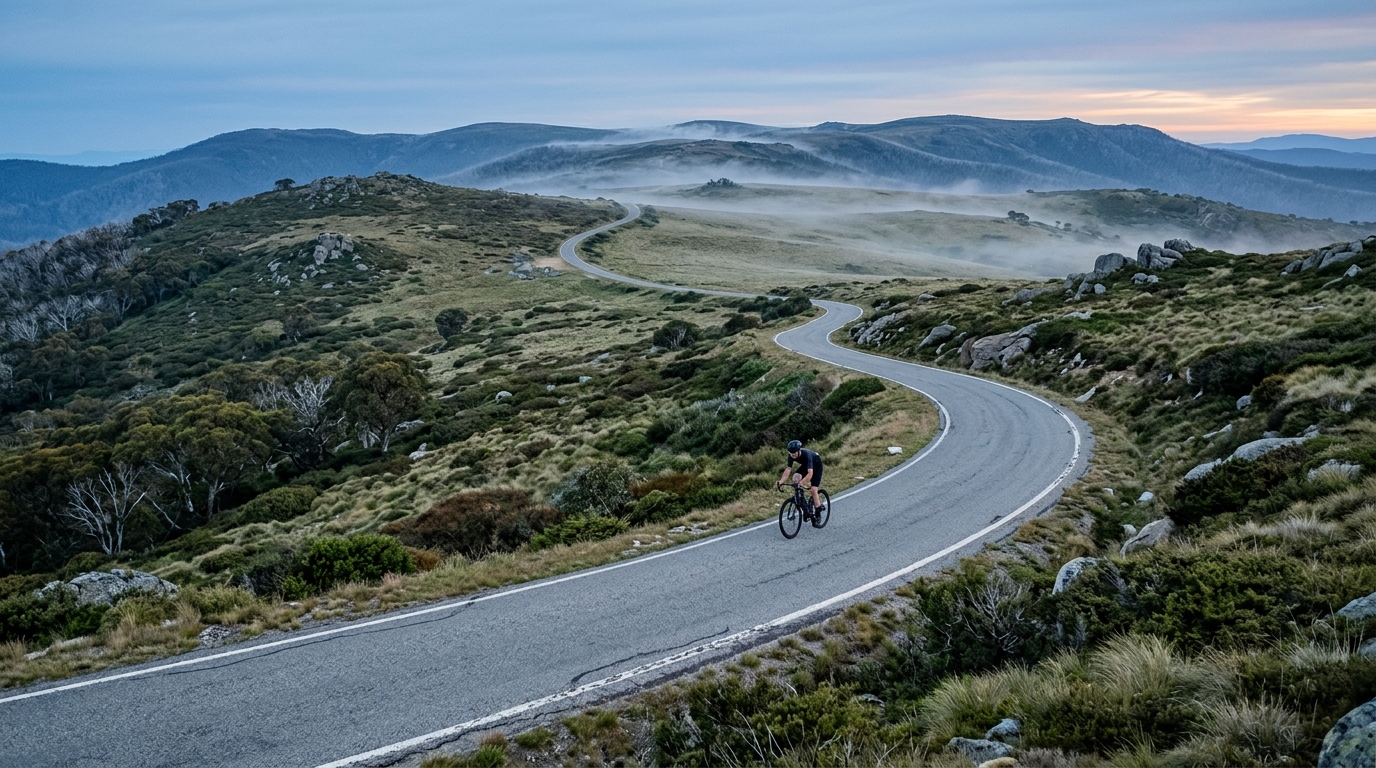
Australia rewards riders who like their climbing honest. There are no hors catégorie monsters here — none of these 3 ascents carry that tag — but altitude is not the point. The point is the long, exposed drag of the Bogong High Plains, where the road unspools toward a summit at 1,643 metres and the gum-lined switchbacks give way to open alpine country. This is climbing that asks for patience and pacing rather than raw peak numbers.
Chase variety and you get it. Cunninghams Gap delivers a shorter, sharper effort through rainforest-shaded hairpins, while Pandoras Pass trades scenery for grind, a test of legs and resolve on quieter roads. Come for the space, the light, and the sense that you can ride for hours without meeting a soul. It is worth the trip precisely because the climbs feel earned, not stacked with hype — just tarmac, gradient, and a lot of sky.
Signature climbs of Australia
All climbs in Australia
5 climbs
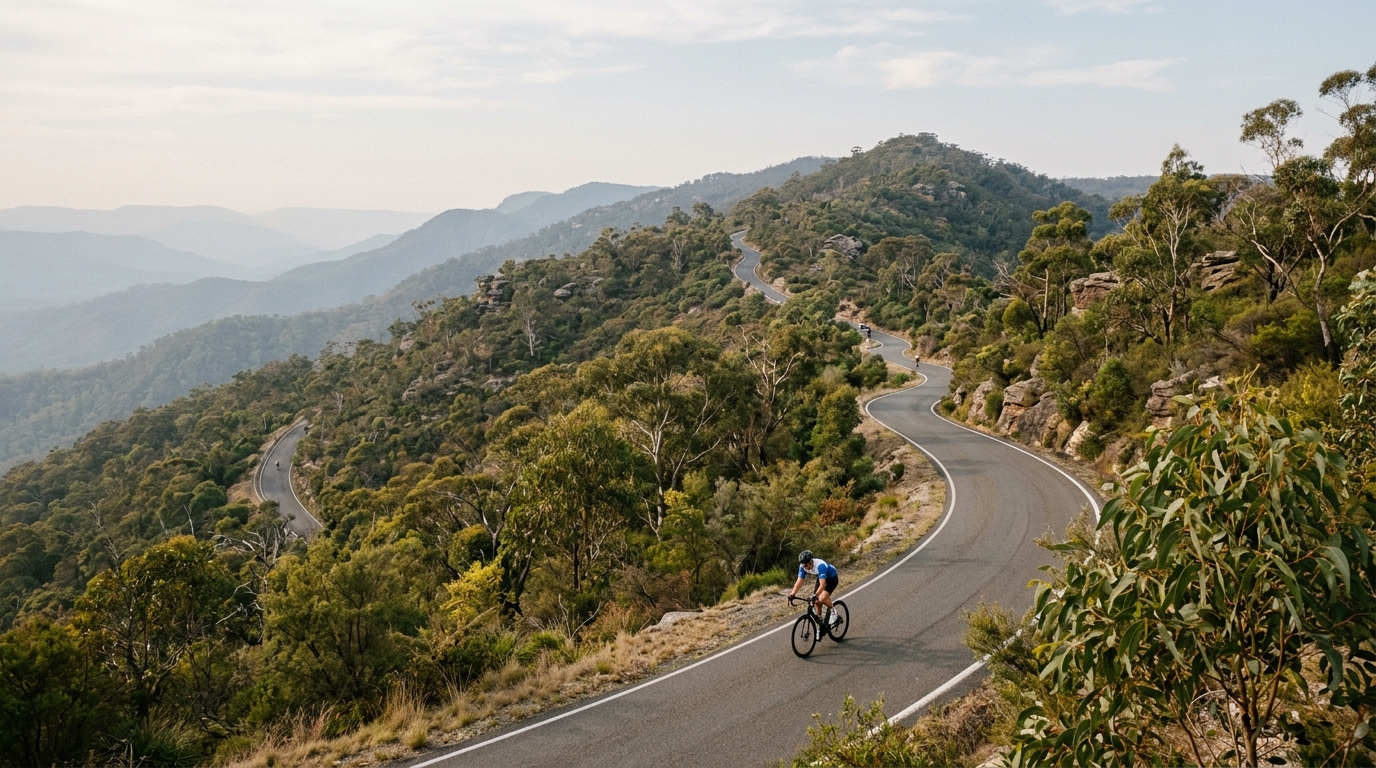
The complete guide to climbing in Australia
The Riding
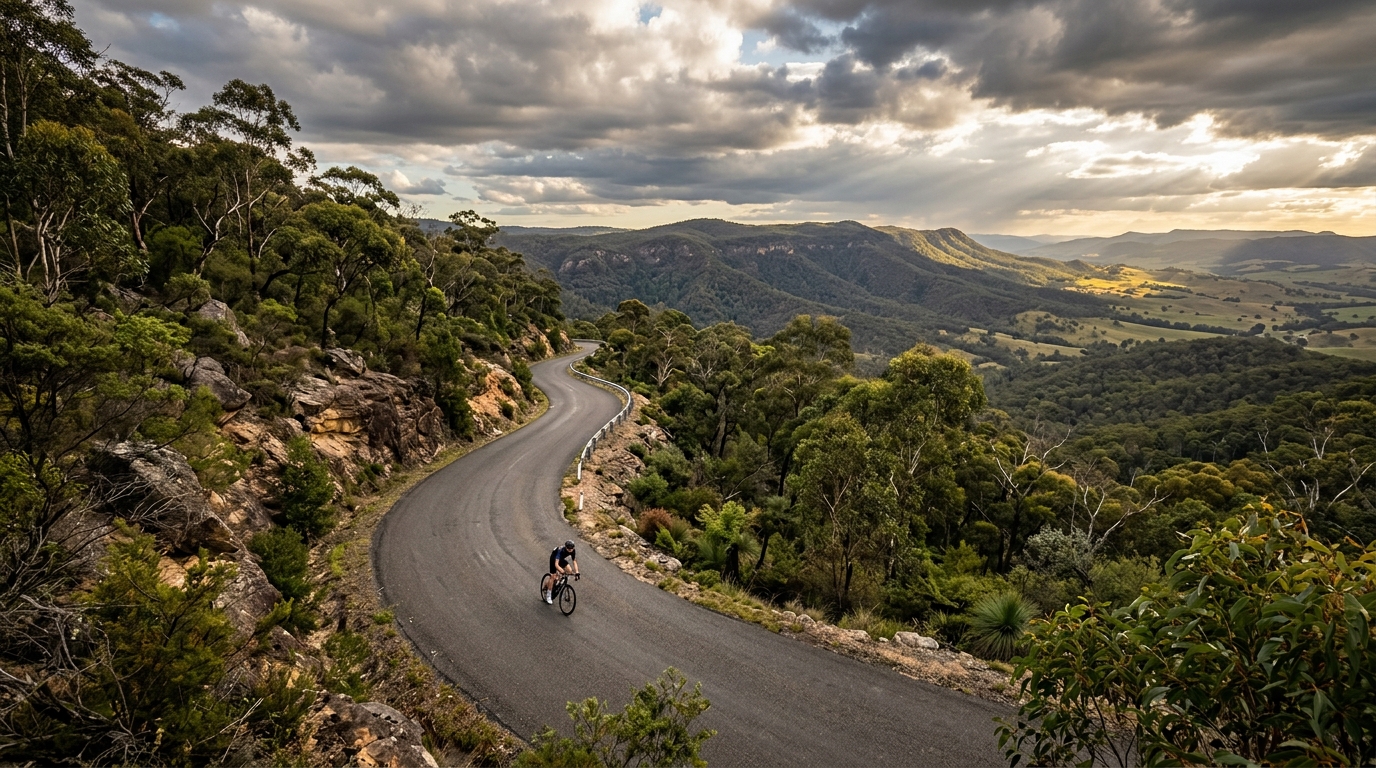
Australia is a big, dry continent where the climbing hides in pockets rather than spanning entire mountain ranges. Neverchill currently maps 3 climbs here, and none of them fall into the hors catégorie bracket — this is not the Alps, and it does not pretend to be. What you get instead is a spread of terrain that rewards riders who read a road carefully: high-plateau grinds that top out at real altitude, escarpment passes cut through coastal ranges, and inland routes that string long, patient gradients across otherwise open country.
The defining feature of Australian climbing is exposure. Tree cover thins as you gain elevation, the wind has nothing to break it across the tablelands, and the sun sits high and hard for most of the year. That combination changes how a climb feels far more than its raw gradient does. A modest average over several kilometres can turn brutal when there is no shade and a headwind rolling off the plains. Conversely, the escarpment climbs are often shorter and sharper — quick hits of steep tarmac where the road pitches up out of a valley and settles again just as fast.
Because the sample here is small and deliberate, every mapped climb earns its place. This is a region to ride selectively rather than to bag in volume. Treat the 3 climbs as anchor efforts around which you build a longer day, and you will get far more out of Australian riding than you would chasing a big number.
Standout Climbs
Bogong High Plains is the headline. This is high-country riding in the truest Australian sense — a long ascent onto an alpine plateau that puts you at the top end of the continent's climbable elevation. It is the climb that most rewards genuine endurance and steady pacing, and the one where altitude and weather matter most. If you ride only one climb in Australia, this is it.
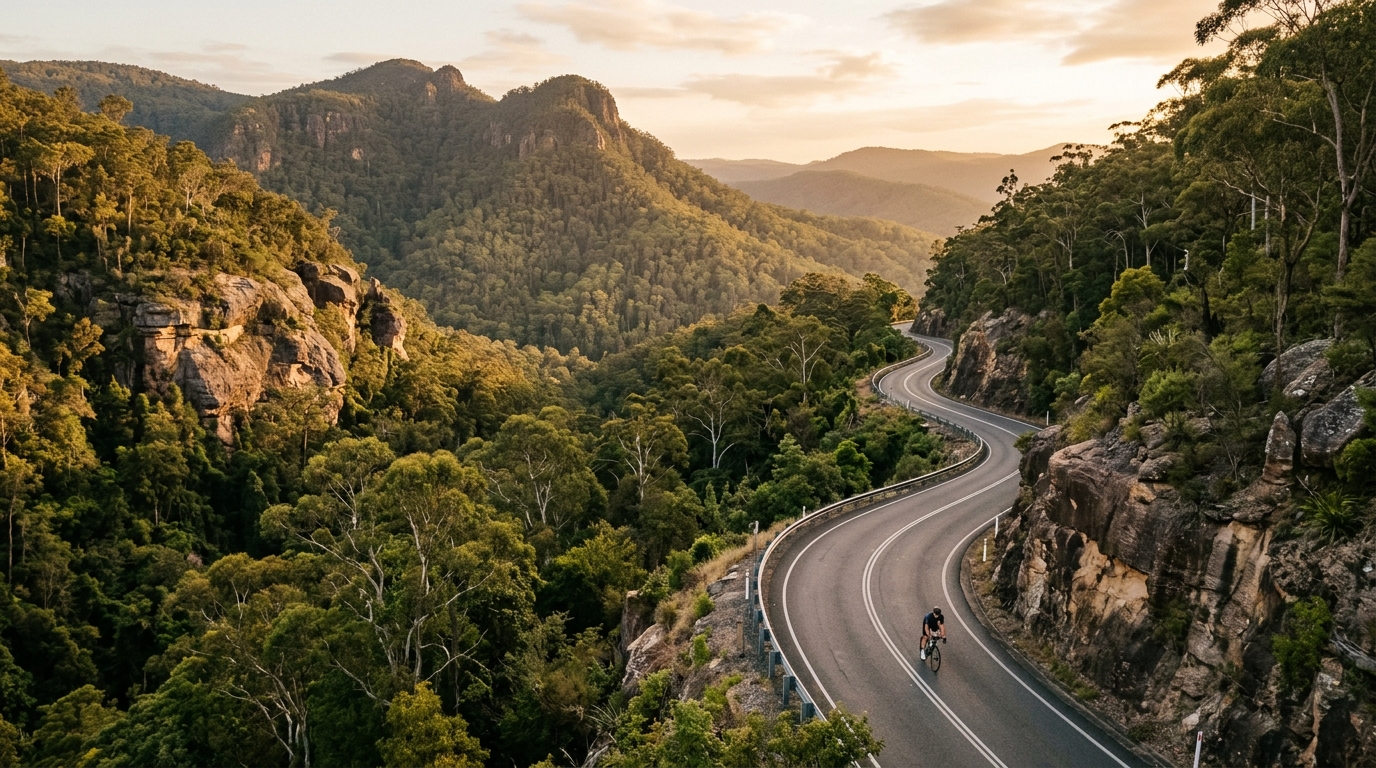
Cunninghams Gap is the escarpment classic — a pass carved through a coastal range that trades the plateau grind for a more concentrated, valley-to-ridge effort. It sits closer to the populated southeast, which makes it one of the more accessible mapped climbs here, and its character is punchier than the high plains: get on top of the gear early and hold it.
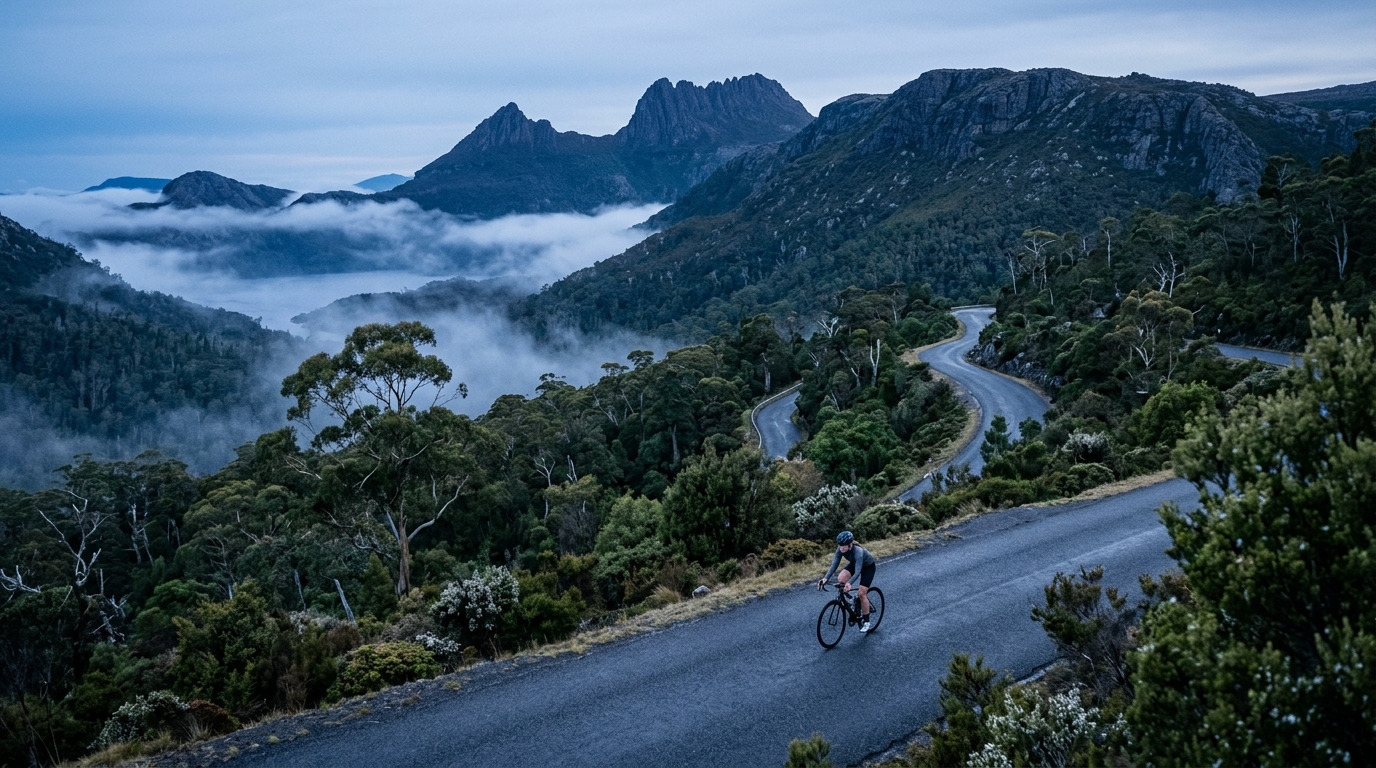
Pandoras Pass rounds out the set as the inland option, a route that captures the long, exposed feel of riding away from the coast. It is the climb where the mental side of Australian riding shows itself — patience, hydration, and respect for the open country do more for you than any burst of power. Together these three cover the full range of what the region offers: plateau, escarpment, and interior.
When to Ride
Season is the single most important planning decision in Australia, and the reason comes straight from the numbers. The highest summit on the network here reaches 1643 m. That is high enough to draw genuine alpine conditions across the cold months — snow, ice on the road, and closures are all in play on the high country, so the plateau riding around Bogong High Plains has a real off-season. You do not want to be caught up there in winter.
The practical window for the high-elevation climbs is the warmer half of the year, when the snow has cleared and the plateau roads are open and dry. Aim for stable conditions and start early: at altitude the mornings are cool and calm, and the wind and heat both build through the day. For a summit near 1643 m, an early roll-out buys you the best surface and the least weather.
The lower escarpment and inland climbs like Cunninghams Gap and Pandoras Pass have a longer usable season, but they flip the problem — instead of cold, the enemy is heat. On these exposed routes, the middle of a hot day is punishing, and there is little shade to hide in. Shoulder seasons often give the best balance: enough warmth that the high country is open, but not so much that the low, sun-baked climbs cook you. Whenever you ride, check current conditions before committing to the high plains, because the mountain makes its own weather.
Practical Notes
Traffic on these climbs is generally manageable, but the escarpment passes double as through-roads, so expect vehicles moving at speed and ride defensively on the descents. The high-plateau and inland routes are quieter but far more remote, which shifts the risk from cars to self-sufficiency.
Resupply is the thing to plan hardest. On the high country and the interior routes, services are sparse and spread thin — carry more water than you think you need, and do not assume a tap or a shop at the top. The exposure that defines Australian climbing also means dehydration creeps up quickly, so drink to a schedule rather than to thirst.
Altitude deserves respect on the plateau. At 1643 m the air is thinner than most riders train in, and sustainable efforts feel harder than the same number would at sea level. Pace by feel and by sustainable power output rather than by ego, and give yourself margin on the longer efforts. If you are not sure what your ceiling is, run the numbers through the FTP estimator before you travel — knowing your threshold makes it far easier to ration effort across a long, exposed climb where blowing up leaves you stranded a long way from help.
On gearing, err toward the easier end. The plateau ascents are long enough that a low bailout gear keeps your cadence up and your legs intact for the full effort, while the escarpment pitches can be steep enough to want that same gear for short, sharp sections. A compact or sub-compact setup with a wide-range cassette is the safe default across all 3 climbs. You will rarely wish you had a bigger gear on Australian roads; you will often be glad of a smaller one.
Summary
- Climbs mapped: 3
- Highest summit: 1643 m
Australian climbing is a study in quality over quantity. With 3 mapped climbs spanning high plateau, coastal escarpment, and open interior — topping out at 1643 m on the high country — this is a region to ride with intent rather than to tick off. Get the season right, carry enough water, gear low, and pace to your threshold, and Bogong High Plains, Cunninghams Gap, and Pandoras Pass will each give you a distinct and memorable day on the bike.
Looking for full rides in Australia?
Routes in Australia