🇷🇴 Route library
Cycling routes in Romania
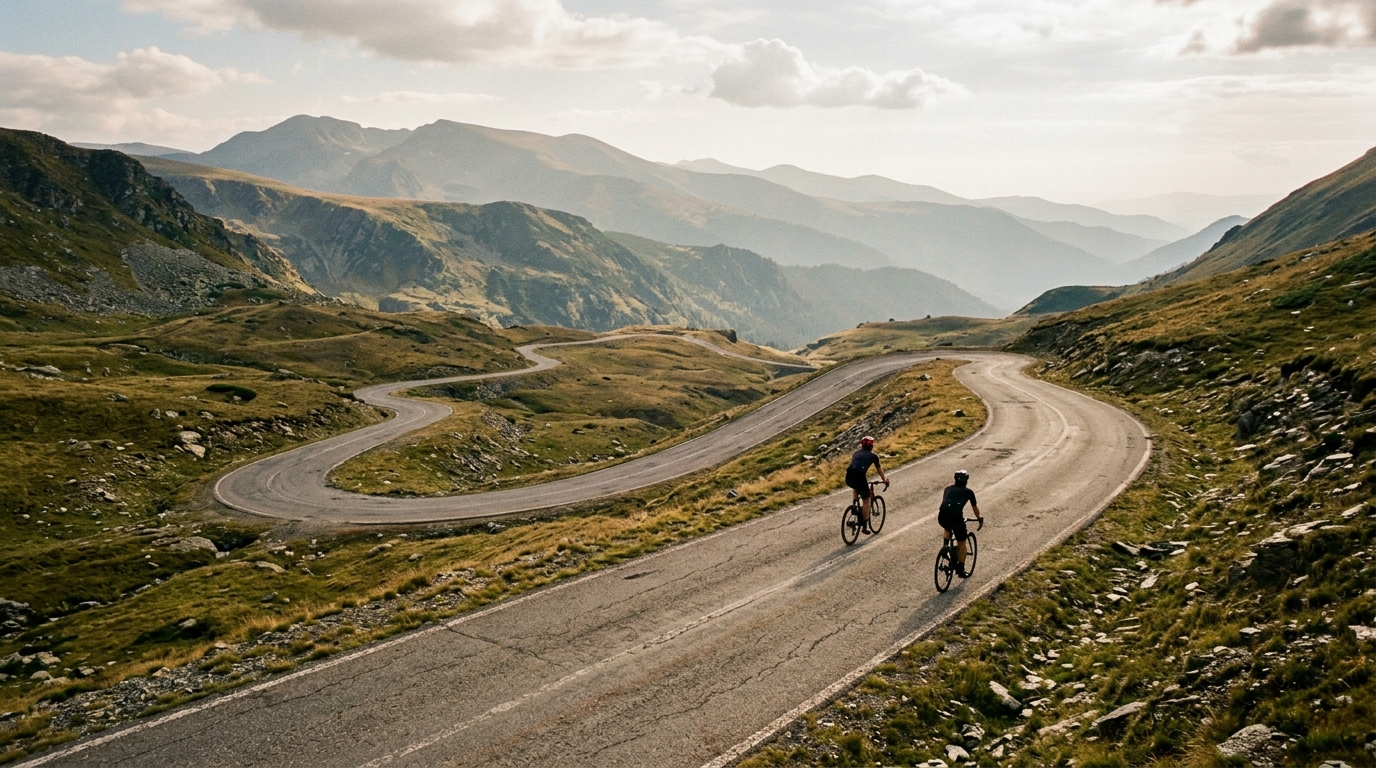
Romania rewards riders who chase altitude. The country's catalogue is small but mighty, built around two of the continent's most talked-about mountain roads: the Transfăgărășan, threading the Făgăraș Mountains, and the Transalpina, climbing high through the Parâng Mountains. These are ride-of-a-lifetime ascents, all sweeping hairpins and thin alpine air, where the road itself becomes the reason to travel.
The numbers hint at the effort. The longer of the two routes runs to 100 km, and the biggest day stacks up 2,815 m of climbing, the kind of vertical gain that turns a ride into a story. With just two routes on the map, Romania is compact but serious, a place for cyclists who want to trade volume for the raw scale of the Carpathians. Point your wheels at the Făgăraș or Parâng peaks and let the mountains do the rest.
- Routes
- 2
- Longest
- 99.9km· Transfăgărășan
- Most climbing
- 2815m· Transfăgărășan
Regions in Romania
Signature routes of Romania
2 routes
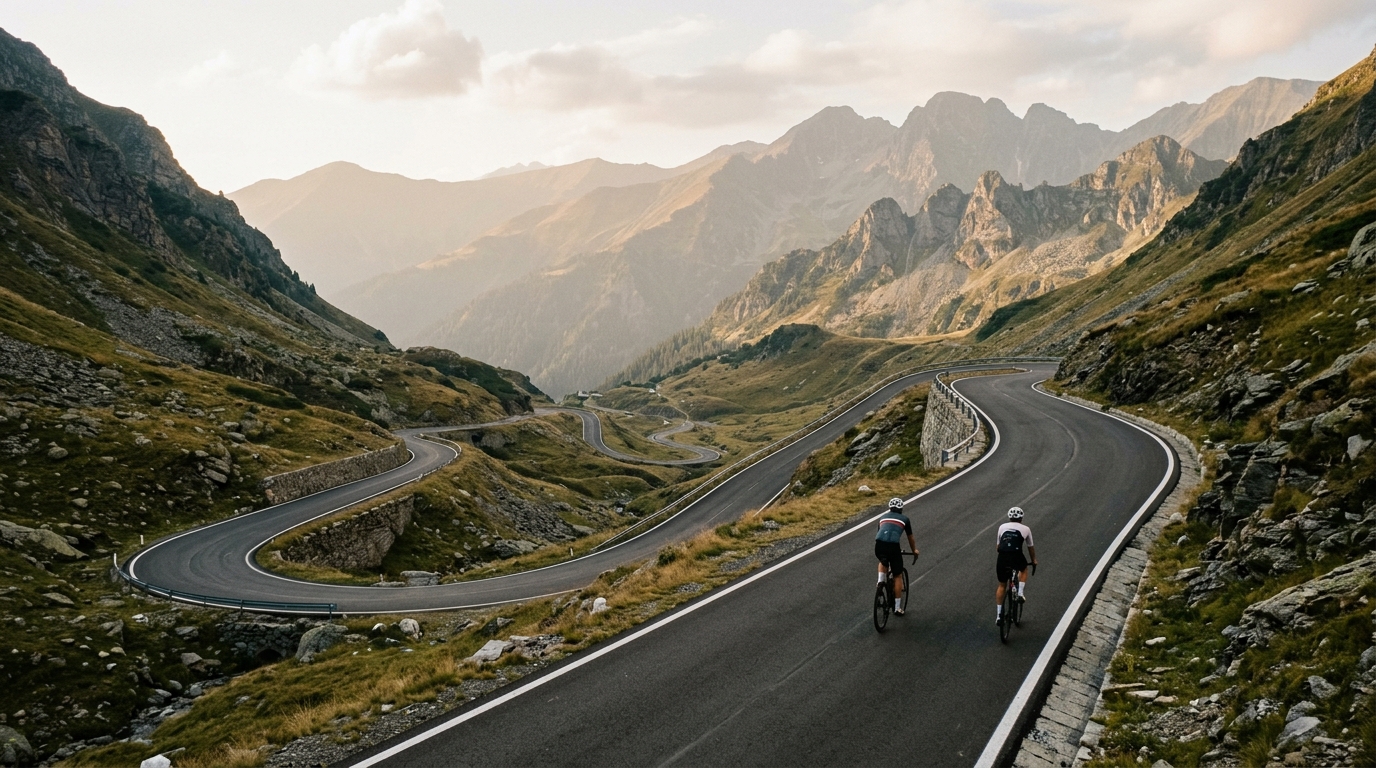
Transfăgărășan
A 99.9 km point-to-point charge across Romania's Făgăraș Mountains, stacking 2815 m of climbing on flawless asphalt.
View routeTransalpina
A 58.2 km asphalt traverse through Romania's Parâng Mountains, banking 2331 m of climbing across one of the Carpathians' highest paved roads.
View routeThe complete guide to riding in Romania
The Riding
Romania sits at the eastern edge of Europe's high country, and its cycling character is defined almost entirely by mountains. The catalogued riding here is small but concentrated: two routes are currently on the map, and both are shaped by the Carpathian ranges that cut across the country. This is not a place you come for endless flat mileage or gentle valley spinning. It is a place you come to climb.
The numbers tell a clear story. The longest catalogued route stretches to 100 km, and the route with the most vertical gain packs in 2,815 m of climbing. That ratio — serious elevation over a moderate distance — is the signature of Romanian road riding. Neither of the two routes is rated as epic in the catalogue, but the terrain they cover is unmistakably alpine: long, sustained ascents, exposed high passes, and switchback after switchback stacked up the flanks of the Făgăraș and Parâng Mountains.
If you like riding that rewards patience and a good set of climbing legs, Romania delivers. The appeal is the gradient and the altitude, not the breadth of the network.
Signature Routes
Two marquee routes carry the region, and both are among the most recognisable mountain roads in this part of Europe.
The Transfăgărășan threads through the Făgăraș Mountains, climbing through a tangle of hairpins toward a high pass before dropping down the far side. It is the archetypal Romanian ascent — a road that gains altitude relentlessly and asks for steady, sustained effort rather than short bursts.
The Transalpina runs through the Parâng Mountains and offers a similar high-alpine profile: long climbing, exposed upper sections, and the kind of sustained vertical that pushes a route toward that 2,815 m climbing figure. Between them, these two roads account for the entire catalogued offering, and they are the reason riders point their wheels toward Romania in the first place.
Ride either and you will spend most of your day going up, then descending a mountain road that demands attention and rewards it.
When to Ride
High-mountain routes like these are seasonal by nature. Because both the Transfăgărășan and the Transalpina climb to genuine altitude in the Carpathians, the practical riding window is the warmer months, when the passes are clear and the upper sections are open and dry. Attempting these climbs outside that window means contending with cold, weather, and potentially closed high ground.
Plan for the summer heart of the season if you want the cleanest shot at both passes. Aim to be on the high sections earlier in the day, when conditions on exposed mountain roads tend to be most settled and the long descents are safest.
Practical Notes
Come prepared to climb. With a longest route of 100 km and a maximum of 2,815 m of climbing, gearing matters more than raw distance here — a setup that lets you spin comfortably on sustained gradients will make both routes far more enjoyable.
Treat each route as a full mountain day. Even though neither is rated epic and the distances are moderate by flatland standards, the vertical gain means you should carry enough food and water to get up and over a high pass, and pack layers for the temperature swings between valley and summit. Descents off these passes are long and technical, so check your brakes and ride the downhills with respect.
Because only two routes are catalogued, planning is straightforward: pick the Făgăraș Mountains via the Transfăgărășan or the Parâng Mountains via the Transalpina, and build your day around the climb.
Summary
Romania's cycling offering is compact and unambiguous. Two catalogued routes, neither rated epic, cover the high ground of the Făgăraș and Parâng Mountains. The longest runs to 100 km and the most demanding piles up 2,815 m of climbing — a profile that puts vertical gain, not distance, at the centre of the experience.
The Transfăgărășan and the Transalpina are the headline acts, and they define what riding here is about: long alpine ascents, high passes, and committed mountain days. If that is the kind of riding you chase, Romania's short catalogue punches well above its size.
Looking for the climbs in Romania?
Climbs in Romania