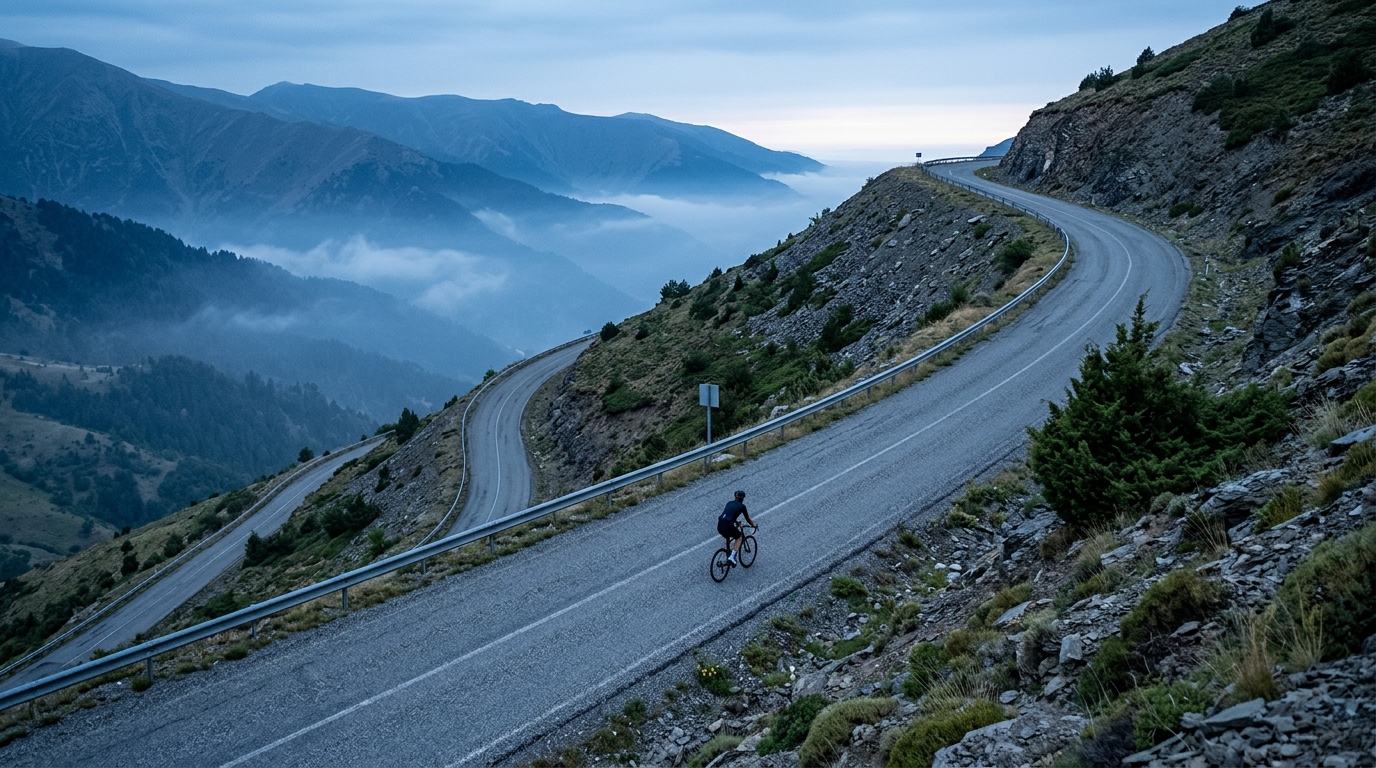
Zigana Pass
A practical profile of Zigana Pass, a 15 km HC climb in Turkey averaging 7.51 percent with severe ramps that demand disciplined pacing.
- Length
- 15km
- Avg
- 7.5%
- Max
- 19.1%
- Summit
- 2,102m
- Ascent
- 905m
The climb
Gradient profile
Zigana Pass cycling climb profile
Zigana Pass is a serious mountain effort: 15 km long, rated HC, and averaging 7.51 percent from a start elevation of 975 m to a summit elevation of 2102 m. The headline number is the average gradient, because over this distance it points to a climb that does not need long walls to be selective. A sustained mid-to-high single digit average for 15 km is enough to make pacing errors compound quickly.
The key complication is the maximum gradient of 19.12 percent. The available profile data does not say where that ramp appears, so the safest way to read the climb is not as a neatly segmented ascent with a known easy opening or predictable sting near the top. It should be approached as a long, steady load with the possibility of very steep interruptions. That matters tactically and practically: if you ride the average too aggressively early, any pitch near the maximum becomes a forced surge rather than a controlled change in cadence.
How the gradient unfolds
From bottom to summit, the climb gains 1127 m in elevation based on the listed start and summit elevations. Over 15 km, that produces the 7.51 percent average, which means the road is doing real work almost all the way up. Even if some parts ease, the climb has to take that vertical gain back somewhere.
That is the defining character of Zigana Pass. It is not just the steepest section that hurts. It is the amount of time spent climbing before and after it. The 19.12 percent maximum gradient is the danger point, but the average is what makes the danger point costly. On a shorter climb, a rider can over-torque through a steep ramp and recover. On an HC climb of this length, that same move can push you above threshold, raise lactate, and leave you paying for it for the remaining kilometres.
Pacing and gearing notes
Treat Zigana Pass as a controlled threshold climb, not a punchy effort. The opening should feel slightly restrained, especially if riding by /glossary/ftp. A sensible target is to keep the first part below the effort you think you can hold for the full ascent, then let the climb come back to you once the rhythm is established.
Gearing should be chosen for the maximum gradient, not the average. A setup that feels comfortable at 7.51 percent may still be too large when the road pitches toward 19.12 percent. The goal is to preserve cadence and avoid grinding at low rpm, because muscular fatigue becomes a major limiter over 15 km.
Practical approach:
- Settle early and avoid chasing speed on the lower slopes.
- Keep one or two gears in reserve for the steepest ramps.
- Ride the steep sections by torque control, not ego.
- If the gradient eases, recover without fully backing off.
- Save any real acceleration for the final part, once the summit is effectively within reach.
Zigana Pass rewards riders who respect the arithmetic. The average is already hard, the length gives mistakes time to accumulate, and the maximum gradient means there is a real penalty for arriving at the steepest pitch overextended.