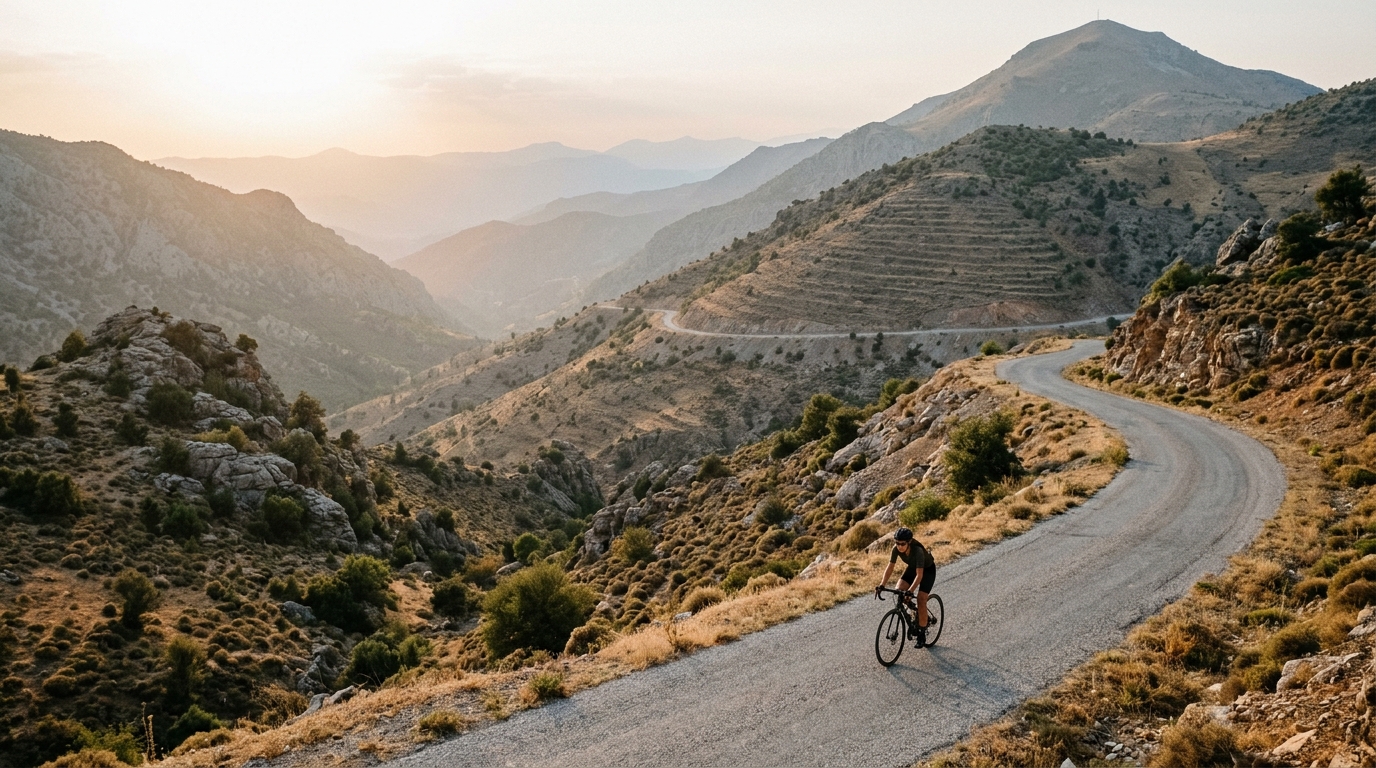
Kızıldağ Pass
A practical rider-focused profile of Kızıldağ Pass, a 16.2 km category 1 climb in Turkey averaging 5.53% with ramps up to 14.02%.
- Length
- 16.2km
- Avg
- 5.5%
- Max
- 14.0%
- Summit
- 2,308m
- Ascent
- 882m
The climb
Gradient profile
Kızıldağ Pass cycling climb profile
Kızıldağ Pass is a long, high, category 1 climb that asks for restraint more than aggression. The headline numbers are clear: 16.2 km at an average gradient of 5.53%, starting at 1411 m and topping out at 2308 m. That is 897 m of net elevation gain, which puts this firmly in the sustained endurance-climb category rather than the short punchy effort category.
The average gradient can make the climb look controlled on paper, but the maximum gradient of 14.02% changes how it should be ridden. A climb averaging 5.53% over 16.2 km is already long enough to punish early overpacing. Add double-digit ramps, and the key tactical problem becomes variability: you need to keep enough torque and aerobic headroom available for the steepest sections without letting the easier parts become wasted recovery.
How the gradient rides
From the base at 1411 m, the road gains steadily toward the summit at 2308 m. With only the headline profile available, the safest reading is not that Kızıldağ Pass is a smooth metronomic climb, but that its overall average masks sharper moments. The 14.02% maximum gradient means there are sections where seated rhythm can break down if you are already riding near threshold.
That matters because the climb is long enough for small pacing errors to compound. On a shorter climb, a hard surge into a steep pitch can be absorbed. Here, the same mistake can leave you carrying fatigue for many kilometres. The right approach is to treat the lower slopes as the setup phase, not the place to prove form.
Pacing strategy
Ride the first part deliberately below your target climbing effort. If you use /glossary/ftp as an anchor, this is the kind of climb where an even power cap is more useful than chasing speed. The average gradient is moderate, so speed may feel flattering early, especially if the road is sitting near the mean. The risk is that the 14.02% ramps demand a sudden jump in force, and any effort already sitting too high will turn those ramps into anaerobic spikes.
A good pacing model is:
- Start controlled and keep breathing settled
- Let cadence drop slightly on steeper ramps rather than forcing a big acceleration
- Use any easing in the gradient to return to rhythm, not to surge
- Save the hardest sustained effort for the final portion toward 2308 m
Gearing notes
Bring gearing that lets you stay seated when the road tilts into its steepest sections. The average of 5.53% does not require ultra-low climbing gears by itself, but the 14.02% maximum does. If your easiest gear is already a grind on steep gradients, Kızıldağ Pass will push you into low-cadence fatigue before the summit.
The practical target is simple: choose gearing that lets you ride the long 16.2 km body of the climb aerobically while still having one bailout gear for the steepest ramps. That combination matters more than top-end speed. This is a climb won by keeping the effort narrow, managing torque, and arriving near the summit with enough control to finish strongly rather than surviving the last kilometres.