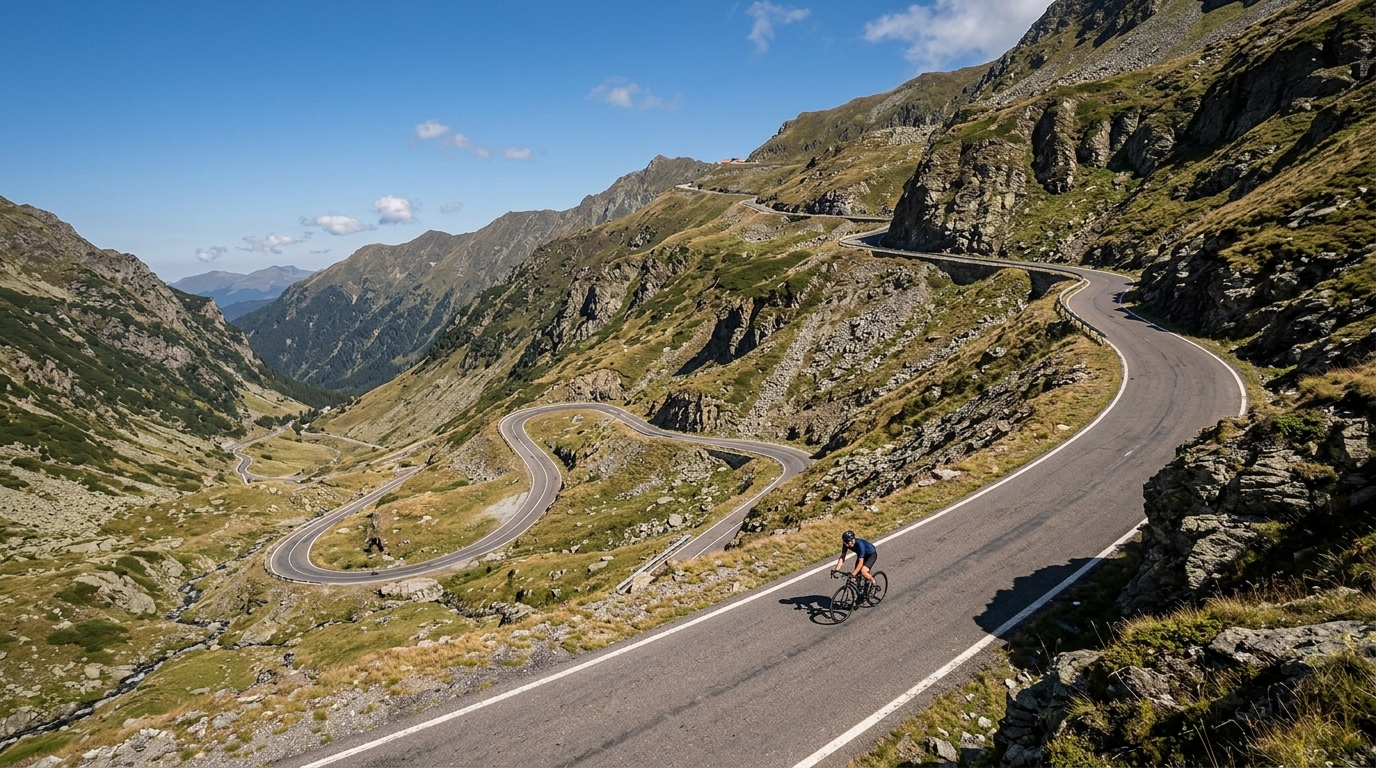
Transfăgărășan
A practical profile of the Transfăgărășan cycling climb, an HC ascent with long sustained climbing and severe ramps that punish poor pacing.
- Length
- 20.6km
- Avg
- 7.9%
- Max
- 22.0%
- Summit
- 2,102m
- Ascent
- 1,588m
The climb
Gradient profile
Transfăgărășan cycling climb profile
The Transfăgărășan is not complicated on paper, but it is demanding in the way serious climbs usually are: it gives you a long duration, a high average gradient, and enough steepness at the top end to make any early overreach expensive.
From a start elevation of 464 metres, the road climbs to 2102 metres over 20.6 kilometres. The average gradient is 7.93 percent, which is already a meaningful load for this distance. The key detail is the maximum gradient of 21.99 percent. That tells you this is not just a steady threshold climb where the average tells the whole story. The climb has ramps steep enough to force low-cadence, high-torque efforts if you arrive under-geared or already above your sustainable pace.
How the gradient rides
The headline is the combination of length and density. A 20.6 kilometre climb at nearly 8 percent does not leave much free recovery built into the profile. Even without knowing every corner or segment split, the numbers describe a climb where the main challenge is cumulative fatigue. The road gains 1638 metres from bottom to summit, so the climbing pressure is continuous enough that small pacing mistakes compound.
The maximum gradient matters because it changes how the average should be interpreted. On a climb with an average of 7.93 percent, a short ramp near 21.99 percent can push power far above target even if the rider is trying to stay controlled. That is where many riders lose the climb: not through one spectacular failure, but through repeated small spikes that turn an aerobic effort into something much more anaerobic.
Its HC category is appropriate. This is the sort of ascent where form, gearing, fueling, and restraint all matter. Fitness gets you into the climb; pacing gets you to the summit with a usable finish.
Pacing and gearing notes
Ride the first part as if the steepest ramps are still ahead, because the profile gives you every reason to assume they will matter. If you pace only by the average gradient, you risk turning the hardest sections into forced surges. Use /glossary/ftp as the anchor: the safest strategy is to keep the early effort below the level you think you can hold for the full climb, then let the final section decide whether you can lift.
Gearing should be chosen for the maximum gradient, not the average. A setup that feels comfortable on an 8 percent climb may become restrictive when the road pitches much steeper. The goal is not just to survive the steepest ramps, but to avoid grinding so hard that your cadence collapses and your legs accumulate fatigue you cannot clear.
Practical approach:
- Start conservatively and resist chasing speed early.
- Keep power or perceived effort smooth through the sustained sections.
- Expect short, very steep ramps to distort your pacing if you are over-geared.
- Use the easier gear before you need it, not after cadence has already dropped.
- If using power, check your sustainable climbing output with /tools/ftp-estimator before treating this as a threshold effort.
The Transfăgărășan is a long HC climb with a sharp edge. The rider who respects the 20.6 kilometre duration and prepares for gradients up to 21.99 percent will usually outperform the rider who simply sees the 7.93 percent average and starts too hard.