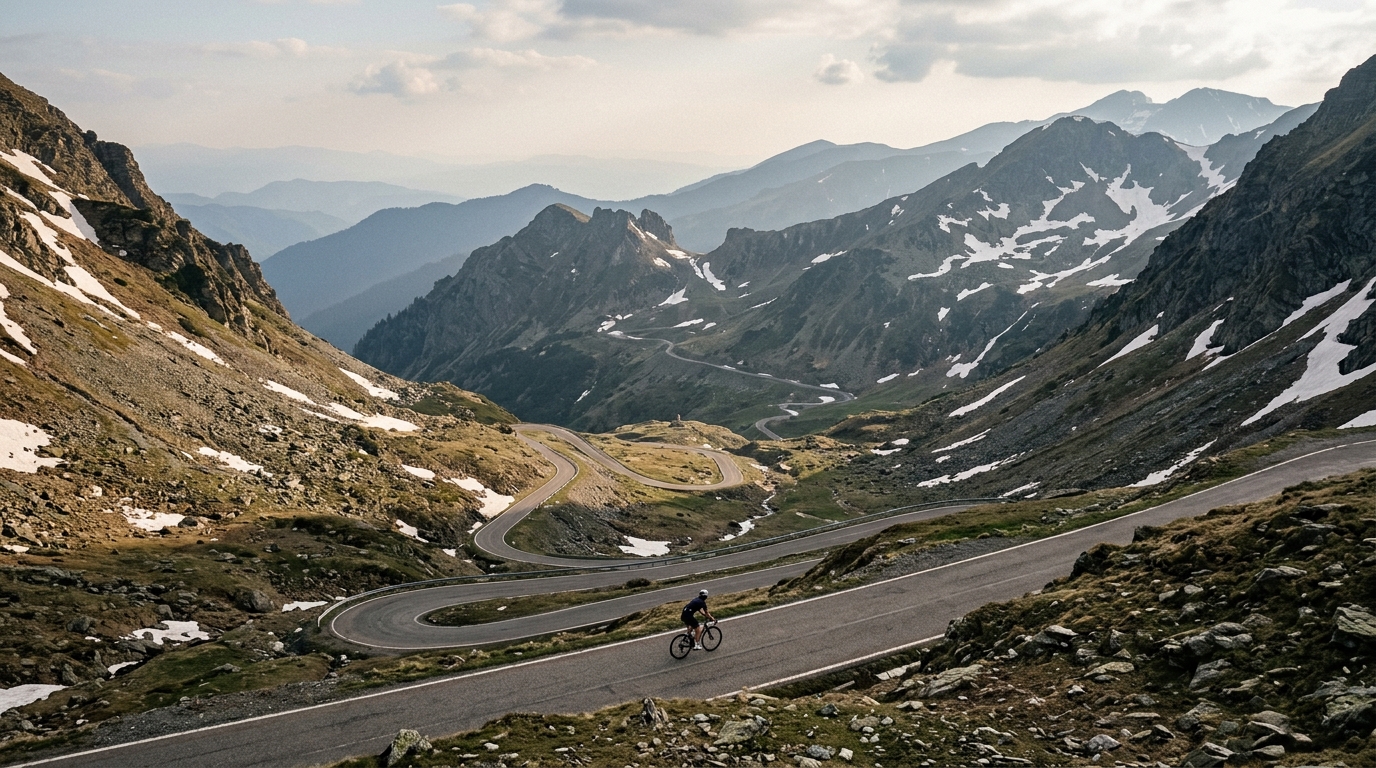
Climb library · Romania
Cycling climbs in Romania
Romania is where the Carpathians turn a road bike into a mountain machine. With seven catalogued climbs and summits reaching 2102 metres, this is a country that rewards riders willing to trade the flatlands for thin air and switchbacks. At the heart of it sits the Transfăgărășan, the sole hors catégorie ascent in the collection and a benchmark for anyone chasing a true high-mountain challenge on two wheels.
Beyond that headline climb, the roster spreads across the range with real variety. The Surduc Pass, Vulcan Pass, Prislop Pass, Rucăr-Bran Pass, and Tihuța Pass each carve their own line through the peaks, offering gradients and gateways that suit different strengths and appetites. Together they make Romania a destination that punches well above its modest tally, a place where a compact set of climbs adds up to a genuinely rewarding riding calendar.
Signature climbs of Romania
All climbs in Romania
9 climbs
- TransfăgărășanHCRO · 18.6 km · 8.8% · 1588 m1444pts
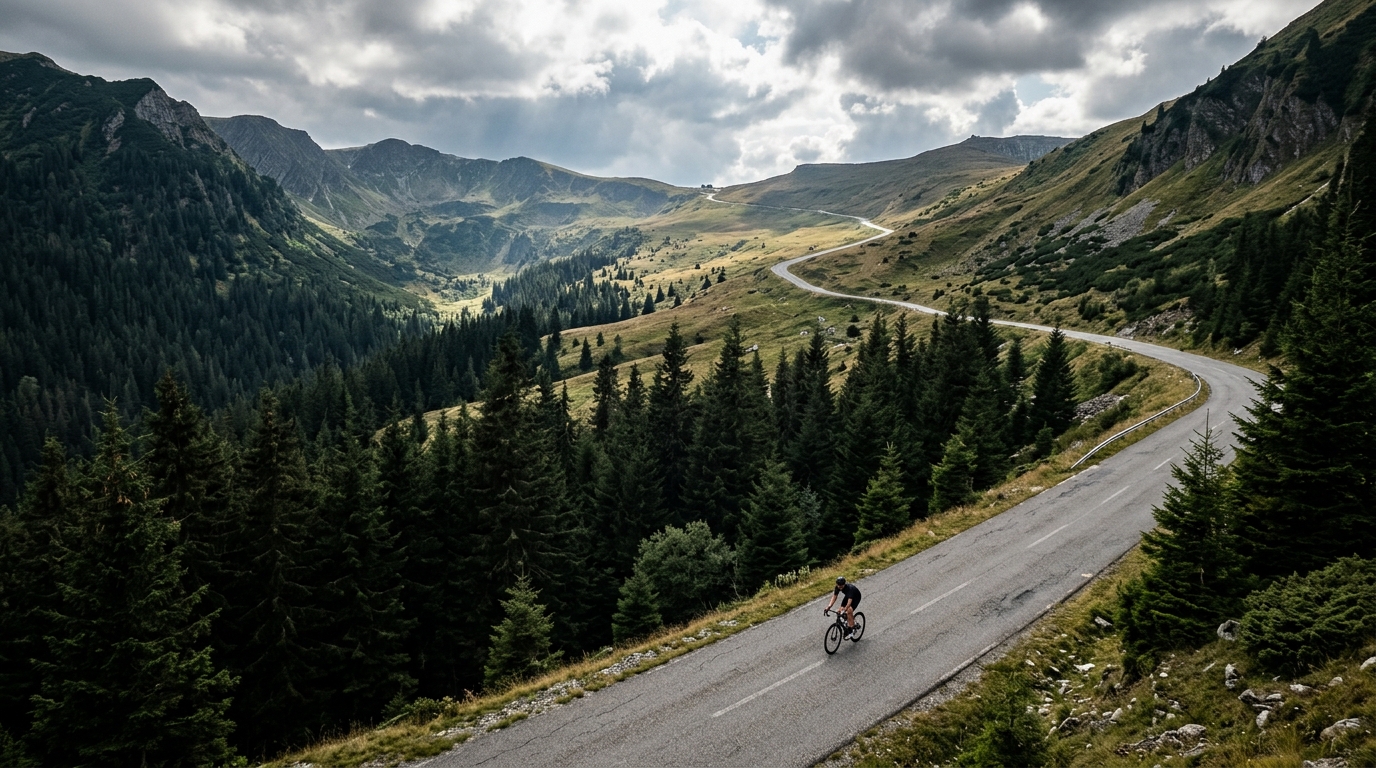 Prislop PassCat 2RO · 17.3 km · 4.0% · 676 m277pts
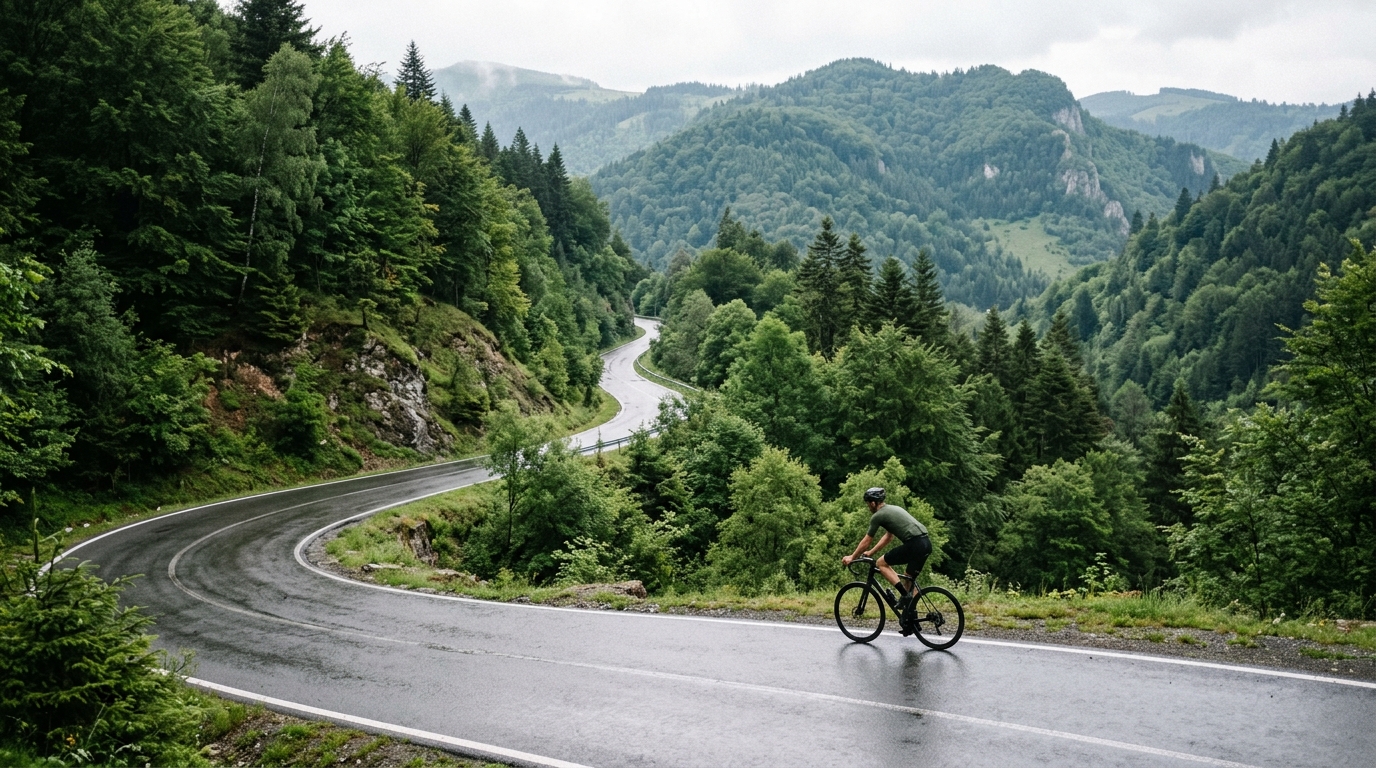 Rucăr-Bran PassCat 2RO · 10.4 km · 5.0% · 543 m263pts
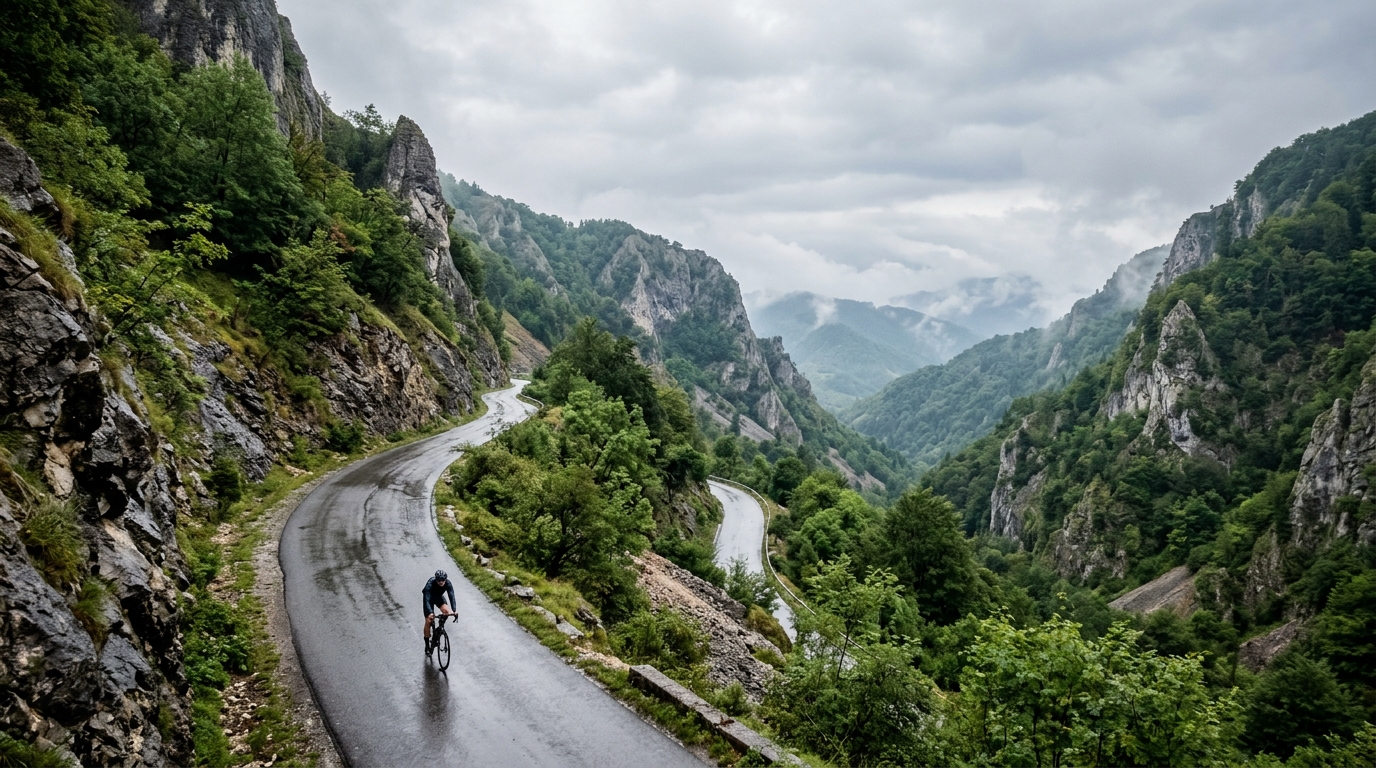 Surduc PassCat 1RO · 26.0 km · 5.1% · 1322 m671pts
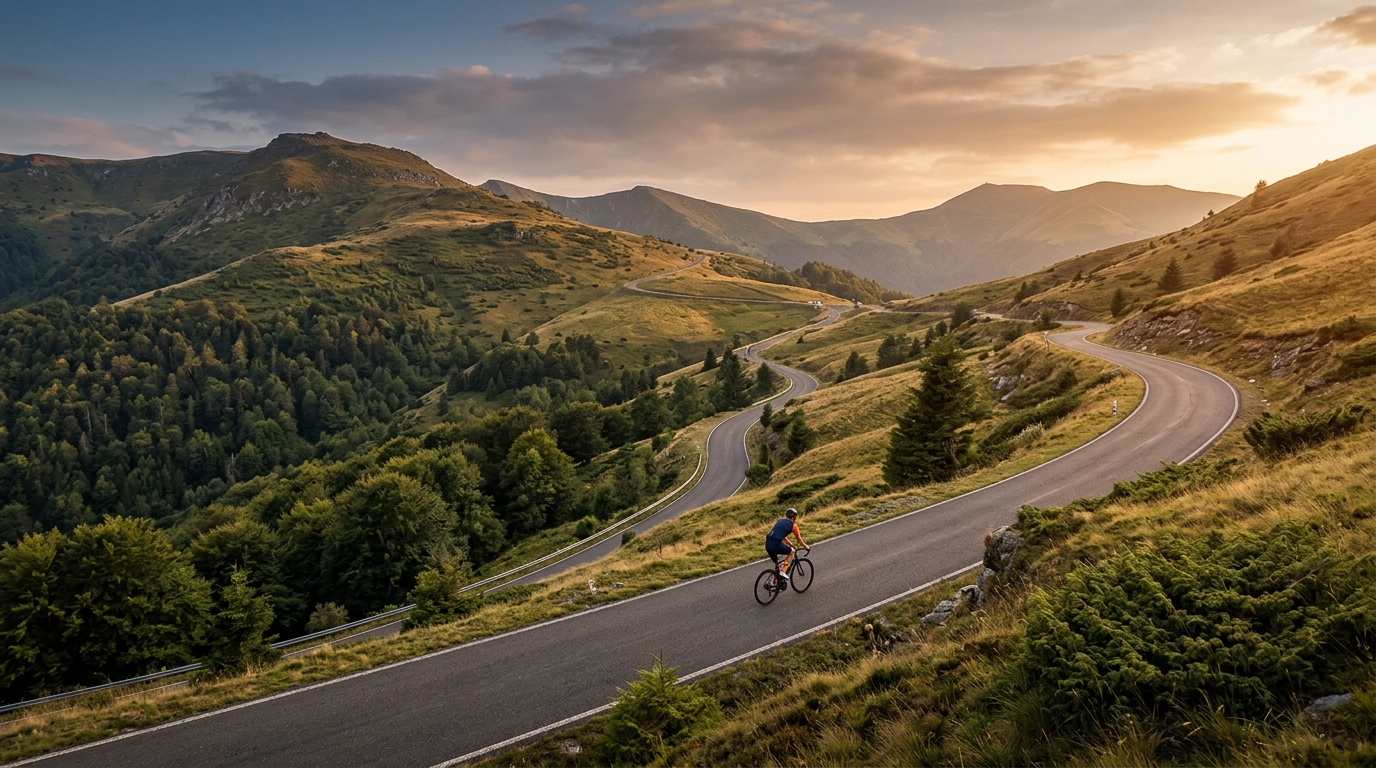 Vulcan PassCat 1RO · 22.3 km · 5.9% · 1308 m775pts
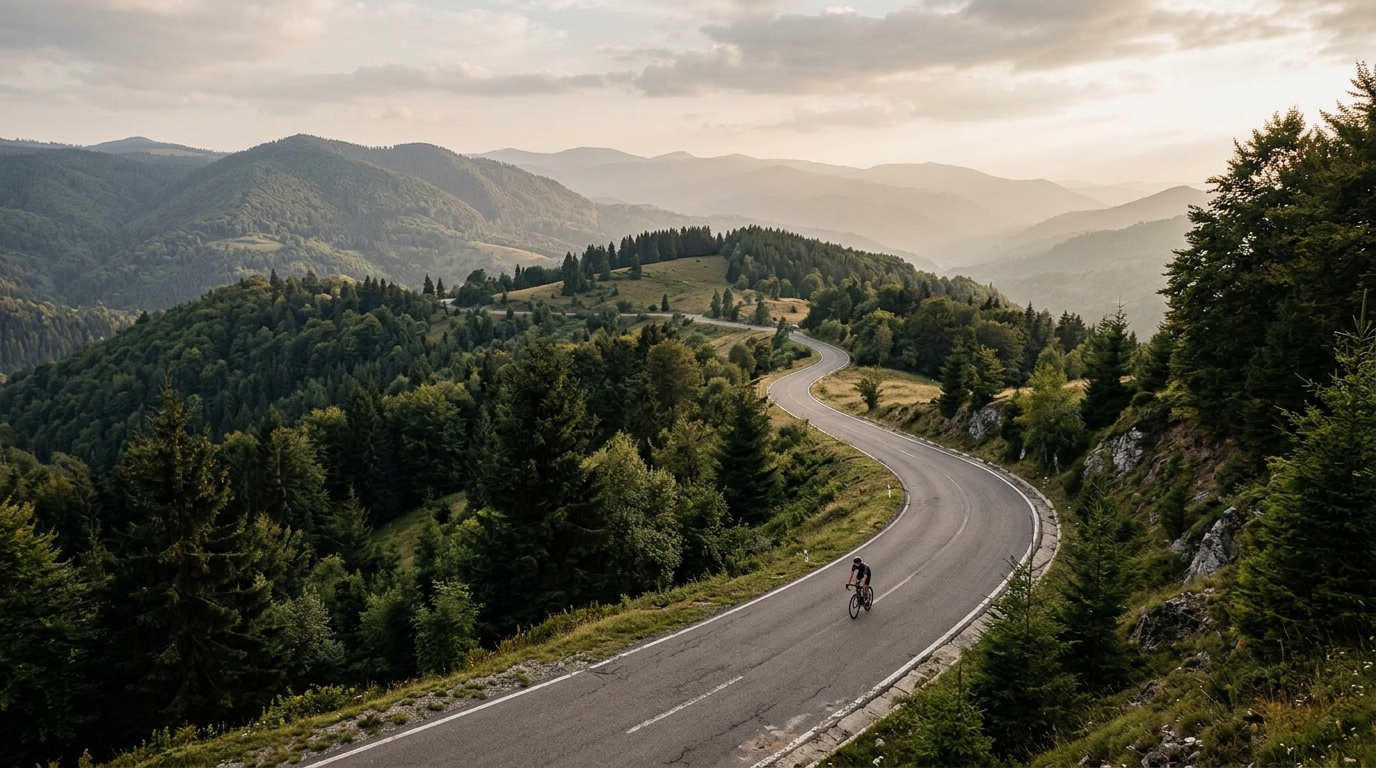 Tihuța PassCat 3RO · 11.9 km · 3.6% · 417 m158pts
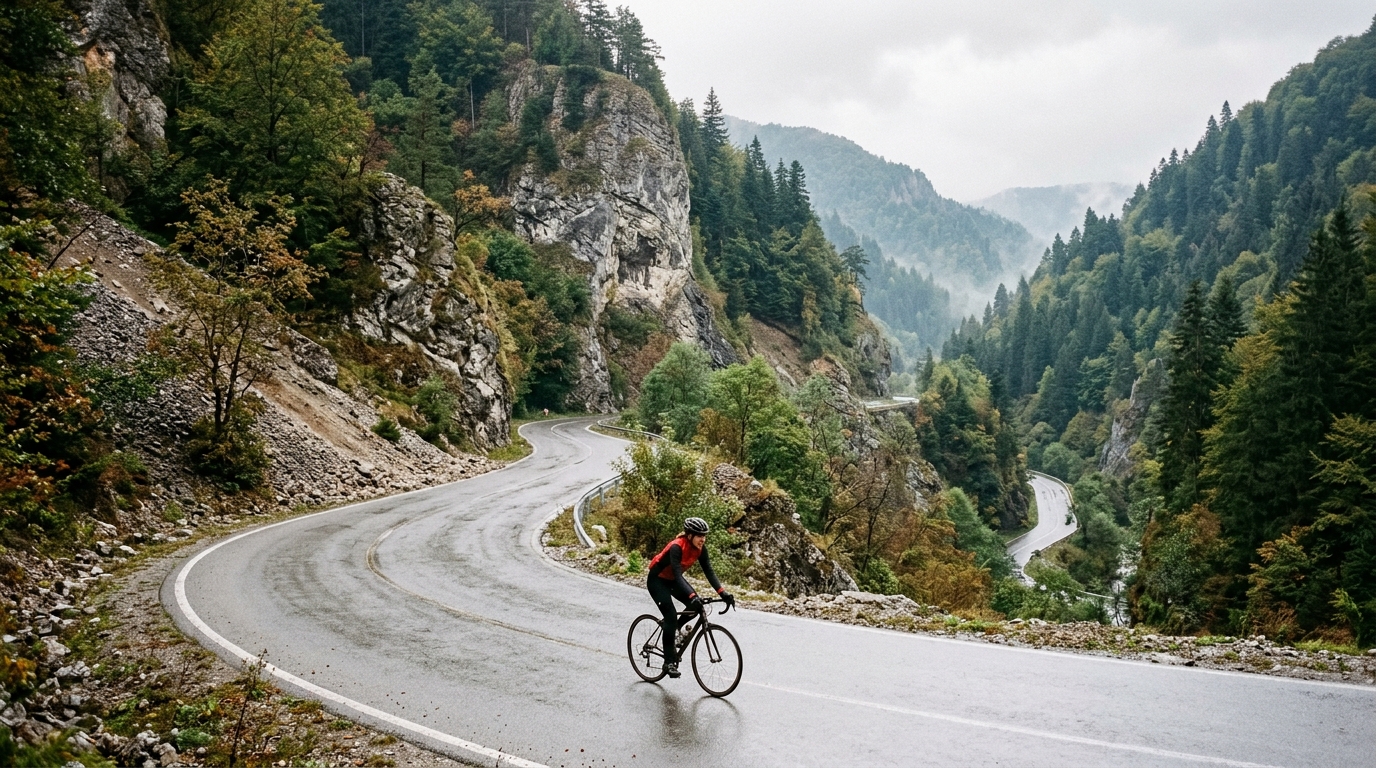 Oituz PassCat 2RO · 29.8 km · 3.3% · 1004 m329pts
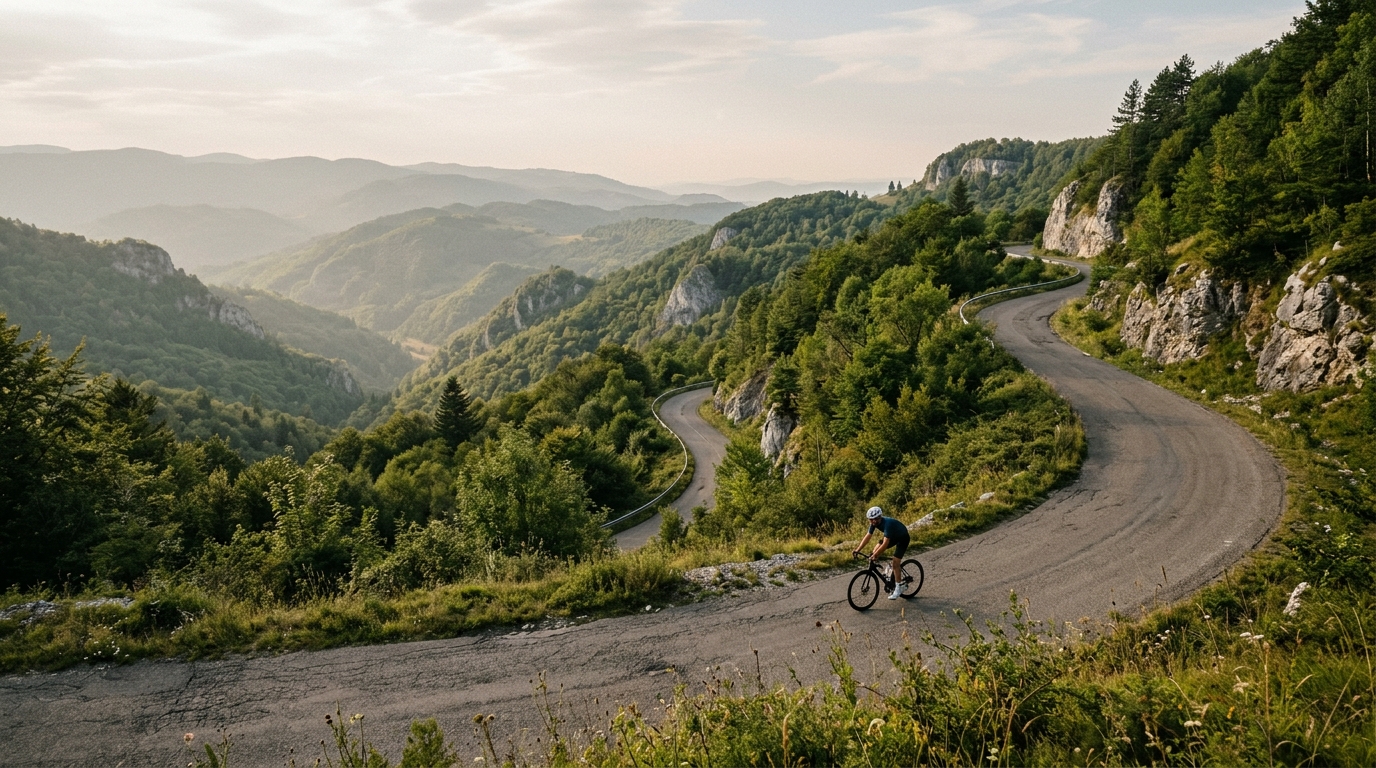 Huta PassCat 3RO · 5.3 km · 5.5% · 270 m159pts
 Gutâi PassCat 2RO · 27.6 km · 3.2% · 885 m276pts
The complete guide to climbing in Romania
The Riding
Romania is a mountain cyclist's country of long, patient climbs rather than short, savage ramps. Its riding is shaped almost entirely by the Carpathians, the great arc of high ground that curves through the heart of the country and lends nearly every serious ascent its length and altitude. Seven catalogued climbs define the landscape here, and together they tell a consistent story: broad valleys that tilt gradually upward, forested lower slopes that give way to open alpine terrain, and summits that reward the patient more than the explosive.
The defining characteristic is scale. These are passes, not walls. Gradients tend to sit in a manageable, sustainable range for much of their length, but the roads keep going long after the legs expect them to stop. The highest summit among the catalogued climbs reaches 2102 m, and altitude becomes a genuine factor near the top, where thinner air and cooler temperatures add a second layer of difficulty to what the gradient alone suggests. This is climbing measured in hours and horizons rather than in brutal percentages.
Standout Climbs
The undisputed centrepiece is the Transfăgărășan, the country's single hors catégorie ascent and the reason many riders travel to Romania in the first place. It is the highest and hardest of the seven, a road that switchbacks its way toward the high Carpathian ridgeline and delivers the full alpine experience: sustained effort, sweeping hairpins, and an exposed, dramatic upper section. If you ride one climb in Romania, this is it.
Beyond that headline effort, the remaining six catalogued passes offer a quieter but no less satisfying kind of climbing. The Prislop Pass and Tihuța Pass carry you through the northern and eastern reaches of the Carpathian chain, both long and steady in the classic Romanian mould. The Vulcan Pass and Surduc Pass sit closer together in the country's mountainous interior, each a solid, honest climb that rewards a measured tempo. The Rucăr-Bran Pass threads through more rolling, connective terrain, making it one of the more approachable outings, while the Huta Pass rounds out the set with another dependable Carpathian ascent. Taken together, these six form the backbone of any Romanian climbing trip, and they pair naturally with the Transfăgărășan as warm-ups, recovery days, or destinations in their own right.
When to Ride
Timing matters more in Romania than in gentler climbing regions, precisely because of the altitude these roads reach. The highest ground, including the upper Transfăgărășan, is genuinely seasonal: snow lingers late and returns early at 2102 m, so the reliable window for the loftiest climbs is the warmer months of high summer. Aim for the heart of summer if the highest passes are on your list, and check conditions before committing to anything near the top of the range.
The lower passes open up earlier and stay rideable longer, giving you more flexibility if you build a trip around them. Even in summer, though, pack for the mountains: temperatures fall noticeably with elevation, and a fast, exposed descent from a high summit can be cold even on a warm valley day.
Practical Notes
Ride these climbs as the long efforts they are. Pace yourself for duration rather than for a single hard pitch, and carry enough food and water for a sustained ascent, because the upper sections can be remote and exposed. Layers are essential on the higher passes; the temperature swing between a valley start and a 2102 m summit is significant, and a windproof layer for the descent is worth its weight.
Because the standout climbs are true mountain passes, plan your day around the ascent and its descent as a whole rather than treating the summit as the finish. Fresh legs, an early start, and respect for the weather will get far more out of a Romanian climbing day than raw power alone.
Summary
Romania offers seven catalogued climbs crowned by a single hors catégorie giant, the Transfăgărășan, and rounded out by six long Carpathian passes: Surduc, Vulcan, Prislop, Rucăr-Bran, Tihuța, and Huta. With a high point of 2102 m, this is a country of sustained, patient climbing where length and altitude, not gradient alone, define the challenge. Ride in the warmer months, dress for the mountains, and treat each pass as the full-day mountain effort it is.
Looking for full rides in Romania?
Routes in Romania