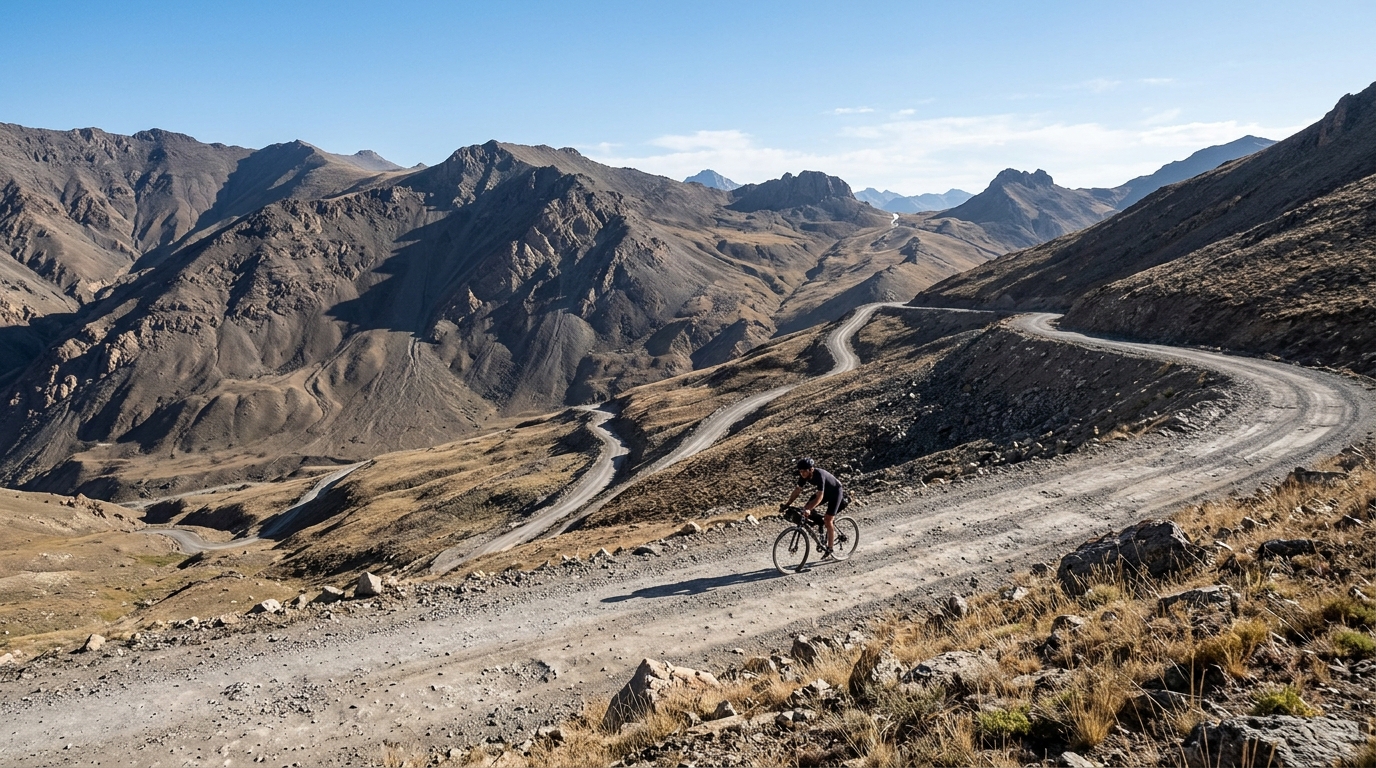
Torugart Pass
A compact high-elevation climb in KG: 1.6 km at 6.07%, topping out at 3729 m with a steady, controlled pacing demand.
- Length
- 1.6km
- Avg
- 6.1%
- Max
- 7.2%
- Summit
- 3,729m
- Ascent
- 80m
The climb
Gradient profile
Torugart Pass cycling climb profile
Torugart Pass is a short, high-elevation category 4 climb in KG, and its difficulty comes less from raw length than from where the effort happens. The climb starts at 3632 m and tops out at 3729 m, gaining 97 m over 1.6 km. On paper, the 6.07% average gradient is manageable. In practice, the elevation changes the cost of every acceleration.
How the gradient rides
The defining feature is steadiness. The maximum gradient is 7.15%, only a little above the 6.07% average, so the profile does not point to a climb with violent ramps or long recovery sections. It is better read as a sustained drag where the pressure stays on from bottom to summit.
That matters tactically. On a climb this short, it is tempting to treat the first half as a launch pad and ride it like a punch. But because the road sits between 3632 m and 3729 m, any early spike above sustainable power is harder to clear. The gradient is not steep enough to force a survival rhythm, but it is steep enough to punish a gear that is too big or an effort that drifts over FTP too soon.
Pacing and gearing
The right approach is controlled from the base. Settle into climbing pressure immediately, then let the effort build only once the summit is clearly coming. With just 1.6 km to cover, there is not much terrain available to correct a mistake. A small overreach in the opening minute can turn a relatively modest 6.07% climb into a stalled, low-cadence grind near the top.
Gearing should prioritize cadence rather than bravado. The maximum gradient of 7.15% is not extreme, but at this elevation the safer choice is a gear that lets you keep the pedals moving smoothly without repeated torque spikes. If you are riding this after a longer approach, shift before the slope bites, hold a steady rhythm, and resist standing unless it is to briefly reset the legs.
What it means
Torugart Pass is not a long mountain test by distance, but it is still a climb that rewards discipline. The numbers describe a compact, steady ascent: short enough to invite aggression, high enough to punish it, and consistent enough that the best ride comes from even pacing rather than surges. Treat the gradient as constant pressure, not as an invitation to sprint from the bottom.